Workplace in UK: Essential Safety and Compliance Guide
Workplace in UK: Essential Safety and Compliance Guide

The workplace in UK environments has evolved dramatically over recent years, with businesses facing increasingly complex regulatory requirements alongside heightened expectations for employee safety and wellbeing. From manufacturing facilities and warehouses to schools and healthcare settings, every organisation must navigate a sophisticated framework of statutory obligations whilst maintaining productive, safe working conditions. Understanding these requirements and implementing robust compliance measures has become essential for sustainable business operations across all sectors.
Regulatory Framework Governing UK Workplaces
The regulatory landscape surrounding the workplace in UK settings comprises multiple layers of legislation designed to protect employees, contractors, and visitors. Health and safety law operates through a combination of primary legislation, supporting regulations, and approved codes of practice that together create comprehensive protection standards.
Core Health and Safety Legislation
The Health and Safety at Work Act 1974 remains the cornerstone of workplace safety regulation, establishing fundamental duties for employers and employees alike. This framework extends to specific regulations addressing particular hazards and equipment types, creating a detailed compliance structure that applies across industries.
Key regulatory areas include:
Equipment safety regulations governing machinery, lifting equipment, and pressure systems
Substance control requirements for hazardous materials and airborne contaminants
Workplace facility standards covering ventilation, lighting, and environmental conditions
Employee welfare provisions ensuring adequate facilities and working conditions
Risk assessment obligations requiring systematic hazard identification and control
The Health and Safety Executive provides comprehensive resources supporting businesses in understanding and implementing these requirements effectively.
Statutory Inspection Requirements
Many workplace hazards require regular professional inspection by competent persons to maintain safety and legal compliance. These examinations ensure equipment remains fit for purpose and operates within safe parameters throughout its working life.
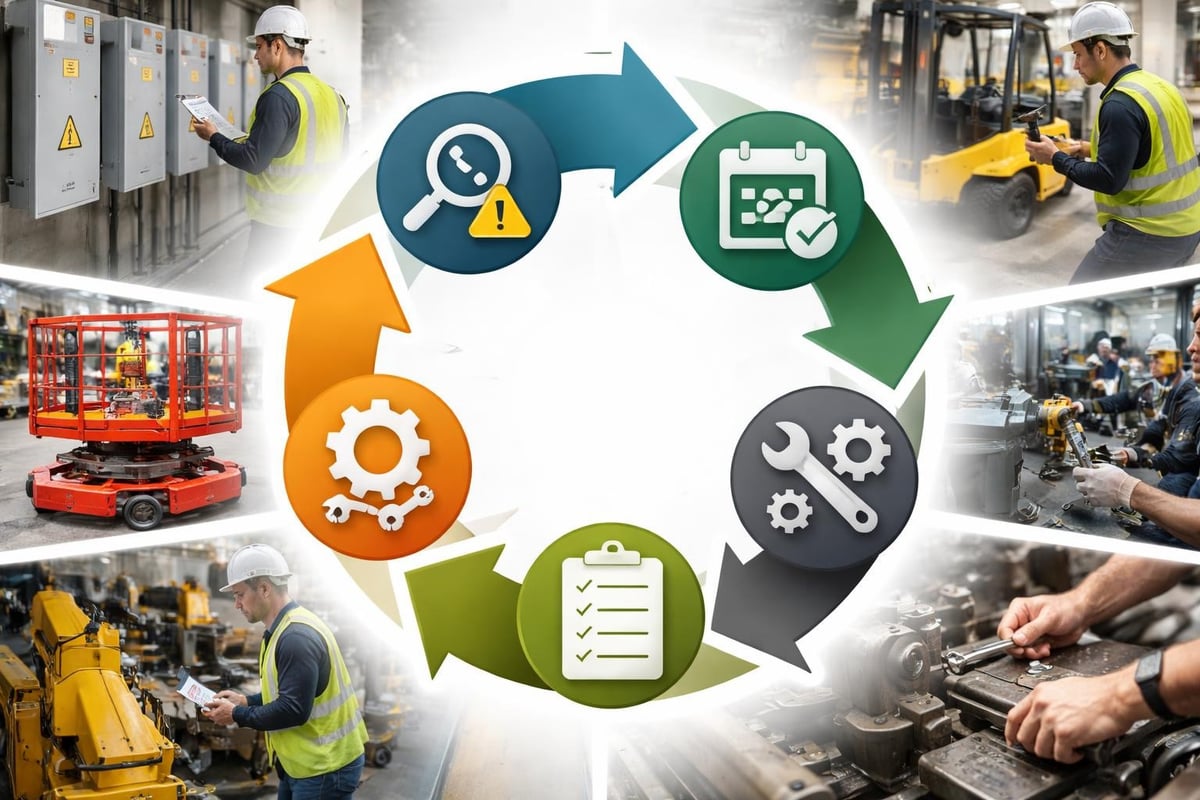
Understanding inspection regulations specific to your operations helps maintain continuous compliance and prevents costly enforcement action. Different equipment types carry distinct examination frequencies and technical requirements.
Regulation | Equipment Covered | Typical Frequency | Competent Person Required |
|---|---|---|---|
LOLER 1998 | Lifting equipment, hoists, cranes | 6-12 months | Yes |
PUWER 1998 | Work equipment, machinery | Risk-based | Yes |
PSSR 2000 | Pressure systems, vessels | Risk-based | Yes |
COSHH 2002 | LEV systems, extraction | 14 months | Yes |
Creating Safe Working Environments
The modern workplace in UK operations demands more than regulatory box-ticking. Businesses must create genuinely safe environments where risks are properly controlled and employees can work without fear of injury or ill health.
Risk Assessment Methodology
Effective risk management begins with thorough assessment of workplace hazards. This systematic process identifies what could cause harm, who might be affected, and what control measures are needed. The approach should be proportionate, focusing effort where risks are greatest.
A robust risk assessment process includes:
Hazard identification across all workplace activities and locations
Risk evaluation considering likelihood and potential severity
Control measure implementation following the hierarchy of control
Documentation and communication to relevant personnel
Regular review and update when circumstances change
Manufacturing sectors face particular challenges with workplace danger arising from machinery, moving parts, and process hazards requiring constant vigilance.
Equipment Safety Management
Work equipment represents a significant hazard source in many workplace in UK settings. From simple hand tools to complex manufacturing machinery, each item requires appropriate safety measures and maintenance regimes.
Ensuring equipment remains safe involves establishing comprehensive management systems covering selection, maintenance, inspection, and operator training. LOLER inspections provide statutory examinations for lifting equipment, identifying defects before they cause accidents and ensuring compliance with legal requirements throughout equipment lifecycles.
Effective equipment safety programmes address:
Pre-use checks by operators identifying obvious defects
Planned preventive maintenance according to manufacturer specifications
Statutory inspections by competent engineering inspectors
Defect reporting and isolation procedures
Operator training and competency verification
Workplace Culture and Employee Wellbeing
Beyond physical safety, the contemporary workplace in UK businesses must address broader wellbeing factors affecting productivity and employee satisfaction. Workplace conflict research demonstrates how organisational culture directly impacts both safety outcomes and business performance.
Fostering Positive Safety Culture
Safety culture reflects the collective attitudes, beliefs, and behaviours regarding workplace safety within an organisation. Strong safety cultures treat protection as a core value rather than an administrative burden, with visible leadership commitment and genuine employee engagement.

Characteristics of mature safety cultures include open reporting of near misses without blame, active employee participation in safety decisions, and consistent application of safety standards regardless of production pressures. Research by organisations such as Great Place to Work UK demonstrates clear connections between positive workplace culture and reduced accident rates.
Addressing Psychosocial Hazards
Modern workplace health encompasses mental wellbeing alongside physical safety. Psychosocial hazards including excessive workload, poor management practices, and workplace bullying can cause significant harm requiring the same systematic risk management as physical dangers.
Employers should assess and control:
Work demands ensuring reasonable workloads and appropriate resources
Control and autonomy allowing employees appropriate decision-making
Support systems from managers, colleagues, and organisational resources
Relationships addressing bullying, harassment, and interpersonal conflict
Role clarity preventing confusion and conflicting requirements
Change management supporting employees through organisational transitions
Industry-Specific Compliance Challenges
Different sectors face unique compliance challenges reflecting their particular hazards, equipment types, and working conditions. Understanding industry-specific requirements helps businesses develop targeted compliance strategies.
Manufacturing and Engineering
Manufacturing environments typically contain the widest range of workplace hazards, from machinery and lifting equipment to pressure systems and hazardous substances. These workplaces require comprehensive safety compliance programmes addressing multiple regulatory areas simultaneously.
Common equipment requiring statutory inspection in manufacturing includes:
CNC machinery and metalworking equipment
Overhead cranes and gantry systems
Forklift trucks and materials handling equipment
Air receivers and compressed air systems
Dust extraction and fume ventilation systems
Understanding inspection frequency requirements for different equipment types helps schedule examinations efficiently whilst maintaining continuous compliance.
Warehousing and Distribution
Warehouse operations centre on materials handling, with significant risks from lifting equipment, mobile plant, and manual handling activities. The workplace in UK distribution centres operates under intense time pressures that can compromise safety without strong management systems.
Key compliance areas include:
Hazard Category | Primary Controls | Inspection Requirements |
|---|---|---|
Forklift operations | Operator training, traffic management | Daily checks, statutory LOLER |
Racking systems | Load limits, damage inspections | Regular competent person examination |
Loading bays | Edge protection, vehicle restraints | Periodic structural assessment |
Conveyors | Guarding, emergency stops | PUWER inspections |
Construction and Fabrication
Construction sites and fabrication workshops present dynamic workplace in UK environments where hazards change as work progresses. Temporary works, working at height, and multiple contractors create complex safety management requirements.
Fabrication workshops require particular attention to machinery guarding, welding fume control, and manual handling of heavy materials. Lifting equipment sees intensive use, demanding robust inspection and maintenance regimes.
Maintaining Compliance Documentation
Effective compliance extends beyond conducting inspections to maintaining comprehensive documentation demonstrating ongoing safety management. The workplace in UK businesses must retain inspection reports, risk assessments, training records, and incident investigations to satisfy regulatory requirements.
Essential Documentation Systems
Well-organised documentation systems provide evidence of compliance whilst supporting continuous improvement through trend analysis and audit trails. Digital systems increasingly replace paper-based approaches, offering improved accessibility and reporting capabilities.

Critical documentation includes:
Current insurance certificates including employers' liability coverage
Statutory inspection reports for all relevant equipment types
Risk assessments covering significant workplace hazards
Training records demonstrating operator competency
Maintenance logs showing preventive and corrective actions
Incident records including near misses and investigation findings
Policy documents outlining safety management arrangements
The ONS workplace classification methodology provides insights into how workplace data supports broader economic analysis.
Inspection Report Management
Statutory inspection reports form critical compliance evidence whilst identifying necessary remedial actions. Effective systems ensure reports reach relevant decision-makers promptly and defects receive appropriate attention within required timescales.
Best practices include:
Immediate notification of dangerous defects requiring urgent action
Clear assignment of responsibility for addressing identified issues
Systematic tracking of corrective actions through to completion
Integration with maintenance management systems
Regular review of recurring defects indicating systemic problems
Understanding different defect categories helps prioritise responses appropriately. Dangerous defects require immediate equipment withdrawal, whilst less serious issues may allow continued operation with monitoring pending planned remediation.
Training and Competency Development
The workplace in UK regulations place clear duties on employers to ensure employees receive adequate training for their roles. This extends beyond initial induction to ongoing competency development as roles evolve and new hazards emerge.
Operator Training Requirements
Equipment operators require specific training appropriate to the machinery they use. Generic awareness training proves insufficient for complex or high-risk equipment requiring detailed understanding of operating procedures, emergency responses, and routine safety checks.
Effective operator training programmes include:
Theoretical instruction covering equipment principles, hazards, and controls
Practical skills development under supervision in realistic conditions
Assessment and certification verifying competency achievement
Refresher training maintaining skills and updating knowledge
Conversion training when operators move to different equipment types
Many workplace in UK accidents involve operators lacking adequate training or experience for tasks they undertake, highlighting this critical control measure.
Supervisory Competency
Supervisors and managers require broader competency encompassing not only technical understanding but also leadership skills to maintain safe working practices. Their decisions directly influence workplace safety culture and risk management effectiveness.
Key supervisory competencies include:
Recognising hazards and assessing risks dynamically
Implementing appropriate control measures for identified hazards
Monitoring compliance with safety procedures
Investigating incidents and implementing corrective actions
Communicating safety requirements clearly to team members
Enforcement and Penalties
Health and Safety Executive inspectors maintain regulatory oversight of the workplace in UK operations, conducting both planned inspections and investigating serious incidents. Understanding the enforcement framework helps businesses appreciate compliance importance beyond moral and economic considerations.
Inspection Powers and Outcomes
HSE inspectors possess extensive powers including unannounced workplace entry, equipment examination, document review, and employee interviews. Inspections may result in various outcomes depending on findings and compliance history.
Possible enforcement actions include:
Action | Application | Implications |
|---|---|---|
Verbal advice | Minor issues, good compliance history | Informal correction required |
Notification of contravention | Specific legal breaches identified | Formal correction confirmation needed |
Improvement notice | Serious breaches requiring action | Legal deadline for compliance |
Prohibition notice | Imminent serious risk | Immediate activity/equipment cessation |
Prosecution | Significant breaches, repeat offences | Unlimited fines, potential imprisonment |
Recent years have seen substantial increases in penalty levels, with serious breaches attracting fines exceeding £1 million in some cases. The government's inclusion at work guidance demonstrates regulatory attention extending beyond traditional safety into broader workplace welfare.
Corporate Responsibility
Company directors and senior managers face personal liability for safety failings under the Corporate Manslaughter and Corporate Homicide Act 2007. This legislation addresses gross safety management failures causing death, creating potential criminal liability for organisations and individuals.
Demonstrating robust safety management systems provides the best defence against enforcement action whilst protecting employees from harm. Regular safety inspections by competent persons form essential components of these systems.
Emerging Workplace Challenges
The workplace in UK environments continues evolving, with new technologies, working patterns, and regulatory expectations creating fresh compliance challenges. Forward-thinking businesses anticipate these developments rather than reacting after problems emerge.
Technology Integration
Automation, robotics, and artificial intelligence increasingly feature in workplace operations, introducing new hazard profiles requiring updated risk assessments and control measures. Collaborative robots working alongside humans, automated guided vehicles, and smart manufacturing systems demand fresh safety thinking.
New technology considerations include:
Human-machine interface design preventing user errors
Cybersecurity protecting safety-critical systems from interference
Emergency override systems allowing manual intervention
Training requirements for new equipment operation and maintenance
Risk assessment addressing novel hazards and failure modes
Understanding how workplace participation in safety decisions evolves with technological change helps maintain effective consultation processes.
Hybrid Working Models
Post-pandemic workplace arrangements increasingly blend office attendance, remote working, and varied work locations. This creates compliance challenges around equipment provision, display screen equipment assessments, and duty of care extension to home working environments.
The workplace in UK businesses must address:
Home workstation assessments and equipment provision
Lone worker protection and emergency response
Communication maintenance between dispersed teams
Mental health support for isolated workers
Regulatory compliance across multiple locations
Skills and Competency Gaps
Research on UK employer perspectives highlights ongoing challenges recruiting and retaining competent personnel across technical and safety-critical roles. The workplace in UK operations increasingly struggles to maintain adequate competency levels as experienced workers retire and training pathways evolve.
Addressing competency challenges requires:
Structured apprenticeship and graduate programmes
Partnerships with educational institutions
Knowledge capture from experienced personnel before retirement
Investment in continuous professional development
Competitive employment packages retaining skilled workers
Sector-Specific Compliance Resources
Different industries benefit from tailored compliance guidance reflecting their unique equipment, processes, and regulatory obligations. The workplace in UK sectors ranging from healthcare to hospitality each face distinct challenges requiring specialised understanding.
Healthcare and Education
Schools and healthcare facilities operate under additional safeguarding requirements alongside standard workplace safety obligations. Equipment ranges from patient hoists and lifts to specialist ventilation systems and pressure sterilisers.
Key compliance areas include:
Patient moving and handling equipment safety
Pressure vessels in sterilisation processes
Ventilation systems controlling infection risks
Laboratory equipment and hazardous substance management
Facilities management equipment from boilers to catering plant
Care homes require particular attention balancing resident independence with comprehensive safety management, whilst dental and medical practices need specialist understanding of healthcare-specific equipment regulations.
Hospitality and Retail
Hotels and cafés face diverse safety requirements spanning commercial kitchen equipment, passenger lifts, and building services. The public-facing nature of these workplace in UK businesses adds complexity through dual duties toward employees and customers.
Common inspection requirements include:
Commercial catering equipment and extraction systems
Passenger lifts and goods hoists
Boilers and hot water systems
Refrigeration plant and pressure vessels
Food preparation machinery and equipment
Specialist Trades
Sectors such as dry cleaners, garages, and breweries operate highly specialised equipment requiring industry-specific technical knowledge. The workplace in UK businesses across these sectors benefits from inspectors understanding their particular operational contexts and regulatory interpretations.
Vehicle workshops require attention to lifting equipment including ramps and jacks, compressed air systems, and tyre inflation equipment. Breweries operate pressure vessels, pumping systems, and materials handling equipment under demanding hygiene requirements.
Information Management in Modern Workplaces
Effective safety management depends on timely access to relevant information across organisations. Research indicates UK workers face significant challenges locating necessary information, directly impacting compliance effectiveness and operational efficiency.
Digital Transformation Benefits
Modern compliance management systems offer substantial advantages over traditional paper-based approaches. Cloud-based platforms provide real-time access to inspection records, risk assessments, and training documentation from any location.
Key digital capabilities include:
Automated scheduling ensuring inspections occur within required timescales
Mobile data capture allowing on-site documentation and reporting
Dashboard analytics highlighting compliance trends and emerging issues
Document version control maintaining current policy and procedure access
Audit trail generation demonstrating compliance history to regulators
Integration capabilities connecting with maintenance and asset management systems
Comprehensive compliance resources help businesses understand and implement effective management systems appropriate to their scale and complexity.
Knowledge Retention Strategies
As The Work Foundation research demonstrates, organisational knowledge represents critical competitive advantage. The workplace in UK operations must systematically capture and transfer expertise, particularly regarding safety-critical processes and equipment.
Effective knowledge management approaches include documented procedures, mentoring programmes pairing experienced and developing staff, and systematic review of lessons learned from incidents and near misses. Video documentation of complex procedures provides valuable reference material supporting consistent safe working practices.
Creating and maintaining compliant, safe workplace in UK environments requires systematic attention to regulatory requirements, robust management systems, and genuine commitment to employee protection. From understanding statutory inspection obligations to fostering positive safety cultures, businesses must address multiple interconnected elements ensuring legal compliance whilst protecting their most valuable asset - their people. Workplace Inspection Services Ltd supports organisations across the UK with expert, independent engineering inspections under LOLER, PUWER, PSSR and COSHH/LEV regulations, helping businesses maintain compliance, reduce operational risks, and ensure genuinely safe working environments for all employees.