Workplace Danger: Identifying and Managing Hazards in 2026
Workplace Danger: Identifying and Managing Hazards in 2026

Every workplace contains inherent risks, but recognising and managing workplace danger effectively can mean the difference between a safe, productive environment and one that exposes employees to serious harm. In 2026, organisations face increasingly complex safety challenges as equipment becomes more sophisticated, regulations evolve, and workforce expectations around health and safety continue to rise. Understanding how to systematically identify, assess and control hazards is not just a legal obligation but a fundamental aspect of responsible business management. This article examines the critical elements of workplace danger management, from initial hazard identification through to implementing robust control measures that protect people and ensure compliance.
Understanding the Nature of Workplace Danger
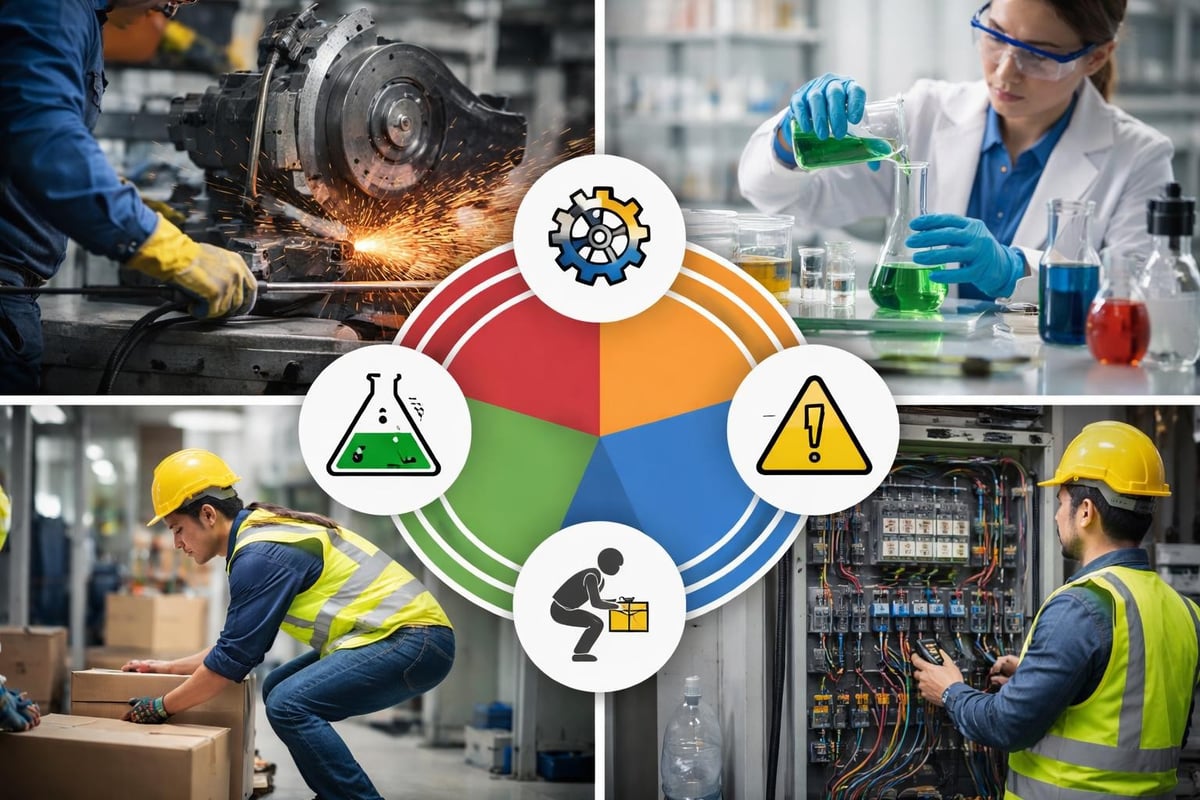
Workplace danger manifests in numerous forms across different industrial settings, each presenting unique challenges for employers and safety professionals. Physical hazards such as moving machinery, falling objects and slip hazards remain among the most prevalent causes of workplace accidents, whilst chemical exposures, biological agents and ergonomic stressors create longer-term health risks that may not be immediately apparent. In engineering environments, the concentration of heavy equipment, pressure systems and lifting apparatus creates a particularly demanding safety landscape.
The Health and Safety Executive recognises several categories of workplace danger that organisations must address:
Mechanical hazards from moving parts, sharp edges and crushing points
Electrical hazards including live conductors and faulty equipment
Thermal hazards from hot surfaces, flames and extreme temperatures
Noise and vibration that can cause permanent damage
Hazardous substances including dusts, fumes and chemical exposures
Psychological hazards such as workplace stress and violence
Understanding these categories helps organisations develop comprehensive approaches to safety management. However, recognising that hazards exist is only the first step. Proactive hazard identification requires systematic processes that uncover risks before they result in incidents.
The Human Cost of Unmanaged Hazards
Beyond regulatory penalties and insurance premiums, workplace danger that goes unmanaged carries significant human costs that affect individuals, families and communities. In 2025-26, provisional HSE statistics indicate that workplace fatalities remain a persistent concern across UK industries, with many incidents entirely preventable through proper hazard identification and control measures. Non-fatal injuries number in the hundreds of thousands annually, resulting in lost working days, reduced quality of life for injured workers and substantial economic impacts.
Engineering and manufacturing sectors face particular scrutiny due to the inherent risks associated with machinery operation, lifting activities and pressure systems. When organisations fail to implement adequate safety measures, workers may suffer crush injuries, amputations, respiratory diseases or musculoskeletal disorders that fundamentally alter their lives. The ripple effects extend to colleagues who witness incidents, families who support injured workers through recovery, and workplace cultures that become defined by fear rather than confidence.
Systematic Hazard Identification Approaches
Effective management of workplace danger begins with robust identification processes that uncover both obvious and hidden risks within operational environments. Many organisations rely on reactive approaches, addressing hazards only after incidents occur, but leading safety practitioners recognise that proactive identification delivers far superior outcomes. A systematic approach combines multiple techniques to ensure comprehensive coverage across all work activities, locations and processes.
Workplace inspections form the foundation of hazard identification, enabling safety professionals and competent persons to examine equipment, environments and working practices in detail. Regular statutory inspections of lifting equipment, pressure systems and work equipment serve dual purposes: ensuring compliance with regulations whilst simultaneously identifying deterioration, damage or unsafe conditions that could escalate into serious incidents. Organisations that integrate LOLER inspections into their safety management systems benefit from expert scrutiny of cranes, hoists, lifting accessories and other critical equipment, ensuring potential failures are identified before catastrophic events occur.
Structured Risk Assessment Methodologies
Risk assessment transforms raw hazard information into actionable insights by evaluating both the likelihood and potential severity of harm. The five-step approach mandated by UK health and safety legislation provides a clear framework:
Identify hazards present in the workplace or arising from work activities
Determine who might be harmed and how different groups face varying levels of risk
Evaluate risks and decide on appropriate control measures
Record findings and implement identified controls
Review assessments regularly and following significant changes
This methodology ensures workplace danger receives proportionate attention based on actual risk levels. High-consequence, high-likelihood scenarios demand immediate intervention, whilst lower-risk situations may require monitoring and periodic review. The challenge lies in avoiding complacency around familiar hazards whilst maintaining appropriate focus on emerging risks.
Advanced risk assessment increasingly incorporates technological tools that enhance both accuracy and efficiency. AI frameworks for forecasting hazardous events represent cutting-edge developments in operational risk analysis, particularly valuable in complex, high-risk industrial environments where traditional assessment methods may overlook subtle patterns or cascading failure scenarios.
Assessment Type | Best Used For | Frequency | Key Personnel |
|---|---|---|---|
General workplace assessment | Overall site hazards | Annually or post-change | Health & Safety Manager |
Task-specific assessment | High-risk activities | Before task commencement | Supervisors & Operators |
Equipment assessment | Machinery and tools | Per statutory requirements | Competent persons |
Substance assessment | Chemical/dust exposures | Per COSHH regulations | Occupational hygienist |
Engineering Controls and Hierarchy of Risk Management
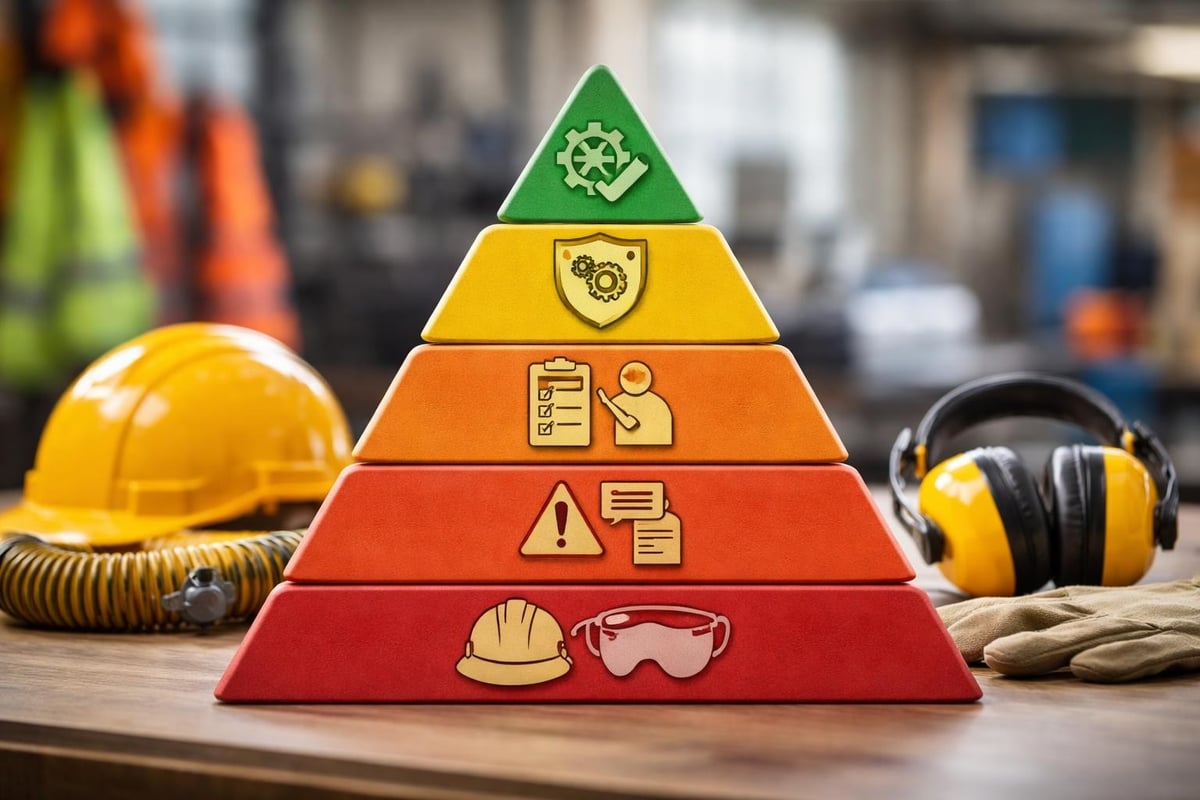
Once workplace danger has been identified and assessed, organisations must implement appropriate controls following the established hierarchy of risk management. This principle-based approach prioritises eliminating hazards entirely over attempting to manage them through procedural or behavioural interventions. Understanding this hierarchy proves essential for making cost-effective safety investments that deliver genuine protection.
Elimination represents the most effective control, removing hazards completely from the workplace. Where elimination proves impossible or impractical, substitution replaces dangerous substances, processes or equipment with safer alternatives. These top-tier controls deliver permanent risk reduction without relying on worker compliance or ongoing management attention.
When elimination and substitution cannot adequately address workplace danger, engineering controls provide the next level of protection:
Machine guarding prevents access to dangerous moving parts
Ventilation systems remove harmful airborne contaminants
Isolation and lockout systems prevent unexpected equipment activation
Automated systems eliminate human exposure to hazardous processes
Structural barriers separate workers from danger zones
Engineering controls offer significant advantages over administrative measures because they function independently of human behaviour, remaining effective regardless of worker fatigue, complacency or training gaps. However, these systems require proper maintenance and periodic testing to ensure continued effectiveness.
Administrative Controls and Safe Systems of Work
Administrative controls introduce procedures, training and work practices designed to minimise exposure to workplace danger. Whilst less reliable than engineering solutions, these measures play vital roles in comprehensive safety management systems. Safe systems of work document step-by-step procedures for completing tasks safely, incorporating risk assessments, method statements and emergency procedures.
Effective administrative controls include:
Permit-to-work systems for high-risk activities
Competency frameworks ensuring workers possess necessary skills
Rotation schedules limiting exposure to harmful conditions
Planned maintenance programmes preventing equipment deterioration
Clear signage and marking alerting workers to specific hazards
Training forms a cornerstone of administrative control, equipping workers with knowledge about workplace danger they encounter and the protective measures in place. However, organisations must recognise that training alone proves insufficient for managing serious risks. The right to know principle establishes workers' fundamental entitlement to information about hazardous substances and dangerous conditions, but this must be coupled with effective physical controls and robust management systems.
Statutory Compliance and Inspection Regimes
UK legislation establishes comprehensive frameworks for managing workplace danger, with specific regulations addressing different hazard categories and equipment types. The Provision and Use of Work Equipment Regulations 1998 (PUWER), Lifting Operations and Lifting Equipment Regulations 1998 (LOLER), Pressure Systems Safety Regulations 2000 (PSSR) and Control of Substances Hazardous to Health Regulations 2002 (COSHH) create overlapping but complementary requirements that organisations must satisfy.
These regulations share common themes: duty holders must ensure equipment is suitable for intended purposes, properly maintained, and subject to examination by competent persons at prescribed intervals. PUWER applies broadly to workplace machinery and tools, requiring inspections where significant risk exists due to equipment installation or deterioration. LOLER mandates thorough examinations of lifting equipment at six or twelve-month intervals, depending on equipment type and usage patterns. Understanding the specific frequency requirements for different equipment categories helps organisations maintain compliance whilst managing inspection costs effectively.
The Role of Competent Person Examinations
Statutory examinations by competent persons provide independent verification that workplace danger associated with specific equipment remains controlled. These inspections go beyond routine maintenance checks, requiring detailed technical knowledge, examination methodologies and reporting procedures that meet regulatory standards. Competent persons identify defects that could result in dangerous situations, categorising findings based on urgency and recommending appropriate remedial actions.
The competent person role demands:
Technical expertise in relevant equipment types and failure modes
Understanding of applicable regulations and industry standards
Practical examination skills to detect wear, damage and deterioration
Professional judgement to assess significance of findings
Clear communication through detailed written reports
Many organisations struggle to maintain in-house competence across all equipment categories, particularly where specialised knowledge is required for pressure systems, complex lifting arrangements or specific industrial processes. Independent inspection services provide access to qualified engineers with broad experience across multiple sectors, ensuring examinations meet regulatory requirements whilst providing valuable safety insights.
Monitoring, Measuring and Continuous Improvement
Managing workplace danger requires ongoing attention rather than one-time interventions. Effective organisations implement monitoring systems that track both leading indicators (proactive measures of safety performance) and lagging indicators (incident rates and near-miss data). This dual approach enables early detection of deteriorating conditions whilst learning from events that do occur.
Leading indicators provide insight into safety system effectiveness before failures occur:
Inspection completion rates and defect resolution times
Training compliance and competency assessment results
Safety observation programmes and behavioural audits
Preventive maintenance completion rates
Risk assessment review currency
Lagging indicators reveal actual safety outcomes but offer limited predictive value:
Lost-time injury frequency rates
Days away from work statistics
Near-miss reporting volumes
Property damage incidents
Regulatory enforcement actions
Workplace health surveillance adds another dimension to monitoring, particularly where exposure to hazardous substances or harmful physical agents creates cumulative health risks. Systematic health monitoring detects early signs of occupational disease, enabling interventions before permanent damage occurs.

Creating a Positive Safety Culture
Technical controls and regulatory compliance form necessary foundations for managing workplace danger, but organisational culture ultimately determines whether safety systems function as intended. A positive safety culture exists where workers at all levels genuinely believe that preventing harm takes priority over production pressures, cost considerations and schedule demands.
Characteristics of strong safety cultures include:
Leadership commitment demonstrated through resource allocation and personal involvement
Open communication enabling workers to raise concerns without fear
Just culture principles focusing on system improvements rather than blame
Continuous learning from incidents, near-misses and industry events
Worker participation in hazard identification and solution development
Organisations can assess their safety culture through employee surveys, safety perception studies and behavioural observation programmes. Where gaps exist between stated safety values and actual workplace practices, leaders must address underlying issues through sustained effort and genuine cultural change rather than superficial compliance exercises.
Sector-Specific Considerations for Engineering Environments
Engineering workplaces present distinctive safety challenges that require specialised knowledge and tailored approaches to workplace danger management. Manufacturing facilities typically contain concentrated machinery risks, whilst warehousing operations face particular challenges around lifting equipment and vehicle movements. Understanding sector-specific hazard profiles enables more effective resource allocation and targeted control measures.
In fabrication environments, hazards cluster around:
Metal cutting and forming machinery with exposed cutting edges and crushing points
Welding operations creating fume exposures and fire risks
Material handling involving heavy, awkward loads
Noise exposure from cutting, grinding and forming processes
Manual handling of sheet materials and finished components
Pressure system operations introduce different concerns, with potential for catastrophic failure if vessels, pipework or protective devices deteriorate or malfunction. Regular examination under PSSR requirements identifies corrosion, mechanical damage and safety device deficiencies before they escalate into dangerous situations.
The diverse range of workplace equipment requiring statutory inspection reflects the breadth of workplace danger present across different sectors. From air receivers in automotive workshops to passenger lifts in commercial buildings, each equipment category presents unique failure modes and inspection requirements that competent persons must understand thoroughly.
Emerging Workplace Dangers in 2026
As technology evolves and working practices change, new categories of workplace danger emerge that may not be adequately addressed by traditional safety approaches. Collaborative robotics introduces human-machine interaction risks that differ from conventional industrial robotics, requiring fresh thinking about safeguarding and safety-rated control systems. Additive manufacturing technologies create novel exposure scenarios as metal and polymer powders are processed, whilst battery energy storage systems bring electrical and thermal hazards into previously low-risk environments.
Organisations must maintain awareness of emerging risks through:
Industry publications and safety bulletins
Professional networking and knowledge sharing
Regulatory updates and guidance documents
Incident learning from early adopters
Technology vendor safety information
Documentation and Record-Keeping Requirements
Comprehensive documentation forms an essential component of effective workplace danger management, serving multiple purposes from regulatory compliance to continuous improvement. UK health and safety legislation requires organisations to maintain various records demonstrating their approach to identifying and controlling workplace risks.
Core documentation requirements include:
Document Type | Content | Retention Period | Review Frequency |
|---|---|---|---|
Risk assessments | Hazard identification and control measures | Duration of work activity + 3 years | Annually minimum |
Inspection reports | Statutory examination findings and recommendations | Life of equipment + 2 years | Per examination cycle |
Training records | Competency evidence and refresher training | Duration of employment + 6 years | Ongoing verification |
Incident investigations | Root cause analysis and corrective actions | Minimum 3 years | Post-incident only |
Maintenance logs | Preventive and corrective maintenance activities | Life of equipment | Per maintenance schedule |
Well-maintained records serve multiple audiences: demonstrating due diligence to regulators, providing audit trails for insurance purposes, enabling trend analysis for continuous improvement, and protecting organisations in liability claims. Digital record management systems increasingly replace paper-based approaches, offering enhanced searchability, automated review reminders and improved accessibility for distributed teams.
Written schemes of examination represent particularly important documents for pressure systems and certain lifting equipment, establishing the scope, nature and frequency of inspections required to maintain safety. These living documents require review whenever significant changes occur to equipment configuration, operating parameters or regulatory requirements.
Integrating Safety into Operational Planning
Effective management of workplace danger requires integration of safety considerations into all aspects of operational planning rather than treating it as a separate compliance function. Procurement decisions should evaluate safety features and whole-life safety costs alongside purchase prices. Facility design must incorporate safety requirements from initial concept stages through to commissioning and handover. Process development should embed risk assessments and safe systems of work before new activities commence.
This integrated approach ensures that controlling workplace danger receives appropriate attention when decisions have maximum impact and changes remain relatively inexpensive to implement. Retrofitting safety measures after equipment installation or process establishment typically costs significantly more than designing safety in from the outset.
Organisations can assess their integration effectiveness by reviewing:
Design review procedures that incorporate safety expertise early
Management of change processes ensuring risk assessment before modifications
Contractor management systems extending safety standards to external parties
New employee orientation establishing safety expectations from day one
Performance metrics that balance productivity with safety outcomes
OSHA resources provide valuable educational materials for developing comprehensive approaches to hazard identification and prevention, whilst additional reference materials offer sector-specific guidance for various industries.
The compliance hub maintained by specialist inspection providers offers centralised access to regulatory requirements, inspection guidance and industry best practices, helping organisations stay current with evolving standards.
Understanding and managing workplace danger requires systematic approaches combining regulatory compliance, engineering controls, competent person examinations and positive safety cultures. Organisations that invest in comprehensive hazard identification, implement appropriate control measures and maintain vigilant monitoring systems protect both their workers and their business interests. Workplace Inspection Services Ltd supports businesses across the UK in meeting their statutory inspection obligations through expert LOLER, PUWER, PSSR and COSHH/LEV examinations, helping organisations identify risks, maintain compliance and create safer working environments for everyone.