Vessel Inspections: A Complete Guide for 2026
Vessel Inspections: A Complete Guide for 2026
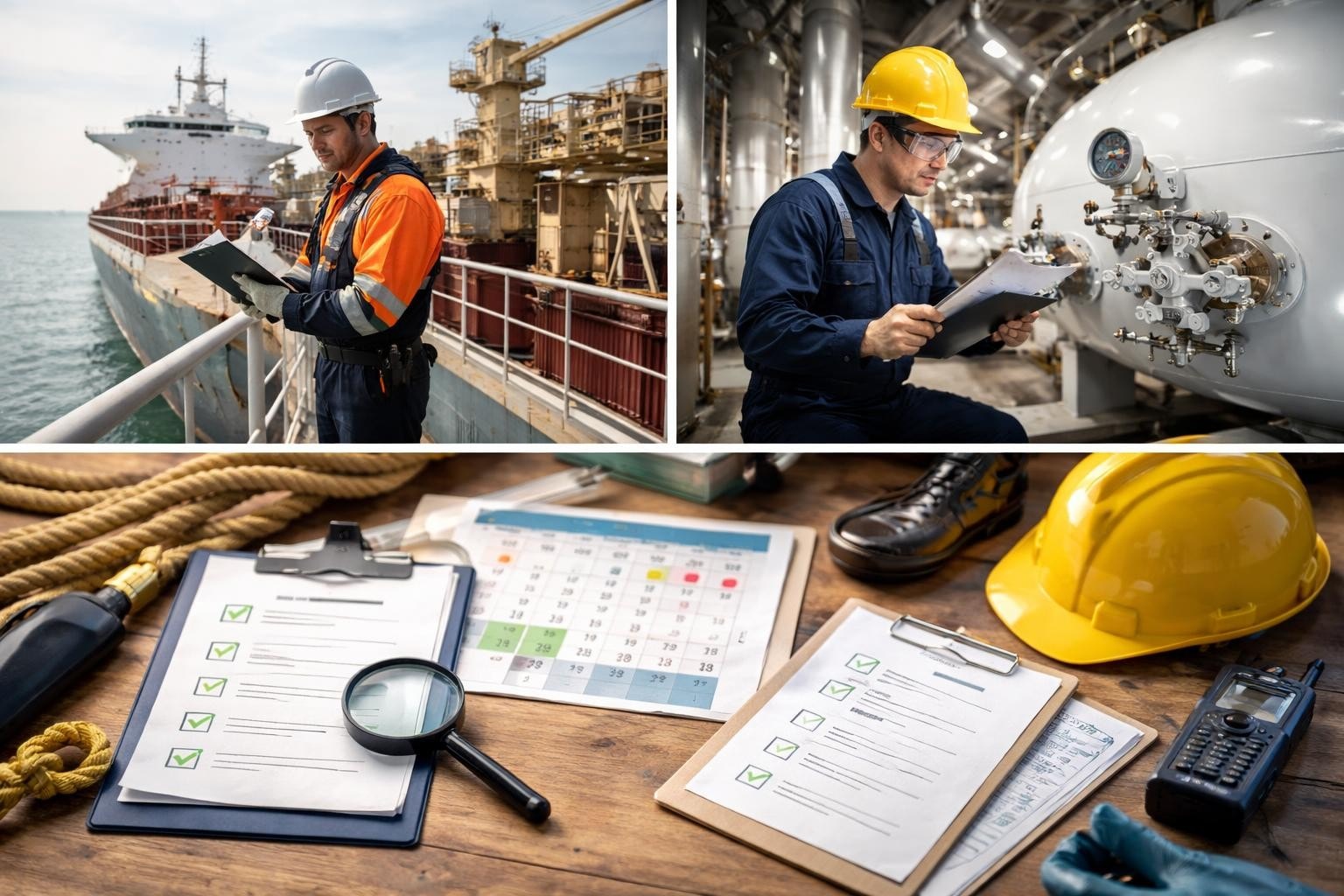
Vessel inspections represent a critical component of industrial safety and regulatory compliance across numerous sectors. Whether examining pressure vessels in manufacturing facilities, maritime vessels in shipping operations, or specialised containment systems in chemical plants, thorough inspection protocols ensure operational safety, protect personnel, and maintain legal compliance. Understanding the scope, requirements, and best practices for vessel inspections enables organisations to manage risk effectively whilst meeting statutory obligations. This guide explores the fundamental aspects of vessel inspections, regulatory frameworks, and the practical considerations businesses must address to maintain safe, compliant operations.
Understanding Vessel Inspections Across Industries
Vessel inspections encompass a broad spectrum of examination activities tailored to different equipment types and operational contexts. In maritime settings, inspections focus on structural integrity, navigational systems, and compliance with international safety conventions. Industrial environments require systematic examination of pressure vessels, storage tanks, and processing equipment that operate under potentially hazardous conditions.
The U.S. Customs and Border Protection's Vessel Inspection Guide provides comprehensive procedures for maritime vessel examinations, highlighting the complexity and rigour required in this field. Similarly, industrial pressure vessel examinations demand specialised knowledge of materials science, stress analysis, and non-destructive testing methodologies.
Classification of Vessel Types
Different vessel categories require distinct inspection approaches:
Pressure vessels: Equipment containing gases or liquids under pressure, including air receivers, autoclaves, and steam boilers
Storage vessels: Tanks holding chemicals, petroleum products, or other substances at atmospheric or elevated pressures
Maritime vessels: Ships, boats, and offshore platforms subject to classification society rules
Process vessels: Reactors, distillation columns, and other specialised industrial equipment
Understanding these classifications helps organisations identify applicable regulations and develop appropriate inspection protocols for their specific equipment.
Regulatory Framework and Statutory Requirements
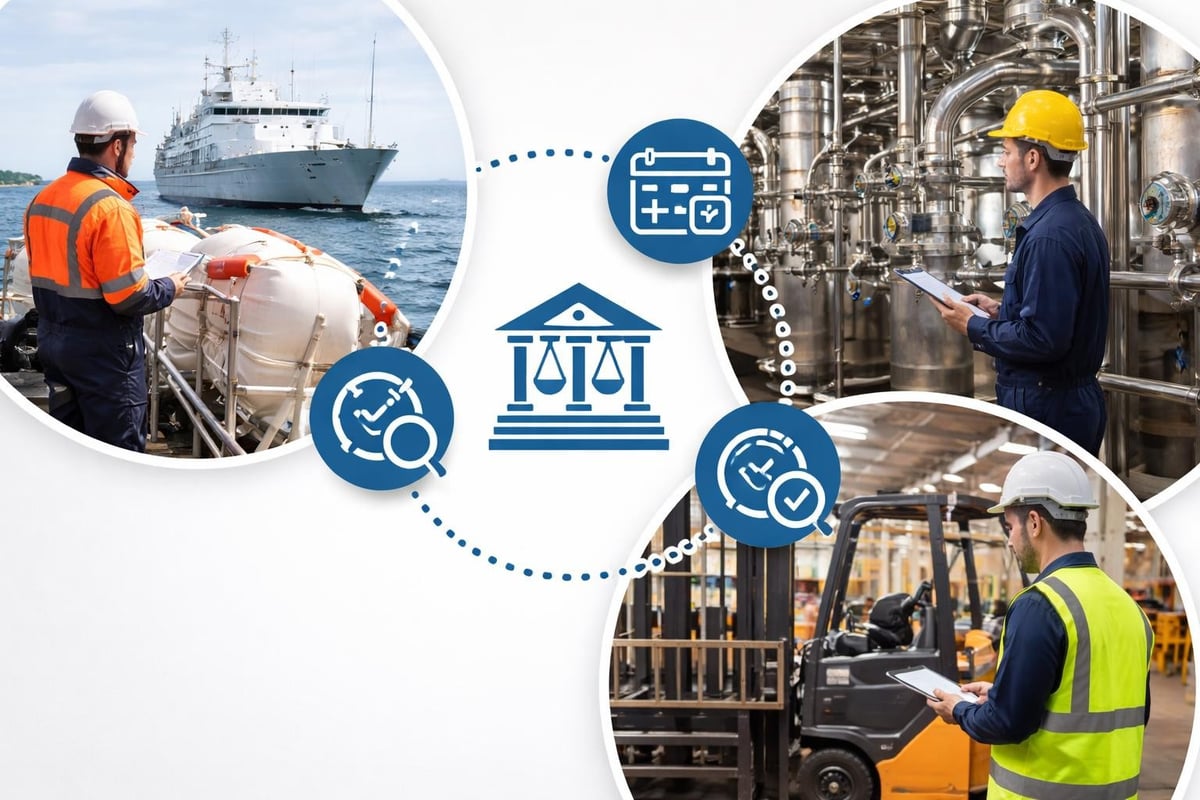
Compliance with vessel inspection regulations requires navigating multiple regulatory frameworks depending on vessel type and location. In the United Kingdom, the Pressure Systems Safety Regulations 2000 (PSSR) govern pressure vessel examinations, mandating periodic inspections by competent persons. These regulations establish clear responsibilities for employers, requiring written schemes of examination and thorough documentation.
For businesses operating pressure systems, PSSR inspections ensure that air receivers, steam systems, and associated pipework meet safety standards and remain suitable for continued service. Competent inspection bodies assess pressure vessels against design specifications, examining components for deterioration, corrosion, and mechanical damage that could compromise integrity.
The Code of Federal Regulations outlines certificate of inspection requirements for towing vessels, demonstrating how regulatory standards establish inspection frequency and criteria across different jurisdictions. International maritime organisations similarly maintain comprehensive protocols governing vessel examinations worldwide.
Regulation | Application | Inspection Frequency | Key Requirements |
|---|---|---|---|
PSSR 2000 | Pressure systems in UK workplaces | Based on written scheme | Competent person examination, documentation |
LOLER 1998 | Lifting equipment including vessel-mounted cranes | Six or twelve months | Thorough examination, defect reporting |
Maritime classifications | Ships and offshore installations | Annual and periodic surveys | Hull integrity, machinery, safety systems |
Industry standards (API, ASME) | Process and storage vessels | Risk-based intervals | Material testing, thickness measurements |
Pre-Inspection Planning and Preparation
Effective vessel inspections begin long before the examination itself. Organisations must establish comprehensive preparation protocols ensuring inspectors have necessary access, documentation, and safety provisions. Planning considerations include equipment isolation, cleaning requirements, scaffolding installation, and coordination with operational schedules to minimise production disruption.
Essential Pre-Inspection Activities
Documentation review: Gather design drawings, previous inspection reports, repair records, and operational history
Risk assessment: Identify hazards associated with inspection activities, including confined space entry and working at height
Equipment preparation: Isolate systems, depressurise vessels, and implement lock-out/tag-out procedures
Access arrangements: Install temporary platforms, lighting, and ventilation as required
Inspector briefing: Provide site-specific safety information and operational context
Thorough preparation enables inspectors to conduct examinations efficiently whilst maintaining safety standards. The FAO's vessel inspection guidelines emphasise systematic approaches that prevent accidents and enhance safety outcomes, principles equally applicable across maritime and industrial contexts.
Inspection Methodologies and Techniques
Modern vessel inspections employ diverse examination techniques ranging from visual assessment to advanced non-destructive testing (NDT). Visual inspection remains fundamental, identifying obvious defects, corrosion patterns, and structural anomalies. However, comprehensive examinations increasingly incorporate sophisticated technologies providing detailed information about vessel condition.
Vessel integrity inspection methods include ultrasonic thickness measurement, radiography, magnetic particle testing, and acoustic emission monitoring. These techniques detect internal flaws, measure remaining wall thickness, and assess material properties without damaging components.
Visual examination: Surface defects, corrosion, deformation, leakage
Ultrasonic testing: Wall thickness measurement, lamination detection
Radiographic inspection: Internal structural assessment, weld quality verification
Magnetic particle testing: Surface and near-surface crack detection in ferromagnetic materials
Dye penetrant testing: Surface-breaking defects in non-magnetic materials
Acoustic emission: Real-time structural monitoring during pressurisation
Selecting appropriate methodologies depends on vessel design, operating conditions, service history, and regulatory requirements. Inspectors combine multiple techniques to build comprehensive understanding of equipment condition and remaining service life.

Critical Inspection Points and Assessment Criteria
Thorough vessel inspections systematically examine specific components and areas where deterioration commonly occurs. Experienced inspectors focus attention on high-stress regions, corrosion-prone locations, and areas subject to cyclic loading or thermal fatigue.
Primary Examination Areas
Shell and pressure boundaries: The vessel's main body requires careful examination for corrosion, erosion, mechanical damage, and deformation. Wall thickness measurements at predetermined locations track material loss over time, informing remaining service life calculations.
Welds and joints: Welded connections represent potential failure points requiring detailed scrutiny. Inspectors assess weld quality, check for cracking, and verify that repairs maintain original design integrity.
Nozzles and penetrations: Areas where pipes, manholes, or instrumentation penetrate vessel walls experience stress concentrations. These locations demand particular attention during examinations.
Support structures: Saddles, legs, and mounting brackets undergo loads that can cause fatigue or settlement. Proper alignment and structural condition ensure vessels remain adequately supported.
Internal components: Baffles, trays, heating coils, and other internal fittings require inspection for damage, corrosion, or deterioration affecting performance.
The API RP 572 standard provides comprehensive inspection practices covering components, planning methodologies, and assessment procedures that guide thorough examinations.
Documentation and Record-Keeping Requirements
Vessel inspections generate substantial documentation serving multiple purposes: demonstrating regulatory compliance, informing maintenance decisions, and establishing equipment history. Comprehensive records enable trending analysis, supporting predictive maintenance strategies and life-extension assessments.
Inspection reports typically include:
Equipment identification and description
Examination scope and methodologies employed
Detailed findings with measurements and observations
Assessment of defects against acceptance criteria
Recommendations for repair, monitoring, or further investigation
Next inspection due date
Inspector qualifications and certification details
Maintaining accurate inspection records satisfies regulatory obligations whilst providing valuable operational intelligence. Digital documentation systems increasingly replace paper records, offering enhanced accessibility, searchability, and integration with maintenance management platforms.
Document Type | Retention Period | Primary Purpose | Regulatory Requirement |
|---|---|---|---|
Inspection reports | Life of equipment | Historical reference, trending | Statutory requirement |
Written schemes | Current version plus superseded | Define examination scope | PSSR mandate |
Repair records | Permanent | Track modifications, maintain traceability | Good practice/regulatory |
Test certificates | Life of equipment | Verify material properties, testing | Design code requirement |
Defect Assessment and Fitness-for-Service Evaluation
Discovering defects during vessel inspections necessitates careful assessment determining whether equipment remains suitable for continued operation. Not all defects require immediate repair; engineering evaluation often demonstrates that minor flaws pose no immediate safety risk under current operating conditions.
Fitness-for-service assessments employ recognised methodologies evaluating defects against established criteria. These analyses consider defect type, size, location, operating pressures and temperatures, and remaining service requirements. Advanced techniques enable quantification of remaining strength, prediction of crack growth rates, and calculation of safe operating periods.
Assessment outcomes typically fall into several categories:
Accept as-is: Defects within acceptable limits requiring no immediate action but continued monitoring
Accept with operational restrictions: Equipment suitable for service with reduced pressure, temperature, or other limitations
Repair required: Defects necessitating corrective action before continued operation
Remove from service: Critical defects posing immediate safety risks requiring equipment withdrawal
Understanding pressure vessel safety considerations helps organisations make informed decisions balancing operational requirements against risk management imperatives.
Maritime Vessel Inspection Considerations
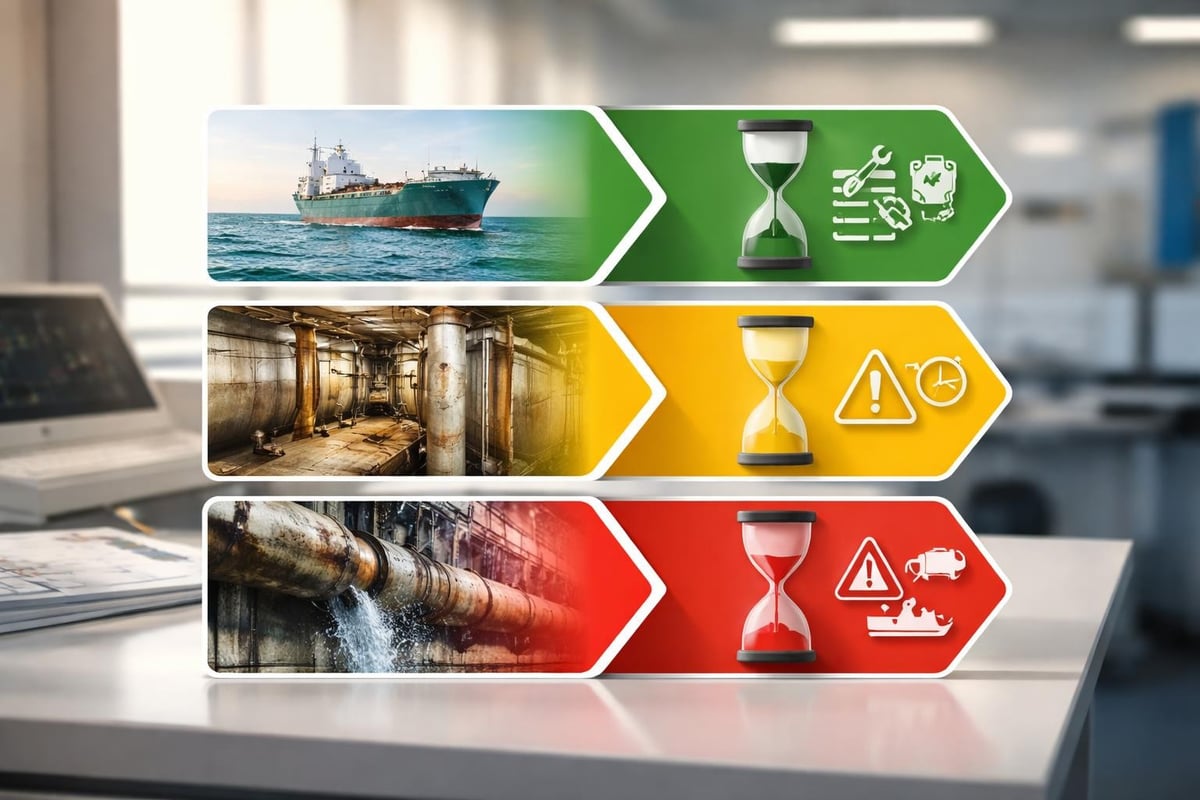
Maritime vessel inspections operate under distinct regulatory frameworks compared to industrial pressure systems, though fundamental safety principles remain consistent. Classification societies establish construction standards and conduct periodic surveys ensuring vessels meet seaworthiness requirements throughout their operational lives.
The CDC's operational inspection procedures for cruise ships demonstrate the breadth of maritime vessel examinations, covering water systems, food service, accommodation, and medical facilities. These comprehensive inspections protect public health whilst ensuring regulatory compliance.
Maritime vessel inspections typically follow structured survey schedules:
Annual surveys: Conducted yearly, examining hull condition, machinery operation, and safety equipment
Intermediate surveys: More detailed examinations performed at defined intervals between special surveys
Special surveys: Comprehensive inspections at four or five-year intervals requiring extensive examination and testing
Damage surveys: Conducted following casualties, groundings, or collisions to assess structural integrity
Recent developments include remote inspection capabilities employing photographs and video footage for certain examination types, reducing costs and improving accessibility whilst maintaining safety standards.
Inspection Frequency and Scheduling Optimisation
Determining appropriate vessel inspection intervals balances regulatory requirements, operational considerations, and risk management objectives. Statutory regulations often establish maximum periods between examinations, but organisations may implement more frequent inspections based on specific circumstances.
Factors Influencing Inspection Frequency
Regulatory mandates: Minimum inspection intervals prescribed by applicable regulations establish baseline requirements organisations must meet regardless of other considerations.
Operating conditions: Severe service conditions including high pressures, extreme temperatures, corrosive environments, or cyclic loading typically warrant more frequent examinations than benign operating regimes.
Service history: Equipment with documented reliability and minimal deterioration may qualify for extended intervals, whilst vessels experiencing recurring problems require enhanced monitoring.
Criticality assessment: Vessels whose failure would cause significant safety, environmental, or production consequences justify more rigorous inspection schedules than less critical equipment.
Non-destructive testing capabilities: Advanced monitoring technologies enable condition-based inspection strategies, scheduling examinations based on actual equipment state rather than fixed time intervals.
Organisations implementing risk-based inspection programmes optimise resource allocation by directing inspection effort toward highest-risk equipment whilst ensuring adequate coverage of entire vessel populations.
Competent Person Requirements and Qualifications
Vessel inspections must be conducted by appropriately qualified individuals possessing necessary knowledge, training, and experience. Regulatory frameworks typically specify competence requirements, though specific qualifications vary depending on equipment type and jurisdiction.
For pressure system examinations under PSSR, competent persons require comprehensive understanding of pressure vessel design, materials, deterioration mechanisms, and relevant regulations. Many inspectors hold professional engineering qualifications supplemented by specialised training in inspection techniques and defect assessment methodologies.
Key competencies include:
Technical knowledge: Understanding of mechanical engineering principles, materials science, and pressure vessel design codes
Regulatory awareness: Familiarity with applicable regulations, standards, and industry guidance
Inspection techniques: Proficiency in visual examination, NDT interpretation, and measurement procedures
Risk assessment: Ability to evaluate findings and make informed judgements about equipment suitability
Communication skills: Capacity to document findings clearly and convey technical information to diverse audiences
Professional development remains essential as inspection technologies evolve and regulatory requirements change. Continuing education through technical courses, industry conferences, and peer interaction maintains inspector competence throughout their careers.
Special Considerations for Industrial Applications
Industrial facilities employ diverse vessel types serving manufacturing, processing, and storage functions. These applications present unique inspection challenges requiring tailored approaches addressing specific operational demands and regulatory contexts.
Manufacturing environments often contain numerous small pressure vessels including air receivers, hydraulic accumulators, and steam-heated equipment. Whilst individual units may pose limited risk, their collective number creates substantial inspection workload. Systematic programmes ensuring all equipment receives timely examination prevent regulatory non-compliance and maintain workplace safety.
Chemical and petrochemical facilities operate complex process vessels under demanding conditions. Aggressive chemicals, high temperatures, and cyclic operation accelerate deterioration, necessitating comprehensive inspection programmes incorporating advanced examination techniques. Understanding workplace safety regulations governing these environments helps organisations develop compliant, effective inspection strategies.
Industry-Specific Applications
Industry Sector | Typical Vessel Types | Common Inspection Challenges | Recommended Approaches |
|---|---|---|---|
Manufacturing | Air receivers, steam boilers | Access limitations, operational constraints | Scheduled outages, portable NDT equipment |
Chemical processing | Reactors, distillation columns | Corrosive environments, complex internals | Specialised materials knowledge, advanced NDT |
Food and beverage | Fermentation vessels, CIP systems | Hygiene requirements, frequent cleaning | Sanitary design consideration, accelerated schedules |
Pharmaceuticals | Sterile processing vessels | Contamination prevention, validation requirements | Clean room protocols, validated procedures |
Emerging Technologies and Future Developments
Vessel inspection practices continue evolving as new technologies enhance examination capabilities and regulatory frameworks adapt to changing industrial landscapes. Digital transformation increasingly influences inspection methodologies, documentation systems, and data analysis approaches.
Advanced sensor technologies enable continuous monitoring of vessel condition during operation, detecting anomalies before they develop into serious defects. Permanent ultrasonic thickness monitors track corrosion progression in real-time, whilst acoustic emission sensors identify active crack growth and structural changes.
Drone technology facilitates visual examination of large vessels and tall equipment, reducing scaffolding requirements and improving inspector safety. High-resolution cameras and thermal imaging systems mounted on remotely operated vehicles provide detailed inspection data from elevated locations previously requiring costly access provisions.
Artificial intelligence and machine learning algorithms increasingly support defect detection and assessment, analysing inspection data to identify patterns human reviewers might miss. These systems learn from historical inspection records, improving accuracy and consistency whilst accelerating data processing.
The joint industry guidelines for conducting vessel inspections demonstrate how collaborative efforts address emerging challenges, developing best practices that enhance safety whilst accommodating operational realities.
Integration with Overall Safety Management Systems
Vessel inspections function most effectively when integrated within comprehensive safety management frameworks. Isolated inspection activities provide limited value unless findings inform maintenance decisions, operational practices, and continuous improvement initiatives.
Effective integration requires:
Clear responsibilities: Defined roles for equipment owners, operators, and inspection personnel
Communication protocols: Systematic processes ensuring inspection findings reach decision-makers promptly
Action tracking: Mechanisms monitoring implementation of inspection recommendations and repairs
Performance metrics: Key indicators measuring inspection programme effectiveness and equipment reliability
Continuous improvement: Regular review of inspection strategies based on performance data and emerging best practices
Understanding how mechanical engineering inspections support broader safety objectives helps organisations maximise value from inspection investments whilst maintaining regulatory compliance and operational integrity.
Cost Management and Return on Investment
Vessel inspection programmes represent significant ongoing expenditures through direct inspection costs, equipment downtime, and any resulting maintenance activities. However, these investments deliver substantial returns by preventing failures, extending equipment life, and maintaining regulatory compliance.
Unplanned vessel failures generate costs far exceeding routine inspection expenses. Production losses, emergency repairs, environmental remediation, and potential liability claims following accidents make preventive inspection programmes highly cost-effective risk management tools.
Strategic approaches to cost management include:
Risk-based resource allocation: Concentrating inspection effort on highest-risk equipment whilst ensuring adequate coverage of entire vessel population
Inspection bundling: Coordinating examinations with planned outages to minimise production disruption
Technology investment: Implementing advanced monitoring systems reducing inspection frequency for low-risk equipment
Competent inspection partners: Engaging qualified providers delivering thorough, efficient examinations that identify genuine safety issues whilst avoiding unnecessary recommendations
Lifecycle planning: Incorporating inspection findings into equipment replacement decisions, optimising capital deployment across facility assets
Organisations seeking comprehensive statutory workplace inspections benefit from partnering with experienced providers offering technical expertise, regulatory knowledge, and practical understanding of operational requirements.
Vessel inspections represent essential safety and compliance activities across maritime, industrial, and manufacturing environments, requiring systematic approaches balancing regulatory obligations against operational realities. Understanding inspection methodologies, regulatory frameworks, and best practices enables organisations to maintain safe, compliant operations whilst managing costs effectively. Workplace Inspection Services Ltd supports businesses throughout the UK with expert statutory inspections including PSSR examinations of pressure vessels and associated equipment, helping organisations meet their legal obligations whilst reducing risk and ensuring safe working environments.