Pressure Vessel Safety: Compliance and Inspection Guide
Pressure Vessel Safety: Compliance and Inspection Guide
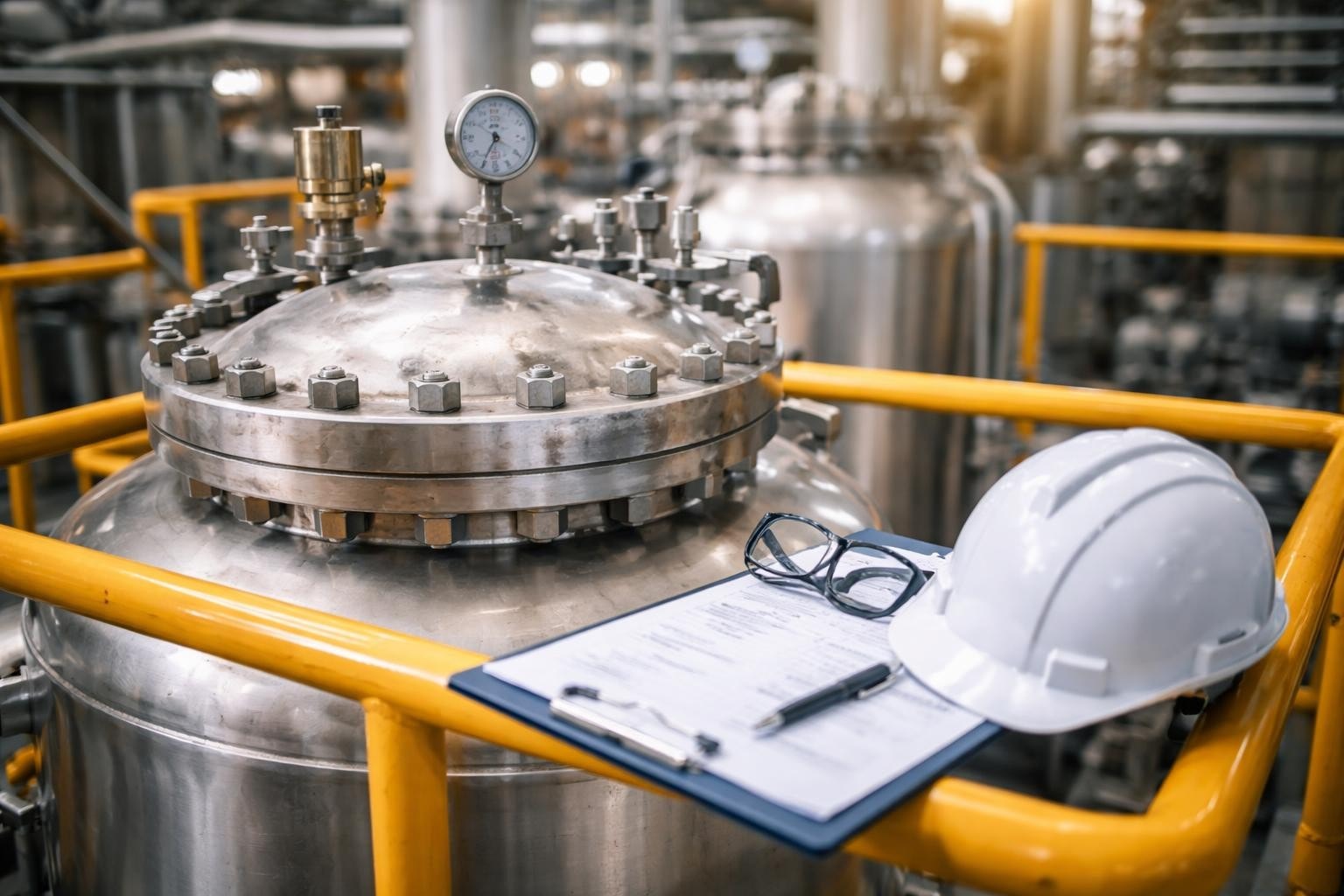
Pressure vessels are fundamental components in countless industrial operations across the United Kingdom, from manufacturing facilities to food processing plants. These containers, designed to hold gases or liquids at pressures substantially different from ambient conditions, present significant safety risks if not properly designed, maintained, and inspected. Understanding the regulatory framework, design principles, and inspection requirements for pressure systems is essential for any organisation operating equipment under pressure, ensuring both legal compliance and the safety of personnel working in proximity to these critical assets.
Understanding Pressure Vessels and Their Applications
A pressure vessel is a container engineered to hold gases or liquids at a pressure substantially higher or lower than atmospheric pressure. These vessels range from simple air receivers in workshop compressor systems to complex industrial reactors processing hazardous materials. The defining characteristic is the internal pressure differential, which subjects the vessel walls to mechanical stress requiring careful engineering and ongoing monitoring.
Industries across multiple sectors rely on pressure systems daily. Manufacturing facilities use air receivers to store compressed air for pneumatic tools and equipment. Chemical plants employ reaction vessels operating at elevated temperatures and pressures. Food and beverage producers utilise steam systems and autoclaves. Even seemingly low-risk environments such as care homes may operate heating systems with pressure components requiring statutory attention.
Classification and Design Standards
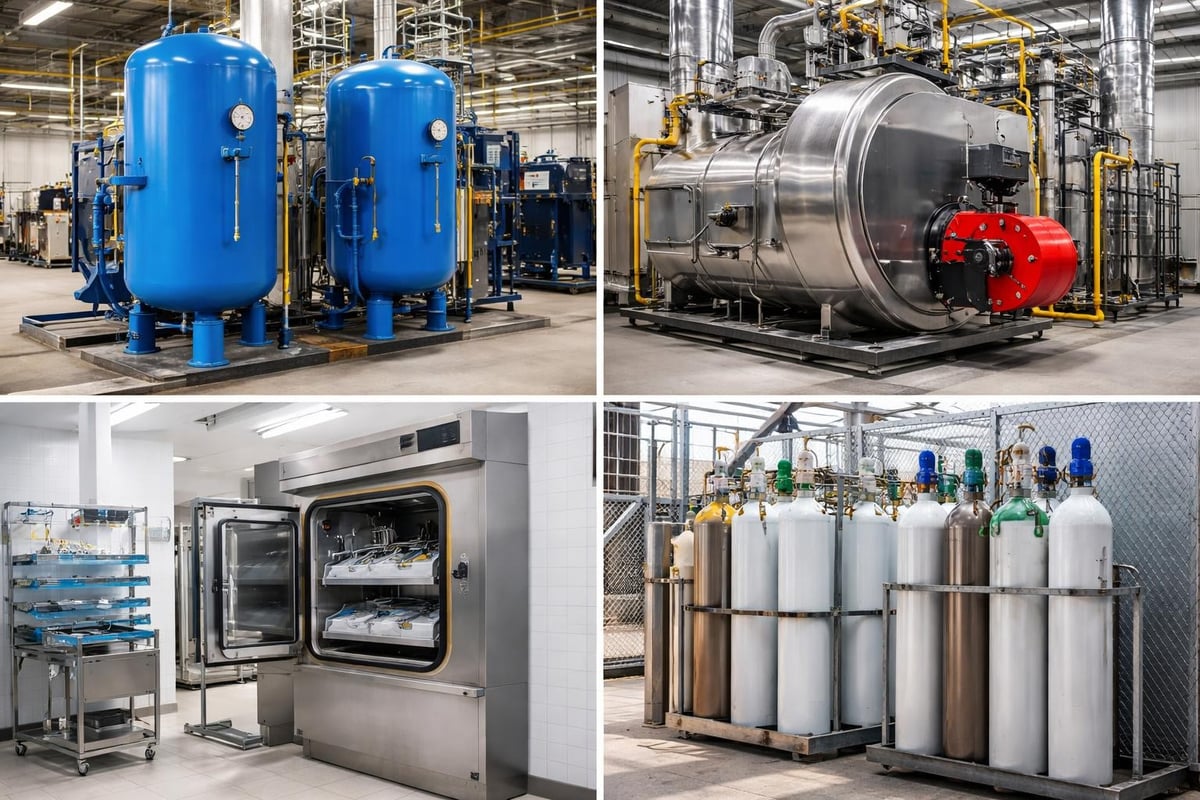
Pressure vessels are classified according to several criteria including operating pressure, temperature, contained substance, and volume. The ASME Boiler and Pressure Vessel Code Section VIII provides comprehensive rules for construction, establishing internationally recognised standards that many UK manufacturers follow alongside European directives.
The classification system considers multiple factors:
Operating pressure range – differentiating low, medium, and high-pressure systems
Temperature parameters – affecting material selection and design calculations
Contents hazard level – distinguishing between inert gases, flammable substances, and toxic materials
Vessel volume and geometry – influencing structural requirements and inspection accessibility
Installation location – whether fixed, mobile, or transportable
British standards and European pressure equipment directives govern design, manufacture, and installation. Vessels must bear appropriate markings indicating design pressure, temperature limits, manufacturing standards, and certification details. These markings serve as essential reference points during inspections and maintenance activities.
Regulatory Framework and Legal Obligations
The Pressure Systems Safety Regulations 2000 (PSSR) establish the legal framework governing pressure systems in UK workplaces. These regulations place clear duties on owners, users, and designers of pressure equipment, creating a comprehensive safety regime that extends throughout a vessel's operational life. PSSR compliance requires organisations to understand their responsibilities and implement appropriate control measures.
Key Regulatory Requirements
PSSR mandates that every pressure system has a written scheme of examination prepared by a competent person. This scheme specifies which parts require examination, the nature of examinations, and maximum intervals between inspections. The regulations apply to steam systems, compressed air systems, and any system containing relevant fluid above atmospheric pressure where failure could cause injury.
Duty holders must ensure:
Safe design and construction by competent persons
Proper installation according to manufacturer specifications
Provision of adequate safety devices and protective systems
Development and maintenance of written schemes of examination
Examination by competent persons at prescribed intervals
Maintenance of systems in safe operating condition
Provision of adequate instructions and training for operators
The Occupational Safety and Health Administration similarly emphasises the importance of comprehensive pressure vessel safety programmes, reflecting international consensus on risk management approaches. Organisations must demonstrate that their systems are examined regularly and maintained to prevent dangerous failures.
Design Considerations and Safety Factors
Proper pressure vessel design incorporates multiple safety margins to account for operational variables, material degradation, and unforeseen stress conditions. Engineers must consider not only normal operating parameters but also transient conditions during start-up, shutdown, and emergency scenarios.
Material Selection and Stress Analysis
Material choice fundamentally affects vessel safety and longevity. Engineers evaluate factors including tensile strength, ductility, corrosion resistance, and behaviour under cyclic loading. Carbon steel suits many general applications, whilst stainless steel offers superior corrosion resistance for food processing or chemical environments. Specialist alloys may be necessary for extreme temperature or pressure conditions.
Stress analysis examines how pressure loads distribute through vessel walls, identifying potential failure points. Calculations consider:
Circumferential stress – the primary hoop stress in cylindrical sections
Longitudinal stress – axial forces along the vessel length
Radial stress – perpendicular to the vessel wall
Combined loading – interaction of pressure, thermal, and mechanical stresses
Stress concentrations – at nozzles, attachments, and discontinuities
Design Element | Primary Function | Critical Considerations |
|---|---|---|
Wall thickness | Contains internal pressure | Material strength, corrosion allowance, fabrication tolerances |
End closures | Seals vessel ends | Geometry selection (hemispherical, elliptical, flat), reinforcement requirements |
Nozzles and openings | Access and connections | Reinforcement calculations, stress concentration management |
Support structures | Distributes vessel weight | Thermal expansion accommodation, stability under operating conditions |
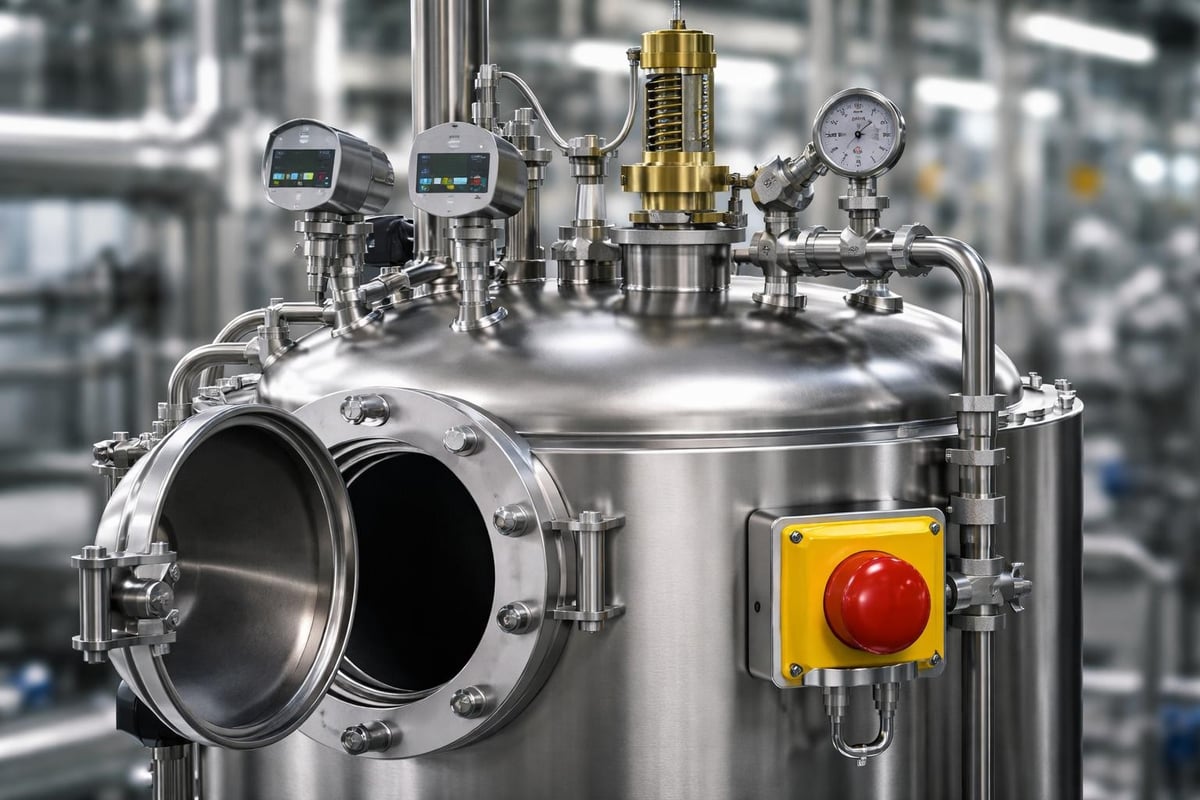
Safety devices form an integral part of system design. Pressure relief valves prevent catastrophic overpressure by venting excess pressure safely. Burst discs provide backup protection, failing at predetermined pressures. Temperature sensors, pressure gauges, and automated shutdown systems offer operational monitoring and control. The EPA's chemical safety guidance highlights how proper safety device selection and maintenance prevents serious incidents.
Inspection and Examination Requirements
Regular examination forms the cornerstone of pressure vessel safety management. Statutory inspections identify deterioration before it compromises vessel integrity, whilst also verifying that safety devices function correctly and operating parameters remain within design limits. Businesses operating pressure systems must arrange examinations according to their written scheme, typically at intervals not exceeding certain maximum periods.
Types of Inspection Activities
Thorough examination involves detailed assessment by competent inspectors who understand pressure system hazards and failure modes. Inspections encompass internal and external examinations, with scope determined by the written scheme. Understanding inspection regulations helps organisations plan maintenance windows and budget appropriately for compliance activities.
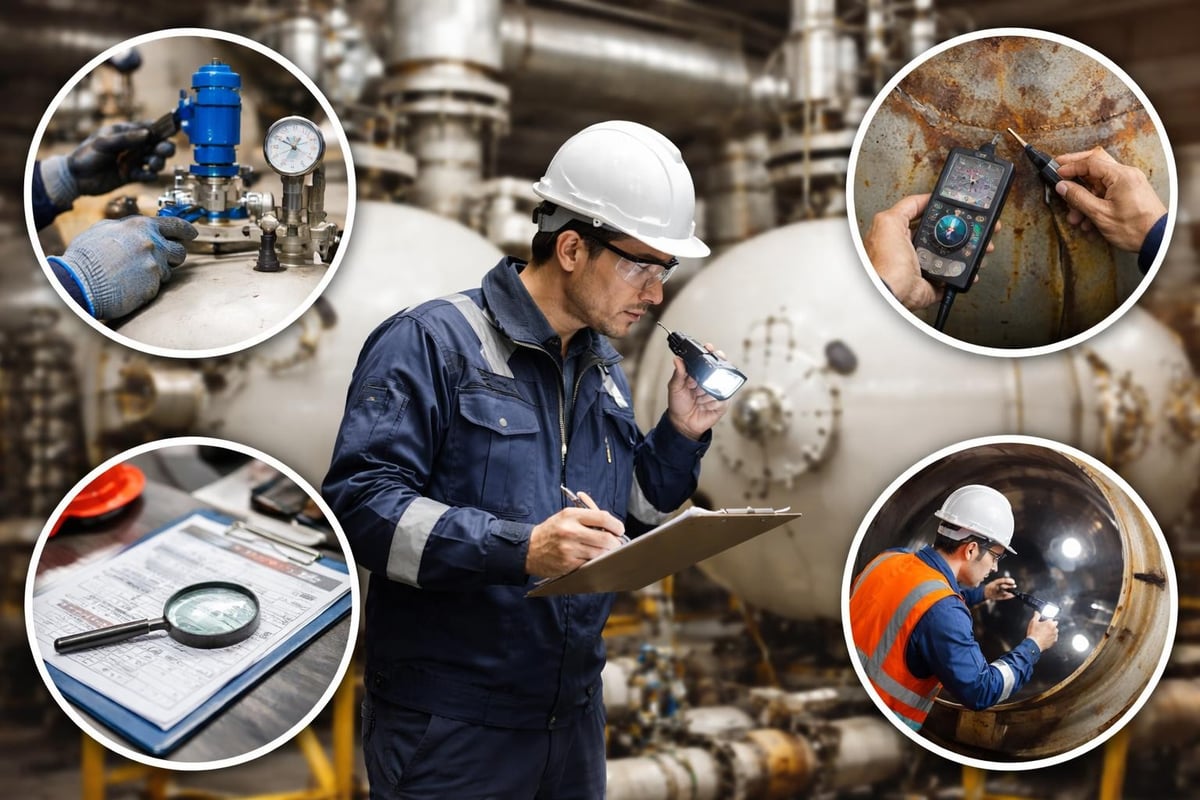
External examination assesses visible components without disassembly:
Visual inspection for corrosion, deformation, or damage
Verification of safety device condition and settings
Review of pressure gauges and instrumentation
Assessment of support structures and foundations
Examination of pipework, valves, and connections
Documentation review including operating logs
Internal examination requires vessel shutdown and opening:
Direct assessment of internal surfaces for corrosion, erosion, or cracking
Measurement of wall thickness using ultrasonic testing
Inspection of weld integrity and joint conditions
Evaluation of internal fittings and baffles
Assessment of coating or lining condition where applicable
Competent persons conducting examinations must possess appropriate qualifications, experience, and knowledge of relevant standards. They prepare detailed reports specifying any defects, recommended actions, and the next examination date. Organisations must act promptly on inspector recommendations, particularly where defects affect safe operation.
Common Failure Modes and Risk Factors
Understanding how pressure vessels fail enables better preventive strategies. Whilst catastrophic ruptures attract attention, many failures result from gradual degradation processes that diligent inspection programmes can detect and address before serious consequences occur.
Degradation Mechanisms
Corrosion represents one of the most prevalent threats to pressure vessel integrity. External corrosion affects vessels exposed to moisture, chemicals, or corrosive atmospheres. Internal corrosion depends on the contained fluid's chemistry, temperature, and velocity. Even systems containing supposedly inert compressed air can experience internal corrosion from moisture condensation. Regular inspection identifies corrosion early, allowing intervention through coating repair, material replacement, or process modifications.
Fatigue cracking develops when vessels experience repeated pressure cycling. Each cycle induces stress reversals that, over thousands or millions of cycles, can initiate and propagate cracks. Systems with frequent start-stop operations or fluctuating process conditions face elevated fatigue risk. Non-destructive examination techniques detect cracks before they reach critical sizes.
Stress corrosion cracking combines mechanical stress and corrosive environment, producing failures at stress levels below normal material strength. Certain material-environment combinations prove particularly susceptible. Austenitic stainless steels, for example, can crack when exposed to chloride solutions under tensile stress.
Failure Mode | Primary Causes | Detection Methods | Prevention Strategies |
|---|---|---|---|
Corrosion | Moisture, chemicals, inadequate protection | Visual inspection, thickness testing | Protective coatings, material selection, environmental control |
Fatigue | Pressure cycling, thermal cycling | Crack detection testing, vibration analysis | Design for cyclic loading, operating procedure optimisation |
Overpressure | Relief valve failure, operational errors | Safety device testing, pressure monitoring | Proper relief sizing, operator training, automated controls |
Material defects | Manufacturing flaws, improper repairs | Radiography, ultrasonic testing | Quality control, competent repair personnel, documentation |
Overpressure incidents occur when pressure exceeds design limits, potentially causing immediate failure. Relief valve malfunction, blocked vent lines, external fire exposure, or operational errors can create overpressure conditions. Multiple protective layers including properly sized relief devices, operator training, and automated control systems mitigate this risk.
Maintenance and Operational Best Practices
Effective pressure vessel management extends beyond inspection to encompass comprehensive maintenance programmes and operational discipline. Organisations must establish systems ensuring vessels remain in safe operating condition between statutory examinations.
Maintenance Programme Elements
A robust maintenance strategy addresses both preventive and corrective activities. Preventive maintenance follows scheduled intervals, addressing wear items and monitoring degradation trends. Corrective maintenance responds to identified defects or failures, restoring equipment to safe operating condition.
Maintenance activities include:
Safety device servicing – relief valves require periodic removal, testing, and recertification to verify correct operation
Corrosion protection – coating inspection and repair maintains protective barriers
Leak detection and repair – prompt attention to leaks prevents escalation and environmental release
Instrumentation calibration – ensures accurate pressure and temperature indication
Support structure maintenance – preserves stability and alignment
Documentation updates – maintains accurate records of modifications, repairs, and maintenance history
Organisations operating manufacturing facilities or fabrication workshops often maintain multiple pressure systems requiring coordinated maintenance scheduling. Planning maintenance during production downtime maximises efficiency whilst meeting statutory requirements.
Operator Training and Competence
Personnel operating pressure systems must understand operating limits, safety device functions, and emergency procedures. Training programmes should address normal operation, start-up and shutdown sequences, abnormal condition recognition, and emergency response. Operators need clear written instructions covering their specific equipment, complementing general safety training.
Competency requirements vary with system complexity and risk level. Simple air receiver systems in garage workshops require basic operator awareness, whilst complex chemical process vessels demand extensive technical knowledge and formal qualifications. Employers must assess competency requirements and provide appropriate training, refresher courses, and supervision.
Documentation and Record Keeping
Comprehensive documentation underpins effective pressure system management. Regulations require specific documents, whilst additional records support informed decision-making and demonstrate management commitment to safety. Understanding written scheme requirements helps organisations establish appropriate documentation systems.
Essential Documentation
Written scheme of examination constitutes the primary compliance document, specifying examination requirements for each pressure system. Prepared or certified by a competent person, the scheme identifies parts requiring examination, examination methods, and maximum intervals. Schemes must reflect actual system configuration and operating conditions, requiring review following modifications or changes in use.
Examination reports document findings from each statutory inspection. Competent persons prepare reports identifying defects, specifying repair requirements, and determining the next examination date. Organisations must retain reports and make them available to enforcement authorities upon request. Reports inform maintenance planning and provide trend data for degradation monitoring.
Operating instructions provide operators with necessary information for safe system operation. Instructions cover normal operating procedures, operating limits, safety device functions, and actions required in abnormal situations. Clear, accessible instructions reduce human error risks and support operator competence development.
Additional beneficial records include:
Maintenance logs tracking routine servicing and repairs
Modification records documenting design changes and approval processes
Incident reports capturing near misses and failures for lessons learned
Training records demonstrating operator competence
Supplier documentation including design calculations and material certificates
Digital documentation systems offer advantages for multi-site organisations, enabling centralised record management and automated examination scheduling. However, systems must ensure information remains accessible to site personnel and inspectors when required.
Emerging Technologies and Future Considerations
Pressure vessel inspection and monitoring continues evolving with technological advancement. Modern approaches supplement traditional examination methods, offering enhanced detection capabilities and operational insights. Organisations should remain aware of developing techniques whilst ensuring fundamental inspection requirements remain satisfied.
Advanced Inspection Techniques
Acoustic emission testing detects active crack growth and structural changes during operation, offering real-time monitoring capabilities. Sensors detect high-frequency stress waves generated by crack propagation, corrosion, or leak formation. This technique enables continuous surveillance of critical vessels, potentially extending intervals between intrusive inspections where regulatory frameworks permit risk-based approaches.
Phased array ultrasonics provides detailed imaging of internal structures and defects, improving on conventional ultrasonic methods. Inspectors can visualise weld integrity, measure remaining wall thickness precisely, and characterise crack geometry. The technology proves particularly valuable for complex geometries where access limitations challenge traditional methods.
Digital radiography offers immediate image review and manipulation, reducing inspection time whilst potentially improving defect detection. Unlike film radiography requiring chemical processing, digital systems provide instant results supporting faster decision-making during maintenance windows.
Risk-based inspection methodologies apply probability and consequence analysis to optimise examination frequencies and methods. Rather than uniform intervals, risk-based approaches focus resources on higher-risk equipment whilst potentially extending intervals for lower-risk systems. Implementation requires sophisticated analysis and may need regulatory approval, but offers efficiency improvements for large pressure system populations.
Integration with Wider Workplace Safety
Pressure vessel safety does not exist in isolation but forms part of comprehensive workplace safety management. Organisations must consider interactions between pressure systems and other workplace hazards, ensuring integrated control measures and coordinated inspection activities.
Many facilities combine pressure equipment with lifting operations, mechanical machinery, and hazardous substance handling. LOLER inspections for lifting equipment, PUWER examinations for machinery, and COSHH assessments for hazardous substances should coordinate with pressure system examinations. Scheduling multiple statutory inspections together maximises efficiency whilst minimising production disruption.
Safety management systems should incorporate pressure vessel risks within broader risk assessments. Consider interactions such as:
Pressure system failures affecting nearby personnel or equipment
Lifting equipment used for pressure vessel maintenance
Hazardous substance release from pressure system failures
Fire or explosion risks from flammable contents under pressure
Confined space entry during internal examination
Cross-functional safety teams benefit from understanding multiple regulatory frameworks. Personnel managing compliance activities across LOLER, PUWER, PSSR, and COSHH can identify synergies and streamline management systems. This integrated approach reduces administrative burden whilst enhancing overall workplace safety.
Organisations should establish clear responsibility allocation for pressure system management. Senior management must demonstrate commitment through resource provision and policy development. Competent persons require authority to halt operations when safety concerns arise. Operators need clear reporting channels for abnormal conditions or defects. This organisational structure, combined with technical compliance measures, creates resilient safety management.
Effective pressure vessel management requires understanding regulatory obligations, implementing robust inspection programmes, and maintaining comprehensive documentation systems. Organisations operating pressure systems across the UK must balance operational requirements with statutory compliance, recognising that thorough examination and preventive maintenance protect both personnel safety and business continuity. Workplace Inspection Services Ltd supports businesses nationwide with expert pressure system examinations under PSSR, helping organisations maintain compliance, reduce risk, and ensure safe working environments through independent, professional inspection services.