Health Safety Workplace: Essential Compliance Guide 2026
Health Safety Workplace: Essential Compliance Guide 2026

Maintaining a robust health safety workplace culture has become increasingly critical for UK businesses facing evolving regulatory requirements and heightened employee expectations. In 2026, organisations across manufacturing, construction, engineering and industrial sectors must navigate complex statutory obligations whilst ensuring practical protective measures remain embedded in daily operations. The financial and reputational consequences of safety failures extend far beyond immediate incidents, affecting productivity, employee morale and long-term business sustainability. This comprehensive guide explores the essential components of effective health safety workplace management, from regulatory compliance to proactive risk reduction strategies.
Understanding Statutory Health Safety Workplace Obligations
UK employers operate under a comprehensive framework of health and safety legislation designed to protect workers across all industries. The Health and Safety at Work etc. Act 1974 establishes the fundamental duty of care employers owe to their employees, contractors and visitors. This cornerstone legislation requires businesses to ensure, so far as reasonably practicable, the health, safety and welfare of everyone affected by their operations.
Beyond this overarching duty, specific regulations address particular workplace hazards and equipment types. The Management of Health and Safety at Work Regulations 1999 mandate systematic risk assessment, competent safety advice and emergency procedures. For organisations using machinery and equipment, understanding inspection regulations becomes essential to maintaining both legal compliance and operational safety.
Sector-Specific Regulatory Requirements
Different industries face distinct health safety workplace challenges requiring specialised regulatory frameworks:
Manufacturing facilities must comply with machinery safety standards, hazardous substance controls and noise exposure limits
Construction sites require scaffolding inspections, fall protection measures and confined space protocols
Engineering workshops need equipment examinations, pressure system controls and electrical safety management
Warehousing operations demand materials handling safety, racking inspections and vehicle movement controls
The UK Health and Safety Executive provides accessible guidance for businesses seeking to understand their specific obligations, offering templates and practical tools for smaller organisations.

Risk Assessment and Hazard Identification
Effective health safety workplace management begins with systematic hazard identification and risk evaluation. The risk assessment process forms the foundation for all subsequent safety measures, enabling organisations to prioritise resources towards the most significant threats to worker wellbeing.
A comprehensive risk assessment follows five essential steps:
Identify hazards present in the workplace, including physical dangers, chemical exposures, ergonomic risks and psychosocial factors
Determine who might be harmed and how different groups (employees, contractors, visitors, vulnerable persons) face distinct risk profiles
Evaluate risks by considering likelihood and severity, then compare existing controls against recognised standards
Record findings in documentation that demonstrates systematic analysis and justifies control measures
Review regularly to ensure assessments remain current as operations, equipment or personnel change
The hierarchy of controls framework provides a scientifically validated approach to selecting the most effective risk reduction measures. This methodology prioritises elimination and substitution over administrative controls and personal protective equipment, recognising that engineering solutions typically offer more reliable protection.
Common Workplace Hazards Requiring Assessment
Hazard Category | Examples | Potential Consequences |
|---|---|---|
Physical | Moving machinery, height work, noise, vibration | Injuries, hearing loss, musculoskeletal disorders |
Chemical | Solvents, dusts, fumes, adhesives | Respiratory disease, skin conditions, poisoning |
Biological | Bacteria, viruses, moulds | Infections, allergic reactions, disease |
Ergonomic | Repetitive movements, awkward postures, manual handling | Chronic pain, repetitive strain injuries |
Psychosocial | Work pressure, violence, bullying | Stress, anxiety, depression |
Engineering businesses must pay particular attention to machinery hazards, ensuring PUWER inspections form part of their ongoing risk management approach. Regular statutory examinations identify deterioration, wear and developing faults before they create dangerous situations.
Implementing Effective Control Measures
Once hazards have been identified and risks assessed, organisations must implement appropriate controls to reduce dangers to acceptable levels. The selection and maintenance of control measures directly determines health safety workplace performance in practice.
Engineering controls represent the most reliable protective approach. These physical modifications to equipment, processes or workspaces eliminate hazards or create barriers between workers and dangers. Examples include machine guarding, local exhaust ventilation systems, noise enclosures and automatic shut-off devices.
Administrative controls complement engineering measures by establishing safe working procedures. These include permit-to-work systems, job rotation to limit exposure duration, clear signage and equipment isolation procedures. Whilst valuable, administrative controls depend upon human compliance and therefore require robust monitoring and reinforcement.
Equipment Inspection and Maintenance Programmes
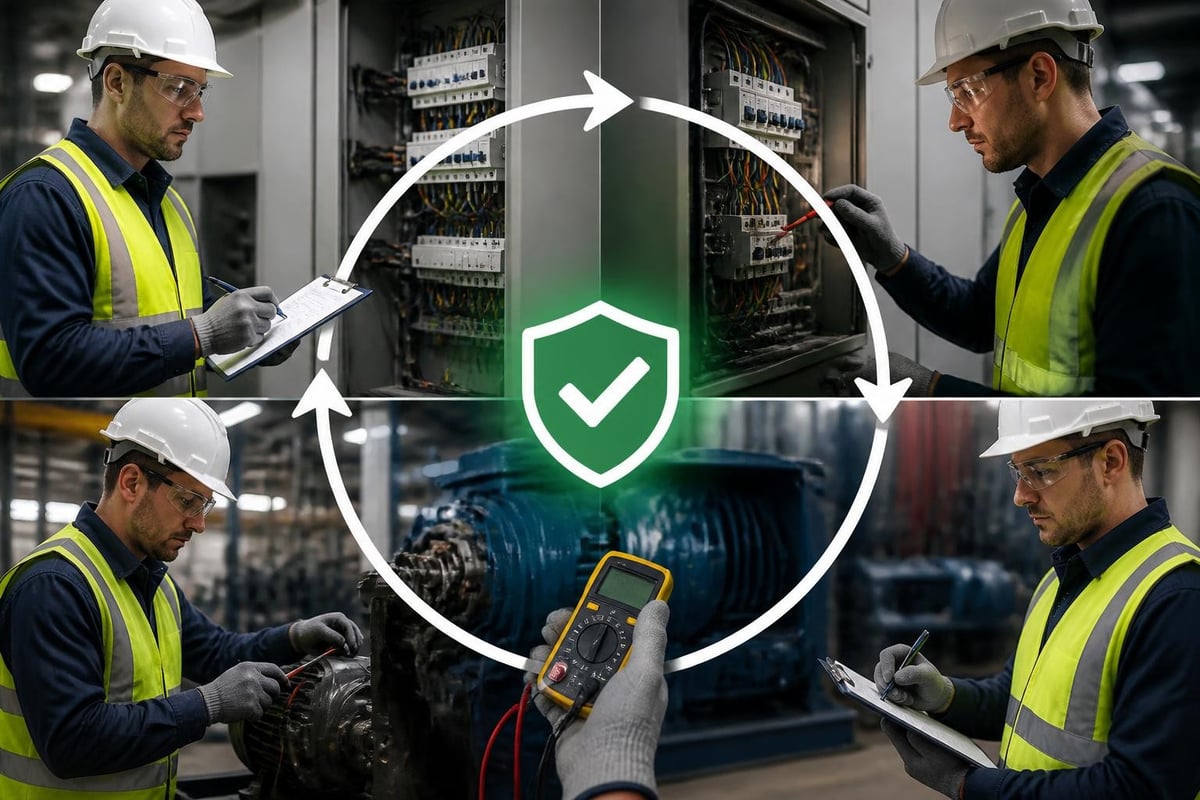
Statutory inspections form a critical component of health safety workplace management for organisations using lifting equipment, pressure systems and work equipment. Regular examinations by competent persons ensure equipment remains safe throughout its operational life.
Different equipment types require specific inspection frequencies based on regulatory requirements and operational demands. Understanding the inspection frequency guide helps organisations plan maintenance schedules, budget for examinations and avoid compliance gaps.
Lifting equipment under LOLER typically requires thorough examination at least every 12 months, with more frequent inspections for equipment lifting persons
Pressure systems need examination within periods specified in the written scheme of examination, often annually or six-monthly
Work equipment requires inspection at intervals appropriate to the risk, considering manufacturer recommendations and operating conditions
Local exhaust ventilation systems demand thorough examination and testing at least every 14 months under COSHH regulations
Maintaining detailed inspection records demonstrates due diligence and provides valuable data for trend analysis. Organisations should track defect types, failure patterns and maintenance costs to identify opportunities for equipment upgrades or operational improvements.
Building a Positive Safety Culture
Technical compliance with health safety workplace regulations, whilst essential, proves insufficient without genuine organisational commitment to worker protection. A positive safety culture emerges when leadership demonstrates authentic concern for employee wellbeing, workers feel empowered to raise concerns and continuous improvement becomes embedded in operational thinking.
Leadership visibility in safety matters significantly influences workforce attitudes and behaviours. When senior managers participate in safety walks, attend incident investigations and discuss safety performance in business reviews, employees recognise that health safety workplace concerns receive genuine priority rather than token acknowledgement.
Employee Engagement and Communication Strategies
Effective health safety workplace programmes actively involve workers in hazard identification, control selection and procedure development. Frontline employees possess detailed knowledge of operational realities that desk-based assessments may overlook. Their participation enhances both the practical effectiveness of controls and their sense of ownership over safety outcomes.
Communication channels should enable information flow in multiple directions:
Top-down communications share policy updates, inspection findings, incident learnings and performance metrics
Bottom-up mechanisms allow workers to report hazards, suggest improvements and raise concerns without fear
Peer-to-peer exchanges enable teams to share practical solutions and reinforce safe behaviours through social norms
The University of North Carolina highlights that successful workplace safety programmes require management leadership, worker participation, hazard identification and control, education and training, and programme evaluation working in concert.
Training and Competency Development
Comprehensive training ensures workers possess the knowledge and skills necessary to perform their duties safely. Health safety workplace training requirements vary based on job roles, equipment used and hazards encountered, but all organisations must provide adequate instruction, information and supervision.
Induction training introduces new employees to site-specific hazards, emergency procedures and general safety expectations. This initial orientation should occur before workers begin substantive duties, providing essential protective knowledge from their first day. Role-specific training then addresses the particular risks and control measures relevant to individual positions.
Competency Frameworks and Skill Verification
Training Type | Delivery Method | Refresh Frequency | Competency Verification |
|---|---|---|---|
General safety induction | Classroom/online | Annual | Comprehension test |
Equipment operation | Practical demonstration | As required by regulation | Observed performance |
Emergency response | Practical exercises | 6-12 months | Drill participation |
Risk assessment | Workshop-based | 2-3 years | Assessment quality review |
First aid | Certified courses | 3 years | Formal qualification |
Maintaining training records demonstrates compliance whilst providing evidence of due diligence should incidents occur. Modern learning management systems enable organisations to track qualification expiry dates, schedule refresher training and identify competency gaps across the workforce.
Specialist roles require additional certification and ongoing professional development. Personnel conducting statutory inspections must possess appropriate engineering qualifications, practical experience and continued competence in their examination disciplines. Organisations should verify inspector credentials and ensure supplementary testing services meet recognised industry standards.
Incident Management and Investigation
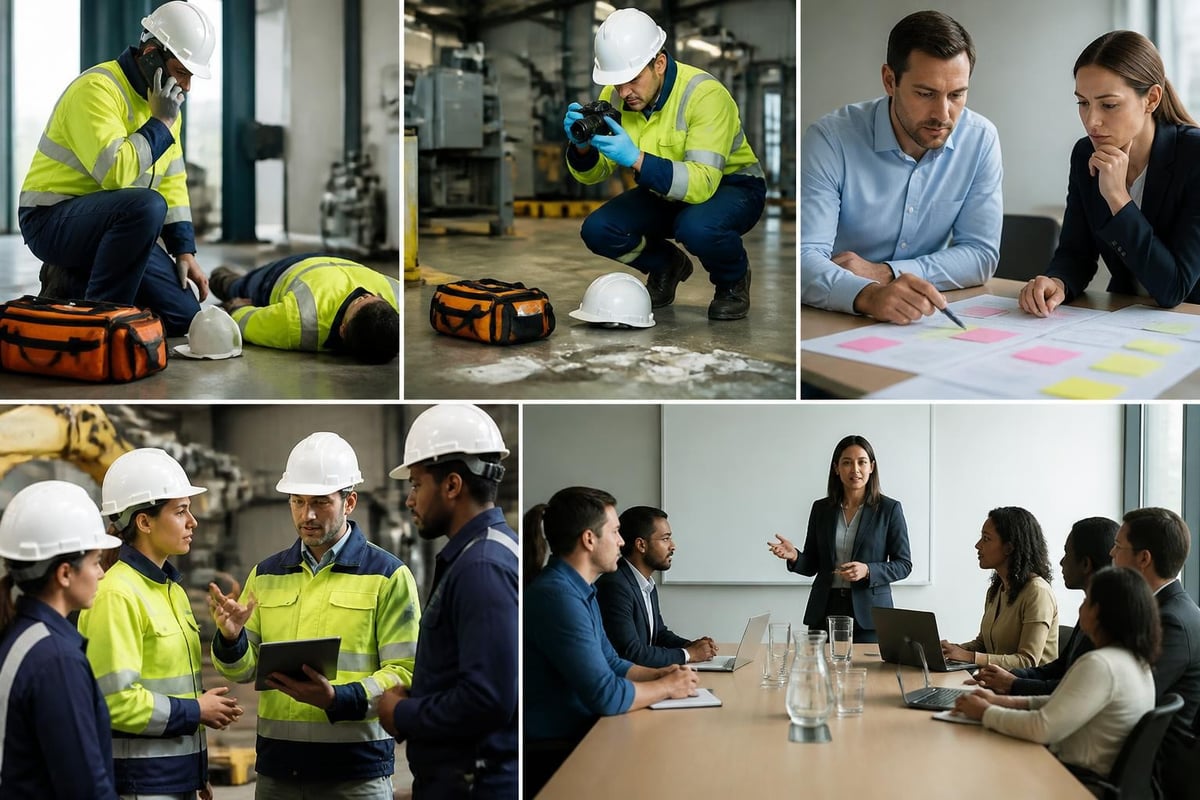
Despite comprehensive preventative measures, incidents may still occur within even well-managed organisations. Effective health safety workplace programmes include robust systems for reporting, investigating and learning from incidents, near-misses and unsafe conditions.
Incident reporting should encourage workers to document all events, regardless of severity. Near-miss reporting proves particularly valuable, as these events reveal system weaknesses before serious consequences emerge. Research consistently demonstrates that multiple near-misses typically precede serious injuries, making their investigation an essential predictive tool.
Root Cause Analysis Methodologies
Thorough investigations move beyond identifying immediate causes to explore underlying systemic factors that allowed incidents to occur. The "five whys" technique encourages investigators to probe progressively deeper, asking why each contributing factor existed until fundamental root causes emerge.
Investigation findings should drive tangible improvements rather than simply assigning blame. Effective corrective actions address multiple failure points:
Immediate actions prevent recurrence whilst investigation proceeds, such as equipment isolation or temporary procedural changes
Corrective measures address the specific circumstances that allowed this incident to occur
Systemic improvements tackle broader organisational factors revealed through investigation, such as training gaps or procedural weaknesses
Learning dissemination shares lessons across the organisation to prevent similar incidents in other areas
Businesses committed to understanding workplace safety challenges can explore broader workplace health and safety compliance strategies that integrate incident learning into continuous improvement cycles.
Monitoring, Auditing and Continuous Improvement
Health safety workplace performance requires ongoing measurement and evaluation to ensure systems remain effective as circumstances evolve. Proactive monitoring identifies emerging risks before incidents occur, whilst reactive measures analyse failures to prevent recurrence.
Leading indicators measure activities and conditions that predict future performance. These include inspection completion rates, training attendance, near-miss reporting frequency and hazard correction times. Leading indicators enable early intervention when performance trends suggest increasing risk.
Lagging indicators measure actual harm outcomes, including injury rates, lost-time incidents and severity measures. Whilst valuable for assessing overall performance, lagging indicators only reveal problems after damage has occurred, limiting their preventative utility.
Internal Audit Programmes
Regular audits provide systematic evaluation of health safety workplace management systems against planned arrangements. Audit scope should encompass documentation review, workplace inspections, interviews with managers and workers, and verification of competencies and training records.
Effective audits balance compliance verification with performance improvement. Auditors should identify not only regulatory breaches but also opportunities for enhanced protection, efficiency gains and best practice adoption. Antea Group outlines essential environment, health and safety best practices that strengthen workplace safety beyond minimum compliance.
External benchmarking enables organisations to compare their health safety workplace performance against industry peers and recognised standards. Certification schemes such as ISO 45001 provide structured frameworks for developing, implementing and improving occupational health and safety management systems.
Ergonomics and Musculoskeletal Disorder Prevention
Musculoskeletal disorders represent one of the most prevalent categories of work-related ill health across UK industries. These conditions, affecting muscles, joints, tendons and nerves, result from prolonged exposure to awkward postures, repetitive movements, forceful exertions and inadequate recovery time.
Effective ergonomics programmes systematically optimise the fit between workers and their tasks. This approach considers physical workstation design, tool selection, task organisation and individual worker capabilities. Minnesota Department of Labor and Industry demonstrates how ergonomics best practices reduce musculoskeletal injuries across various sectors.
Practical Ergonomic Interventions
Workstation adjustability enables individual workers to position equipment, seating and materials for optimal posture
Mechanical assistance replaces manual handling with trolleys, hoists, lifting aids and powered equipment
Job rotation varies physical demands throughout shifts, preventing overuse of particular muscle groups
Micro-breaks allow brief recovery periods during repetitive tasks, reducing cumulative strain
Tool redesign minimises awkward wrist positions, excessive grip force and vibration exposure
Engineering workshops face particular ergonomic challenges from heavy component handling, prolonged standing on hard surfaces and precision work requiring sustained awkward postures. Addressing these hazards through workplace modifications and equipment improvements protects worker health whilst often enhancing productivity through reduced fatigue and improved efficiency.
Noise Control and Hearing Conservation
Occupational noise exposure causes irreversible hearing damage when workers experience sound levels exceeding safe thresholds over prolonged periods. The Control of Noise at Work Regulations 2005 establish exposure limits and require employers to assess, control and monitor noise risks.
The CDC emphasises preventing noise-induced hearing loss through reducing workplace noise below 85 dBA, the level above which hearing damage becomes likely with prolonged exposure. This prevention-focused approach prioritises engineering controls over personal protective equipment.
Engineering noise controls include:
Source modification through quieter equipment selection, maintenance improvements and operational adjustments
Path intervention using enclosures, barriers, absorption materials and distance to reduce noise transmission
Receiver protection through administrative controls limiting exposure duration and hearing protection when engineering controls prove insufficient
Manufacturing and engineering environments frequently generate hazardous noise from machinery operation, compressed air use, impact processes and material handling. Effective health safety workplace noise management requires systematic measurement, prioritised control implementation and audiometric surveillance to detect early hearing changes.
Chemical Safety and Exposure Control
The Control of Substances Hazardous to Health Regulations 2002 (COSHH) establish comprehensive requirements for managing workplace chemical risks. These regulations require employers to prevent or adequately control employee exposure to hazardous substances including chemicals, fumes, dusts, vapours and biological agents.
COSHH assessment follows a structured approach identifying substances used, exposure routes, potential health effects and necessary control measures. This process informs selection of appropriate protective strategies, from substitution of hazardous materials through to specialised extraction systems and respiratory protective equipment.
Local Exhaust Ventilation Systems
Engineering facilities frequently employ local exhaust ventilation (LEV) to capture contaminants at their source before they enter the breathing zone. These systems require regular health and safety inspection and thorough examination to ensure continued effectiveness. Deteriorated performance may result from blocked filters, ductwork leaks, fan wear or inadequate airflow for current processes.
Effective LEV system management includes:
Thorough examination and testing at intervals not exceeding 14 months by competent persons
Routine maintenance addressing filter changes, fan servicing and ductwork cleaning
Performance monitoring through regular airflow measurements and capture efficiency checks
User training ensuring operators understand system function and recognise performance degradation
Chemical safety extends beyond exposure control to encompass proper storage, handling procedures, emergency response capabilities and disposal arrangements. Safety data sheets provide essential information on hazard characteristics, first aid measures and protective requirements for each substance used within the organisation.
Pressure Systems and Confined Spaces
Specialised workplace hazards demand focused attention within health safety workplace management frameworks. Pressure systems and confined spaces exemplify scenarios where inadequate controls can rapidly escalate to catastrophic outcomes.
Pressure equipment failure can release tremendous energy in explosive events, projecting fragments and releasing hazardous contents. The Pressure Systems Safety Regulations 2000 require employers to establish written schemes of examination, conduct regular inspections and maintain equipment in safe condition. Examining pressure vessel integrity through systematic inspection programmes prevents catastrophic failures whilst maintaining operational reliability.
Confined Space Entry Protocols
Confined spaces present multiple hazards including oxygen deficiency, toxic atmospheres, engulfment risks and difficulty of rescue. Entry into confined spaces requires:
Thorough risk assessment identifying all potential hazards before entry authorisation
Permit-to-work systems ensuring appropriate controls are verified before access
Atmospheric testing confirming oxygen adequacy and absence of toxic or flammable gases
Continuous monitoring throughout occupation to detect changing conditions
Emergency rescue arrangements providing immediate response capability if incidents occur
The confined nature of these spaces transforms routine tasks into high-risk activities. Ventilation may prove inadequate, normal escape routes become restricted, and working conditions intensify physical and psychological stress. Robust procedural controls and rigorous supervision prove essential when exposure to these hazards cannot be avoided.
Workplace Transport and Pedestrian Safety
Vehicle and pedestrian interaction creates substantial risks within industrial sites, warehouses and construction environments. Workplace transport incidents frequently result in serious injuries or fatalities when heavy vehicles contact pedestrians or when operators lose control of equipment.
Effective segregation represents the most reliable protective approach, physically separating vehicle routes from pedestrian areas through barriers, designated walkways and access restrictions. Where complete segregation proves impractical, organisations must implement comprehensive controls addressing visibility, speed management and procedural safeguards.
Traffic management measures include clearly marked routes, adequate lighting, convex mirrors at blind corners, speed limits appropriate to site conditions and reversing cameras on larger vehicles. Driver training, pedestrian awareness and site induction reinforce understanding of local hazards and expected behaviours.
Emerging Technologies in Workplace Safety
Technological advancement continues reshaping health safety workplace capabilities through enhanced monitoring, improved communication and predictive analytics. Recent research reviews wearable technologies and connected-worker solutions that enhance occupational safety, health and productivity through real-time data collection and analysis.
Modern safety technology applications include environmental sensors detecting gas concentrations, noise levels and temperature extremes before they reach hazardous thresholds. Wearable devices track worker location, detect falls and monitor physiological indicators suggesting heat stress or fatigue. Integrated systems aggregate data from multiple sources, identifying patterns and triggering alerts when conditions suggest elevated risk.
Digital platforms transform traditional paper-based systems for inspections, audits, training records and incident reporting. Mobile applications enable immediate hazard reporting with photographic evidence, whilst cloud-based systems provide real-time visibility of safety performance across multiple sites. These technologies enhance both compliance management and organisational learning when properly implemented within broader management frameworks.
However, technology should complement rather than replace fundamental safety principles. The Business Development Bank of Canada notes that improving productivity through better health and safety practices requires cultural commitment alongside technical systems. Organisations must maintain focus on leadership engagement, worker participation and systematic hazard control whilst leveraging technological tools to enhance these core functions.
Contractor Management and Supply Chain Safety
Many organisations engage contractors to perform specialised tasks, temporary projects or activities outside core competencies. These working arrangements create health safety workplace challenges requiring systematic management to ensure contractors receive appropriate information, maintain adequate standards and integrate safely within host operations.
Effective contractor management begins during selection, evaluating safety competence alongside technical capability and commercial factors. Pre-qualification processes should verify insurance coverage, safety policies, competent personnel and satisfactory performance history. Understanding how contractors manage their own safety compliance obligations provides insight into likely performance.
Coordination and Communication Requirements
Once engaged, contractors require comprehensive site induction addressing local hazards, emergency procedures, permit systems and coordination requirements. Host organisations retain overall responsibility for ensuring workplace safety, making clear communication of expectations and effective supervision essential throughout contract duration.
Coordination becomes particularly critical when multiple contractors work simultaneously or when contractor activities interact with host operations. Interfaces between different work groups create elevated risks requiring explicit management through method statements, toolbox talks and regular liaison meetings. Documentation of agreements, work scopes and safety responsibilities protects all parties whilst clarifying accountability.
Maintaining effective health safety workplace standards requires sustained commitment to regulatory compliance, systematic risk management and genuine cultural prioritisation of worker protection. From statutory equipment examinations through ergonomic improvements and emerging safety technologies, organisations must adopt comprehensive approaches that address immediate hazards whilst building resilient long-term capabilities. Whether you need support with statutory inspections, compliance guidance or developing systematic safety programmes, Workplace Inspection Services Ltd provides expert engineering inspection services across the UK, helping organisations maintain compliance, reduce risk and protect their most valuable asset - their people.