Health Safety Regulations: A Complete Guide for 2026
Health Safety Regulations: A Complete Guide for 2026

Health safety regulations form the backbone of workplace protection across the United Kingdom, establishing clear standards that employers must meet to safeguard their workforce. These legally binding requirements have evolved significantly over recent decades, adapting to emerging workplace hazards and technological advances whilst maintaining their core purpose: preventing injuries, illnesses and fatalities in industrial settings. For organisations operating machinery, lifting equipment or pressure systems, understanding and implementing health safety regulations is not merely a legal obligation but a fundamental responsibility that protects both people and business continuity.
Understanding the Scope of Health Safety Regulations
Health safety regulations encompass a comprehensive framework of legislation designed to address specific workplace hazards. The regulations cover everything from the handling of hazardous substances to the operation of complex machinery, creating a structured approach to risk management that applies across all sectors.
The Health and Safety at Work Act 1974 serves as the primary legislation underpinning all subsequent regulations in the United Kingdom. This foundational Act establishes the general duties of employers, employees and others to ensure workplace safety. Building upon this framework, specific regulations address particular risks with detailed requirements tailored to different industrial contexts.
Key Regulatory Frameworks in Engineering Environments
Engineering and industrial workplaces face unique challenges that require specialised regulatory oversight. Several critical regulations apply specifically to these environments:
LOLER 1998: Governs lifting operations and lifting equipment safety
PUWER 1998: Addresses the provision and use of work equipment
PSSR 2000: Regulates pressure systems and associated safety protocols
COSHH 2002: Controls exposure to hazardous substances
Management of Health and Safety at Work Regulations 1999: Requires risk assessments and safety management systems
The Lifting Operations and Lifting Equipment Regulations 1998 represent one of the most significant pieces of legislation for businesses using cranes, hoists, lifts or other lifting apparatus. These health safety regulations mandate thorough examinations at prescribed intervals, ensuring equipment remains safe throughout its operational life.

Employer Responsibilities Under Health Safety Regulations
Employers carry the primary legal responsibility for implementing health safety regulations within their organisations. This duty of care extends beyond simple compliance to encompass proactive risk management and continuous improvement of safety standards.
Conducting Comprehensive Risk Assessments
Risk assessment forms the cornerstone of regulatory compliance. Employers must systematically identify hazards, evaluate risks and implement appropriate control measures. This process requires:
Hazard identification: Recognising potential sources of harm in the workplace
Risk evaluation: Assessing the likelihood and severity of potential incidents
Control implementation: Establishing measures to eliminate or reduce risks
Documentation: Maintaining detailed records of assessments and actions taken
Review cycles: Regularly updating assessments to reflect changing conditions
The Management of Health and Safety at Work Regulations 1999 specify that risk assessments must be suitable and sufficient, considering all aspects of work activities that might affect employee safety. For businesses with five or more employees, written records of these assessments become mandatory.
Providing Training and Information
Health safety regulations require employers to ensure workers receive adequate training, instruction and supervision. This obligation varies depending on the specific tasks performed and equipment used. Those operating complex machinery must receive comprehensive training covering both normal operations and emergency procedures.
Training programmes should address the specific health safety regulations relevant to each role. Machine operators need detailed instruction on PUWER requirements, whilst those working with lifting equipment must understand LOLER compliance standards. Regular refresher training helps maintain competency and reinforces safe working practices.
Training Component | Frequency | Documentation Required |
|---|---|---|
Initial induction | Before starting work | Training records, competency certificates |
Equipment-specific training | Before operating new equipment | Operator certification, assessment records |
Refresher training | Annually or as required | Updated training logs, competency reviews |
Emergency procedures | Bi-annually | Drill records, response evaluations |
Statutory Inspection Requirements
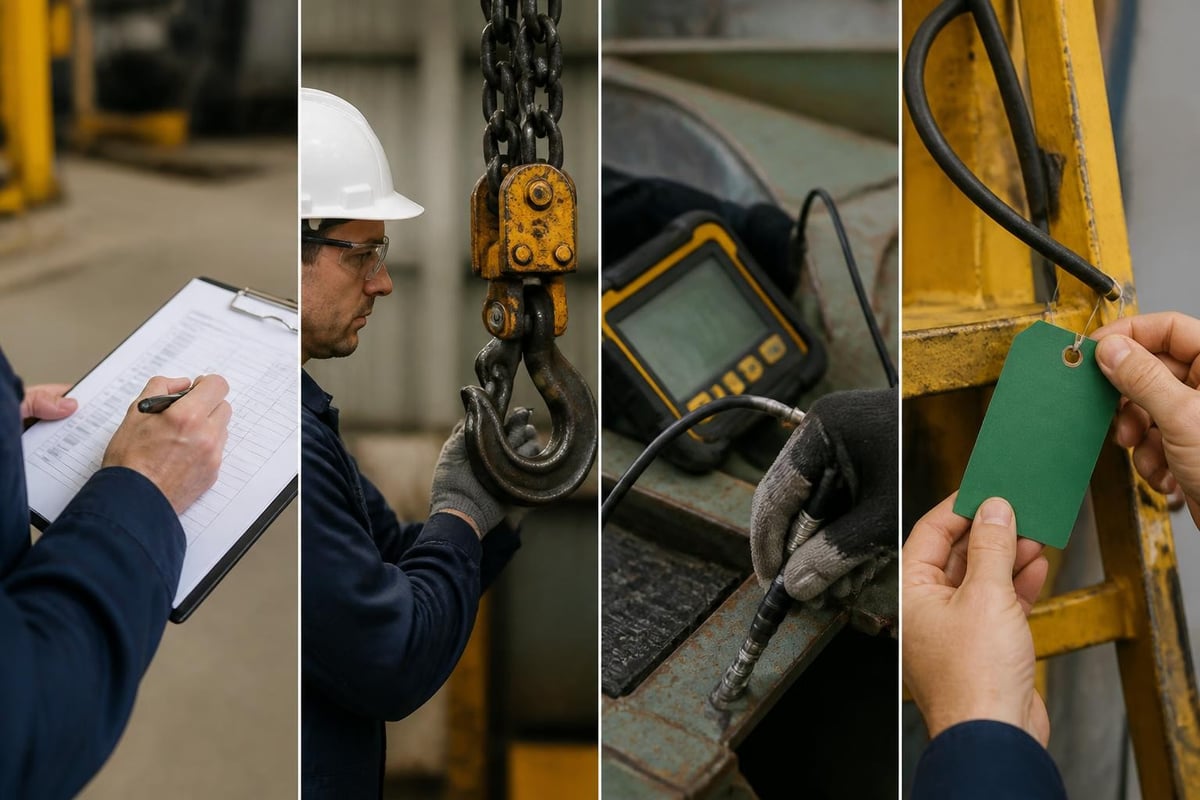
Many health safety regulations mandate periodic inspections by competent persons to verify equipment safety and operational compliance. These inspections form a critical control measure, identifying deterioration, damage or defects before they lead to incidents.
The concept of the "competent person" appears throughout health safety regulations, referring to individuals with the necessary training, experience and knowledge to perform inspections effectively. Organisations may employ in-house competent persons or engage specialist inspection companies to fulfil these duties.
LOLER Inspection Obligations
LOLER requires thorough examinations of lifting equipment at intervals determined by risk assessment, though typically not exceeding twelve months for most equipment. These examinations must be conducted by competent persons who assess structural integrity, operational safety and compliance with design specifications.
Lifting accessories such as slings, shackles and hooks require examination before first use and then at intervals appropriate to their use conditions. Equipment used to lift persons, such as passenger lifts or mobile elevating work platforms, demands even more rigorous inspection protocols due to the elevated risk.
PUWER Compliance and Equipment Safety
The Provision and Use of Work Equipment Regulations extend beyond simple inspection requirements to encompass the entire lifecycle of workplace equipment. PUWER inspections verify that machinery remains suitable for its intended purpose, properly maintained and equipped with necessary safety features.
These health safety regulations require that equipment is:
Suitable for its intended use and the conditions in which it operates
Maintained in efficient working order and good repair
Inspected at appropriate intervals to ensure safe operation
Used only by persons who have received adequate training
Accompanied by suitable health and safety measures including guards and protective devices
Managing Hazardous Substances and Airborne Contaminants
Health safety regulations addressing chemical hazards and airborne contaminants protect workers from both immediate and long-term health effects. The Control of Substances Hazardous to Health Regulations establish a comprehensive framework for managing exposure risks.
COSHH Assessment and Control
COSHH assessments must identify hazardous substances present in the workplace, evaluate exposure routes and implement appropriate control measures. The hierarchy of control guides this process, prioritising elimination and substitution before relying on engineering controls or personal protective equipment.
Employers must consider eight principles of good control practice when managing hazardous substances:
Design and operate processes to minimise emission and spread
Take into account relevant workplace exposure limits
Control exposure by engineering measures at source
Ensure control measures are properly used and maintained
Monitor exposure where necessary
Provide health surveillance where appropriate
Prepare plans and procedures for accidents and emergencies
Ensure employees are properly informed, trained and supervised
Local Exhaust Ventilation Requirements
Where processes generate harmful dusts, fumes or vapours, local exhaust ventilation (LEV) systems often provide the most effective control. Health safety regulations mandate thorough examination and testing of these systems at least every fourteen months to confirm adequate performance.
LEV examinations assess capture efficiency, airflow rates, filter condition and overall system integrity. Detailed records must document test results, maintenance activities and any deficiencies requiring remediation. The competent person conducting these examinations must understand both the process hazards and the engineering principles governing effective ventilation.
Pressure Systems and Associated Risks
Pressure systems present significant hazards requiring specialised health safety regulations. The Pressure Systems Safety Regulations 2000 establish requirements for design, installation, operation and maintenance of systems containing steam, compressed air or other pressurised fluids.
Written Schemes of Examination
PSSR mandates written schemes of examination for most pressure systems, specifying which parts require examination, the nature of the examination and maximum intervals between examinations. A competent person must draw up this scheme before the system enters service.
The written scheme considers:
System design pressure and temperature
Potential failure modes and consequences
Operating conditions and environmental factors
Previous examination findings and operational history
Specific risks associated with the contained fluid
Examinations conducted under the written scheme verify that protective devices function correctly, pressure vessels show no dangerous defects and safety-critical components remain fit for continued service. Understanding inspection regulations helps organisations maintain compliant documentation and examination schedules.
Competent Person Requirements for Pressure Systems
The competence requirements for pressure system examination exceed those for many other inspection activities. Examiners must possess detailed knowledge of pressure system design, materials science, non-destructive testing techniques and failure analysis.
Competence Area | Knowledge Required | Practical Skills |
|---|---|---|
System design | Pressure vessel codes, piping standards | Drawing interpretation, stress analysis |
Inspection techniques | Visual examination, NDT methods | Defect recognition, measurement accuracy |
Material properties | Creep, fatigue, corrosion mechanisms | Material identification, degradation assessment |
Safety devices | Relief valve sizing, control systems | Functional testing, set pressure verification |
Personal Protective Equipment Standards
When engineering controls cannot eliminate workplace hazards entirely, health safety regulations require provision of appropriate personal protective equipment. OSHA standards for PPE provide comprehensive guidance on selection, use and maintenance of protective equipment across various workplace scenarios.
Selecting Appropriate PPE
PPE selection must follow systematic assessment of workplace hazards and exposure routes. The Personal Protective Equipment at Work Regulations 1992 require that equipment is:
Appropriate for the risks involved
Compatible with other PPE when multiple items are needed
Correctly fitted to the wearer
Properly maintained and replaced when necessary
Employers must provide PPE free of charge to employees, along with training on correct use, storage and limitations. Regular inspection of PPE ensures continued effectiveness, particularly for equipment protecting against high-consequence hazards such as respiratory protection or fall arrest systems.
Respiratory Protection and Air Quality
Respiratory protective equipment requires special consideration under health safety regulations. Selection depends on contaminant type, concentration and exposure duration. Tight-fitting respirators demand fit testing to verify adequate seal, whilst powered air systems may be necessary for extended wear or high contamination levels.
The CDC guidance on PPE emphasises the importance of comprehensive PPE programmes including hazard assessment, equipment selection, training, fit testing and programme evaluation. These elements work together to ensure respiratory protection achieves its intended purpose.

Enforcement and Consequences of Non-Compliance
Health safety regulations carry legal force, with enforcement undertaken primarily by the Health and Safety Executive and local authorities. Inspectors possess extensive powers including premises entry, document examination and equipment inspection to verify regulatory compliance.
Inspection Powers and Enforcement Actions
When inspectors identify contraventions of health safety regulations, they can issue:
Improvement notices: Requiring specific actions within a stated timeframe
Prohibition notices: Immediately stopping dangerous activities or equipment use
Prosecution: For serious breaches or persistent non-compliance
Fee for intervention: Recovering enforcement costs from non-compliant duty holders
Prosecution for breaching health safety regulations can result in unlimited fines in the Crown Court, whilst magistrates' courts can impose fines up to £20,000 per offence. In cases involving fatalities or serious injuries, corporate manslaughter charges may apply, carrying potential imprisonment for directors and senior managers.
Building a Positive Safety Culture
Beyond avoiding penalties, effective implementation of health safety regulations generates substantial business benefits. Reduced accident rates lower insurance premiums, decrease absence costs and improve productivity. Demonstrating regulatory compliance enhances reputation with clients, particularly in sectors where contractor safety performance influences tender success.
Forward-thinking organisations view health safety regulations not as bureaucratic burdens but as frameworks supporting continuous improvement. Regular audits identify gaps between actual practice and regulatory requirements, whilst benchmarking against industry standards drives performance enhancement.
Documentation and Record-Keeping Requirements
Health safety regulations impose extensive documentation obligations spanning risk assessments, inspection reports, training records and incident investigations. Maintaining comprehensive, accessible records demonstrates due diligence and supports effective safety management.
Essential Records for Regulatory Compliance
Organisations must retain specific documents to demonstrate compliance with health safety regulations:
Risk assessments: Current assessments for all significant hazards
Inspection reports: Thorough examination reports for LOLER, PUWER and PSSR equipment
Training records: Evidence of instruction, training and competency assessment
Maintenance logs: Documentation of preventive maintenance and repairs
Incident reports: Records of accidents, near-misses and dangerous occurrences
COSHH assessments: Substance evaluations and exposure monitoring results
Written schemes: Examination schemes for pressure systems
Digital record systems increasingly replace paper-based documentation, offering advantages including rapid retrieval, automated reminders for periodic activities and integration with maintenance management systems. However, systems must ensure data integrity, backup procedures and accessibility to inspectors when required.
Retention Periods and Accessibility
Different records require retention for varying periods under health safety regulations. Inspection reports for lifting equipment and pressure systems must be kept until the next examination and for at least two years. COSHH health surveillance records require retention for forty years from the date of last entry.
Organisations should establish document retention policies addressing:
Minimum retention periods for each record type
Storage methods ensuring preservation and accessibility
Procedures for transferring records when equipment ownership changes
Processes for disposing of records after retention periods expire
Reviewing the compliance hub resources helps businesses understand documentation requirements across different health safety regulations.
Emerging Trends in Health Safety Regulations
Health safety regulations continue evolving to address new workplace hazards, technological developments and changing work patterns. Recent amendments reflect lessons learned from incident investigations and emerging scientific understanding of occupational health risks.
Digital Transformation and Safety Management
Technology increasingly influences how organisations implement health safety regulations. Digital inspection tools enable real-time data capture during examinations, whilst cloud-based systems facilitate collaboration between sites, inspectors and senior management.
Internet of Things sensors monitor equipment condition continuously, potentially identifying developing faults before scheduled inspections. Artificial intelligence analyses patterns across multiple facilities, highlighting emerging risks and optimising inspection frequencies based on actual condition data rather than fixed intervals.
These technological advances complement rather than replace traditional compliance approaches. Health safety regulations still require competent person examinations, though digital tools enhance efficiency and data quality supporting these activities.
Regulatory Updates and Brexit Implications
The United Kingdom's departure from the European Union prompted review of health safety regulations previously implemented through EU directives. Whilst substantive requirements remain largely unchanged, organisations must monitor regulatory updates for evolving standards and guidance.
The Health and Safety Executive continues publishing guidance supporting regulatory interpretation and best practice implementation. Staying informed about regulatory developments ensures organisations maintain compliance whilst benefiting from improved understanding of effective control measures.
Integrating Multiple Regulatory Requirements
Workplace operations often fall under several sets of health safety regulations simultaneously, requiring integrated compliance approaches. A manufacturing facility might need to address LOLER for overhead cranes, PUWER for production machinery, PSSR for compressed air systems and COSHH for cutting fluids and welding fumes.
Coordinated Inspection Scheduling
Efficient compliance planning coordinates inspection activities to minimise operational disruption whilst meeting all regulatory deadlines. Creating a master schedule identifying all statutory inspection requirements helps prevent missed examinations and allows maintenance shutdown planning that addresses multiple obligations simultaneously.
Organisations benefit from establishing relationships with inspection providers offering comprehensive coverage across different health safety regulations. This approach ensures consistency in competency standards, documentation formats and communication protocols whilst often delivering cost efficiencies compared to engaging multiple specialist providers.
Risk-Based Prioritisation
Where resource constraints prevent addressing all compliance activities simultaneously, risk-based prioritisation ensures critical requirements receive appropriate attention. High-consequence hazards such as pressure systems or lifting operations carrying persons warrant priority over lower-risk equipment.
This prioritisation must remain within legal frameworks established by health safety regulations. Whilst organisations can sometimes extend inspection intervals for low-risk equipment through detailed risk assessment, mandatory maximum intervals specified in regulations provide absolute limits that cannot be exceeded regardless of assessed risk levels.
Navigating the complex landscape of health safety regulations requires specialist knowledge, systematic processes and ongoing commitment to compliance across all operational areas. Organisations that embed regulatory requirements within their safety culture protect their workforce whilst avoiding enforcement action and reputational damage. Workplace Inspection Services Ltd supports businesses throughout the United Kingdom with expert statutory inspections under LOLER, PUWER, PSSR and COSHH regulations, providing the specialist competence and comprehensive documentation that demonstrates regulatory compliance and maintains safe working environments.