Workplace Regulations: A Complete Guide for UK Businesses
Workplace Regulations: A Complete Guide for UK Businesses

Understanding and implementing workplace regulations is fundamental to operating a safe, legally compliant business in the United Kingdom. These regulations form the backbone of occupational health and safety, protecting employees whilst ensuring organisations meet their statutory obligations. For businesses operating machinery, lifting equipment, or pressure systems, compliance isn't merely about avoiding penalties-it's about creating an environment where people can work without unnecessary risk. The complexity of modern workplace regulations demands careful attention, particularly in sectors where engineering equipment plays a central role.
The Foundation of UK Workplace Regulations
Workplace regulations in the UK derive from a comprehensive legislative framework designed to protect workers across all industries. The Health and Safety at Work etc. Act 1974 serves as the primary legislation, establishing general duties for employers, employees, and others. This foundational Act requires employers to ensure, so far as is reasonably practicable, the health, safety, and welfare of their employees.
Beyond this overarching legislation, specific regulations address particular hazards and equipment types. These include:
The Lifting Operations and Lifting Equipment Regulations 1998 (LOLER)
The Provision and Use of Work Equipment Regulations 1998 (PUWER)
The Pressure Systems Safety Regulations 2000 (PSSR)
The Control of Substances Hazardous to Health Regulations 2002 (COSHH)
The Management of Health and Safety at Work Regulations 1999
Each regulation carries specific requirements that businesses must understand and implement. The National Labor Relations Board provides comprehensive guidance on workplace rights and obligations, though UK businesses must primarily focus on domestic legislation.
How Regulations Interact with Daily Operations
Workplace regulations don't exist in isolation-they directly influence how businesses plan operations, maintain equipment, and train staff. For manufacturing facilities, construction sites, and engineering workshops, these regulations determine inspection schedules, maintenance protocols, and operational procedures.
Consider a facility operating overhead cranes, forklifts, and pressure vessels. Multiple regulations apply simultaneously, each with distinct requirements for examination frequency, competent person involvement, and record-keeping. Understanding health and safety inspection requirements becomes essential for coordinating these overlapping obligations efficiently.
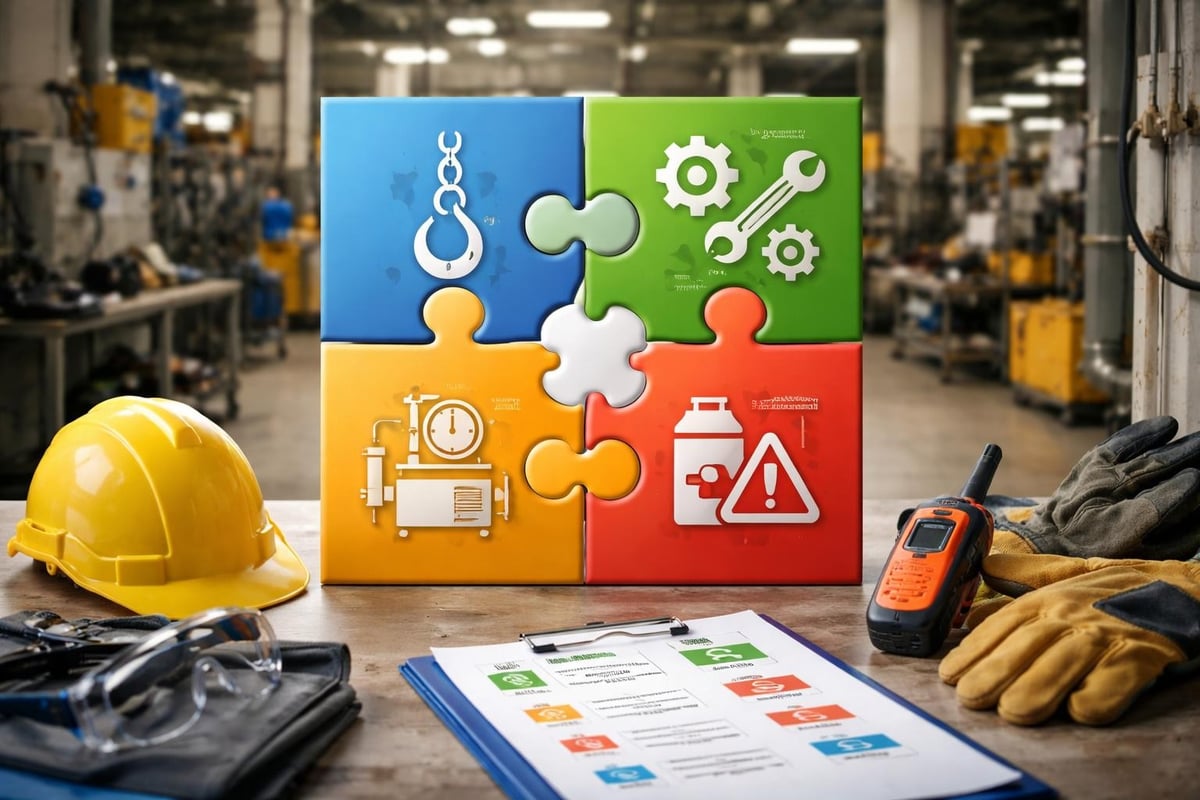
Statutory Inspection Requirements Under Key Regulations
Statutory workplace inspections form a critical component of regulatory compliance. These aren't optional assessments-they're legal requirements with specific frequencies, standards, and documentation needs. The consequences of non-compliance range from enforcement notices to prosecution, making understanding these obligations paramount.
LOLER: Lifting Equipment Compliance
The Lifting Operations and Lifting Equipment Regulations 1998 govern any equipment used for lifting people or loads. This includes cranes, hoists, lift trucks, lifting accessories, and even passenger lifts. LOLER requires thorough examinations by a competent person at intervals specified in an examination scheme or, if no scheme exists, at intervals determined by the equipment type and use.
LOLER inspections must verify that lifting equipment remains safe for continued use, identifying any deterioration, damage, or defects that could create risks. The regulation specifically mandates that examination reports be provided within 28 days, and any defects presenting imminent danger must be reported to the relevant enforcing authority immediately.
Examination Type | Timing | Purpose |
|---|---|---|
Initial examination | Before first use | Verify equipment is safe |
Periodic examination | As per scheme or 6-12 months | Identify deterioration |
Post-installation | After installation at new site | Confirm correct installation |
Exceptional circumstances | After significant modification | Ensure continued safety |
PUWER: Work Equipment Safety
PUWER applies broadly to virtually all work equipment, from hand tools to complex machinery. This regulation requires that equipment is suitable for its intended use, maintained in safe working order, and inspected appropriately. For businesses operating engineering equipment, PUWER compliance involves regular inspections to identify hazards such as inadequate guarding, defective controls, or worn components.
The regulation places particular emphasis on maintenance and inspection intervals. Equipment must be inspected at suitable intervals and whenever circumstances might affect its safety. Detailed guidance on OSHA regulations provides international context, though UK businesses must follow domestic standards primarily.
Pressure Systems Safety Regulations
PSSR governs pressure systems including steam boilers, air receivers, pressure vessels, and associated pipework. The regulation requires a written scheme of examination prepared by a competent person, with examinations carried out according to the intervals specified in that scheme.
Pressure system failures can be catastrophic, making compliance absolutely essential. The regulation demands that systems are properly designed, safely operated, and regularly examined to detect deterioration before it becomes dangerous. Organisations operating pressure equipment must understand their obligations thoroughly.
Risk Assessment and Management Responsibilities
Effective compliance with workplace regulations begins with comprehensive risk assessment. The Management of Health and Safety at Work Regulations 1999 explicitly require employers to assess risks to employees and others affected by their activities. This assessment forms the foundation for determining what measures are needed to comply with specific regulations.
Key elements of workplace risk assessment include:
Identifying hazards present in the workplace
Determining who might be harmed and how
Evaluating risks and deciding on control measures
Recording significant findings and implementing controls
Reviewing assessments regularly and when circumstances change
For equipment-intensive environments, risk assessments must consider mechanical hazards, electrical dangers, pressure system risks, substance exposure, and human factors. NIOSH authoritative recommendations provide evidence-based guidance on reducing occupational injuries and illnesses.

The Role of Competent Persons
Workplace regulations frequently reference "competent persons"-individuals with the necessary skills, knowledge, and experience to perform specific tasks safely. For statutory inspections, competence isn't negotiable. The competent person conducting a LOLER examination, for instance, must understand lifting equipment engineering principles, deterioration mechanisms, and relevant standards.
Determining competence involves evaluating:
Relevant qualifications and certifications
Practical experience with similar equipment
Knowledge of applicable regulations and standards
Understanding of the specific workplace context
Ability to identify defects and assess their significance
Many businesses engage independent engineering inspection companies to provide competent person services, ensuring examinations meet statutory standards whilst avoiding conflicts of interest.
Documentation and Record-Keeping Requirements
Proper documentation forms an essential component of regulatory compliance. Workplace regulations typically require specific records to be kept for defined periods, providing evidence of compliance and a history of equipment condition. These records serve multiple purposes: demonstrating due diligence, supporting maintenance planning, and providing information for incident investigations.
Essential Documentation Elements
Different regulations prescribe different documentation requirements, but common elements include:
Thorough examination reports with detailed findings
Equipment registers identifying all items requiring inspection
Written schemes of examination for pressure systems
Risk assessments for equipment and operations
Maintenance records showing work performed
Training records demonstrating competence
The OSHA general safety references highlight the importance of comprehensive documentation in maintaining workplace safety standards.
Document Type | Retention Period | Purpose |
|---|---|---|
LOLER reports | Until next examination plus 2 years | Compliance evidence |
PSSR written schemes | Life of pressure system | Examination planning |
Risk assessments | Until superseded | Control measure justification |
Training records | Employment plus 6 years | Competence demonstration |
Digital vs. Paper Records
Modern businesses increasingly adopt digital record-keeping systems for workplace inspection documentation. Digital systems offer advantages including searchable databases, automated reminder systems for upcoming inspections, and easier sharing with enforcing authorities when required. However, the format matters less than ensuring records are accurate, accessible, and retained for the appropriate period.
Enforcement and Consequences of Non-Compliance
The Health and Safety Executive (HSE) and local authorities enforce workplace regulations across the UK. These bodies have extensive powers including unannounced inspections, the ability to take equipment out of service, and prosecution for serious breaches. Understanding the enforcement landscape helps businesses appreciate why proactive compliance proves far more cost-effective than reactive responses to enforcement action.
Enforcement Tools and Penalties
Inspectors employ a range of enforcement tools proportionate to the risks and circumstances they encounter:
Improvement Notices: Require specific improvements within a defined timeframe
Prohibition Notices: Immediately stop activities posing serious injury risk
Prosecution: For significant breaches or repeated non-compliance
Fee for Intervention: Recovering HSE's costs for time spent on material breaches
Prosecution for workplace regulation breaches can result in unlimited fines in Crown Court cases. Directors and senior managers can face personal liability where their conduct contributed to offences. The comprehensive overview of health and safety regulations details enforcement processes and employer obligations.
Industry-Specific Regulatory Considerations
Different sectors face unique regulatory challenges based on their equipment, processes, and hazards. Manufacturing facilities, warehouses, construction sites, and engineering workshops each operate under the same overarching regulations but apply them to vastly different contexts.
Manufacturing and Engineering Sectors
Manufacturing environments typically involve extensive machinery subject to PUWER, lifting equipment requiring LOLER compliance, and often pressure systems governed by PSSR. The concentration of equipment means inspection scheduling becomes complex, requiring careful coordination to minimise operational disruption whilst meeting statutory deadlines.
Common equipment requiring statutory inspection in manufacturing includes:
Overhead travelling cranes and gantry systems
Forklift trucks and other mobile lifting equipment
Machine tools with rotating or moving parts
Air receivers and compressed air systems
Local exhaust ventilation systems
Lifting accessories including slings, shackles, and chains
Production facilities benefit from developing comprehensive inspection frequency guides that consolidate all statutory obligations into a single schedule.
Construction and Temporary Works
Construction sites present particular challenges due to constantly changing environments, temporary installations, and equipment movement between locations. LOLER explicitly requires examination when lifting equipment is installed at a new site, adding to the inspection burden for construction companies.
Mobile elevating work platforms, temporary hoists, and tower cranes all require careful management under workplace regulations. The transient nature of construction work makes robust record-keeping systems essential for tracking equipment history across multiple sites.

Developing an Effective Compliance Programme
Systematic compliance programmes help businesses manage their workplace regulation obligations efficiently. Rather than treating inspections as isolated events, successful organisations integrate compliance into their operational management systems, ensuring statutory requirements are met as part of normal business processes.
Building a Compliance Framework
An effective compliance framework encompasses several interconnected elements:
Planning and Scheduling: Develop a master schedule capturing all inspection obligations, maintenance requirements, and training needs. This consolidated view prevents oversights and allows efficient resource allocation.
Competent Resource Management: Ensure access to competent persons for all required inspections, whether through employed staff or external providers. Verify and document competence regularly.
Documentation Systems: Implement robust systems for capturing, storing, and retrieving inspection reports, certificates, and related documentation. Digital systems often provide superior functionality compared to paper-based approaches.
Training and Awareness: Ensure staff understand relevant regulations, their personal responsibilities, and the importance of compliance. Regular refresher training maintains awareness and adapts to regulatory changes.
Review and Improvement: Periodically review the compliance programme's effectiveness, identifying opportunities for improvement. Safety compliance expertise supports continuous enhancement of workplace safety standards.
Integrating External Inspection Services
Many organisations engage specialist engineering inspection companies to conduct statutory examinations. This approach offers several advantages including guaranteed competence, independence, and access to specialised equipment for testing. When selecting providers, businesses should verify appropriate accreditations, insurance coverage, and specific industry experience.
The relationship between businesses and inspection providers works best when built on clear communication about operational constraints, equipment criticality, and reporting preferences. Discussing inspection scheduling well in advance allows providers to allocate appropriate resources whilst businesses plan for any necessary equipment downtime.
Regulatory Changes and Future Developments
Workplace regulations evolve in response to emerging risks, technological advances, and lessons from incidents. Staying informed about regulatory changes forms part of ongoing compliance obligations. The HSE regularly consults on proposed regulatory amendments, providing opportunities for businesses to contribute to the development of practical, effective standards.
Recent years have seen increased emphasis on competence verification, more detailed guidance on examination scope, and enhanced expectations around risk assessment documentation. The OSHA reference texts on industrial hygiene and occupational medicine offer valuable international perspectives on evolving workplace safety practices.
Technology's Impact on Compliance
Digital technologies are transforming how businesses manage workplace regulation compliance. Equipment monitoring systems can provide real-time data on operating conditions, potentially informing examination intervals through condition-based approaches. Mobile applications streamline inspection processes, allowing immediate digital report generation and automatic integration with compliance management systems.
However, technology complements rather than replaces regulatory requirements. Regardless of available technology, statutory examinations must still be conducted by competent persons at appropriate intervals, with findings properly documented and defects addressed promptly.
Cost-Effective Compliance Strategies
Compliance with workplace regulations requires investment in inspections, maintenance, training, and documentation. However, the costs of non-compliance-including enforcement action, equipment damage, and potential injuries-far exceed proactive compliance expenses. Smart businesses view regulatory compliance as risk management rather than merely a cost burden.
Several approaches help optimise compliance costs:
Consolidating inspections: Where regulations permit, combining related inspections reduces administrative overhead and equipment downtime
Preventive maintenance: Regular maintenance identified through inspections prevents expensive breakdowns and extends equipment life
Staff training: Developing internal competence for routine inspections reduces reliance on external services where appropriate
Multi-year agreements: Establishing relationships with inspection providers often secures preferential rates and priority scheduling
Understanding comprehensive inspection regulations helps businesses develop efficient compliance strategies aligned with statutory obligations.
Common Compliance Pitfalls and How to Avoid Them
Despite the clear requirements of workplace regulations, businesses frequently encounter compliance challenges. Recognising common pitfalls enables proactive measures to avoid them.
Equipment inventory gaps: Failing to identify all equipment requiring statutory inspection represents a significant compliance risk. Comprehensive equipment registers should capture every item subject to LOLER, PUWER, PSSR, or other regulations, regardless of age or usage frequency.
Inadequate examination scheduling: Allowing examinations to lapse, even briefly, constitutes non-compliance. Robust scheduling systems with advance warnings prevent oversights.
Incomplete defect resolution: Identifying defects during inspections achieves nothing if corrective action isn't promptly implemented. Systems should track defects through to verified completion of remedial work.
Poor documentation practices: Missing reports, incomplete records, or inadequate retention periods create compliance vulnerabilities. The detailed OSHA handbook emphasises documentation's critical role in demonstrating regulatory compliance.
Competence assumptions: Assuming individuals possess necessary competence without verification creates risks. Regular competence reviews ensure personnel conducting or overseeing inspections maintain required knowledge and skills.
Navigating workplace regulations successfully requires understanding statutory obligations, implementing systematic compliance processes, and maintaining detailed documentation across all relevant equipment and operations. Whether managing lifting equipment, work machinery, pressure systems, or hazardous substance controls, regulatory compliance protects both people and business interests. Workplace Inspection Services Ltd supports organisations throughout the UK with expert statutory inspections under LOLER, PUWER, PSSR, and COSHH/LEV regulations, helping businesses maintain compliance, reduce operational risk, and create safer working environments through professional, independent engineering examination services.