Safety Compliance Company: UK Standards & Best Practice
Safety Compliance Company: UK Standards & Best Practice

Workplace safety compliance has never been more critical for UK businesses. With evolving regulations, stricter enforcement, and heightened awareness of employee welfare, organisations across all sectors face mounting pressure to maintain rigorous safety standards. A safety compliance company provides the expertise, inspection services, and regulatory guidance necessary to navigate this complex landscape. From statutory examinations to comprehensive risk assessments, these specialist providers ensure businesses meet their legal obligations whilst creating safer working environments for everyone.
Understanding the Role of a Safety Compliance Company
A safety compliance company serves as the bridge between regulatory requirements and practical workplace implementation. These organisations specialise in interpreting complex legislation, conducting thorough inspections, and providing actionable recommendations that keep businesses compliant.
The primary function extends beyond simple tick-box exercises. Professional compliance providers deliver comprehensive assessments of workplace equipment, systems, and processes. They identify potential hazards before they become incidents, document findings in legally recognised formats, and guide organisations through corrective actions.
Core Services and Expertise
Modern safety compliance companies offer diverse services tailored to specific regulatory frameworks:
Statutory equipment inspections under LOLER, PUWER, and PSSR regulations
Environmental monitoring including LEV testing and COSHH assessments
Risk assessment consultancy and safety management system development
Training and competency verification for equipment operators
Emergency preparedness planning and evacuation procedure reviews
Each service area requires specialized knowledge. Engineers conducting inspections must hold relevant qualifications and maintain current understanding of regulatory updates. This expertise ensures inspections meet both the letter and spirit of safety legislation.

Regulatory Frameworks Governing UK Workplaces
British workplace safety legislation creates a comprehensive framework protecting employees and visitors. Understanding these regulations helps businesses appreciate why engaging a safety compliance company proves invaluable.
The Health and Safety at Work Act 1974 establishes foundational duties for employers. However, specific regulations provide detailed requirements for particular hazards and equipment types. OSHA's compliance assistance resources offer valuable insights applicable across jurisdictions, though UK businesses must primarily focus on domestic legislation.
Key Statutory Inspection Requirements
Regulation | Equipment Covered | Inspection Frequency | Certification Required |
|---|---|---|---|
LOLER 1998 | Lifting equipment, hoists, cranes | Minimum annually | Thorough examination certificate |
PUWER 1998 | Work equipment, machinery | Risk-based intervals | Inspection report |
PSSR 2000 | Pressure systems, vessels | Based on written scheme | Examination certificate |
COSHH 2002 | LEV systems, extraction | Minimum 14 months | LEV test certificate |
These regulations don't exist in isolation. A comprehensive safety compliance company understands how different requirements interact. For example, a mobile elevating work platform might require inspection under both LOLER and PUWER, depending on usage patterns.
Businesses operating across multiple sites must ensure consistency. A safety compliance company with nationwide coverage provides standardised inspection protocols whilst accommodating site-specific variations. This approach delivers both efficiency and thoroughness.
Selecting the Right Safety Compliance Partner
Choosing an appropriate safety compliance company requires careful consideration. Not all providers offer equivalent expertise, and the wrong selection can expose businesses to continued risk despite apparent compliance efforts.
Independence represents a crucial factor. Companies that sell equipment and provide inspections face inherent conflicts of interest. Truly independent inspectors assess equipment objectively, without financial incentive to recommend replacements or upgrades unnecessarily.
Essential Qualifications and Credentials
Competent inspectors typically hold:
Engineering qualifications relevant to equipment types
Accreditation from recognised professional bodies
Specific training certificates for specialized equipment
Insurance coverage including professional indemnity
Proven track record across similar industries
Understanding inspection regulations helps businesses evaluate potential partners effectively. The right safety compliance company demonstrates transparency about inspector qualifications and welcomes questions about methodology.
Response times matter significantly. Equipment failures don't follow convenient schedules, and delayed inspections can halt operations. Providers offering rapid deployment and flexible scheduling minimise business disruption whilst maintaining safety standards.
Industry-Specific Compliance Challenges
Different sectors face unique safety compliance challenges. A safety compliance company with broad industry experience recognises these variations and tailors approaches accordingly.
Manufacturing environments present complex machinery risks. Manufacturing facilities typically operate numerous power presses, conveyor systems, and material handling equipment. Each requires regular inspection under appropriate regulations, creating substantial administrative burdens alongside technical challenges.
Sector-Specific Considerations
Warehousing and Logistics
Forklift trucks, pallet racking, and loading equipment dominate these environments. High equipment utilisation rates accelerate wear, potentially shortening safe operating intervals. A specialized safety compliance company understands these pressures and recommends appropriate inspection frequencies.
Healthcare and Care Facilities
Patient hoists, mobility aids, and specialized medical equipment require particularly careful attention. Failure risks patient safety alongside staff welfare. Care homes need providers experienced in sensitive environments where inspections must accommodate ongoing care delivery.
Hospitality Sector
Hotels, restaurants, and cafes often overlook compliance requirements. Kitchen extraction systems, goods lifts, and laundry equipment all fall under statutory inspection regimes. Many operators remain unaware until enforcement action occurs.

Inspection Methodologies and Standards
Professional safety compliance companies follow structured inspection methodologies ensuring thoroughness and consistency. These approaches combine visual examination, functional testing, and detailed documentation.
The inspection process typically begins with equipment identification and history review. Inspectors examine previous reports, noting recurring issues or progressive deterioration. This historical context informs current assessment priorities.
Visual examination identifies obvious defects: corrosion, damage, wear, or modifications. Experienced inspectors recognise subtle indicators suggesting underlying problems. Surface cracks might indicate structural fatigue; unusual wear patterns could reveal operational misuse.
Testing Procedures and Acceptance Criteria
Functional testing verifies equipment operates safely under working conditions. For lifting equipment examined under LOLER inspections, this includes load testing, control response verification, and safety device functionality checks. Each test follows established protocols ensuring repeatable, objective results.
Non-destructive testing techniques supplement visual and functional examinations:
Ultrasonic testing detects internal flaws in critical components
Magnetic particle inspection reveals surface and near-surface cracks
Dye penetrant testing identifies surface-breaking defects
Radiographic examination assesses internal weld quality
Standards provide acceptance criteria. A competent safety compliance company references appropriate British Standards, manufacturer specifications, and industry guidance documents. Understanding ANSI Z535 standards demonstrates how standardized approaches improve consistency, though UK businesses primarily follow BSI standards.
Documentation and Record Keeping Requirements
Comprehensive documentation forms the backbone of effective compliance management. A safety compliance company must deliver clear, legally compliant records supporting business defensibility.
Inspection reports should include:
Unique equipment identification details
Inspection date, scope, and methodology
Detailed findings with photographic evidence
Risk categorization of identified defects
Specific remedial recommendations with timeframes
Inspector credentials and certification
Digital record systems increasingly replace paper documentation. Cloud-based platforms enable instant access, automated renewal reminders, and multi-site visibility. Businesses can track compliance status across entire equipment portfolios from single dashboards.
Retention and Accessibility
Regulations specify minimum retention periods. LOLER certificates must remain available until the next examination plus two years. However, compliance best practices for 2026 recommend longer retention supporting trend analysis and incident investigation.
Accessibility matters equally. During inspections, enforcement officers expect immediate documentation access. A professional safety compliance company ensures clients can retrieve records quickly, avoiding delays that suggest poor management.
Risk Management and Hazard Mitigation
Beyond statutory compliance, forward-thinking safety compliance companies help clients build proactive risk management cultures. Identifying hazards represents just the starting point; effective mitigation requires systematic approaches.
Risk assessment frameworks prioritize actions based on severity and likelihood. A catastrophic but unlikely event might receive less immediate attention than a moderate hazard occurring frequently. This pragmatic approach optimizes safety investments.
Hierarchy of Control Measures
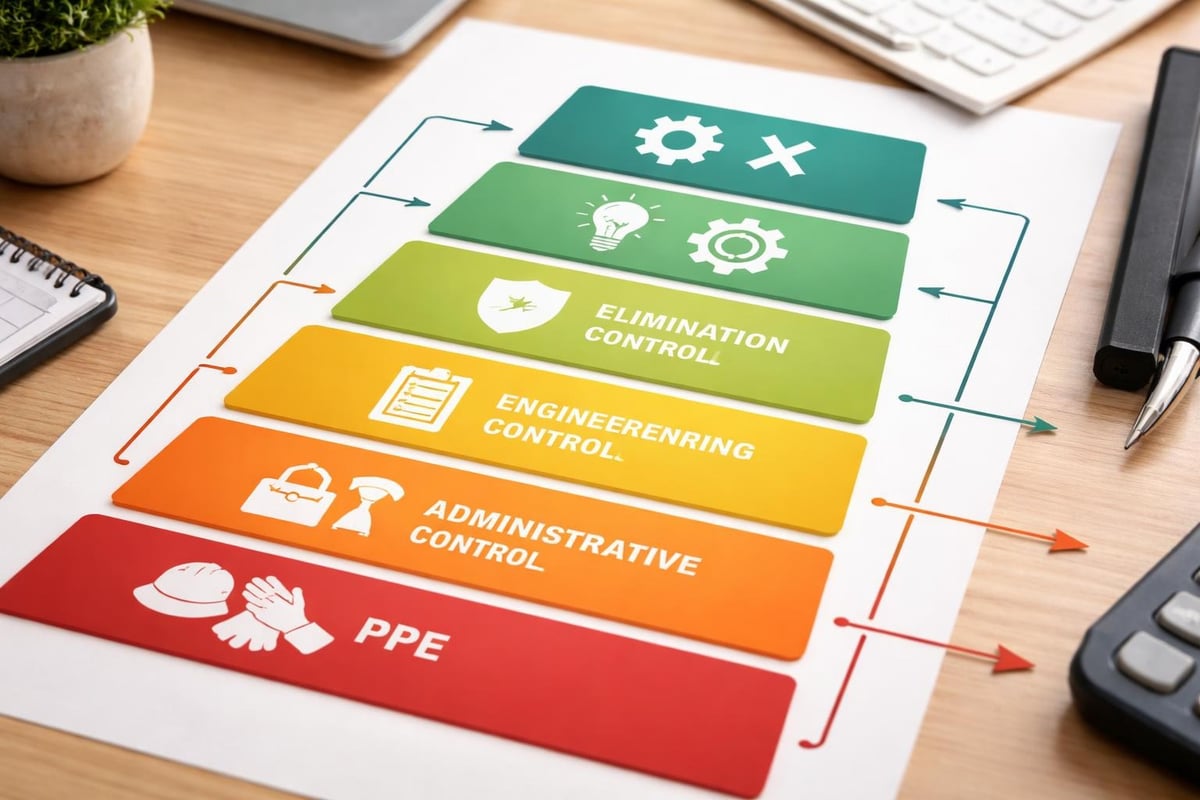
Professional advisers recommend control measures following established hierarchies:
Priority Level | Control Type | Example Application |
|---|---|---|
1 | Elimination | Remove hazardous process entirely |
2 | Substitution | Replace dangerous substance with safer alternative |
3 | Engineering controls | Install machine guarding, ventilation systems |
4 | Administrative controls | Implement safe working procedures, permits |
5 | Personal protective equipment | Provide appropriate PPE as last resort |
A quality safety compliance company doesn't simply identify defects. They recommend practical solutions balancing safety improvement with operational requirements. Unrealistic recommendations that businesses cannot implement provide no actual safety benefit.
Cost Considerations and Value Proposition
Engaging a safety compliance company represents an investment requiring justification. Forward-thinking businesses recognise that compliance costs pale against potential consequences of non-compliance.
Direct costs include inspection fees, remedial works, and documentation systems. These expenses are predictable and manageable through planned maintenance budgets. Indirect costs of non-compliance prove far more substantial: enforcement fines, increased insurance premiums, production downtime, and reputational damage.
The Health and Safety Executive issues substantial penalties for serious breaches. Recent prosecutions demonstrate courts' willingness to impose six-figure fines on organizations demonstrating systematic compliance failures. Even minor breaches trigger improvement notices requiring costly corrective actions.
Return on Investment Analysis
Consider the financial impact of equipment failure:
Downtime costs from production halts during investigations
Replacement expenses for damaged equipment and materials
Injury compensation including legal costs and increased premiums
Brand damage affecting customer confidence and contract opportunities
A comprehensive safety compliance company helps quantify these risks. By demonstrating potential loss scenarios, they justify proactive investment in proper inspection regimes. Many businesses discover that systematic compliance actually reduces total ownership costs through optimized maintenance scheduling.
Inspection frequency guidance helps businesses plan budgets effectively. Understanding typical intervals for different equipment types enables accurate cost forecasting and prevents budget surprises.
Technology Integration and Digital Solutions
Modern safety compliance companies leverage technology enhancing service delivery and client value. Digital transformation affects every aspect of compliance management, from initial inspections through ongoing monitoring.
Mobile inspection platforms enable real-time reporting. Inspectors complete forms on tablets, capturing photographs and measurements directly into cloud systems. Clients receive reports within hours rather than weeks, accelerating corrective action timelines.
Emerging Technologies
Internet of Things (IoT) Sensors
Continuous monitoring systems track equipment performance between inspections. Vibration sensors detect bearing wear; temperature monitoring identifies lubrication problems. Early warnings enable preventive maintenance before failures occur.
Artificial Intelligence Analysis
Machine learning algorithms analyze historical inspection data, predicting failure probabilities. These insights help optimize inspection intervals, focusing resources on highest-risk equipment whilst extending intervals for reliable assets.
Augmented Reality Support
Remote expert assistance uses AR overlays guiding on-site personnel through complex procedures. This technology proves particularly valuable for urgent safety assessments when specialist inspectors cannot attend immediately.
Progressive safety compliance companies invest in these technologies, delivering enhanced service whilst improving efficiency. However, technology supplements rather than replaces human expertise. Experienced engineers remain essential for nuanced judgement calls technology cannot replicate.
Training and Competency Development
A responsible safety compliance company recognises that inspection certificates alone don't ensure safety. Equipment operators must understand proper usage, maintenance responsibilities, and hazard recognition.
Many providers offer training programmes complementing inspection services. Courses cover:
Equipment-specific operation procedures
Daily pre-use inspection techniques
Hazard identification and reporting protocols
Emergency response procedures
Maintenance fundamentals
Competency verification presents particular challenges. Demonstrating operator capability requires more than attendance certificates. Practical assessments confirm individuals can safely perform tasks under supervision before authorizing independent operation.
Building Safety Cultures
The most effective safety compliance companies function as cultural change agents. Through regular interaction, they reinforce safety priorities and encourage proactive hazard management. Site personnel who understand "why" behind requirements demonstrate better compliance than those simply following instructions.
Workplace danger awareness extends beyond specific equipment. Comprehensive safety cultures embed risk consciousness into daily operations. Employees at all levels recognize responsibilities and feel empowered to raise concerns without fear of repercussions.
Audit Preparedness and Enforcement Engagement
Health and Safety Executive inspections create significant stress for unprepared businesses. A professional safety compliance company helps clients maintain audit-ready status, minimizing disruption when inspectors arrive.
Preparation involves systematic record organization, equipment identification marking, and staff briefing. When inspectors request documentation, immediate production demonstrates management commitment and organizational competence. Delays or missing records suggest poor safety culture, inviting closer scrutiny.
Common Enforcement Issues
OSHA's most frequently cited standards reveal recurring compliance failures. Whilst American-focused, parallels exist in UK enforcement patterns:
Inadequate hazard communication and signage
Insufficient fall protection systems
Respiratory protection programme deficiencies
Machine guarding inadequacies
Electrical safety standard violations
Understanding common pitfalls helps businesses focus improvement efforts. A knowledgeable safety compliance company identifies these vulnerabilities during routine inspections, addressing issues before regulators discover them.
International Standards and Global Operations
Businesses operating internationally face additional complexity. Different jurisdictions impose varying requirements, though increasing harmonization simplifies compliance for multinational operations.
IEC 61508 functional safety standards provide internationally recognized frameworks for safety-critical systems. Whilst not directly applicable to all equipment, these standards influence global best practices. Companies demonstrating IEC 61508 compliance often find regulatory acceptance easier across multiple territories.
For aerospace sector businesses, AS9100 quality management standards incorporate safety compliance within broader quality frameworks. A safety compliance company serving aerospace clients must understand these integrated requirements, ensuring inspection programmes support AS9100 certification.
Brexit Implications
Post-Brexit regulatory divergence creates potential complications. Whilst UK regulations currently mirror EU directives, future changes may occur. Businesses with European operations need safety compliance companies capable of navigating both frameworks, ensuring equipment meets requirements in all operational territories.
Continuous Improvement and Performance Monitoring
Compliance represents a journey rather than a destination. The most valuable safety compliance company relationships involve ongoing partnership supporting continuous improvement.
Performance metrics help track progress:
Defect trends showing whether issues increase or decrease over time
Overdue inspection percentages indicating scheduling effectiveness
Remedial action completion rates demonstrating response commitment
Near-miss reporting frequencies reflecting safety culture engagement
Lost time injury statistics providing ultimate outcome measures
Regular business reviews analyze these metrics, identifying improvement opportunities. A collaborative approach recognizes that clients and compliance providers share responsibility for safety outcomes. Neither party can succeed without the other's commitment.
Benchmarking and Industry Comparison
Understanding performance relative to industry peers provides valuable context. A business with higher defect rates might face more challenging operating conditions rather than poor maintenance. Conversely, significantly better performance might indicate inadequate inspection thoroughness.
Professional safety compliance companies access broad industry data through multiple client relationships. Whilst maintaining confidentiality, they can provide anonymized benchmarking insights helping clients understand their relative position. This intelligence informs strategic planning and resource allocation decisions.
Specialized Equipment and Complex Systems
Certain equipment types require particularly specialized expertise. Standard inspection capabilities prove insufficient for complex or unusual systems.
Pressure vessels operating under extreme conditions need inspectors understanding metallurgy, stress analysis, and fatigue mechanisms. Understanding written scheme requirements demonstrates the detailed planning necessary for pressure system examinations.
Niche Specializations
Fairground and Entertainment Equipment
Mobile rides present unique challenges combining structural integrity, dynamic loading, and public safety considerations. Specialized safety compliance companies serving this sector understand relevant codes and design standards.
Marine and Offshore Systems
Saltwater environments accelerate corrosion whilst access challenges complicate inspections. Offshore lifting equipment inspections require personnel with marine qualifications alongside engineering expertise.
Nuclear and Radiation Environments
Facilities handling radioactive materials need inspectors with radiation safety training and appropriate security clearances. Standard safety compliance companies cannot service these specialized requirements.
Businesses operating unusual equipment should verify potential providers possess relevant experience. General inspection capabilities don't automatically translate to niche equipment competency.
Effective safety compliance management protects businesses from regulatory enforcement whilst creating genuinely safer workplaces. Selecting the right safety compliance company requires evaluating independence, expertise, and cultural fit alongside basic service capabilities. For organizations across the UK seeking comprehensive statutory inspection services, Workplace Inspection Services Ltd delivers the specialized engineering expertise and nationwide coverage necessary to maintain compliance under LOLER, PUWER, PSSR, and COSHH regulations whilst supporting continuous safety improvement.