Safe Working Environment: Essential Guide for 2026
Safe Working Environment: Essential Guide for 2026

Creating and maintaining a safe working environment represents one of the most fundamental responsibilities for any organisation operating in the engineering and industrial sectors. Beyond the obvious moral imperative to protect employees from harm, a genuinely safe workplace delivers measurable benefits including improved productivity, reduced insurance premiums, enhanced staff retention and full regulatory compliance. As we progress through 2026, the landscape of workplace safety continues to evolve, with statutory requirements becoming increasingly comprehensive and enforcement more rigorous. Organisations must adopt a proactive, systematic approach to safety management that addresses both immediate hazards and long-term risk factors.
Understanding the Foundations of Workplace Safety
A safe working environment extends far beyond simply meeting minimum legal requirements. It encompasses a holistic approach to risk management that considers physical hazards, equipment safety, procedural controls and organisational culture. The most effective safety programmes recognise that protection begins with thorough hazard identification and continues through robust control measures, regular monitoring and continuous improvement.
Key Components of Safety Management
Physical Safety Elements:
Properly maintained equipment and machinery
Adequate guarding and safety devices
Clear walkways and emergency exits
Appropriate lighting and ventilation
Correctly stored hazardous materials
Procedural Controls:
Documented safe working procedures
Permit-to-work systems for high-risk activities
Regular safety audits and inspections
Incident reporting and investigation processes
Emergency response protocols
The CDC's NIOSH guidelines emphasise that workers themselves must be actively involved in identifying potential hazards and developing practical solutions. This collaborative approach ensures that safety measures reflect the reality of day-to-day operations rather than theoretical assumptions.

Statutory Compliance and Legal Obligations
The regulatory framework governing workplace safety in the UK is comprehensive and demanding. Organisations must navigate multiple pieces of legislation, each designed to address specific aspects of workplace risk. Understanding these requirements represents the foundation upon which a safe working environment is built.
Primary Health and Safety Regulations
The Health and Safety at Work Act 1974 establishes the overarching duty of care that employers owe to their employees and others who may be affected by their operations. However, more specific regulations address particular hazards and equipment types.
Regulation | Focus Area | Key Requirements |
|---|---|---|
LOLER 1998 | Lifting equipment | Thorough examination at specified intervals |
PUWER 1998 | Work equipment | Suitability, maintenance, inspection records |
PSSR 2000 | Pressure systems | Written scheme of examination, competent inspection |
COSHH 2002 | Hazardous substances | Risk assessment, exposure control, health surveillance |
Understanding inspection regulations enables organisations to develop compliant schedules that ensure equipment remains safe whilst meeting statutory obligations. Each regulation carries specific documentation requirements, and inspections must be conducted by competent persons with appropriate qualifications and experience.
Competent Person Requirements
Statutory inspections cannot be conducted by just anyone. The regulations specify that examinations must be performed by individuals or organisations possessing sufficient independence, competence and resources. This requirement ensures that inspections are thorough, objective and technically sound.
For organisations operating pressure systems, developing a written scheme of examination represents a legal requirement that outlines precisely how and when equipment will be inspected. This document must be prepared or certified by a competent person and tailored to the specific risks presented by each system.
Creating Effective Hazard Prevention Programmes
Preventing workplace accidents requires more than reactive measures following incidents. The most successful organisations implement comprehensive programmes that identify potential hazards before they cause harm. OSHA's hazard prevention guidance stresses that effective prevention involves establishing priorities based on risk severity and implementing controls according to the hierarchy of control measures.
The Hierarchy of Controls
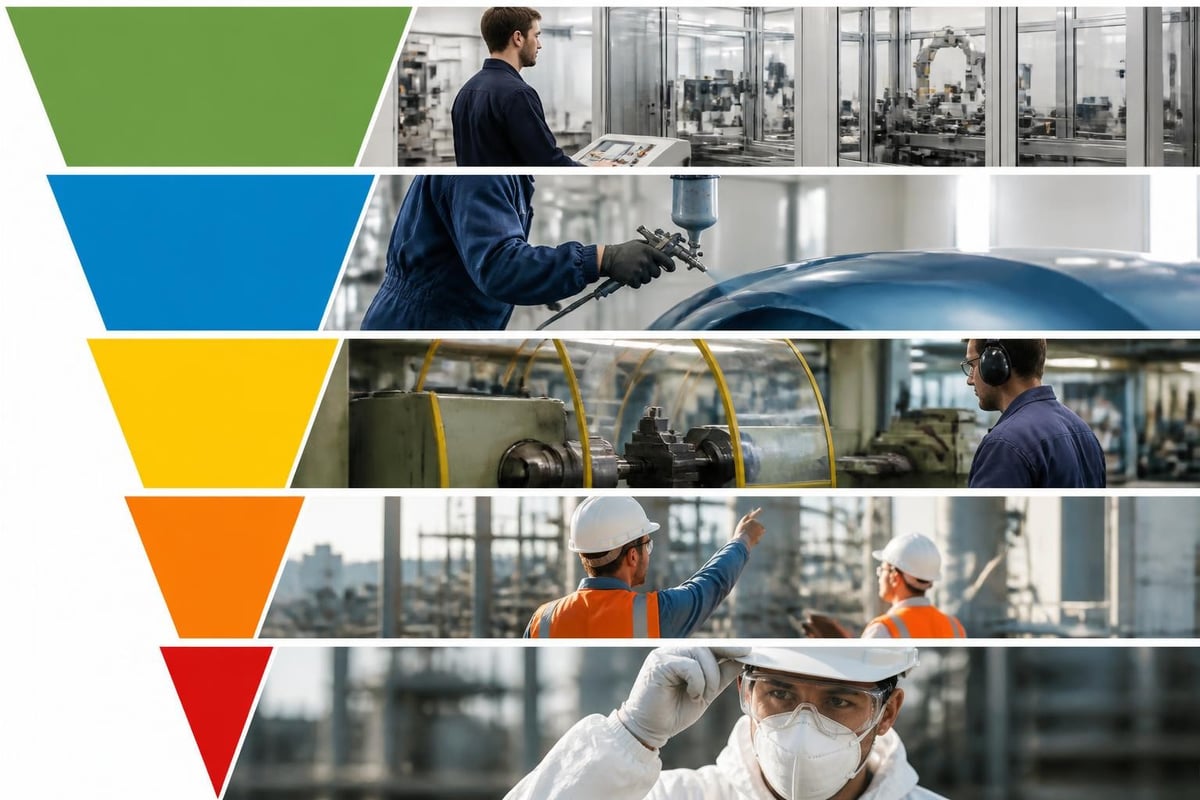
1. Elimination: Remove the hazard entirely where possible.
2. Substitution: Replace hazardous materials or processes with safer alternatives.
3. Engineering Controls: Install physical barriers, ventilation systems or guards.
4. Administrative Controls: Implement safe working procedures and training.
5. Personal Protective Equipment: Provide appropriate PPE as a last line of defence.
This hierarchy reflects the relative effectiveness of different control strategies. Elimination offers absolute protection, whilst PPE requires consistent correct usage and provides only personal protection. A robust safe working environment typically employs multiple control levels simultaneously.
Risk Assessment Methodology
Conducting thorough risk assessments forms the cornerstone of hazard prevention. These assessments must be systematic, documented and regularly reviewed.
Risk Assessment Steps:
Identify all hazards present in the workplace
Determine who might be harmed and how
Evaluate existing controls and identify gaps
Record findings and implement additional measures
Review assessments periodically and after changes
Each assessment should consider both routine operations and non-routine activities such as maintenance, cleaning or emergency situations. Special attention must be paid to vulnerable workers including young persons, expectant mothers and those with disabilities.
Equipment Inspection and Maintenance Programmes
Regular inspection and maintenance of workplace equipment represents a critical element in sustaining a safe working environment. Equipment failures account for a significant proportion of workplace accidents, many of which could be prevented through timely identification of defects.
Developing Inspection Schedules
The frequency of equipment inspections depends on multiple factors including equipment type, operating conditions, manufacturer recommendations and statutory requirements. Inspection frequency guidelines help organisations determine appropriate intervals that balance safety with operational efficiency.
Factors Influencing Inspection Frequency:
Statutory requirements and regulation-specific intervals
Equipment criticality and potential failure consequences
Operating environment and exposure to harsh conditions
Historical failure rates and maintenance records
Manufacturer specifications and recommendations
For lifting equipment, LOLER inspections must occur at intervals not exceeding those specified in the examination scheme, typically six or twelve months depending on equipment type and usage. These thorough examinations go beyond routine maintenance checks to assess structural integrity and safety-critical components.
Inspection Documentation
Maintaining comprehensive records of all inspections, examinations and maintenance activities is both a legal requirement and a practical necessity. These records demonstrate compliance, support insurance claims and help identify recurring issues requiring attention.
Document Type | Content Requirements | Retention Period |
|---|---|---|
Thorough examination reports | Defects, limitations, next examination date | Until superseded plus two years |
Maintenance logs | Work performed, parts replaced, technician details | Minimum five years |
Defect notifications | Immediate hazards, restrictions on use | Until defect remedied |
Competent person certificates | Qualifications, insurance, scope of competence | Current plus archived records |
Managing Hazardous Substances and Exposure Control
Many industrial and engineering environments involve substances hazardous to health, whether chemicals, dusts, fumes or biological agents. Effective control of these exposures is essential for protecting worker health and maintaining a safe working environment.
COSHH Assessment and Control
The Control of Substances Hazardous to Health Regulations require employers to prevent or adequately control exposure to hazardous substances. This begins with identifying all substances used or created during work processes and assessing the risks they present.
Exposure control often relies on Local Exhaust Ventilation (LEV) systems that capture contaminants at source before workers can inhale them. These systems require regular testing to confirm they remain effective. COSHH and LEV inspections verify that ventilation systems are performing correctly, adequately controlling exposure and protecting employee health.
LEV System Components Requiring Inspection:
Hoods and capture points positioned correctly
Ductwork free from damage and leaks
Fans operating at specified performance levels
Air cleaning equipment functioning effectively
Discharge arrangements preventing re-circulation
The regulations mandate thorough examination of LEV systems at least every 14 months, with more frequent testing for certain high-risk processes. These examinations must be conducted by competent persons and detailed records maintained.
Building a Positive Safety Culture
Technical controls and statutory compliance provide the framework for workplace safety, but genuine protection requires a culture where safety is genuinely valued at all organisational levels. Forbes highlights that creating this culture demands consistent leadership commitment and active employee engagement.
Leadership and Accountability
Senior management sets the tone for safety culture through visible commitment and resource allocation. When leaders demonstrate that safety genuinely matters through their decisions and behaviour, employees recognise this priority.
Leadership Actions That Strengthen Safety Culture:
Conducting regular safety walkabouts and engaging with frontline workers
Allocating adequate budgets for safety equipment and training
Investigating all incidents thoroughly regardless of severity
Recognising and rewarding safe behaviour
Including safety performance in management objectives
Accountability must extend throughout the organisation with clear responsibilities defined at every level. Supervisors require authority to stop unsafe work, whilst individual employees must understand their personal safety obligations.
Employee Engagement and Consultation
Workers possess intimate knowledge of operational realities and potential hazards. Organisations that harness this knowledge through structured consultation develop more effective safety measures. Safety committees, regular toolbox talks and suggestion schemes create channels for employee input.
Training represents another critical element of engagement. Workers cannot work safely without understanding the hazards they face and the controls protecting them. Training must be specific, practical and regularly refreshed to remain effective.
Monitoring, Auditing and Continuous Improvement
A safe working environment requires ongoing attention rather than one-time implementation. Systematic monitoring identifies emerging risks whilst auditing verifies that safety systems function as intended.
Active and Reactive Monitoring
Active Monitoring Activities:
Scheduled workplace inspections
Safety observation programmes
Equipment pre-use checks
Environmental monitoring for contaminants
Review of safety documentation
Reactive Monitoring Activities:
Accident and incident investigation
Analysis of near-miss reports
Occupational health surveillance results
Insurance claims and liability issues
Regulatory enforcement actions
Both approaches provide valuable data. Active monitoring identifies potential problems before harm occurs, whilst reactive monitoring reveals where controls have failed and require strengthening.

Safety Performance Indicators
Measuring safety performance enables organisations to track progress and identify areas requiring attention. Effective metrics combine leading indicators that predict future performance with lagging indicators that reflect historical outcomes.
Indicator Type | Examples | Value |
|---|---|---|
Leading | Training completion rates, inspection findings, near-miss reports | Predict future performance |
Lagging | Accident rates, lost time injuries, enforcement notices | Show historical outcomes |
Cultural | Safety survey results, reporting culture, engagement levels | Indicate underlying attitudes |
Reviewing these indicators regularly at management meetings ensures safety remains visible and receives appropriate attention. Paylocity emphasises that truly safe workplaces address both physical safety and psychological well-being, creating environments where people feel secure raising concerns.
Managing Change and Non-Routine Operations
Many workplace accidents occur during non-routine activities or following changes to equipment, processes or personnel. Effective management of change ensures that safety considerations inform decisions before implementation.
Change Management Protocols
Any significant change should trigger a formal review process that considers safety implications. This includes new equipment installation, process modifications, organisational restructuring or changes to working arrangements.
Change Management Steps:
Describe the proposed change and reasons
Identify affected activities and personnel
Assess new or altered risks
Implement additional control measures
Update risk assessments and procedures
Communicate changes to affected workers
Provide necessary training and information
Temporary works and maintenance activities present particular challenges. Permit-to-work systems provide structured control for high-risk activities such as hot work, confined space entry or work on energised electrical systems.
Contractor Management
When contractors work on site, responsibility for their safety typically rests with the organisation controlling the workplace. Effective contractor management includes pre-qualification checks, site-specific inductions, coordination of activities and monitoring of performance.
Clear communication prevents contractors from unknowingly creating hazards for employees or vice versa. Understanding compliance and safety requirements applicable to specific industries helps organisations brief contractors appropriately.
Integrating Safety Into Operational Excellence
The most successful organisations recognise that safety and productivity complement rather than conflict with each other. A genuinely safe working environment actually enhances efficiency by reducing downtime, improving employee morale and streamlining operations.
Safety and Business Performance
Research consistently demonstrates that organisations with strong safety records outperform competitors across multiple metrics. Reduced accident rates translate directly into lower insurance premiums, whilst effective hazard prevention minimises equipment damage and production disruptions.
Strong safety performance also enhances reputation, supporting customer relationships and recruitment efforts. Prospective employees increasingly consider workplace safety when evaluating potential employers, particularly in sectors with historically high accident rates.
Business Benefits of Enhanced Safety:
Reduced workers' compensation and liability costs
Lower insurance premiums and better coverage terms
Decreased absenteeism and staff turnover
Improved productivity and quality
Enhanced reputation and competitive advantage
Simplified regulatory compliance and reduced enforcement risk
Best practices from construction safety demonstrate how comprehensive safety programmes deliver measurable returns on investment whilst protecting the most valuable asset of any organisation.
Procurement and Design Considerations
Safety considerations should influence decisions from the earliest stages of project planning. Designing out hazards during procurement proves far more effective than attempting to control risks after equipment arrives on site. Specifications should address safety features explicitly, requiring suppliers to demonstrate compliance with relevant standards.
Similarly, involving safety professionals in facility design ensures that layouts support safe operations. Adequate space for maintenance access, appropriate materials handling routes and effective segregation of pedestrians from vehicle movements all contribute to safer operations.
Emergency Preparedness and Response
Despite comprehensive prevention measures, organisations must prepare for potential emergencies including fires, chemical releases, medical emergencies and natural disasters. Effective emergency response minimises harm when incidents occur.
Emergency Planning Requirements
Essential Emergency Plan Elements:
Clear evacuation procedures and assembly points
Designated emergency coordinators and deputies
Communication systems for alerting personnel
Coordination with emergency services
Arrangements for vulnerable persons
Emergency equipment locations and maintenance
Regular drills and exercises
Emergency plans require regular testing through drills that simulate realistic scenarios. These exercises identify gaps in arrangements whilst familiarising personnel with their roles. Following each drill, debriefing sessions should identify lessons and drive improvements.
First aid provision represents another critical element. The Health and Safety (First Aid) Regulations require employers to provide adequate equipment, facilities and trained personnel based on workplace risks and workforce size. Regular refresher training ensures first aiders maintain competence.
Technology and Innovation in Safety Management
Advancing technology offers new tools for enhancing workplace safety. From digital inspection platforms to sensor-based monitoring systems, innovation continues reshaping safety management approaches.
Digital Safety Management Systems
Modern safety management increasingly relies on digital platforms that centralise documentation, automate reminders and provide real-time visibility of safety performance. These systems track inspection schedules, manage training records, coordinate audits and analyse incident data.
Advantages of Digital Safety Systems:
Automated scheduling prevents missed inspections
Mobile access supports on-site data capture
Integrated analytics identify trends and patterns
Centralised records simplify compliance demonstration
Improved communication across multiple sites
Organisations operating nationwide particularly benefit from systems that provide consistent processes across locations whilst enabling local customisation where appropriate.
Emerging Safety Technologies
Innovation continues introducing new capabilities for hazard detection and control. Wearable technology can monitor worker exposure to hazards and provide alerts when thresholds are exceeded. Drones enable inspection of hazardous or difficult-to-access locations without exposing personnel to risk.
However, technology represents a tool rather than a complete solution. Antea Group's EHS best practices emphasise that successful safety management requires balancing technological capabilities with human expertise, organisational culture and systematic processes. Technology should enhance rather than replace fundamental safety disciplines.
Establishing and maintaining a safe working environment demands systematic attention to statutory compliance, hazard prevention, equipment maintenance and cultural development. Organisations that integrate safety into operational planning whilst engaging employees at all levels create workplaces where people thrive whilst business objectives advance. For comprehensive support with statutory inspections and compliance across engineering operations, Workplace Inspection Services Ltd provides expert examination services under LOLER, PUWER, PSSR and COSHH/LEV regulations, helping organisations throughout the UK maintain the highest safety standards whilst meeting their legal obligations.