Safe to Work: A Guide to Workplace Safety Compliance
Safe to Work: A Guide to Workplace Safety Compliance
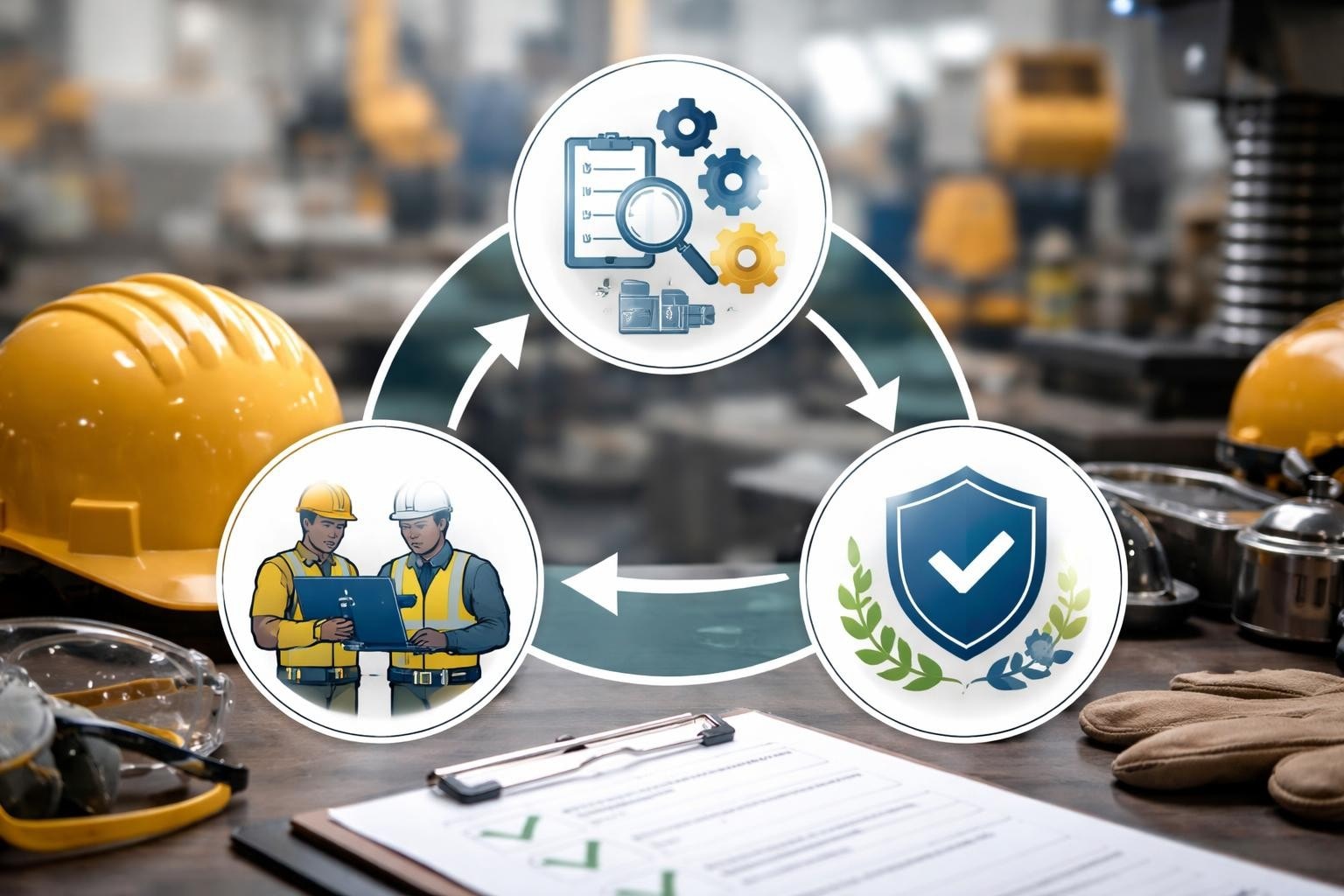
Ensuring workplace equipment and systems are safe to work with represents one of the most critical responsibilities for employers across all industries. The legal and moral obligation to protect employees extends beyond simple awareness-it requires systematic inspection processes, thorough risk assessments and adherence to statutory regulations. When machinery, lifting equipment, pressure systems or ventilation controls are deemed safe to work with, organisations demonstrate their commitment to preventing accidents, maintaining compliance and creating an environment where employees can perform their duties without unnecessary risk.
Understanding the Safe to Work Concept
The designation that equipment or a work area is safe to work within carries significant weight in engineering and industrial contexts. This determination isn't made arbitrarily but through structured assessment processes that evaluate condition, maintenance history and compliance with applicable safety standards.
Legal Framework for Safe to Work Determinations
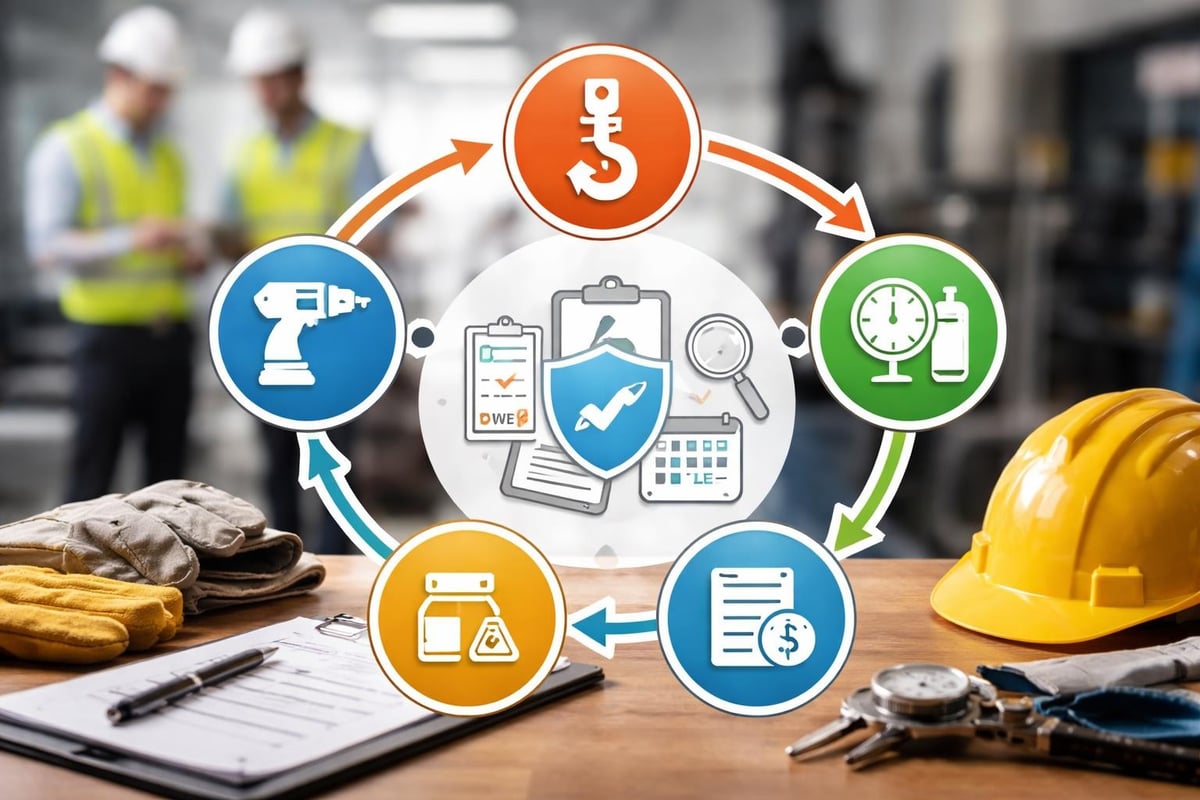
Several statutory regulations govern whether equipment can be certified as safe to work. The Provision and Use of Work Equipment Regulations 1998 (PUWER) establishes fundamental requirements for machinery safety, whilst the Lifting Operations and Lifting Equipment Regulations 1998 (LOLER) specifically addresses lifting equipment. Similarly, the Pressure Systems Safety Regulations 2000 (PSSR) and Control of Substances Hazardous to Health (COSHH) regulations create frameworks within which safety assessments occur.
These regulations collectively mandate:
Regular thorough examinations by competent persons
Written schemes of examination for specified equipment types
Immediate reporting of defects that could cause danger
Comprehensive record-keeping of all inspections and remedial actions
Understanding inspection regulations helps organisations establish compliant frameworks that genuinely protect their workforce whilst avoiding enforcement action from regulatory bodies.
The Role of Competent Persons
Determining whether equipment is safe to work demands expertise beyond general management knowledge. Competent persons possess the combination of training, experience and knowledge necessary to identify defects, assess risk severity and make informed judgements about equipment safety.
The Health and Safety Executive (HSE) defines competence not merely as theoretical understanding but practical capability to recognise hazards specific to the equipment type and working environment. This expertise becomes particularly crucial when safety inspections reveal marginal defects that require professional judgement to categorise.
Categories of Workplace Equipment Requiring Safety Certification
Different equipment types present unique hazards and consequently require specialised inspection approaches to confirm they're safe to work with under operational conditions.
Lifting Equipment and Accessories
Cranes, hoists, lifting slings, shackles and similar equipment operate under extreme loads where failure can result in catastrophic consequences. LOLER inspections provide the systematic examination framework that confirms lifting equipment remains fit for purpose, with particular attention to load-bearing components, safety devices and structural integrity.
Equipment Type | Primary Hazards | Key Inspection Focus |
|---|---|---|
Overhead cranes | Structural failure, dropped loads | Wire rope condition, brake function, limit switches |
Mobile elevated work platforms | Overturn, falls from height | Stability mechanisms, guard rails, emergency controls |
Lifting slings | Sudden failure under load | Fabric/chain wear, end fittings, identification markings |
Passenger/goods lifts | Entrapment, uncontrolled movement | Door interlocks, overspeed governors, buffer performance |
Each category requires specific technical knowledge to accurately assess whether the equipment remains safe to work at its rated capacity.
Pressure Systems and Vessels
Air receivers, steam boilers, pressure pipework and associated protective devices present explosion and release hazards when compromised. The comprehensive approach to pressure vessel safety involves both external examination and, where appropriate, internal inspection or non-destructive testing methods.
Pressure system inspections evaluate:
Vessel shell thickness and corrosion levels
Safety valve calibration and operation
Pressure gauge accuracy
Protective device integrity
Support and mounting condition
Pipework joints and connections
Only after thorough assessment can pressure systems be confirmed as safe to work under operating pressures and temperatures.
Developing Effective Written Schemes of Examination
A written scheme serves as the blueprint for maintaining equipment in a safe to work condition throughout its operational life. This document specifies examination intervals, inspection scope and the competencies required of examining engineers.
Components of a Robust Written Scheme
Effective written schemes balance regulatory requirements with operational realities. They must be sufficiently detailed to guide competent persons whilst remaining flexible enough to accommodate changing circumstances or equipment modifications.
Essential elements include:
Equipment identification: Precise descriptions including serial numbers, locations and capacities
Examination intervals: Frequencies based on risk assessment, manufacturer guidance and regulatory minimums
Scope of examination: Specific components, systems or parameters to be assessed
Testing requirements: Functional tests, load tests or non-destructive examination methods
Reporting criteria: Standards for categorising defects and timescales for remedial action
The scheme should reflect actual operating conditions rather than generic templates. Equipment operating in corrosive environments, high-duty cycles or critical applications may require more frequent examination than standard intervals suggest.

Inspection Frequency and Risk-Based Approaches
Determining how often equipment must be examined to remain safe to work involves balancing statutory requirements with practical risk assessment. As outlined by guidance on statutory engineering inspections, different equipment types carry different baseline examination frequencies.
Standard Examination Intervals
The inspection frequency guide provides framework timings, though these represent maximum intervals rather than rigid schedules:
LOLER lifting equipment: Six or twelve months depending on equipment type and usage
PUWER machinery: As determined by risk assessment, typically annually
PSSR pressure systems: Intervals specified in the written scheme, commonly twelve to twenty-six months
LEV systems: Fourteen months maximum between thorough examinations
These baseline frequencies can be shortened where risk assessments identify accelerated deterioration potential, harsh operating environments or safety-critical applications.
Factors Influencing Examination Frequency
Several variables should inform decisions about whether standard intervals adequately ensure equipment remains safe to work:
Risk Factor | Impact on Frequency | Rationale |
|---|---|---|
Operating environment | Decrease interval in corrosive, dusty or extreme temperature conditions | Accelerated component degradation |
Duty cycle | More frequent examination for constant or heavy-duty use | Increased wear and fatigue loading |
Consequence of failure | Reduce interval for safety-critical systems | Enhanced assurance where failure risks are severe |
Maintenance quality | Well-maintained equipment may sustain standard intervals | Effective maintenance extends safe operational periods |
Equipment age | Older equipment often requires more frequent assessment | Age-related deterioration increases |
Defect Classification and Remedial Actions
When inspections identify issues, accurate categorisation determines whether equipment can continue to be used as safe to work or requires immediate withdrawal from service.
Immediate, Delayed and Advisory Defects
Most inspection frameworks classify findings into categories reflecting urgency:
Immediate action defects render equipment unsafe to work and mandate immediate cessation of use until repairs are completed. Examples include cracked load-bearing components, inoperative safety devices or excessive wear beyond safe limits.
Delayed action defects don't present immediate danger but require remediation within specified timeframes-typically before the next scheduled examination. These might include minor corrosion, worn components approaching limits or deteriorating protective treatments.
Advisory observations highlight areas requiring monitoring or improvement but don't compromise current safe operation. Recommendations for enhanced maintenance procedures or improved operating practices often fall within this category.
The expertise inherent in comprehensive safety inspection procedures ensures consistent application of classification criteria across different examiners and organisations.
Documentation and Record-Keeping Requirements
Demonstrating equipment is safe to work extends beyond the physical condition to encompass complete, accessible records proving compliance history and current status.
Statutory Documentation Requirements
Regulations mandate specific documentation that must be generated, retained and made available:
Reports of thorough examination: Detailed findings from each inspection
Defect notifications: Immediate reporting to both employer and HSE where serious defects exist
Written schemes: Current versions reflecting any amendments or updates
Maintenance records: Evidence of repairs, adjustments and routine servicing
Certificates of conformity: For new equipment or significant modifications
These records must typically be retained throughout equipment operational life plus two years, with some jurisdictions requiring longer retention periods.

Digital Record Management Systems
Modern compliance management increasingly relies on digital systems that centralise inspection records, automate scheduling and provide audit trails demonstrating due diligence. The compliance hub approach offers organisations visibility across their entire equipment portfolio.
Benefits of systematic digital record-keeping include:
Automated alerts for approaching examination due dates
Centralised defect tracking from identification through resolution
Historical trending to identify recurring issues or deterioration patterns
Rapid evidence retrieval during audits or investigations
Integration with maintenance management systems
Industry-Specific Safe to Work Considerations
Different sectors face unique challenges when establishing and maintaining safe to work standards for their particular equipment types and operational contexts.
Manufacturing and Fabrication Environments
Manufacturing facilities typically operate diverse machinery portfolios including power presses, guillotines, CNC equipment and material handling systems. The complexity arises from interdependencies where multiple machines form production lines-failure of one component can impact overall operational safety.
Fabrication workshops face particular challenges with welding equipment, cutting machinery and material handling. Fabrication workshop considerations include ensuring extraction systems remain effective alongside verifying structural integrity of lifting beams and jib cranes subjected to repeated loading cycles.
Warehousing and Logistics Operations
Warehouse environments depend heavily on forklift trucks, pallet racking, dock levellers and overhead doors. The high-throughput nature means equipment operates near capacity with limited downtime for maintenance or inspection.
Risk assessment in warehousing must account for the interaction between mechanical handling equipment and pedestrian traffic, ensuring both machinery safety and operational procedures maintain safe to work conditions for all personnel.
Educational and Care Settings
Schools and care homes present unique duty of care considerations where vulnerable populations may encounter workplace equipment. Passenger lifts, kitchen equipment, boilers and maintenance machinery must meet heightened safety standards reflecting the potentially limited risk awareness of building users.
Supplementary Testing and Advanced Examination Techniques
Beyond visual inspection, certain scenarios demand supplementary testing services to definitively establish safe to work status.
Non-Destructive Testing Methods
When visual examination cannot adequately assess component integrity, NDT techniques provide deeper insights:
Ultrasonic thickness testing: Measures wall thickness in pressure vessels and pipework to quantify corrosion
Magnetic particle inspection: Reveals surface and near-surface cracks in ferromagnetic materials
Dye penetrant testing: Identifies surface-breaking defects in non-magnetic materials
Radiographic examination: Assesses internal weld quality and detects hidden flaws
These methods prove particularly valuable for ageing equipment where continued safe operation depends on accurate assessment of material condition.
Load Testing and Functional Verification
Certain equipment types require periodic proof loading to verify safe working load capacity. Hydrostatic pressure testing confirms pressure vessel integrity by applying test pressures exceeding normal operating levels whilst monitoring for leaks or deformation.
Similarly, lifting equipment may undergo proof load testing where safe working loads are exceeded by calculated factors to verify structural adequacy. These tests provide empirical confirmation that theoretical safe to work limits remain valid.
Maintaining Safe to Work Status Through Effective Maintenance
Inspection identifies current condition, but systematic maintenance preserves safe to work status between examinations. The relationship between maintenance quality and equipment safety cannot be overstated.
Preventive Maintenance Programmes
Structured maintenance schedules address predictable wear patterns before they compromise safety:
Lubrication schedules ensure moving parts operate within design parameters, preventing accelerated wear that could lead to unexpected failure.
Adjustment protocols maintain critical clearances, alignments and tensions that affect both performance and safety.
Component replacement programmes retire parts approaching end of service life on a planned basis rather than waiting for failure.
The guidance in resources such as the ACS safety audit and inspection manual emphasises integration between inspection findings and maintenance planning to create comprehensive safety management systems.
Operator Pre-Use Checks
Daily or shift-start inspections by equipment operators provide the first line of defence against operating unsafe equipment. Training operators to recognise obvious defects, unusual noises or abnormal operation creates a safety culture where questionable equipment is reported rather than used.
Pre-use check systems typically examine:
Safety guard presence and security
Emergency stop function
Visible damage or fluid leaks
Abnormal movement or operation
Warning label legibility
When operators identify concerns, clear escalation procedures ensure competent assessment before equipment returns to service.
Managing Contractor-Provided Equipment
Many organisations rely on hired equipment or contractor-brought machinery, raising questions about responsibility for confirming safe to work status.
Due Diligence for Hired Equipment
Hiring agreements should clearly specify which party bears responsibility for statutory examinations. However, as the employer, the hiring organisation retains overall duty to ensure safe to work conditions for their employees.
Best practice includes:
Requesting current examination certificates before equipment arrives on site
Verifying the competence of examining engineers
Conducting site-specific risk assessment even for certified equipment
Ensuring hired equipment integrates safely with existing systems and operations
Maintaining records of contractor equipment inspections
The principle remains that equipment cannot be presumed safe to work solely because another party provided it-verification remains essential.
Responding to Equipment Failure and Incidents
Despite rigorous inspection regimes, occasional failures occur. Response procedures significantly influence both immediate safety and long-term learning.
Immediate Incident Response
When equipment fails or near-miss incidents occur, immediate priorities include:
Securing the scene to prevent further exposure
Providing necessary first aid or emergency response
Preserving evidence for investigation
Notifying appropriate authorities if required
Initiating formal investigation procedures
Equipment involved in serious incidents should remain out of service until investigation concludes and any necessary remediation occurs.
Root Cause Analysis and Learning
Effective incident investigation extends beyond immediate causes to identify underlying factors. Was examination frequency adequate? Did maintenance programmes address known failure modes? Were operator training gaps evident?
Investigation findings should inform:
Modifications to written schemes or examination intervals
Enhanced maintenance procedures
Improved operator training content
Design modifications or engineering controls
Changes to risk assessments and safe systems of work
This learning cycle transforms incidents from simple failures into opportunities for systemic improvement.
Emerging Technologies and Future Safe to Work Practices
The evolution of inspection technology and equipment design continues to enhance capabilities for maintaining safe to work standards.
Predictive Maintenance and Condition Monitoring
Continuous monitoring systems track vibration, temperature, pressure and other parameters to identify deteriorating conditions before failure occurs. These systems complement rather than replace statutory inspections, providing interim assurance between formal examinations.
Advanced analytics can predict remaining component life with increasing accuracy, enabling precisely timed interventions that optimise both safety and operational efficiency.
Remote and Digital Inspection Capabilities
Remote visual inspection using cameras, drones or robotic systems enables examination of difficult-to-access locations without extensive scaffolding or shutdown requirements. Organisations like those detailed in rope access inspection services demonstrate innovative approaches to accessing challenging inspection locations safely.
Digital twins-virtual replicas of physical equipment-allow simulation of operating conditions, stress analysis and failure prediction to inform examination priorities and maintenance strategies.
Building a Comprehensive Safety Culture
Technical compliance with inspection requirements represents necessary but insufficient conditions for genuinely safe workplaces. Organisational culture determines whether safe to work principles become embedded values or mere box-ticking exercises.
Leadership Commitment and Accountability
Visible management commitment signals that safety transcends production pressures. When leaders prioritise inspection findings, fund necessary repairs promptly and resist operational pressure to compromise standards, workforce behaviour follows.
Accountability structures should ensure individuals understand their specific responsibilities within the safety management system, from operators conducting pre-use checks through maintenance teams executing repairs to managers reviewing inspection trends.
Competency Development and Training
Maintaining safe to work standards requires ongoing investment in workforce competency. This encompasses not only training for competent persons conducting examinations but also operator training, maintenance technician development and management awareness programmes.
Training should address both technical aspects-how to conduct inspections, identify defects, interpret standards-and behavioural elements including communication, challenge culture and incident reporting.
Establishing and maintaining safe to work conditions requires systematic application of inspection regimes, competent technical assessment and organisational commitment that values safety above convenience. Whether you operate lifting equipment, pressure systems, workshop machinery or local exhaust ventilation, professional engineering inspection provides the foundation for compliance and workforce protection. Workplace Inspection Services Ltd delivers nationwide statutory inspection services across LOLER, PUWER, PSSR and COSHH/LEV regulations, helping organisations throughout the UK maintain compliant, safe working environments through expert, independent engineering assessments.