Regulations Safety: Ensuring Workplace Compliance in 2026
Regulations Safety: Ensuring Workplace Compliance in 2026

Regulations safety forms the backbone of modern workplace protection, ensuring that businesses operate within legal frameworks designed to safeguard employees from harm. In 2026, UK organisations face an increasingly complex landscape of statutory requirements, with engineering inspections playing a critical role in maintaining compliance and preventing workplace incidents. Understanding how regulations safety integrates with daily operations enables businesses to build robust risk management systems whilst fulfilling their legal obligations to workers and the wider community.
The Foundation of Regulations Safety in British Workplaces
The concept of regulations safety encompasses all statutory requirements designed to protect workers from occupational hazards. These frameworks establish minimum standards for equipment maintenance, operational procedures, and workplace conditions.
British legislation surrounding regulations safety evolved significantly following major industrial incidents that highlighted gaps in workplace protection. Today's regulatory environment reflects decades of learning, incorporating evidence-based approaches to hazard identification and control.
Core Statutory Frameworks
Multiple legislative instruments govern regulations safety across different aspects of workplace operations:
Health and Safety at Work etc. Act 1974: The foundational legislation establishing employer duties
Management of Health and Safety at Work Regulations 1999: Requirements for risk assessment and control measures
Lifting Operations and Lifting Equipment Regulations 1998 (LOLER): Standards for lifting equipment examination
Provision and Use of Work Equipment Regulations 1998 (PUWER): General equipment safety requirements
Pressure Systems Safety Regulations 2000 (PSSR): Specific controls for pressure equipment
Control of Substances Hazardous to Health Regulations 2002 (COSHH): Management of chemical and biological hazards
Each framework addresses specific hazard categories whilst contributing to a comprehensive regulations safety system. The OSHA laws and regulations framework in the United States provides a parallel example of how systematic regulatory approaches protect workers across different industries.

Industry-Specific Applications
Regulations safety requirements vary considerably across sectors based on inherent operational risks. Manufacturing facilities face different compliance obligations compared to healthcare settings or educational establishments.
Engineering-intensive industries typically encounter the broadest range of regulations safety requirements. A fabrication workshop might require compliance with lifting equipment standards, machinery safety rules, pressure system regulations, and hazardous substance controls simultaneously.
Implementation Strategies for Effective Compliance
Translating regulations safety requirements into practical workplace systems demands structured implementation approaches. Successful compliance programmes share common characteristics regardless of industry sector.
Risk Assessment as the Starting Point
Every regulations safety programme begins with comprehensive risk assessment. This systematic process identifies hazards, evaluates existing controls, and determines additional measures needed to achieve acceptable risk levels.
Effective risk assessments follow a five-step methodology:
Identify hazards: Systematic workplace examination to locate potential harm sources
Determine affected persons: Identify workers and others who might be exposed
Evaluate risks and existing precautions: Assess likelihood and severity with current controls
Record findings and implement improvements: Document assessment results and action plans
Review and update regularly: Revise assessments when circumstances change
Understanding health inspection requirements helps organisations structure their assessment processes around statutory expectations rather than generic templates.
Assessment Element | Frequency | Triggers for Review |
|---|---|---|
General workplace risk assessment | Annually | Incident, process change, new equipment |
Lifting equipment examination | 6-12 months | Regulations specify intervals |
Pressure system examination | Written scheme determines | System modification, damage |
LEV system testing | 14 months | Visual defects, performance issues |
Documentation and Record Keeping
Regulations safety compliance generates substantial documentation requirements. Proper record systems demonstrate due diligence whilst providing evidence during enforcement interactions.
Essential documentation includes risk assessments, inspection reports, maintenance records, training certificates, and incident investigations. Modern digital systems offer advantages over paper-based approaches, particularly for multi-site organisations requiring centralised oversight.
Records must remain accessible throughout specified retention periods, which vary by regulation type. Equipment examination records typically require retention until the next examination, whilst incident records may need preservation for considerably longer periods.
Engineering Inspections Within Regulations Safety Frameworks
Statutory inspections form a cornerstone of regulations safety, providing independent verification that equipment remains safe and compliant. These examinations go beyond basic maintenance, applying engineering expertise to identify deterioration, modification impacts, and compliance gaps.
The Role of Competent Persons
Regulations safety legislation repeatedly references "competent persons" as the individuals qualified to conduct examinations and assessments. Competence encompasses appropriate training, knowledge, experience, and personal qualities to undertake tasks safely and effectively.
For complex engineering equipment, competence typically requires formal qualifications combined with practical experience. LOLER inspections, for instance, demand thorough understanding of mechanical principles, materials science, and relevant standards alongside hands-on familiarity with diverse lifting equipment types.
Organisations must verify inspector competence through qualification checks, professional body membership, and ongoing development evidence. Simply designating an employee as competent without proper assessment creates regulatory and operational risks.

Inspection Intervals and Frequencies
Regulations safety frameworks specify maximum examination intervals, though actual frequencies should reflect risk-based assessments. Higher-risk equipment or challenging operating environments warrant more frequent inspections than minimum statutory requirements.
Common statutory examination frequencies:
Lifting equipment (LOLER): Every 6 months for equipment lifting persons, 12 months for goods-only equipment
Work equipment (PUWER): As specified by risk assessment and manufacturer recommendations
Pressure systems (PSSR): According to written scheme of examination prepared by competent person
LEV systems (COSHH): At least every 14 months for thorough examination and testing
The inspection frequency guide provides detailed breakdowns of statutory intervals across different equipment categories, helping organisations establish compliant examination schedules.
Common Regulations Safety Challenges and Solutions
Even well-intentioned organisations encounter obstacles implementing comprehensive regulations safety programmes. Recognising typical challenges enables proactive mitigation strategies.
Resource Allocation and Prioritisation
Balancing regulations safety investments against competing business demands creates ongoing tension. Budget constraints, staffing limitations, and operational pressures can push compliance activities lower on priority lists.
Effective solutions involve demonstrating the business case for regulations safety investment. Quantifying potential incident costs, including production losses, legal penalties, and reputational damage, often reveals that compliance programmes deliver positive returns.
Multi-Site Coordination
Organisations operating across multiple locations face additional regulations safety complexities. Maintaining consistent standards, coordinating inspection schedules, and ensuring information flow between sites demands robust management systems.
Centralised compliance tracking platforms help multi-site operators maintain oversight whilst allowing site-level flexibility. Regular audits verify that local practices align with organisational policies and statutory requirements.
Challenge | Impact | Solution Approach |
|---|---|---|
Inconsistent procedures across sites | Compliance gaps, uneven protection | Standardised policies with local implementation guidance |
Equipment register inaccuracies | Missed inspections, compliance failures | Centralised asset management with regular verification |
Communication breakdowns | Delayed issue resolution, repeated problems | Digital reporting with automated escalation |
Competence variations | Quality inconsistencies, regulatory risk | Standardised training matrix and qualification requirements |
Keeping Pace with Regulatory Changes
Regulations safety frameworks evolve continuously as new risks emerge and understanding deepens. Staying current with amendments, new guidance, and enforcement priorities challenges busy compliance teams.
Subscribing to regulatory updates from enforcement bodies, participating in industry associations, and maintaining relationships with inspection providers helps organisations anticipate changes. The Code of Federal Regulations demonstrates how regulatory frameworks continuously develop, with parallels in UK legislative processes.
Technology Integration in Regulations Safety Management
Digital tools increasingly support regulations safety administration, offering efficiency gains and enhanced oversight capabilities. Modern compliance management extends well beyond simple spreadsheet tracking.
Digital Inspection Systems
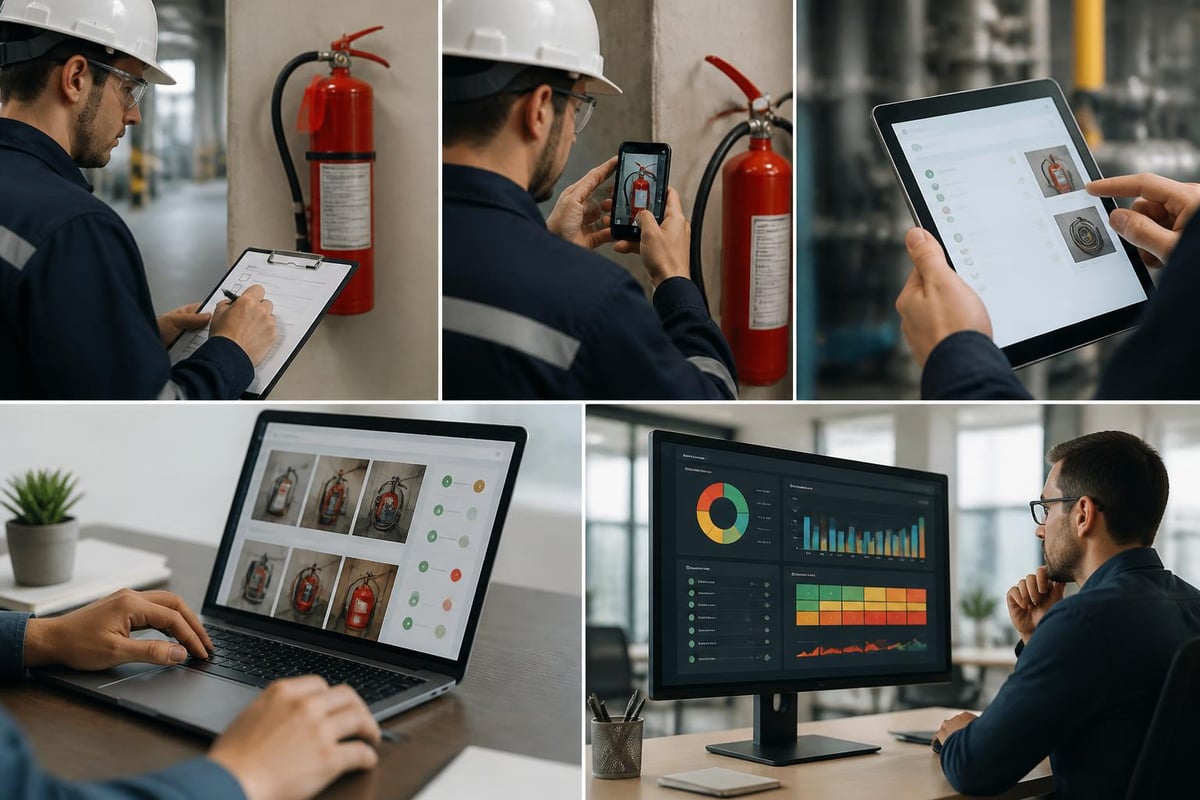
Mobile applications enable inspectors to complete examinations on-site, capturing findings digitally with photographic evidence and immediate report generation. These systems reduce administrative burden whilst improving data quality through structured input fields and validation rules.
Cloud-based platforms provide real-time visibility of inspection status across equipment portfolios. Automated alerts flag overdue examinations, ensuring timely action before compliance lapses occur.
Predictive Maintenance Integration
Advanced organisations integrate regulations safety inspections with predictive maintenance programmes. Condition monitoring data from sensors complements periodic examinations, providing continuous equipment health visibility.
This approach enables intervention before failures occur whilst optimising inspection resources. Equipment demonstrating stable condition might safely extend between examinations within regulatory limits, whilst deteriorating assets receive increased attention.
Training and Cultural Development
Regulations safety succeeds or fails based on organisational culture and individual behaviours. Technical compliance measures prove ineffective without engaged workforces understanding their roles in maintaining safe conditions.
Building Safety Competence
Systematic training programmes develop the knowledge and skills workers need to operate safely within regulations safety frameworks. Training must extend beyond initial induction to include refresher sessions, update briefings, and competence verification.
Effective training programmes include:
Role-specific content addressing actual workplace hazards
Practical demonstrations and hands-on practice opportunities
Assessment methods verifying understanding and capability
Regular refreshers maintaining knowledge currency
Documentation proving competence for regulatory purposes
The CDC's personal protective equipment guidance illustrates how detailed training resources support worker protection, with similar approaches applicable across regulations safety domains.
Leadership Commitment
Senior management commitment to regulations safety establishes organisational priorities and resource allocation. Visible leadership involvement, from site visits to safety committee participation, signals that compliance matters beyond avoiding penalties.
Organisations with strong safety cultures integrate regulations safety into business planning, performance metrics, and recognition systems. Safety becomes embedded in operational identity rather than treated as separate compliance overhead.
Enforcement and Penalties
Understanding enforcement approaches helps organisations appreciate regulations safety seriousness whilst focusing improvement efforts appropriately. UK enforcement bodies employ graduated responses based on compliance history and violation severity.
Inspection and Investigation Processes
The Health and Safety Executive (HSE) and local authorities conduct workplace inspections to verify regulations safety compliance. Inspectors possess wide-ranging powers including site access, document examination, and equipment testing.
Following inspections, enforcement officers may take various actions ranging from verbal advice to formal notices and prosecutions. The Department of Energy's worker safety enforcement framework demonstrates similar graduated enforcement philosophies across different jurisdictions.
Financial and Operational Consequences
Regulations safety violations carry substantial penalties beyond direct fines. Enforcement notices may require operational shutdowns until deficiencies rectify, creating significant business disruption and revenue loss.
Serious breaches resulting in worker harm attract severe penalties including unlimited fines and custodial sentences for responsible individuals. Recent prosecutions demonstrate courts' willingness to impose substantial penalties where organisations fail fundamental regulations safety obligations.
Sector-Specific Regulations Safety Considerations
Different industries face unique regulations safety challenges reflecting their operational characteristics and inherent hazards. Tailoring compliance approaches to sector realities improves effectiveness whilst maintaining statutory adherence.
Manufacturing and Engineering
Engineering facilities typically manage diverse regulations safety requirements simultaneously. Equipment ranges from lifting equipment to pressure systems, each demanding specific inspection regimes and operational controls.
Manufacturing organisations benefit from integrated compliance calendars coordinating various statutory examinations to minimise disruption whilst ensuring comprehensive coverage. Understanding inspection regulations specific to manufacturing equipment supports efficient scheduling.
Warehousing and Logistics
Warehouse operations centre on materials handling equipment subject to extensive regulations safety requirements. Forklift trucks, pallet racking, dock levellers, and goods lifts all require regular examination under relevant statutory frameworks.
High equipment utilisation rates in logistics environments demand robust maintenance systems ensuring inspection windows don't disrupt operations. Some organisations maintain spare equipment allowing rotations during examination periods.
Healthcare and Education
Non-industrial settings often underestimate their regulations safety obligations. Healthcare facilities operate autoclaves, lifting hoists, and compressed air systems requiring statutory examination. Educational establishments increasingly feature engineering workshops with machinery subject to PUWER requirements.
These sectors benefit from guidance tailored to their operational contexts, as generic manufacturing advice may not translate effectively to their circumstances.
Future Directions in Regulations Safety
The regulations safety landscape continues evolving in response to technological changes, emerging hazards, and enforcement priorities. Forward-thinking organisations anticipate developments rather than simply reacting to new requirements.
Digitalisation and Data Analytics
Regulatory frameworks increasingly accommodate digital inspection methodologies and data-driven compliance approaches. Electronic record systems, digital signatures, and cloud-based reporting gain acceptance as technology demonstrates reliability and security.
Advanced analytics applied to inspection data may enable more sophisticated risk-based examination intervals. Equipment demonstrating excellent maintenance history and stable condition could potentially qualify for extended intervals within regulatory boundaries.
Sustainability Integration
Environmental sustainability increasingly intersects with regulations safety frameworks. Equipment efficiency improvements, refrigerant changes, and process modifications must maintain safety standards whilst pursuing environmental objectives.
The NIOSH regulations and regulatory agenda highlights how occupational safety bodies address emerging issues, with climate change impacts and green technology transitions presenting new workplace hazards requiring regulatory attention.
Workforce Changes
Aging workforces, skills shortages, and changing employment patterns influence regulations safety implementation. Remote working, gig economy engagement, and contractor reliance create complexities in establishing accountability and ensuring competence.
Regulatory frameworks may evolve to address these labour market shifts, potentially requiring enhanced contractor management systems or modified training verification approaches.
Building Resilient Compliance Systems
Sustainable regulations safety programmes balance statutory compliance with operational efficiency and continuous improvement. Organisations achieving this balance treat compliance as integrated business practice rather than isolated activity.
System Design Principles
Effective compliance systems share common design characteristics. They establish clear responsibilities, provide adequate resources, maintain appropriate documentation, and include verification mechanisms confirming effectiveness.
Regular internal audits identify system weaknesses before they create compliance failures or safety incidents. These reviews examine both technical compliance and management system functionality, ensuring policies translate into consistent workplace practices.
Continuous Improvement Approaches
Leading organisations don't settle for minimum compliance but pursue excellence through continuous improvement. Incident investigations, near-miss analysis, and benchmark comparisons identify enhancement opportunities.
Engaging workers in improvement processes taps valuable frontline knowledge whilst building ownership of regulations safety outcomes. Suggestion schemes, safety committees, and regular feedback sessions create channels for worker input into compliance system development.
Regulations safety represents a fundamental business obligation requiring systematic approaches, appropriate expertise, and ongoing commitment to maintain effective compliance whilst protecting workers from harm. Workplace Inspection Services Ltd supports organisations across the UK in meeting their statutory inspection requirements through expert LOLER, PUWER, PSSR, and COSHH/LEV examinations. Their independent, nationwide service helps businesses maintain compliance, reduce operational risk, and ensure safe working environments for all employees.