Pressure Testing: Safety, Compliance and Best Practices
Pressure Testing: Safety, Compliance and Best Practices
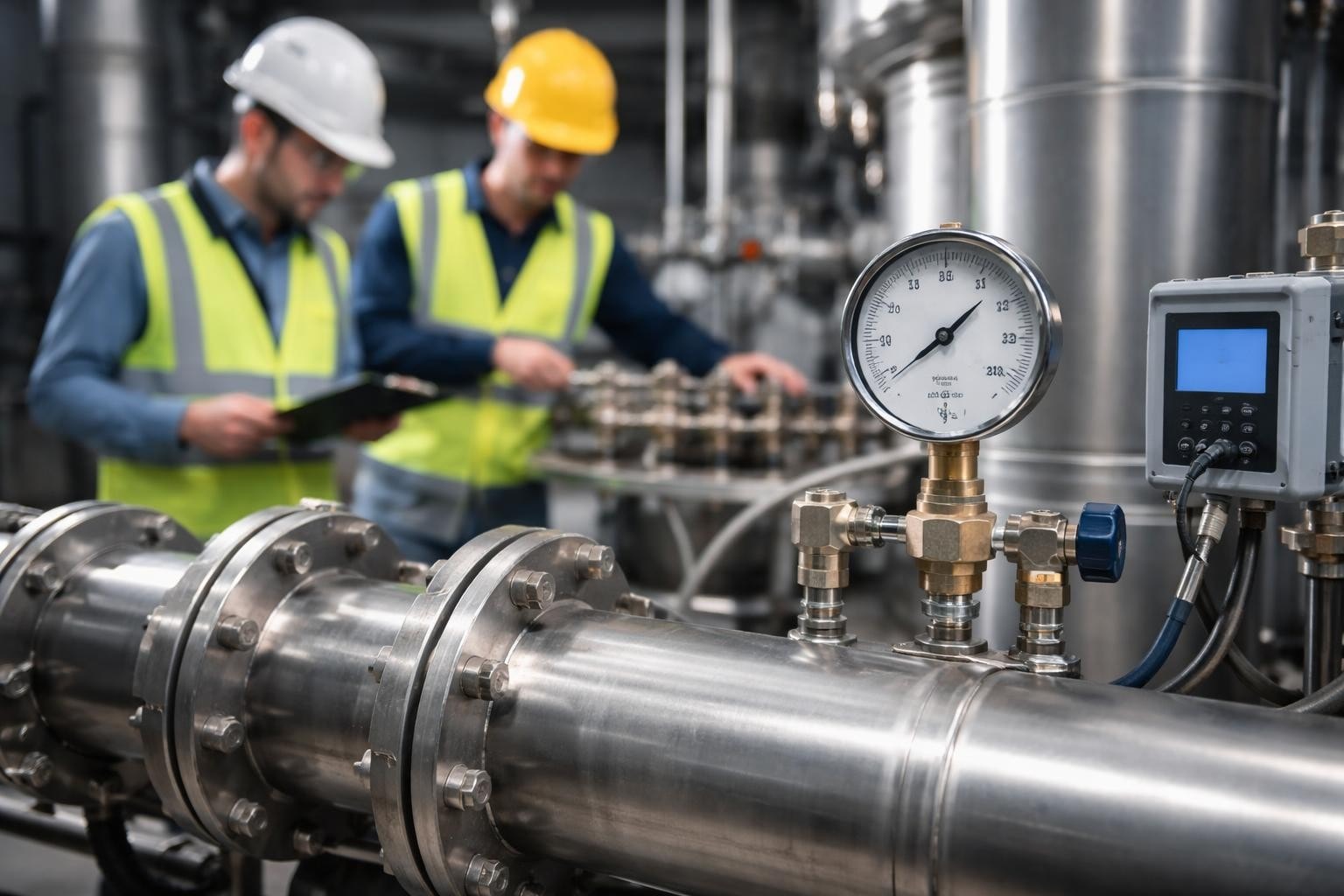
Pressure testing represents one of the most critical verification procedures in industrial settings, ensuring that pressure systems, vessels and pipework can safely withstand their design operating conditions. This non-destructive testing method confirms structural integrity, identifies potential weaknesses and validates that equipment meets regulatory safety standards before being placed into service. For organisations managing pressure equipment, understanding the fundamentals of pressure testing is essential for maintaining workplace safety, achieving regulatory compliance and protecting both personnel and assets from catastrophic failures.
Understanding Pressure Testing Fundamentals
Pressure testing involves subjecting pressure-containing equipment to pressures exceeding normal operating conditions to verify mechanical integrity and identify defects such as leaks, cracks or material weaknesses. The procedure serves as a final validation step before equipment enters service and forms part of ongoing maintenance programmes throughout a system's operational life.
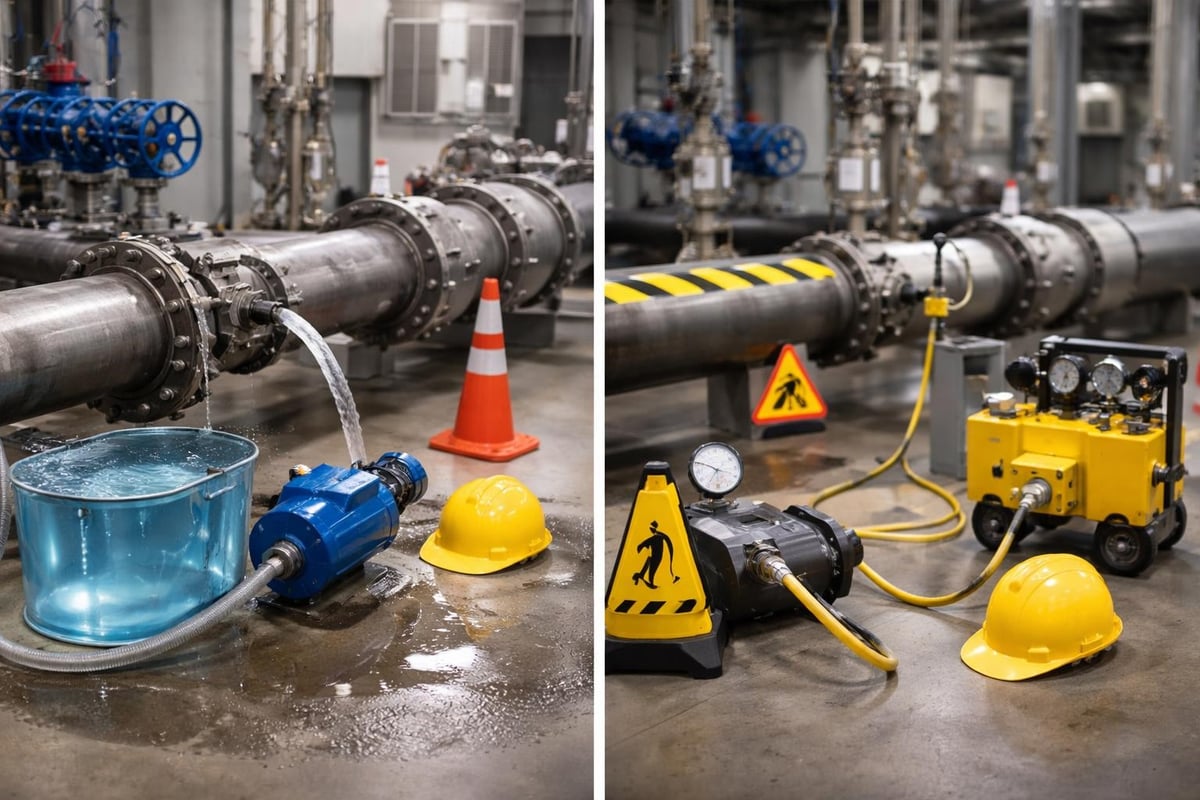
Two primary methods dominate industrial practice: hydrostatic testing and pneumatic testing. Hydrostatic testing uses incompressible fluids (typically water) to pressurise systems, whilst pneumatic testing employs compressed air or inert gases. The choice between methods depends on equipment design, operational requirements and safety considerations.
Why Pressure Testing Matters
The consequences of pressure system failures extend far beyond equipment damage. Catastrophic failures can result in serious injuries, fatalities and significant property damage. Pressure testing provides tangible evidence that equipment can safely contain pressurised media under controlled conditions before exposing personnel to operational risks.
Key benefits include:
Detection of manufacturing defects, welding flaws and material weaknesses
Verification of design calculations and engineering specifications
Identification of assembly errors and installation problems
Validation of repair work and modifications
Compliance with statutory inspection requirements
Industries ranging from oil and gas to manufacturing, pharmaceuticals and utilities rely on pressure testing to maintain operational safety standards. The Health and Safety Executive provides comprehensive guidance on conducting safe pressure tests within UK workplaces.
Hydrostatic Testing Procedures
Hydrostatic testing represents the safer option for most applications because water's incompressibility limits stored energy, reducing the severity of potential failures. The method involves filling the system with water, removing air pockets, gradually increasing pressure to the specified test level and maintaining that pressure whilst inspecting for leaks or deformation.
Test pressures typically range from 1.3 to 1.5 times the design working pressure, though specific requirements vary based on applicable codes and standards. ASME standards and API codes govern pressure testing requirements for different equipment types and industries.
Preparation and Execution
Successful hydrostatic testing demands meticulous preparation. Systems must be thoroughly cleaned to remove debris that could block observation of leaks or cause erosion during testing. All pressure relief devices should be removed or isolated, and temporary blanks installed at appropriate locations.
Preparation Step | Purpose | Critical Considerations |
|---|---|---|
System isolation | Protect connected equipment | Verify isolation valve integrity |
Cleaning | Enable leak detection | Remove scale, debris, contaminants |
Venting points | Eliminate air pockets | Position at high points throughout system |
Pressure gauges | Monitor test pressure | Calibrated instruments in good condition |
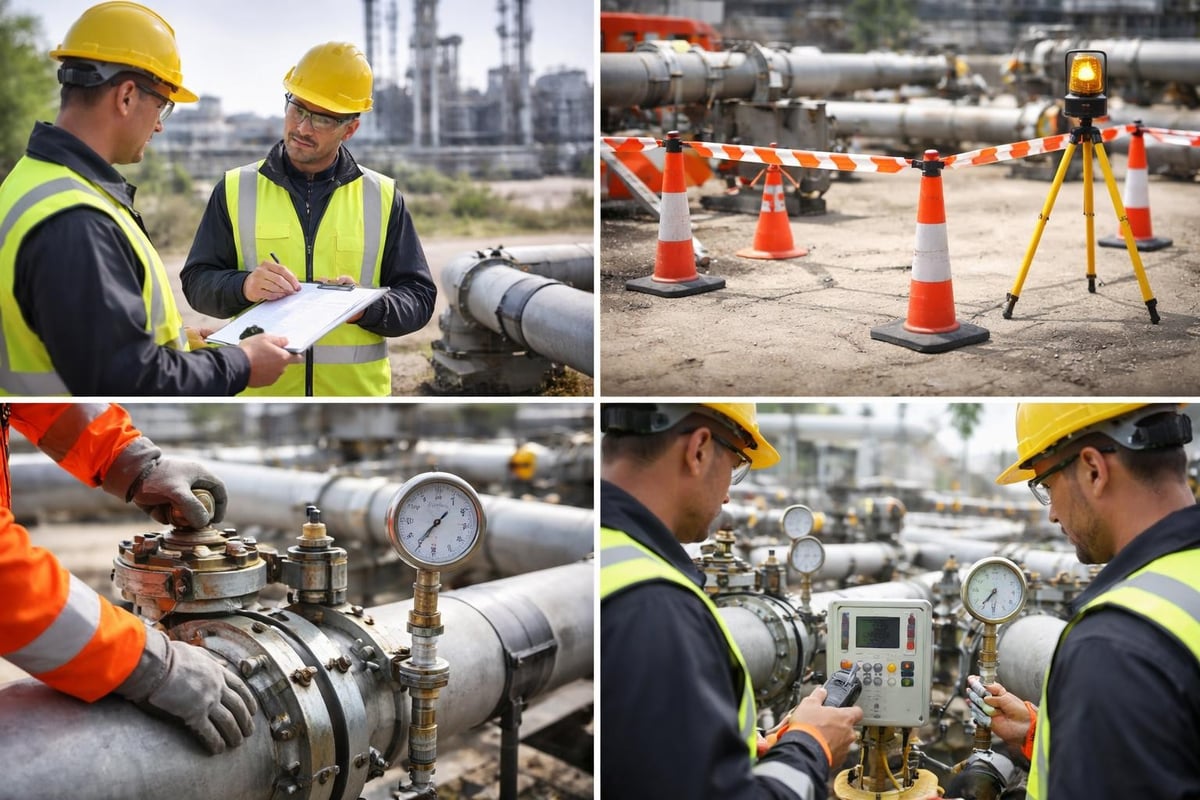
Safety barriers | Protect personnel | Exclusion zones around test area |
Water temperature considerations affect test validity. Cold water can cause brittle fracture in some materials, whilst excessively warm water may not adequately simulate operating conditions. Detailed pressure testing procedures emphasise maintaining appropriate temperature ranges throughout testing.
The pressurisation process should proceed gradually, typically in stages of 25% increments, allowing time to observe the system's response and detect any anomalies before reaching full test pressure. Once achieved, the test pressure is maintained for a specified duration (commonly 30 minutes to several hours) whilst inspectors examine all joints, welds and potential leak points.
Pneumatic Testing Considerations
Pneumatic testing utilises compressed air or inert gases when hydrostatic testing proves impractical. Situations requiring pneumatic methods include systems that cannot tolerate water contamination, equipment lacking adequate structural support for water's weight, or installations in environments where water could cause freeze damage.
The significant difference lies in stored energy. Compressed gases store substantially more energy than incompressible liquids at equivalent pressures, making pneumatic failures potentially explosive. Safety considerations for pneumatic pressure testing emphasise the heightened risks and stringent precautions required.
Enhanced Safety Protocols
Pneumatic testing demands additional safety measures beyond those employed for hydrostatic tests. Test pressures are often limited to lower multiples of design pressure (typically 1.1 to 1.2 times), and personnel must maintain safe distances from pressurised equipment during the test.
Essential pneumatic testing safety measures:
Calculate stored energy to determine safe exclusion zones
Establish physical barriers preventing personnel access
Use remote monitoring and pressurisation controls
Implement staged pressure increases with hold points
Deploy additional safety relief provisions
Conduct thorough pre-test inspections to identify obvious defects
Document and communicate test procedures to all involved personnel
Where pneumatic testing is unavoidable, many organisations combine methods by conducting an initial low-pressure air test (typically 100-200 kPa) to identify major leaks before proceeding with hydrostatic testing at full pressure. This approach maximises safety whilst ensuring thorough examination.
Regulatory Requirements and Standards
Pressure systems operating in UK workplaces must comply with the Pressure Systems Safety Regulations 2000 (PSSR), which mandate regular examination by competent persons. PSSR inspections ensure that pressure systems remain safe throughout their operational life and identify when pressure testing is required.
The regulations require written schemes of examination specifying inspection frequencies, test requirements and examination scope. Pressure testing forms part of these schemes, particularly following repairs, modifications or when examination reveals conditions requiring verification of continued fitness for service.
Industry-Specific Standards
Different industries and equipment types reference specific standards governing pressure testing procedures. Common standards include:
ASME Boiler and Pressure Vessel Code: Comprehensive requirements for pressure vessel design, fabrication and testing
BS EN 13445: European standard for unfired pressure vessels
ASME B31.3: Process piping design and testing requirements
API 510: Pressure vessel inspection code for in-service equipment
PD 5500: UK specification for unfired fusion welded pressure vessels
These standards specify test pressures, hold times, acceptance criteria and documentation requirements. Pressure testing guidelines detail the technical requirements prescribed by various codes and standards.
Organisations must identify applicable standards during the design phase and maintain compliance throughout equipment lifecycle. Regular workplace health and safety compliance reviews ensure continued adherence to evolving regulatory requirements.
Test Planning and Risk Assessment
Effective pressure testing begins with comprehensive planning and risk assessment. Before any test proceeds, a competent person must evaluate potential hazards, identify control measures and document safe working procedures.
Risk assessments should address equipment-specific factors including system volume, test pressure, stored energy levels, material properties and environmental conditions. Human factors such as personnel competence, communication protocols and emergency response capabilities require equal consideration.
Documentation Requirements
Proper documentation supports regulatory compliance and provides evidence of due diligence. Essential documentation includes:
Document Type | Contents | Retention Period |
|---|---|---|
Test procedure | Step-by-step instructions, acceptance criteria | Permanent |
Risk assessment | Hazard identification, control measures | Duration of operation |
Competence records | Personnel qualifications, training | 5+ years |
Test certificates | Results, observations, pass/fail determination | Permanent |
Inspection records | Pre-test and post-test examination findings | Permanent |
Incident reports | Any failures, near-misses or anomalies | Permanent |
Health and safety inspection programmes incorporate pressure testing documentation as evidence of systematic safety management. Regular audits verify that testing procedures align with current standards and regulatory requirements.
Common Challenges and Solutions
Pressure testing operations frequently encounter practical challenges requiring experienced judgment and problem-solving. Understanding common issues enables proactive planning and effective resolution.
Leak detection difficulties arise when small leaks prove difficult to identify, particularly in complex piping systems. Solutions include applying soap solutions to suspected areas, using tracer gases for pneumatic tests, or employing acoustic leak detection equipment. Systematic inspection following predetermined routes ensures comprehensive coverage.
Temperature effects can compromise test validity. Thermal expansion during warm weather or contraction in cold conditions affects pressure readings and system integrity. Allowing adequate stabilisation time and compensating for temperature variations in pressure calculations addresses these concerns.
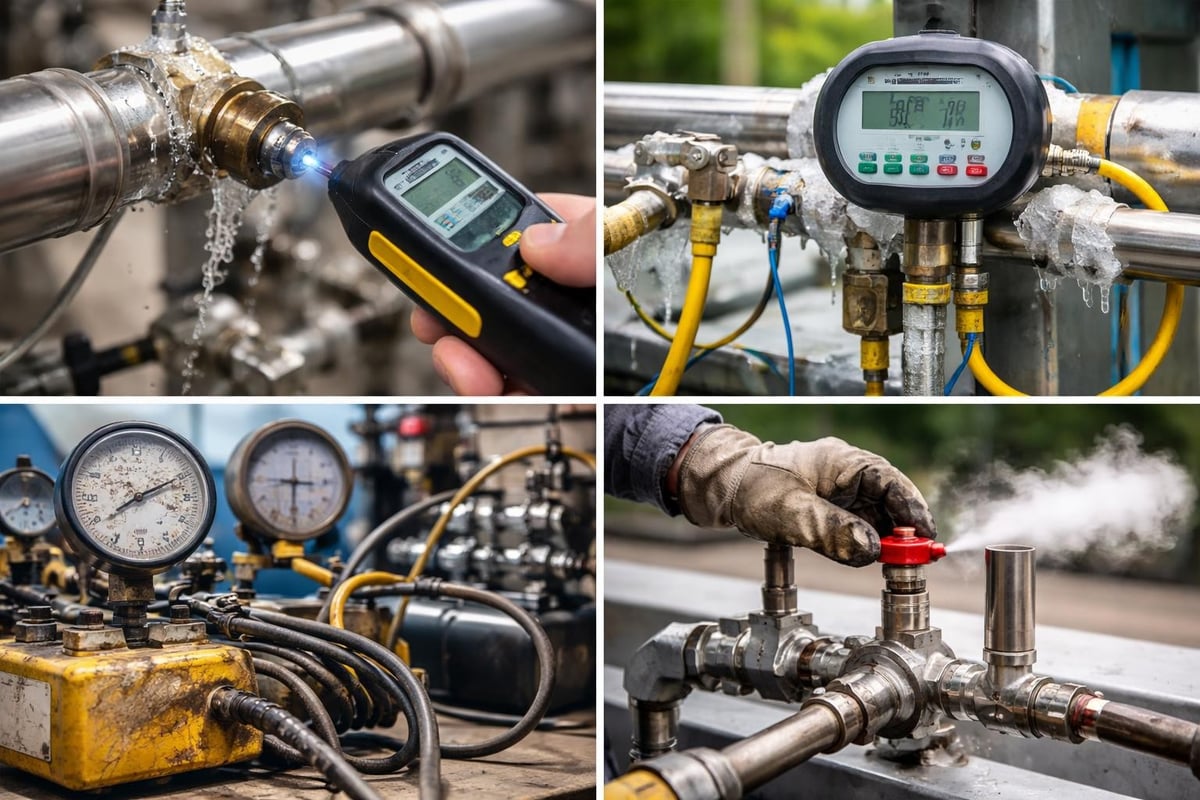
Access limitations in existing installations may prevent complete visual inspection during testing. Remote inspection technologies, including cameras and sensors, extend inspection capabilities to inaccessible areas. Alternative approaches such as acoustic emission testing can detect active defects during pressurisation.
System contamination from test media requires consideration, particularly in pharmaceutical, food processing or semiconductor applications. Using appropriate test fluids, implementing thorough drying procedures and validating cleanliness post-test prevent contamination issues.
Hydraulic System Testing
Hydraulic systems present unique pressure testing considerations due to operating characteristics, fluid properties and typical applications. These systems commonly operate at higher pressures than many industrial applications, with working pressures frequently exceeding 20 MPa (3,000 psi) and reaching 70 MPa (10,000 psi) in specialised applications.
Hydraulic pressure testing protocols emphasise the importance of using compatible test fluids, typically hydraulic oil or water-glycol mixtures, rather than plain water that could compromise system lubrication or cause corrosion. Test pressures generally reach 1.5 times maximum operating pressure, maintained for periods sufficient to identify potential failures.
Component-Specific Considerations
Different hydraulic components require tailored testing approaches:
Hydraulic cylinders: Tested in both directions with particular attention to seal integrity and rod alignment
Hydraulic hoses and fittings: Assembly testing before installation and periodic re-testing after service
Hydraulic pumps: Performance testing combined with pressure capability verification
Control valves: Functional testing at operating pressures to confirm proper operation
Hydraulic accumulators: Specific procedures accounting for gas pre-charge requirements
Safety considerations intensify with hydraulic systems due to high operating pressures and the potential for injection injuries from high-pressure fluid streams. Protective equipment, safe working distances and proper depressurisation procedures become critical safety elements.
Emergency Procedures and Incident Response
Despite comprehensive planning and safety measures, pressure testing incidents occasionally occur. Established emergency procedures ensure rapid, effective response minimising consequences.
Emergency planning addresses potential scenarios including sudden pressure loss indicating system failure, uncontrolled pressure increase suggesting control system malfunction, visible distortion or bulging indicating imminent failure, and fluid discharge from unexpected locations. Each scenario requires specific response actions documented in emergency procedures.
Immediate response priorities include:
Isolating the pressure source and stopping pressurisation
Evacuating personnel from the immediate area
Initiating controlled depressurisation if safe to do so
Securing the area and preventing unauthorised access
Notifying emergency services if injuries occur
Preserving evidence for subsequent investigation
Post-incident investigations determine root causes, identify contributing factors and develop preventive measures. Thorough documentation supports regulatory reporting requirements and continuous improvement initiatives. Safety compliance programmes incorporate lessons learned from incidents into updated procedures and training.
Inspection and Maintenance Integration
Pressure testing integrates with broader inspection and maintenance programmes ensuring continued equipment safety and reliability. Initial commissioning tests verify new equipment integrity, whilst periodic testing confirms ongoing fitness for service.
Inspection intervals depend on equipment type, operating conditions, regulatory requirements and risk assessments. High-risk systems may require annual testing, whilst lower-risk applications might extend intervals to several years. Inspection frequency guidance helps organisations establish appropriate testing schedules.
When Additional Testing Is Required
Specific events trigger additional pressure testing requirements beyond routine schedules:
Repairs involving pressure-containing components
Modifications affecting system pressure capability
Suspected damage from operational incidents
Extended periods of inactivity before return to service
Changes in operating parameters exceeding original design
Examination findings requiring verification of continued integrity
Maintenance records documenting all testing, repairs and modifications support regulatory compliance and inform future testing decisions. Systematic record-keeping enables trend analysis identifying recurring issues requiring corrective action.
Competence and Training Requirements
Pressure testing demands specific competence combining theoretical knowledge with practical skills. Personnel conducting tests must understand pressure system behaviour, applicable standards, safety principles and testing procedures. Similarly, those interpreting results require knowledge to distinguish acceptable from unacceptable conditions.
Training programmes should address relevant regulations including PSSR, applicable industry standards, equipment-specific characteristics, test procedure execution, hazard recognition and emergency response protocols. Regular refresher training maintains competence as standards evolve and new technologies emerge.
Organisations must verify personnel competence through qualification records, practical assessments and ongoing supervision. Independent verification by competent third parties provides additional assurance that testing meets required standards. Engineering inspection specialists offer expertise supporting organisations lacking in-house capabilities.
Quality Assurance and Verification
Quality assurance processes ensure pressure testing achieves intended objectives and produces reliable results. Independent verification provides confidence that testing procedures align with requirements and that equipment meets safety standards.
Key quality elements include:
Calibrated instrumentation with valid certification
Documented procedures approved by competent persons
Independent witness points at critical test stages
Systematic inspection and documentation protocols
Review and approval of test results before equipment release
Non-conformance management addressing failed tests
Continuous improvement based on lessons learned
Third-party verification adds credibility and objectivity to testing programmes. Independent inspectors assess procedure adequacy, witness critical activities and validate test results. This approach proves particularly valuable for high-consequence equipment where failure could result in serious harm.
Statutory workplace inspections often incorporate pressure testing verification as part of comprehensive examination programmes. This integrated approach ensures pressure systems receive appropriate attention within broader safety management frameworks.
Pressure testing remains fundamental to industrial safety, providing essential verification that pressure systems can safely perform their intended functions. Understanding testing methods, regulatory requirements and safety protocols enables organisations to implement effective testing programmes protecting personnel whilst maintaining operational reliability. For comprehensive support with pressure system examinations and statutory compliance across your organisation, Workplace Inspection Services Ltd delivers expert independent inspections nationwide, helping businesses maintain safety standards and meet their regulatory obligations under PSSR and related legislation.