Industry Inspection: Complete Guide for UK Businesses
Industry Inspection: Complete Guide for UK Businesses

Industry inspection represents a fundamental pillar of workplace safety management and regulatory compliance across the United Kingdom. From manufacturing facilities to engineering workshops, businesses rely on systematic inspection programmes to identify hazards, maintain equipment integrity and fulfil their statutory obligations. Understanding the scope, methodology and strategic importance of industry inspection enables organisations to protect their workforce whilst avoiding costly penalties and operational disruptions.
The Strategic Role of Industry Inspection in Modern Business
Industry inspection serves multiple critical functions within contemporary business operations. Beyond mere regulatory compliance, these systematic examinations provide valuable insights into equipment condition, operational efficiency and potential risk factors that could compromise safety or productivity.
The landscape of workplace safety has evolved considerably over recent decades. Where once inspections were viewed primarily as tick-box exercises, forward-thinking organisations now recognise them as strategic tools for continuous improvement. Safety inspections deliver measurable benefits including reduced insurance premiums, decreased downtime and enhanced employee morale through demonstrated commitment to welfare.

Regulatory Framework Governing Industry Inspection
The UK regulatory environment establishes clear expectations for industry inspection across various sectors. Several key pieces of legislation mandate specific inspection requirements:
Lifting Operations and Lifting Equipment Regulations 1998 (LOLER) - Requires thorough examination of lifting equipment at prescribed intervals
Provision and Use of Work Equipment Regulations 1998 (PUWER) - Mandates maintenance and inspection of workplace machinery
Pressure Systems Safety Regulations 2000 (PSSR) - Governs inspection of pressure vessels, compressors and associated systems
Control of Substances Hazardous to Health Regulations 2002 (COSHH) - Requires examination of local exhaust ventilation systems
Understanding inspection regulations helps businesses structure their compliance programmes effectively. Each regulation specifies different intervals, scope and documentation requirements, creating a complex matrix of obligations that vary by equipment type and usage intensity.
Equipment Categories Requiring Industry Inspection
Different equipment classifications demand tailored inspection approaches. Industry inspection programmes must account for these variations to ensure comprehensive coverage and regulatory adherence.
Lifting Equipment and Accessories
Lifting equipment represents one of the most heavily regulated categories due to inherent hazards associated with load handling. LOLER inspections examine cranes, hoists, fork-lift trucks, passenger lifts and lifting accessories including chains, slings and shackles. These thorough examinations identify wear, deformation, corrosion and other degradation that could precipitate catastrophic failure.
Equipment Type | Typical Inspection Interval | Key Risk Factors |
|---|---|---|
Overhead cranes | 6-12 months | Structural fatigue, wire rope wear, brake deterioration |
Fork-lift trucks | 6-12 months | Hydraulic system integrity, mast condition, load capacity |
Passenger/goods lifts | 6 months | Safety mechanism function, rope condition, overspeed governor |
Lifting slings | 6-12 months | Fibre degradation, metal fatigue, connection point wear |
The intensity of use significantly influences appropriate inspection frequency. Equipment operating in demanding environments or subjected to heavy duty cycles requires more frequent examination than occasionally used items.
Work Equipment and Machinery
Manufacturing and processing machinery forms the backbone of industrial operations. Industry inspection of work equipment under PUWER encompasses an enormous range of devices from simple hand tools to complex automated production lines.
Critical machinery requiring systematic inspection includes:
Metalworking equipment such as lathes, milling machines and grinders
Woodworking machinery including circular saws, planers and routers
Food processing equipment operating in demanding hygiene environments
Printing machinery with multiple pinch points and moving components
Packaging systems combining mechanical, pneumatic and electronic elements
Each category presents unique hazards demanding specialist knowledge during examination. Mechanical engineering inspection requires understanding of machine design principles, failure modes and industry-specific risk factors.
Inspection Methodologies and Best Practices
Effective industry inspection combines systematic procedures with technical expertise and practical experience. The methodology employed significantly influences the quality and value of examination outcomes.
Visual Examination Techniques
Visual inspection forms the foundation of most industry inspection activities. Trained inspectors systematically examine equipment for visible signs of deterioration, damage or unsafe conditions. This process extends beyond casual observation to include detailed scrutiny of critical components, verification of safety device function and assessment of overall equipment integrity.
Key visual inspection activities include:
Checking for cracks, distortion or unusual wear patterns
Verifying presence and condition of guards and safety devices
Examining mounting points, fixings and structural connections
Assessing lubrication adequacy and fluid leak evidence
Reviewing maintenance records and operational documentation
Industry inspection effectiveness depends heavily on inspector competence. Qualified engineers bring essential knowledge of failure mechanisms, material properties and relevant standards that enable them to interpret observations accurately.
Non-Destructive Testing Applications
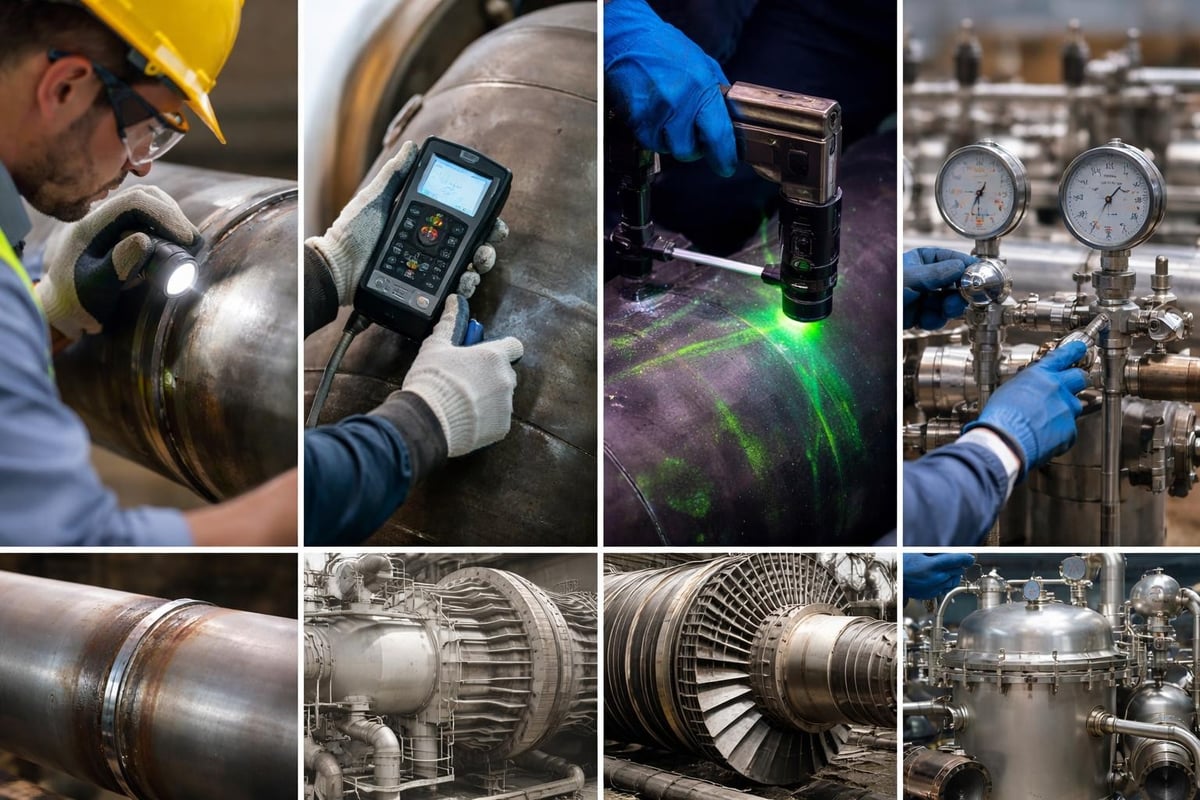
Where visual examination proves insufficient, non-destructive testing (NDT) techniques provide deeper insights into equipment condition. Industry inspection programmes increasingly incorporate NDT methods to detect subsurface defects, measure material thickness and verify structural integrity without damaging components.
Common NDT applications include ultrasonic thickness measurement on pressure vessels, magnetic particle inspection of welds, dye penetrant testing for surface cracks and radiographic examination of critical structural elements. These techniques complement visual inspection to provide comprehensive equipment assessment.
Functional Testing Procedures
Many safety-critical systems require functional testing during industry inspection to verify operational performance. Pressure relief valves demand periodic testing to confirm correct set pressure and adequate flow capacity. Emergency stop circuits require verification that they interrupt power supply within specified response times. Overload protection devices need testing to ensure activation at appropriate load levels.
Hydrostatic pressure testing represents a key functional test for pressure systems, confirming vessel integrity under controlled conditions. This examination involves pressurising equipment with water to prescribed test pressure whilst monitoring for leaks, distortion or other signs of weakness.
Documentation and Record-Keeping Requirements
Industry inspection generates substantial documentation serving multiple purposes from regulatory compliance to maintenance planning. Proper record-keeping practices ensure traceability, support decision-making and demonstrate due diligence.
Statutory Documentation Standards
Regulations mandate specific documentation for various inspection types. LOLER requires a thorough examination report detailing equipment identification, inspection findings, any defects identified and recommendations regarding continued use. These reports must specify the maximum interval until next examination based on equipment condition and usage.
Similarly, PSSR inspections necessitate a written scheme of examination prepared by a competent person outlining inspection scope, methods and intervals appropriate to the specific pressure system. This scheme forms the blueprint for ongoing compliance.
Document Type | Retention Period | Key Content Requirements |
|---|---|---|
LOLER reports | Until superseded by two subsequent reports | Equipment details, defects identified, next examination date |
PSSR examination records | Two years minimum | System identification, examination findings, safe operating limits |
PUWER inspection logs | Duration determined by risk assessment | Equipment condition, maintenance actions, inspector details |
Defect rectification records | Throughout equipment service life | Issue description, remedial action, completion verification |
Digital record systems increasingly replace paper-based approaches, offering advantages including rapid retrieval, data analysis capabilities and automatic interval tracking. However, systems must ensure data integrity, backup provisions and accessibility to regulatory authorities.
Industry-Specific Inspection Considerations
Different industrial sectors face unique challenges requiring tailored industry inspection approaches. Understanding sector-specific risks and regulatory nuances enables appropriate programme design.
Manufacturing and Engineering Environments
Manufacturing facilities typically house diverse equipment requiring comprehensive inspection programmes. Manufacturing industry operations combine lifting equipment, production machinery, pressure systems and materials handling devices, each governed by different regulations and demanding specialist knowledge.
Engineering workshops present particular challenges through varied equipment types, modification activities and prototype development work. Industry inspection must account for non-standard applications and ensure adequate risk assessment precedes equipment use.
Warehousing and Distribution Operations
Warehouse facilities rely heavily on materials handling equipment including fork-lift trucks, pallet jacks, dock levellers and overhead cranes. High utilisation rates combined with shift working patterns necessitate rigorous inspection schedules to maintain safety and operational availability.
Storage racking systems, whilst not always subject to statutory examination requirements, benefit from systematic inspection to identify damage from vehicle impacts, overloading or structural degradation that could precipitate collapse.
Hospitality and Commercial Sectors
Hotels, restaurants and commercial premises often underestimate their industry inspection obligations. Hotels and cafes typically operate goods lifts, kitchen ventilation systems and pressure equipment such as steam ovens and commercial espresso machines, all requiring periodic examination.
Small commercial businesses frequently overlook compliance requirements, particularly regarding lifting equipment used for building maintenance or goods handling. Even modest operations may require formal inspection programmes covering vehicle lifts, passenger lifts or commercial kitchen extraction systems.
Common Inspection Failures and Risk Mitigation
Industry inspection programmes fail when organisations approach compliance reactively rather than strategically. Understanding common pitfalls enables businesses to develop robust systems resistant to these weaknesses.
Inadequate Frequency Determination
Perhaps the most prevalent error involves applying generic inspection intervals without considering actual equipment usage, environmental conditions and operational demands. Inspection frequency must reflect risk assessment outcomes rather than arbitrary schedules.
Equipment operating in harsh environments, subjected to heavy duty cycles or critical to production continuity requires more frequent examination than lightly used items in controlled conditions. Industry inspection programmes should incorporate formal review mechanisms adjusting intervals based on condition trending and operational experience.
Competence and Qualification Issues
Regulatory frameworks require inspections by "competent persons" possessing appropriate training, knowledge and experience. However, competence remains subjectively defined, leading some organisations to appoint inadequately qualified personnel. Guidance from bodies such as LRQA on codes, standards and regulations helps clarify competence expectations across different industries and equipment types.
Indicators of adequate inspector competence include:
Relevant engineering qualifications or recognised inspection certification
Demonstrable experience examining similar equipment types
Knowledge of applicable regulations, standards and industry practices
Understanding of failure mechanisms specific to examined equipment
Ability to interpret findings and make appropriate recommendations
Defect Management Shortcomings
Identifying defects during industry inspection represents only the initial step. Effective programmes require robust systems ensuring timely rectification, appropriate interim controls where continued use occurs and verification of completed repairs.
Categorising defects by severity enables prioritisation of remedial action. Immediate prohibition from use applies to equipment presenting imminent danger, whilst minor issues might permit continued operation pending scheduled maintenance. Clear communication protocols between inspectors, maintenance teams and operational managers prevent misunderstandings and ensure appropriate responses.

Technology Integration in Modern Industry Inspection
Digital transformation reshapes industry inspection practices, introducing capabilities enhancing efficiency, accuracy and value delivery. Forward-thinking organisations leverage technology to optimise their compliance programmes whilst extracting additional business intelligence.
Mobile Inspection Platforms
Tablet-based inspection applications enable real-time data capture, photograph integration and automatic report generation. These systems eliminate transcription errors inherent in paper-based processes whilst accelerating report delivery to clients. Offline functionality ensures inspectors can work effectively in environments lacking network connectivity.
Advanced platforms incorporate equipment databases automatically populating inspection forms with asset details, service history and previous findings. This integration streamlines workflows and ensures consistency across examination cycles. According to research on inspection challenges and solutions, digital tools significantly reduce inspection time whilst improving data quality.
Predictive Maintenance Integration
Industry inspection generates valuable condition data supporting predictive maintenance strategies. Trending analysis identifies deterioration patterns enabling proactive intervention before failures occur. This approach optimises maintenance expenditure by targeting resources where genuinely needed rather than following fixed service schedules.
Integrating inspection findings with operational parameters such as duty cycles, load spectra and environmental conditions enhances prediction accuracy. Machine learning algorithms increasingly analyse this multi-source data to forecast remaining component life and optimise replacement timing.
Internet of Things Applications
Sensor technology enables continuous equipment monitoring between formal industry inspection activities. Vibration sensors detect bearing deterioration, temperature monitors identify overheating issues and strain gauges track structural loading patterns. This real-time intelligence complements periodic examinations, providing comprehensive equipment health visibility.
IoT integration raises questions regarding how continuous monitoring affects statutory inspection requirements. Whilst technology provides valuable supplementary data, current regulations still mandate periodic examination by competent persons. The relationship between automated monitoring and formal inspection continues evolving as regulators assess new capabilities.
Cost-Benefit Analysis of Comprehensive Industry Inspection
Organisations occasionally view industry inspection purely as regulatory overhead rather than value-adding activity. However, comprehensive programmes deliver measurable returns justifying investment beyond mere compliance.
Direct Cost Avoidance
Equipment failures precipitate substantial direct costs including emergency repairs, production downtime and potential replacement expenditure. Systematic industry inspection identifies developing issues enabling planned intervention at convenient times and controlled cost. This proactive approach invariably proves more economical than reactive crisis management.
Insurance implications provide another financial dimension. Insurers increasingly require evidence of robust inspection and maintenance programmes, with premiums reflecting demonstrated risk management. Comprehensive documentation from systematic industry inspection activities supports favourable insurance terms.
Liability and Reputation Protection
Workplace accidents resulting from inadequate equipment maintenance create severe consequences beyond immediate injury costs. Corporate manslaughter legislation holds organisations criminally liable where management failures cause fatalities. Robust industry inspection programmes demonstrating systematic hazard identification and control provide essential defence against such allegations.
Reputation damage following serious incidents can prove commercially devastating, particularly in sectors where safety credentials influence client selection. Demonstrating commitment to occupational safety requirements through comprehensive inspection programmes enhances market positioning and competitive advantage.
Operational Efficiency Benefits
Well-maintained equipment operates more reliably, consumes less energy and delivers higher quality output than neglected alternatives. Industry inspection identifying minor issues before they escalate prevents degradation in operational performance. This maintenance philosophy maximises asset productivity throughout service life.
Planned downtime for scheduled maintenance proves far less disruptive than unexpected failures halting production mid-shift. Industry inspection enables maintenance scheduling during planned shutdown periods, minimising impact on operational targets whilst ensuring thorough attention to identified issues.
Selecting Appropriate Inspection Service Providers
Organisations lacking internal expertise typically engage specialist providers for industry inspection services. Selecting appropriate partners significantly influences programme effectiveness and value delivery.
Evaluation Criteria for Service Providers
Several factors warrant consideration when assessing potential inspection providers. Competence represents the paramount requirement, verified through relevant qualifications, industry experience and technical knowledge. Providers should demonstrate expertise across relevant regulations and equipment types specific to your operations.
Independence constitutes another critical characteristic. Inspection services should remain separate from equipment suppliers and maintenance contractors to ensure objective assessment free from commercial conflicts. This independence provides assurance that recommendations reflect genuine equipment condition rather than sales opportunities.
Key selection considerations include:
Technical qualifications and accreditations held by inspection engineers
Industry experience and track record across relevant sectors
Geographic coverage and response times for your locations
Quality of reporting and documentation provided
Professional indemnity insurance and liability coverage
Service Level Expectations
Clear service level agreements establish mutual expectations regarding inspection frequency, response times, report delivery and defect communication. These agreements should specify how urgent safety issues are escalated, ensuring appropriate management notification occurs promptly.
Flexible scheduling represents an important service characteristic. Providers should accommodate operational requirements, conducting inspections during shutdown periods or outside normal working hours where necessary to minimise production disruption.
International Standards and Best Practice Frameworks
Beyond UK statutory requirements, various international standards and industry frameworks inform best practice in industry inspection. Understanding these references enables organisations to benchmark their programmes against recognised excellence criteria.
The International Organization for Standardization publishes numerous standards relevant to equipment inspection and maintenance. ISO 55000 series addresses asset management, providing structured approaches to lifecycle optimisation including inspection strategy development. Industry-specific standards offer detailed technical guidance on examination methods and acceptance criteria for particular equipment types.
Organisations operating internationally must navigate multiple regulatory regimes. OSHA standards govern workplace safety in the United States, establishing different requirements from UK legislation. Similarly, European directives influence equipment design standards and conformity assessment procedures. Global operations require careful mapping of inspection obligations across jurisdictions to ensure comprehensive compliance.
Professional bodies including the Institution of Mechanical Engineers, the British Standards Institution and industry trade associations publish technical guidance supporting effective industry inspection programmes. These resources address emerging technologies, evolving regulatory interpretations and lessons learned from incident investigations.
Comprehensive industry inspection programmes protect both people and business interests through systematic equipment examination, defect identification and proactive maintenance planning. Organisations investing in robust inspection systems benefit from enhanced safety, operational reliability and regulatory compliance whilst avoiding the substantial costs associated with equipment failures and workplace accidents. Workplace Inspection Services Ltd supports businesses across the UK with expert statutory inspections under LOLER, PUWER, PSSR and COSHH/LEV regulations, delivering the technical knowledge and professional independence essential for effective compliance programmes.