COSHH LEV Testing: A Complete Guide for UK Businesses
COSHH LEV Testing: A Complete Guide for UK Businesses

Understanding workplace safety regulations can feel overwhelming, particularly when managing multiple compliance requirements simultaneously. For businesses handling hazardous substances, coshh lev testing represents a critical statutory obligation that protects employees from airborne contaminants whilst ensuring legal compliance. Local Exhaust Ventilation (LEV) systems serve as the primary engineering control for removing dust, fumes, vapours, and gases at their source, but only when they're functioning correctly. Regular testing confirms these systems continue to perform as designed, maintaining the health protection they were installed to provide.
What COSHH LEV Testing Actually Means
The Control of Substances Hazardous to Health (COSHH) Regulations 2002 place specific duties on employers to control exposure to hazardous substances. Within this framework, coshh lev testing refers to the statutory examination and testing of Local Exhaust Ventilation systems required under Regulation 9.
The regulation mandates that control measures must be:
Properly maintained in efficient working order
Kept in good repair
Subject to thorough examination and testing at suitable intervals
LEV systems qualify as engineering controls under these regulations. When your workplace uses LEV to protect workers from hazardous substance exposure, you're legally obligated to ensure these systems remain effective through regular testing.
The Legal Foundation
COSHH Regulation 9 doesn't simply suggest testing; it requires it. The thorough examination and testing requirements apply to all LEV systems installed as primary control measures for hazardous substances.
This testing serves a fundamentally different purpose than routine maintenance. Whilst maintenance keeps equipment running, coshh lev testing verifies the system continues to provide adequate health protection for workers exposed to potential contaminants.
How Often LEV Testing Must Occur
The standard testing interval for most LEV systems is 14 months maximum. This timeframe allows some flexibility for scheduling whilst ensuring annual coverage with a reasonable buffer.
However, certain circumstances demand more frequent examination:
High contamination environments where systems face accelerated wear
Aggressive substances that may corrode ductwork or damage components
Critical applications where system failure presents immediate serious risks
Following system modifications or changes to workplace processes
After incidents suggesting reduced system performance
The specific testing schedule should reflect your risk assessment findings. More hazardous operations naturally require more frequent verification of control effectiveness.
Testing Trigger | Typical Interval | Additional Notes |
|---|---|---|
Standard operations | 14 months | Maximum permitted interval |
High-risk environments | 6-12 months | Based on risk assessment |
Post-modification | Immediate | Before resuming operations |
Following repairs | Before use | Confirms restoration of performance |
Beyond Statutory Testing
Remember that the 14-month thorough examination represents the maximum interval, not a recommendation. Many organisations choose shorter intervals based on operational demands, insurance requirements, or heightened safety culture. Understanding your inspection frequency requirements helps establish appropriate schedules across all statutory obligations.
What Coshh LEV Testing Involves
A compliant LEV examination goes far beyond a simple visual check. The process requires systematic assessment performed by a competent person with appropriate expertise.
Pre-Testing Documentation Review
Competent examiners begin by reviewing:
Original commissioning test data
Previous examination reports
Maintenance records
Any modifications or alterations
Current risk assessments
This background information establishes baseline performance expectations and highlights areas requiring particular attention during the current examination.
Physical Examination Components
The thorough examination assesses the entire LEV system from capture hood to final discharge point. Inspectors examine ductwork integrity, fan condition, filter status, and all connections for air leakage that would compromise performance.
Visual inspection identifies obvious defects, but coshh lev testing extends to performance verification through actual measurements.
Performance Testing and Measurements
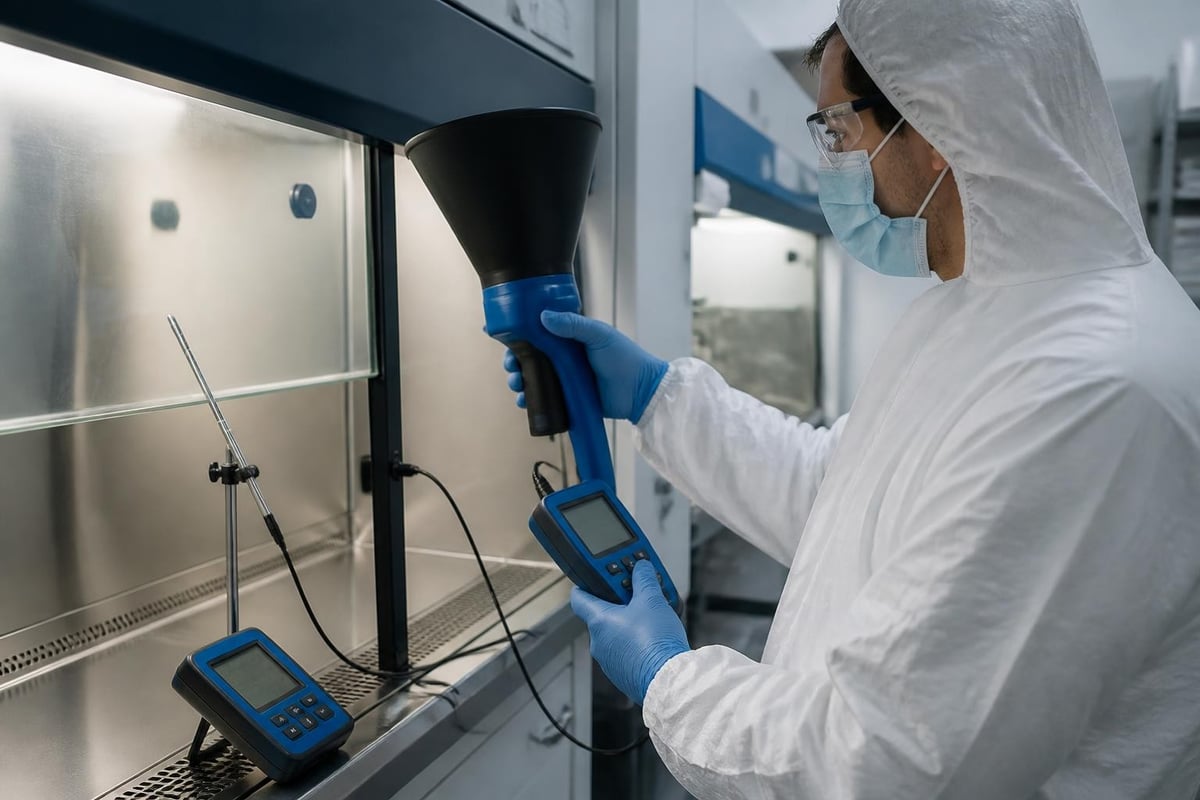
Competent persons take specific measurements to quantify system effectiveness:
Static pressure readings at designated test points
Air velocity measurements at capture hoods
Face velocity for enclosed systems like spray booths
Volume flow rates through extraction points
Filter pressure drop indicating contamination levels
These measurements compare against commissioning data and design specifications. Significant deviations indicate deteriorating performance requiring corrective action.
Who Can Perform LEV Testing
The regulations specify that thorough examinations must be conducted by a "competent person." This term carries specific meaning rather than being open to interpretation.
A competent person possesses:
Appropriate theoretical knowledge of LEV principles
Practical experience examining similar systems
Understanding of the specific hazardous substances involved
Ability to recognise defects and assess their significance
Knowledge to recommend appropriate remedial actions
In-House Versus External Testing
Larger organisations sometimes develop in-house competence for LEV testing. This approach works when staff receive proper training and maintain current expertise through regular practice.
However, most businesses engage specialist testing companies. Independent examiners bring broader experience across various industries and system types, often identifying issues that might be overlooked by those overly familiar with a particular installation.
Workplace Inspection Services Ltd supports businesses across the UK through COSHH / LEV Inspections, providing expert examinations that ensure ventilation systems effectively remove harmful contaminants whilst maintaining statutory compliance.
Common LEV Testing Failures
Understanding typical deficiencies helps organisations maintain systems between formal examinations. Proactive attention to common failure points reduces the likelihood of adverse findings during statutory tests.
Mechanical and Structural Issues
Frequently identified problems include:
Ductwork damage, holes, or disconnected sections
Worn or damaged fan components
Blocked or contaminated filters
Air leakage at joints and connections
Corroded metalwork from chemical exposure
Flexible hoses that have perished or split
Many mechanical failures develop gradually. Regular visual inspections between formal tests help identify deterioration before complete failure occurs.
Performance Degradation
Systems may appear intact yet fail to provide adequate protection. Performance testing reveals:
Insufficient air velocity at capture points
Reduced total airflow from blockages or fan wear
Pressure imbalances indicating system changes
Filter saturation reducing extraction efficiency
Common Defect | Impact on Protection | Typical Cause |
|---|---|---|
Hood damage | Reduced capture efficiency | Physical impact, wear |
Ductwork leaks | Loss of extraction power | Poor joints, corrosion |
Filter blockage | Reduced airflow | Inadequate maintenance |
Fan wear | Decreased performance | Age, contamination |
Damper malfunction | Flow imbalance | Lack of maintenance |
Documentation Deficiencies
Even well-functioning systems may fail compliance if documentation proves inadequate. The legal requirements under COSHH 2002 demand proper record-keeping alongside physical system performance.
Record-Keeping Requirements
COSHH regulations mandate that thorough examination findings must be recorded. These records serve multiple purposes beyond simple compliance demonstration.
Required documentation includes:
Date of examination
System identification and location
Name of competent person conducting the test
Test measurements and results
Comparison with previous performance data
Identified defects and their significance
Recommendations for remedial action
Next examination due date
Records must be kept readily available for inspection by enforcement authorities. Additionally, they should remain accessible to employees and their representatives who have legitimate interest in workplace health protection measures.
Practical Record Management
Many organisations maintain digital records systems for easier retrieval and analysis. Trending performance data across multiple examinations helps predict maintenance needs and plan system upgrades before failures occur.
Records should integrate with broader workplace health and safety compliance documentation, creating a comprehensive view of control measures and their effectiveness.
Integrating LEV Testing With Other Inspections
Businesses rarely face a single statutory inspection requirement. Most workplaces require multiple inspection regulations coverage, creating scheduling and coordination challenges.
Strategic planning helps manage these overlapping obligations efficiently. Consider coordinating coshh lev testing with related inspections:
PUWER assessments of extraction system machinery
Electrical safety checks of LEV control panels and motors
General ventilation reviews for overall workplace air quality
Occupational hygiene monitoring of employee exposure levels
Creating Inspection Schedules
Developing a master inspection schedule prevents missed deadlines whilst optimising resource allocation. Different statutory requirements operate on varying cycles, but thoughtful planning identifies opportunities for efficiency.
Some businesses schedule related inspections consecutively, allowing inspectors to understand the complete picture of workplace controls whilst on-site. Others prefer distributing inspections throughout the year to maintain consistent safety focus.
Responding to Test Findings
The examination report represents a starting point rather than an endpoint. How organisations respond to findings determines whether testing delivers genuine protection improvements or merely satisfies bureaucratic requirements.
Categorising Defects
Examiners typically classify findings by urgency:
Immediate action required - system poses immediate risk and should not be used
Urgent repairs needed - system may continue operating but requires prompt attention
Remedial work recommended - performance degraded but within acceptable limits temporarily
Observations - minor issues or maintenance suggestions
This classification system helps prioritise resources towards the most significant risks whilst ensuring nothing gets overlooked indefinitely.
Implementing Corrections
Critical defects demand immediate response. Continuing to operate LEV systems with serious deficiencies may breach COSHH requirements, potentially exposing both workers and the organisation to unnecessary risks.
For less urgent issues, create documented action plans specifying:
What remedial action will be taken
Who holds responsibility for implementation
Target completion dates
Interim control measures if needed
Verification that corrections prove effective
Maintenance Between Tests
Statutory testing intervals assume appropriate maintenance continues throughout the intervening period. LEV systems require regular attention to sustain their protective capabilities between formal examinations.
Essential maintenance activities include:
Regular filter inspection and replacement
Cleaning of ductwork and hoods
Lubrication of fan bearings
Visual checks for damage or wear
Verification that systems operate when required
Monitoring of pressure gauges and indicators
Many LEV failures discovered during statutory testing could have been prevented through diligent routine maintenance. Understanding commissioning requirements helps establish proper baseline performance expectations that maintenance activities should preserve.
User Checks
Operators working with LEV systems daily can identify performance changes before they become serious deficiencies. Simple checks such as observing dust accumulation, listening for unusual noises, or noticing reduced airflow provide early warning of developing problems.
Training employees to recognise and report potential LEV issues creates another protective layer beyond formal testing schedules. Their observations complement rather than replace competent person examinations.
Industry-Specific Considerations
Different sectors face unique LEV testing challenges based on the substances they handle and the processes they employ. Understanding industry-specific factors helps tailor testing approaches appropriately.
Welding and Metalworking
Welding fume extraction systems often operate in demanding environments. Metal particles can accumulate rapidly in ductwork, and heat exposure may damage flexible hoses. More frequent testing may prove necessary compared to less demanding applications.
Woodworking
Wood dust presents both health and explosion risks. LEV systems must maintain adequate capture velocity to prevent dust escape, whilst ensuring extracted material reaches safe collection points. Testing should verify both extraction performance and proper earthing to prevent static ignition.
Chemical Processing
Systems handling corrosive vapours require particular attention to ductwork integrity. Chemical attack can thin metalwork invisibly, creating failure risks that only thorough examination reveals. Material selection and protective coatings should be verified during testing.
Industry Sector | Primary Concern | Testing Focus |
|---|---|---|
Welding | Fume exposure | Capture velocity, filter condition |
Woodworking | Dust control | Airflow rates, spark detection |
Chemical processing | Corrosion resistance | Ductwork integrity, material compatibility |
Pharmaceuticals | Containment | Face velocity, filter efficiency |
Consequences of Non-Compliance
Failing to conduct coshh lev testing carries significant risks extending beyond potential enforcement action. The health consequences of inadequate LEV system maintenance can prove severe for exposed workers.
Health Implications
When LEV systems fail to perform adequately, employee exposure to hazardous substances increases. Depending on the contaminants involved, workers may face:
Respiratory diseases from dust or fume inhalation
Occupational asthma development
Skin conditions from chemical contact
Long-term health effects including cancers
Acute poisoning from vapour exposure
These health outcomes carry human costs that far exceed any financial penalties. Beyond the moral imperative to protect workers, employers face potential civil liability for occupational disease claims.
Regulatory Enforcement
The Health and Safety Executive takes COSHH compliance seriously. Inspectors may visit workplaces proactively or in response to complaints or incidents. During inspections, they commonly request LEV test records.
Enforcement actions can include:
Improvement notices specifying required corrective actions
Prohibition notices stopping activities until compliance is achieved
Prosecution for serious or repeated failures
Significant financial penalties
Reputational damage affecting business relationships
Planning for System Modifications
LEV systems rarely remain static throughout their operational life. Process changes, equipment additions, or workplace reconfigurations may necessitate modifications to existing ventilation arrangements.
Any significant alteration requires re-testing before the modified system returns to service. This ensures changes haven't inadvertently reduced protection levels or created new exposure risks.
When to Re-Commission
Simply passing the previous test doesn't guarantee continued adequacy after modifications. Changes requiring re-commissioning and testing include:
Adding new extraction points
Extending or rerouting ductwork
Replacing fans or filters with different specifications
Changing substances handled or processes performed
Blocking off unused branches without rebalancing
Working with competent persons during the planning stage helps ensure modifications maintain or improve system performance rather than compromising it.
Selecting a Testing Provider
Choosing the right organisation to conduct coshh lev testing significantly impacts both compliance assurance and value received. Not all providers offer equivalent expertise or thoroughness.
Evaluation Criteria
Consider these factors when selecting a testing company:
Demonstrable competence and relevant qualifications
Experience with your specific industry and substances
Availability of detailed, actionable reports
Understanding of the processes your LEV systems protect
Ability to provide remedial recommendations
Geographic coverage matching your operational locations
Request sample reports before engaging a provider. Quality reports should clearly present findings, explain their significance, and provide practical recommendations rather than simply listing measurements.
Independence and Objectivity
Independent testing providers offer objectivity that in-house staff may struggle to maintain. They're more likely to identify issues without organisational pressure to minimise findings or avoid criticism of existing arrangements.
Companies offering both compliance inspections and repair services may face conflicts of interest. Consider whether testing and remediation should come from separate organisations to ensure impartial assessments.
Cost Considerations
LEV testing represents an unavoidable cost of operating workplaces involving hazardous substances. However, viewing it purely as an expense misses the value competent testing delivers.
Effective testing identifies performance deterioration before complete failure occurs. Planned maintenance typically costs less than emergency repairs following catastrophic failure. Additionally, maintaining proper control reduces workers' compensation claims and productivity losses from ill health.
Testing costs vary based on:
System complexity and size
Number of extraction points
Accessibility for examination
Geographic location
Frequency of testing required
Provider rates and expertise level
While price matters, the cheapest option rarely delivers optimal value. Inadequate testing that overlooks significant defects provides false reassurance whilst leaving workers unprotected.
Integrating Testing Results Into Safety Management
Test reports shouldn't simply file away until the next examination. Forward-thinking organisations integrate LEV testing data into broader safety and compliance management systems.
Performance trending across multiple tests reveals system degradation patterns, informing maintenance priorities and replacement planning. Comparing results across multiple sites identifies best practices worth replicating and problem areas requiring additional support.
Regular review of testing outcomes at management level demonstrates senior commitment to health protection whilst ensuring resources flow toward genuine priorities rather than bureaucratic compliance alone.
Maintaining effective LEV systems through regular coshh lev testing protects your workforce whilst demonstrating commitment to statutory compliance and occupational health. The testing process may seem complex initially, but establishing robust systems and working with competent professionals creates manageable routines that deliver genuine protection. Workplace Inspection Services Ltd provides expert COSHH and LEV inspection services nationwide, helping businesses maintain compliant ventilation systems and safe working environments across all sectors.