Workplace Health and Safety Acts: A 2026 Compliance Guide
Workplace Health and Safety Acts: A 2026 Compliance Guide

Understanding workplace health and safety acts is fundamental to operating a compliant business in the UK. These legislative frameworks establish the legal duties employers must fulfil to protect their workforce from injury, illness and harm. With statutory requirements continually evolving and enforcement becoming increasingly rigorous, organisations must maintain a thorough grasp of their obligations under current legislation. This comprehensive guide explores the essential elements of workplace health and safety acts, their practical application across different sectors, and the specific responsibilities they place upon employers in 2026.
The Legal Foundation of Workplace Safety
Workplace health and safety acts serve as the cornerstone of employee protection legislation across industrialised nations. In the United Kingdom, the primary framework stems from the Health and Safety at Work etc. Act 1974, which establishes fundamental duties for employers, employees and other parties involved in work activities. This overarching legislation creates a general duty of care that extends beyond specific hazards to encompass all aspects of workplace safety.
The Act operates on a principle of reasonably practicable measures, requiring employers to implement safety controls proportionate to the level of risk. This flexibility allows the legislation to remain relevant across diverse industries whilst maintaining consistent protection standards. Businesses must assess their unique risk profiles and implement appropriate safeguards, documentation and monitoring systems to demonstrate compliance.
How Workplace Health and Safety Acts Create Employer Obligations
The legal duties imposed by workplace health and safety acts are extensive and multifaceted. Employers must provide safe systems of work, maintain equipment in proper condition, ensure adequate training and supervision, and create a working environment free from recognised hazards. These responsibilities cannot be delegated or transferred, even when specialist contractors perform specific tasks on company premises.
Key employer obligations include:
Conducting comprehensive risk assessments for all work activities
Implementing control measures following the hierarchy of risk reduction
Providing necessary personal protective equipment without charge
Establishing emergency procedures and evacuation protocols
Consulting with employees on health and safety matters
Maintaining accurate records of incidents, training and inspections
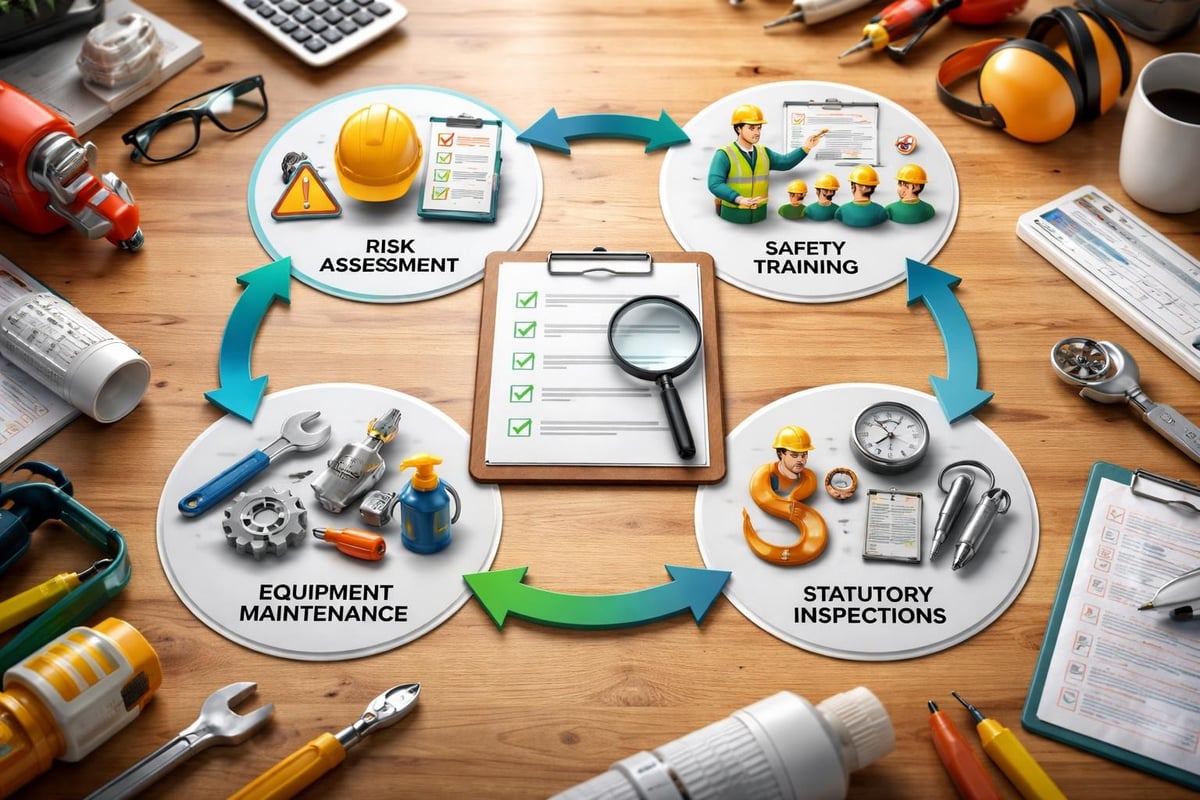
Employers must also appoint competent persons to assist with health and safety management. This requirement ensures organisations have access to the expertise needed to identify hazards, implement controls and maintain compliance with evolving regulatory standards.
Specific Regulations Supporting Primary Legislation
Whilst overarching workplace health and safety acts establish general principles, specific regulations address particular hazards and equipment types. These subordinate pieces of legislation provide detailed requirements that complement the broader statutory framework. Understanding how these regulations interact is essential for comprehensive compliance.
The Management of Health and Safety at Work Regulations 1999 require systematic risk assessment and management processes. These regulations formalise the practical steps employers must take to identify hazards, evaluate risks and implement appropriate controls. They also establish specific requirements for pregnant workers, young persons and temporary employees who may face elevated vulnerabilities.
Equipment-Specific Safety Requirements
Several regulations focus exclusively on particular equipment categories or hazard types. The Provision and Use of Work Equipment Regulations 1998 (PUWER) govern the safety of machinery, tools and equipment used in business operations. These regulations require regular inspections to ensure equipment remains suitable, properly maintained and safe for continued use. Organisations using manufacturing machinery, workshop equipment or mechanical tools must ensure their assets meet current PUWER inspection requirements throughout their operational lifespan.
Similarly, the Lifting Operations and Lifting Equipment Regulations 1998 (LOLER) establish specific duties regarding cranes, hoists, lifting accessories and other load-bearing equipment. The Pressure Systems Safety Regulations 2000 (PSSR) address vessels and pipework containing pressurised substances, whilst the Control of Substances Hazardous to Health Regulations (COSHH) govern exposure to dangerous chemicals, dusts and fumes.
Regulation | Primary Focus | Inspection Frequency | Key Requirements |
|---|---|---|---|
LOLER 1998 | Lifting equipment safety | 6-12 months typical | Thorough examination by competent person |
PUWER 1998 | Work equipment safety | Risk-dependent | Maintenance, inspection, guarding |
PSSR 2000 | Pressure systems | Written scheme defines | Examination by competent person |
COSHH 2002 | Hazardous substances | 14 months (LEV systems) | Exposure control, health surveillance |
These regulations work in concert with primary workplace health and safety acts to create a comprehensive safety framework. Employers must identify which regulations apply to their operations and implement corresponding compliance programmes.
Employee Rights and Responsibilities
Workplace health and safety acts create reciprocal obligations, establishing duties for employees alongside employer responsibilities. Workers must take reasonable care of their own health and safety and that of others who may be affected by their actions. This principle ensures safety becomes a shared responsibility rather than a burden borne solely by management.
Employees have the right to refuse work they reasonably believe presents serious and imminent danger. They also possess protection from dismissal or detriment when raising legitimate safety concerns or participating in health and safety activities. These safeguards encourage open communication about workplace hazards without fear of retaliation.
The Right to Information and Training
Workers are entitled to receive comprehensive information about the risks they face and the control measures in place to protect them. Employers must provide this information in a format employees can understand, considering factors such as language proficiency, literacy levels and prior experience. Training programmes must equip workers with the knowledge and skills needed to perform their duties safely.
The right to know extends to specific hazard information, including substance safety data sheets, equipment operating instructions and emergency procedures. Some jurisdictions have enacted standalone right-to-know legislation that mandates detailed communication about workplace hazards, particularly regarding chemical exposures.
Consultation rights enable employees to participate in safety decision-making through elected representatives or direct engagement. Employers must consult workers when introducing new equipment, changing work processes or developing health and safety policies.

Risk Assessment as a Cornerstone Requirement
The risk assessment process represents perhaps the most fundamental obligation created by workplace health and safety acts. This systematic evaluation identifies potential sources of harm, determines who might be injured and how, evaluates existing control measures, and establishes what additional steps are necessary to reduce risks to acceptable levels.
Effective risk assessments follow a structured methodology:
Identify hazards present in the workplace or arising from work activities
Determine who might be harmed and the potential consequences
Evaluate existing controls and assess residual risk levels
Decide whether additional measures are required
Document findings and implement improvement actions
Review assessments when circumstances change or periodically
Risk assessments must be suitable and sufficient, meaning they appropriately address the actual hazards present without being unnecessarily complex. Small, low-risk operations may require only simple documentation, whilst high-hazard environments demand comprehensive analysis and detailed control specifications.
The Hierarchy of Risk Control
Once hazards are identified, workplace health and safety acts require employers to eliminate or reduce risks by following the established control hierarchy. This prioritised approach ensures the most effective measures receive implementation before less reliable alternatives.
Elimination removes the hazard entirely, representing the most effective control. Where elimination proves impossible, substitution replaces the hazard with something less dangerous. Engineering controls use physical modifications to separate workers from hazards, whilst administrative controls rely on procedures, training and supervision. Personal protective equipment serves as the final defence when other measures cannot adequately reduce risk.
Applying this hierarchy ensures compliance with the reasonably practicable standard central to UK workplace health and safety acts. Employers must demonstrate they have implemented controls proportionate to the identified risks, balancing effectiveness against cost, time and effort considerations.
Enforcement Mechanisms and Penalties
Workplace health and safety acts derive their effectiveness from robust enforcement mechanisms administered by regulatory authorities. In Britain, the Health and Safety Executive (HSE) and local authority environmental health departments hold responsibility for ensuring compliance with safety legislation. These bodies possess extensive powers to inspect premises, investigate incidents and take enforcement action against non-compliant organisations.
Inspectors may issue improvement notices requiring specific actions within defined timeframes or prohibition notices immediately halting dangerous activities. The most serious violations result in prosecution, with potential penalties including unlimited fines for corporate offenders and imprisonment for individuals whose actions cause death or serious injury.
Corporate Manslaughter and Individual Accountability
The Corporate Manslaughter and Corporate Homicide Act 2007 introduced organisational liability for gross safety failures resulting in death. This legislation holds organisations accountable when management failures create fatal consequences, extending beyond individual director culpability to encompass systemic organisational failings.
Senior leaders face personal liability under workplace health and safety acts when their consent, connivance or neglect contributes to corporate offences. Directors and officers must actively engage with safety management to avoid potential prosecution for failures occurring on their watch.
Recent years have witnessed increasing willingness to prosecute both organisations and individuals for serious breaches. Courts have imposed multi-million pound fines on large corporations whilst sentencing individuals to custodial terms for egregious violations. This enforcement trend emphasises the gravity with which workplace health and safety acts are now regarded.
Violation Type | Potential Consequences | Recent Trends |
|---|---|---|
Minor breach | Improvement notice, compliance timeframe | Increased use of fee-for-intervention |
Serious breach | Prohibition notice, prosecution, substantial fine | Higher fines following sentencing guidelines |
Fatal incident | Corporate manslaughter investigation, unlimited fine | Greater individual director accountability |
Repeat offence | Enhanced penalties, potential director disqualification | Publicity orders and remedial requirements |
Industry-Specific Applications
Different sectors face unique challenges when implementing workplace health and safety acts. Manufacturing environments must address machinery hazards, noise exposure and material handling risks. Construction sites contend with working at height, temporary structures and constantly changing work conditions. Healthcare facilities manage biological hazards, manual handling of patients and stress-related concerns.
Engineering inspection companies encounter diverse hazards across the facilities they service. Inspectors must understand how workplace health and safety acts apply to varied equipment types, from lifting equipment in warehouses to pressure vessels in manufacturing plants. This breadth of exposure requires comprehensive training and robust safety procedures.
Statutory Inspection Requirements
Certain equipment categories require periodic examination by competent persons under specific workplace health and safety acts and supporting regulations. These statutory inspections verify equipment remains safe for continued use and complies with applicable standards. The examining engineer must possess appropriate qualifications, experience and independence to provide credible assurance.
Inspection frequencies vary based on equipment type, usage intensity and environmental conditions. Lifting equipment typically requires thorough examination every six to twelve months, whilst pressure systems follow schedules defined in written schemes of examination. Local exhaust ventilation systems controlling hazardous substance exposure need examination at fourteen-month intervals under COSHH regulations.
Organisations must maintain comprehensive records of statutory examinations, making them available for regulatory inspection. These documents demonstrate ongoing compliance with workplace health and safety acts and provide evidence of due diligence should incidents occur.

International Perspectives on Safety Legislation
Whilst this article focuses on UK workplace health and safety acts, understanding international approaches provides valuable context. The United States operates under the Occupational Safety and Health Act 1970, which created OSHA and established federal safety standards. This system differs from British legislation in its detailed prescriptive requirements and different enforcement philosophy.
The OSHA framework establishes specific standards for numerous hazards, providing detailed technical requirements employers must meet. Where UK legislation often sets goal-based objectives allowing flexible compliance methods, American regulations frequently specify exact measures, dimensions or procedures.
Evidence-Based Safety Standards
International safety legislation increasingly relies on scientific research and evidence-based standards. Organisations such as NIOSH develop authoritative recommendations based on comprehensive research into occupational hazards and effective control measures. These evidence-based guidelines inform regulatory development and help organisations implement best practices beyond minimum legal requirements.
The European Union previously influenced UK workplace health and safety acts through directives requiring member state implementation. Following Brexit, Britain maintains alignment with many of these standards whilst retaining autonomy to modify requirements. Understanding these historical connections helps explain similarities between British regulations and those in European countries.
Global harmonisation efforts seek to establish consistent safety standards across borders, particularly for multinational organisations operating in multiple jurisdictions. This convergence simplifies compliance for international businesses whilst raising baseline protection levels in developing regions.
Documentation and Record-Keeping Requirements
Workplace health and safety acts impose extensive documentation obligations on employers. These requirements serve multiple purposes: demonstrating compliance during regulatory inspections, providing evidence of due diligence in legal proceedings, and creating institutional knowledge about hazards and controls.
Risk assessments must be recorded when five or more employees work for the organisation, though documentation represents good practice regardless of company size. These records should identify hazards, evaluate risks, describe control measures and note review dates. Maintaining current, accessible risk assessments proves essential during HSE inspections.
Essential Safety Records
Beyond risk assessments, organisations must maintain numerous other safety documents. Training records demonstrate employees have received necessary instruction and competency verification. Accident and incident logs capture details about injuries, near misses and dangerous occurrences, enabling trend analysis and regulatory reporting.
Inspection reports for statutory examinations under LOLER, PUWER and PSSR
Maintenance records showing equipment servicing and repairs
Safety policy statements outlining organisational commitments
Method statements and safe systems of work for high-risk activities
Health surveillance records for employees exposed to specific hazards
Emergency drill records and evacuation test results
Retention periods vary depending on record type and potential future relevance. Some documents require indefinite retention, particularly those relating to asbestos exposure, whilst others may be discarded after specified periods. Understanding these requirements prevents premature destruction of potentially crucial evidence.
Digital record systems offer advantages over paper-based approaches, including easier searching, automatic backup and remote accessibility. However, organisations must ensure electronic records remain secure, properly backed up and accessible throughout required retention periods.
Continuous Improvement and Safety Culture
Compliance with workplace health and safety acts represents the minimum acceptable standard rather than the aspirational goal. Leading organisations recognise that true safety excellence requires continuous improvement beyond mere legal compliance. This philosophy creates safer workplaces whilst reducing costs associated with incidents, insurance and regulatory intervention.
Safety culture describes the collective attitudes, beliefs and behaviours surrounding workplace safety within an organisation. Strong safety cultures feature active leadership commitment, employee engagement, transparent communication and systematic learning from incidents and near misses. These cultural elements often prove more effective than prescriptive rules in preventing injuries.
Behavioural Safety and Human Factors
Modern approaches to workplace health and safety acts implementation increasingly emphasise human factors and behavioural safety principles. These methodologies recognise that technical controls alone cannot eliminate all risks, particularly those arising from human error, fatigue or complacency.
Behavioural safety programmes identify at-risk behaviours, provide feedback to individuals and groups, and encourage safer work practices through positive reinforcement. These initiatives complement engineering controls and procedural safeguards, addressing the human element often implicated in incidents.
Understanding human factors helps organisations design work systems that accommodate natural human capabilities and limitations. This approach reduces reliance on constant vigilance and perfect execution, instead engineering systems that remain safe despite inevitable human variation and occasional errors.
The Role of Competent Persons
Workplace health and safety acts require organisations to appoint competent persons with sufficient training, experience and knowledge to assist with safety management. This requirement acknowledges that effective compliance demands specialist expertise beyond general management capabilities.
Competent persons may be employees or external consultants, provided they possess relevant qualifications and practical experience. For statutory inspections under regulations like LOLER and PSSR, examining engineers must demonstrate specific technical competence and independence from operational pressures.
Developing Internal Competence
Larger organisations often develop internal health and safety professionals who acquire recognised qualifications such as NEBOSH certificates or diplomas. These individuals provide day-to-day advice, conduct risk assessments, deliver training and liaise with regulatory authorities. Their embedded position enables deep understanding of operational challenges and organisational culture.
Smaller businesses may lack resources for dedicated safety personnel, instead relying on external competent persons who provide advice and conduct required inspections. This arrangement offers access to specialist expertise without the overhead of permanent staffing, though it requires careful selection of reputable providers.
Competence extends beyond technical knowledge to include practical experience and awareness of industry-specific hazards. A competent person in chemical manufacturing faces different challenges than one in logistics or healthcare, requiring tailored expertise for effective guidance.
Workplace health and safety acts create comprehensive legal frameworks that protect employees whilst establishing clear responsibilities for employers across all sectors. Successfully navigating these requirements demands thorough understanding of applicable legislation, systematic risk management, and commitment to continuous improvement beyond minimum compliance. Workplace Inspection Services Ltd supports organisations throughout the UK in meeting their statutory obligations through expert inspections under LOLER, PUWER, PSSR and COSHH regulations, helping businesses maintain compliance, reduce operational risks and foster genuinely safe working environments for their employees.