Work Inspection: Essential Guide for UK Workplaces
Work Inspection: Essential Guide for UK Workplaces

Work inspection represents a fundamental pillar of workplace safety management, serving as the primary mechanism through which organisations identify hazards, verify compliance with statutory requirements, and protect their workforce from preventable incidents. For businesses operating in the UK, understanding the complexities of work inspection is essential, not merely as a regulatory obligation but as a strategic investment in operational continuity and employee wellbeing. This comprehensive examination explores the critical elements that define effective inspection programmes, from regulatory frameworks to practical implementation strategies.
Understanding the Fundamentals of Work Inspection
Work inspection encompasses systematic examination processes designed to evaluate workplace conditions, equipment, and procedures against established safety standards. The Canadian Centre for Occupational Health and Safety defines these activities as proactive measures that identify potential hazards before they result in injury or property damage.
Types and Purposes
Different inspection categories serve distinct purposes within an organisation's safety framework:
Statutory inspections mandated by law, such as LOLER, PUWER, and PSSR examinations
Routine workplace inspections conducted by supervisors or safety representatives
Comprehensive facility audits examining entire operational environments
Incident-triggered inspections following accidents or near-miss events
Each category requires different levels of technical expertise and documentation rigour. Understanding which inspections apply to your specific operations ensures comprehensive coverage of safety obligations.
The primary objective extends beyond mere compliance. Work inspection creates opportunities for continuous improvement, fostering a culture where safety considerations integrate seamlessly into daily operations rather than existing as separate administrative burdens.

Regulatory Framework Governing Work Inspections
The UK regulatory landscape establishes clear requirements for work inspection across various domains. Multiple pieces of legislation define when inspections must occur, who may conduct them, and what documentation organisations must maintain.
Core Legislation
The Health and Safety at Work etc. Act 1974 provides the foundational framework, whilst specific regulations address particular hazard categories. Inspection regulations vary significantly depending on equipment type and operational context.
Regulation | Equipment Covered | Inspection Frequency | Competent Person Required |
|---|---|---|---|
LOLER 1998 | Lifting equipment | 6-12 months typically | Yes - thorough examination |
PUWER 1998 | Work equipment | Risk-based schedule | Yes - inspection |
PSSR 2000 | Pressure systems | Written scheme defines | Yes - competent person |
COSHH 2002 | LEV systems | 14 months maximum | Yes - thorough examination and test |
Understanding these requirements prevents organisations from operating under false assumptions about their obligations. Many businesses underestimate the breadth of equipment requiring regular examination, particularly when machinery serves multiple functions or operates in complex environments.
The U.S. Code on workplace inspections demonstrates how inspection authority operates internationally, though UK businesses must focus primarily on domestic requirements whilst maintaining awareness of global best practices.
Planning an Effective Work Inspection Programme
Strategic planning transforms work inspection from reactive compliance activity into proactive risk management. Successful programmes begin with comprehensive asset inventories, identifying every piece of equipment requiring statutory or recommended examination.
Creating Your Inspection Schedule
Developing a robust schedule requires balancing regulatory minimums with operational realities:
Inventory all equipment requiring inspection under various regulations
Assign risk ratings based on usage intensity, operating environment, and consequence of failure
Establish inspection frequencies meeting statutory minimums whilst considering risk factors
Coordinate timing to minimise operational disruption
Build contingency capacity for unscheduled examinations following incidents
Risk assessment informs frequency decisions beyond statutory minimums. Equipment operating in harsh environments, subjected to intensive use cycles, or critical to worker safety may warrant more frequent examination than regulations strictly require.
The International Labour Organization emphasises that inspection programmes should reflect workplace-specific hazard profiles rather than adopting one-size-fits-all approaches. This philosophy particularly applies to organisations with diverse operational environments across multiple sites.
Conducting Thorough Workplace Examinations
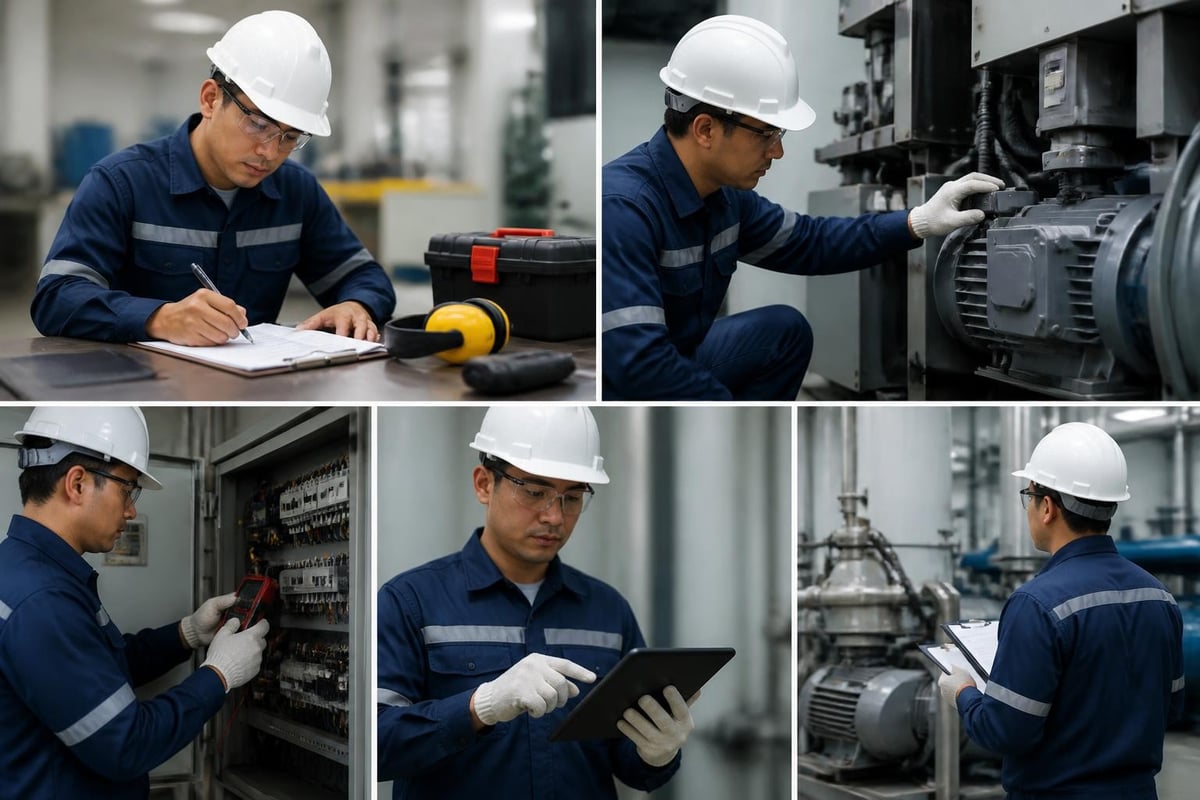
Execution quality determines whether work inspection delivers meaningful safety improvements or merely satisfies paperwork requirements. Competent persons conducting examinations must possess appropriate technical knowledge, practical experience, and independence to identify defects objectively.
Inspection Methodology
Systematic approaches ensure consistency and completeness across examination programmes. WorkSafeBC's guidance outlines structured methodologies applicable across industries.
Pre-Inspection Activities:
Review previous examination reports and maintenance records
Confirm equipment isolation where necessary for safe inspection
Prepare appropriate testing equipment and documentation templates
Brief operational staff on inspection timing and expected disruption
During Examination:
Follow manufacturer specifications and relevant technical standards
Document observations systematically, including measurements and photographs
Test safety-critical functions under realistic operating conditions
Identify not only obvious defects but deterioration trends requiring monitoring
Post-Inspection Requirements:
Classify defects by severity and urgency
Issue clear recommendations with realistic timescales
Communicate findings to responsible managers promptly
Verify implementation of remedial actions before equipment returns to service
For pressure systems, organisations must work within frameworks defined by their written scheme, which establishes specific examination points and testing protocols based on system characteristics and operating parameters.
Selecting Competent Inspection Providers
Organisations face critical decisions regarding whether to conduct inspections internally or engage specialist providers. This choice significantly impacts compliance quality, liability exposure, and resource allocation.
Criteria for Provider Selection
When evaluating inspection services, several factors warrant careful consideration:
Criterion | Why It Matters | Verification Method |
|---|---|---|
Technical competence | Ensures accurate defect identification | Review engineer qualifications, sector experience |
Independence | Prevents conflicts of interest | Confirm no repair/maintenance business links |
Insurance coverage | Protects against professional negligence claims | Request evidence of professional indemnity insurance |
Reporting quality | Facilitates informed decision-making | Review sample reports for clarity and detail |
Geographic coverage | Enables consistent multi-site programmes | Confirm nationwide availability and response times |
Independent engineering inspection companies like Workplace Inspection Services Ltd provide specialist expertise across multiple regulatory frameworks, enabling organisations to consolidate their compliance activities with a single provider whilst maintaining the independence essential for credible examination outcomes.
The U.S. Department of Energy's programme guidance highlights how structured inspection approaches must balance thoroughness with operational practicality, a consideration particularly relevant when coordinating examinations across complex facilities.
Documentation and Record Management
Comprehensive records serve multiple purposes: demonstrating compliance during regulatory visits, informing maintenance planning, supporting insurance claims, and providing historical context for trend analysis. The Electronic Code of Federal Regulations details documentation standards that, whilst American, reflect internationally recognised best practices.
Essential Documentation Elements
Effective record systems capture:
Equipment identification including unique asset numbers, locations, and specifications
Inspection dates and intervals between examinations
Inspector details confirming competence through qualifications and experience
Defect descriptions with severity classifications and photographic evidence
Remedial actions including completion dates and verification
Test results from functional assessments or performance measurements
Digital systems increasingly replace paper records, offering advantages in searchability, remote access, and integration with maintenance management platforms. However, systems must ensure data integrity, with appropriate backup procedures and access controls protecting against loss or unauthorised modification.
Retention periods vary by regulation and equipment type, but organisations should generally maintain inspection records throughout equipment service life plus several years beyond disposal to address potential legacy liability issues.
Common Deficiencies in Work Inspection Programmes
Experience across thousands of UK workplaces reveals recurring weaknesses that undermine inspection effectiveness. Recognising these patterns helps organisations avoid similar pitfalls.
Frequency Failures: Equipment operates beyond required examination intervals, often due to inadequate scheduling systems or poor coordination between sites. Inspection frequency requirements demand careful tracking mechanisms that alert responsible persons well in advance of deadline expiry.
Scope Omissions: Organisations overlook equipment categories requiring examination, particularly accessories, attachments, or ancillary systems not obviously covered by primary regulations. Comprehensive asset inventories updated regularly prevent these gaps.
Competence Deficits: Inspections conducted by individuals lacking appropriate technical knowledge or independence produce unreliable outcomes. This particularly affects in-house programmes where production pressures may compromise examination thoroughness.
Follow-Up Failures: Identified defects remain unaddressed beyond recommended timescales, negating the inspection's protective value. Robust action-tracking systems with escalation protocols ensure timely remediation.
The National Institute of Standards and Technology demonstrates how structured programmes with clear responsibilities and accountability mechanisms significantly reduce these common deficiencies.

Integrating Inspections with Broader Safety Management
Work inspection delivers maximum value when integrated within comprehensive health and safety compliance frameworks rather than existing as isolated activities. This integration creates synergies where inspection findings inform risk assessments, maintenance planning, and training programmes.
Creating Connected Systems
Strategic integration involves several elements:
Risk assessment linkage where inspection results update hazard evaluations
Maintenance coordination scheduling preventive work alongside statutory examinations
Training alignment using defect patterns to identify competence gaps
Procurement influence incorporating maintainability and inspectability into equipment selection
Performance monitoring tracking safety metrics derived from inspection data
Organisations achieving this integration often establish cross-functional teams including operations, maintenance, procurement, and safety specialists who collectively review inspection outcomes and develop coordinated response strategies.
This holistic approach particularly benefits multi-site organisations where central safety teams can identify patterns across locations, sharing learning and standardising approaches whilst respecting site-specific operational contexts.
Financial Considerations and Business Case
Work inspection represents significant ongoing expenditure, particularly for organisations with extensive equipment portfolios. However, framing these costs purely as compliance burdens misses their substantial value proposition.
Cost-Benefit Analysis
Direct Costs:
Inspection fees from external providers or internal resource allocation
Equipment downtime during examinations
Remedial work addressing identified defects
Record management and administration
Avoided Costs:
Incident-related losses including injuries, property damage, and production interruption
Regulatory enforcement actions, fines, and prosecution costs
Insurance premium increases following poor safety performance
Reputational damage affecting customer relationships and recruitment
Research consistently demonstrates that proactive safety investment, including comprehensive inspection programmes, delivers positive returns through avoided losses and improved operational efficiency. Equipment examined regularly experiences fewer unexpected failures, enabling planned maintenance during scheduled downtime rather than emergency repairs disrupting production.
SafeCare BC provides compelling evidence that workplace inspection programmes reduce incident rates significantly, with associated cost savings far exceeding programme investment over time.
Emerging Trends and Future Developments
Work inspection methodology continues evolving, influenced by technological advancement, regulatory updates, and changing workplace demographics. Forward-thinking organisations monitor these developments to maintain competitive advantage through early adoption of beneficial innovations.
Technology Integration
Several technological trends shape modern inspection practice:
Digital reporting platforms enabling real-time data capture, photographic evidence integration, and immediate communication with stakeholders
Predictive maintenance tools using sensor data and analytics to optimise inspection timing based on actual equipment condition rather than fixed intervals
Remote inspection capabilities incorporating video technology allowing expert examination without site visits for certain equipment categories
Augmented reality systems providing inspectors with overlay information during examinations, highlighting critical inspection points and historical defect locations
Whilst technology offers significant efficiency gains, human expertise remains irreplaceable for nuanced defect interpretation, contextual risk assessment, and professional judgment regarding equipment fitness for purpose.
Academic research, including studies on optimal inspection timing, explores whether predictable or randomised inspection schedules deliver superior compliance outcomes, findings increasingly informing regulatory thinking and industry best practice.
Sector-Specific Considerations
Different industries face unique work inspection challenges reflecting their distinct hazard profiles, operational environments, and regulatory contexts. Understanding sector-specific requirements ensures appropriately tailored programmes.
Manufacturing and Production
Manufacturing facilities typically maintain diverse equipment portfolios requiring examination under multiple regulations. PUWER inspections cover production machinery, whilst lifting equipment and pressure systems demand separate attention under LOLER and PSSR respectively.
Coordination challenges arise when single machines incorporate multiple regulated elements, requiring careful planning to ensure comprehensive examination without duplicative effort or excessive production interruption.
Construction and Engineering
Construction environments present particular challenges due to temporary site configurations, equipment movement between locations, and compressed project timescales. Work inspection programmes must accommodate these dynamics whilst maintaining statutory compliance and protecting workers in inherently high-risk environments.
Logistics and Warehousing
Warehouse operations depend heavily on lifting equipment and materials handling machinery requiring regular examination. High utilisation rates and continuous operation schedules demand inspection planning that minimises operational disruption whilst addressing elevated wear rates resulting from intensive use.
Chemical and Process Industries
Chemical facilities operate complex pressure systems and local exhaust ventilation requiring sophisticated examination under PSSR and COSHH regulations. Supplementary testing services often complement basic inspections, providing additional assurance for critical safety systems.
Building Internal Inspection Capability
Organisations must decide whether to develop internal inspection competence or rely entirely on external providers. This strategic choice reflects numerous factors including equipment complexity, examination frequency, geographic distribution, and availability of suitable personnel.
Developing Competent Persons
Building internal capability requires:
Technical Training: Formal qualifications demonstrating understanding of relevant regulations, engineering principles, and examination methodologies. Trade associations and professional bodies offer recognised certification programmes.
Practical Experience: Supervised examination participation building familiarity with equipment types, defect recognition, and risk assessment. Newly qualified inspectors should work alongside experienced colleagues before conducting independent examinations.
Continuing Professional Development: Regular updating on regulatory changes, technical developments, and industry best practices. Competence requires ongoing maintenance, not one-time achievement.
Independence Safeguards: Clear separation between examination and repair responsibilities, ensuring inspectors' objectivity isn't compromised by performance pressures or budget constraints affecting maintenance departments.
Even organisations maintaining internal capability often engage external specialists for complex examinations, independent verification, or capacity supplementation during peak periods.
Managing Multi-Site Inspection Programmes
Organisations operating across multiple locations face additional complexity coordinating consistent work inspection standards whilst accommodating site-specific operational contexts. Centralised oversight combined with local execution typically delivers optimal outcomes.
Coordination Strategies
Effective multi-site programmes incorporate:
Standardised procedures ensuring consistent examination quality regardless of location
Central scheduling systems providing visibility across entire equipment portfolios
Regional provider networks enabling efficient coverage without excessive travel costs
Consolidated reporting allowing comparative analysis identifying systemic issues
Learning distribution mechanisms sharing defect patterns and remedial solutions across sites
Technology platforms increasingly enable this coordination, with cloud-based systems providing real-time status visibility and automated compliance tracking across dispersed operations.
Central safety teams benefit from aggregated data revealing trends invisible at individual site level, informing strategic initiatives around equipment standardisation, maintenance protocol improvement, and training focus areas.
Effective work inspection programmes protect employees, ensure regulatory compliance, and support operational continuity through proactive hazard identification and risk control. Organisations achieve optimal outcomes by integrating statutory examinations within comprehensive safety management systems, engaging competent inspection providers, and maintaining robust documentation practices. Workplace Inspection Services Ltd supports businesses nationwide with independent engineering inspections across LOLER, PUWER, PSSR and COSHH/LEV regulations, helping organisations navigate complex compliance requirements whilst maintaining safe, productive workplaces.