Work Equipment Management: Standards & Safety Compliance
Work Equipment Management: Standards & Safety Compliance

Every organisation relies on work equipment to deliver its services and manufacture its products. From simple hand tools to complex machinery, lifting gear to pressure systems, the equipment used in workplaces across the UK presents both opportunities and risks. Proper management of work equipment isn't simply about productivity - it's a legal requirement that protects employees, reduces operational disruption, and ensures businesses remain compliant with health and safety legislation. Understanding what constitutes work equipment and how to manage it effectively is fundamental to any organisation's risk management strategy.
Defining Work Equipment in the Workplace
Work equipment encompasses a remarkably broad category of items used in occupational settings. The term includes any machinery, appliance, apparatus, tool or installation designed for use at work. This ranges from basic implements such as hammers and screwdrivers through to sophisticated manufacturing machinery, lifting equipment, and pressure systems.
The Health and Safety Executive provides comprehensive guidelines on maintaining work equipment, emphasising that virtually every item used in the course of business activities falls within this definition. Mobile work equipment such as forklift trucks, scaffolding, ladders, computer systems, and even laboratory equipment all qualify as work equipment under current regulations.
Categorising Equipment by Risk and Function
Different categories of work equipment demand varying levels of oversight and inspection:
Lifting equipment: Cranes, hoists, passenger and goods lifts, lifting accessories
Pressure systems: Air receivers, steam boilers, pressure vessels, compressed air systems
Power tools: Circular saws, angle grinders, drill presses, pneumatic tools
Mobile machinery: Telehandlers, excavators, agricultural vehicles
Fixed machinery: Lathes, milling machines, presses, conveyors
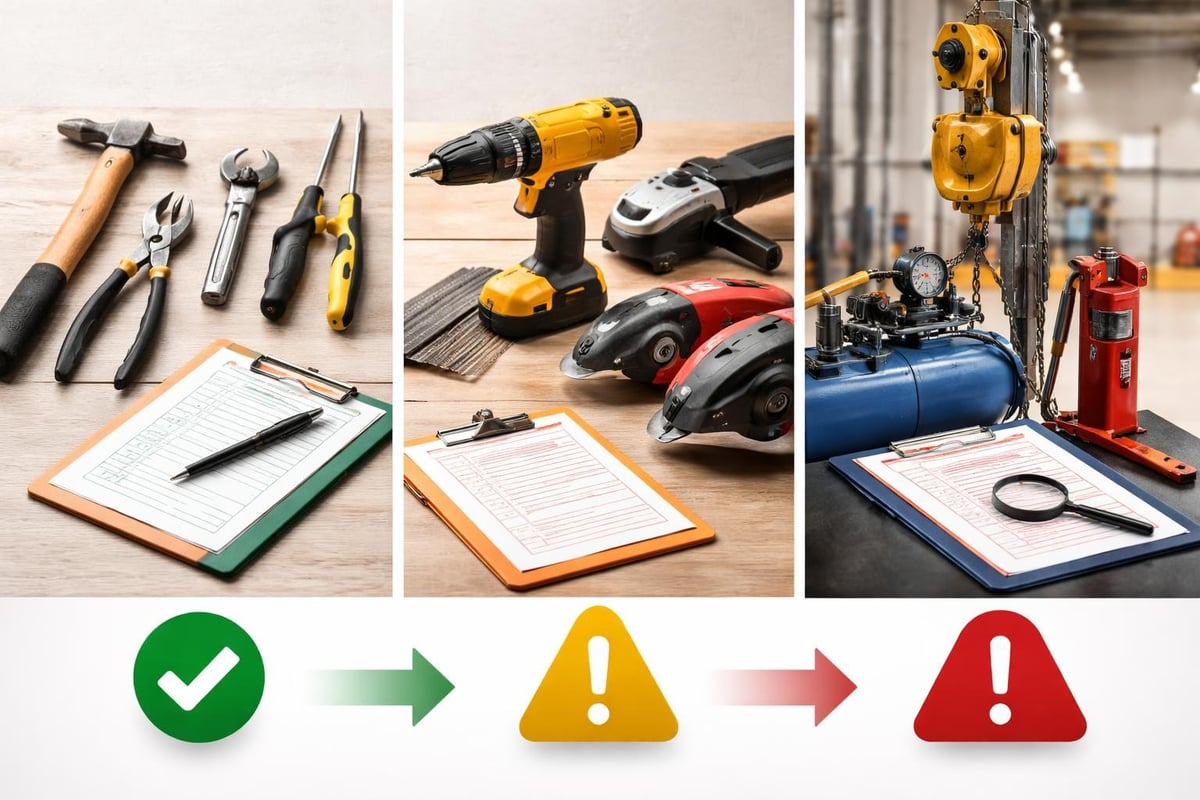
Understanding these classifications helps organisations prioritise their maintenance and inspection schedules appropriately. Equipment that poses higher risks or operates under demanding conditions typically requires more frequent examination.
Statutory Requirements for Work Equipment
The UK regulatory framework governing work equipment comprises several key pieces of legislation. The Provision and Use of Work Equipment Regulations 1998 (PUWER) establishes fundamental requirements that apply to virtually all work equipment. These regulations mandate that equipment must be suitable for its intended use, properly maintained, and inspected at appropriate intervals.
For specialised categories, additional regulations apply. The Lifting Operations and Lifting Equipment Regulations 1998 (LOLER) governs lifting equipment, whilst the Pressure Systems Safety Regulations 2000 (PSSR) addresses equipment operating under pressure. Organisations must understand which regulations apply to their specific equipment portfolio.
Employer Responsibilities Under PUWER
PUWER places clear obligations on employers and those in control of work equipment. Equipment must be:
Suitable for its intended purpose and the conditions in which it's used
Maintained in a safe condition through a systematic maintenance programme
Inspected at suitable intervals to ensure it remains safe
Used only by people who have received adequate training and information
Accompanied by suitable health and safety measures, including protective devices
Businesses requiring PUWER inspections should engage competent persons who understand both the equipment and the regulatory requirements. The frequency of statutory inspections varies depending on equipment type, operating environment, and manufacturer recommendations.
Equipment Type | Typical Inspection Frequency | Primary Regulation |
|---|---|---|
Lifting equipment (general) | 6-12 months | LOLER |
Lifting accessories | 6 months | LOLER |
Pressure vessels | 12-26 months | PSSR |
Power presses | 12 months | PUWER |
Portable electrical tools | 3-12 months | PUWER |
Establishing Effective Maintenance Programmes
Preventive maintenance forms the cornerstone of safe work equipment management. A robust maintenance programme reduces the likelihood of unexpected failures, extends equipment lifespan, and ensures machinery remains compliant with safety standards. Equipment maintenance strategies should balance regulatory requirements with manufacturer guidance and operational experience.
Effective maintenance programmes incorporate several essential elements. First, they establish clear schedules based on equipment criticality and usage patterns. High-use equipment in demanding environments requires more frequent attention than occasionally used items in controlled conditions.
Developing Maintenance Schedules
Creating appropriate maintenance intervals requires consideration of multiple factors:
Manufacturer recommendations and service intervals
Operating environment (temperature, dust, moisture, vibration)
Intensity and frequency of use
Historical failure patterns and maintenance records
Regulatory minimum requirements
Documentation proves crucial for demonstrating compliance. Maintenance records should capture the date of service, work performed, parts replaced, person responsible, and any issues identified. This creates an audit trail that helps organisations prove due diligence and identify recurring problems requiring design or operational changes.
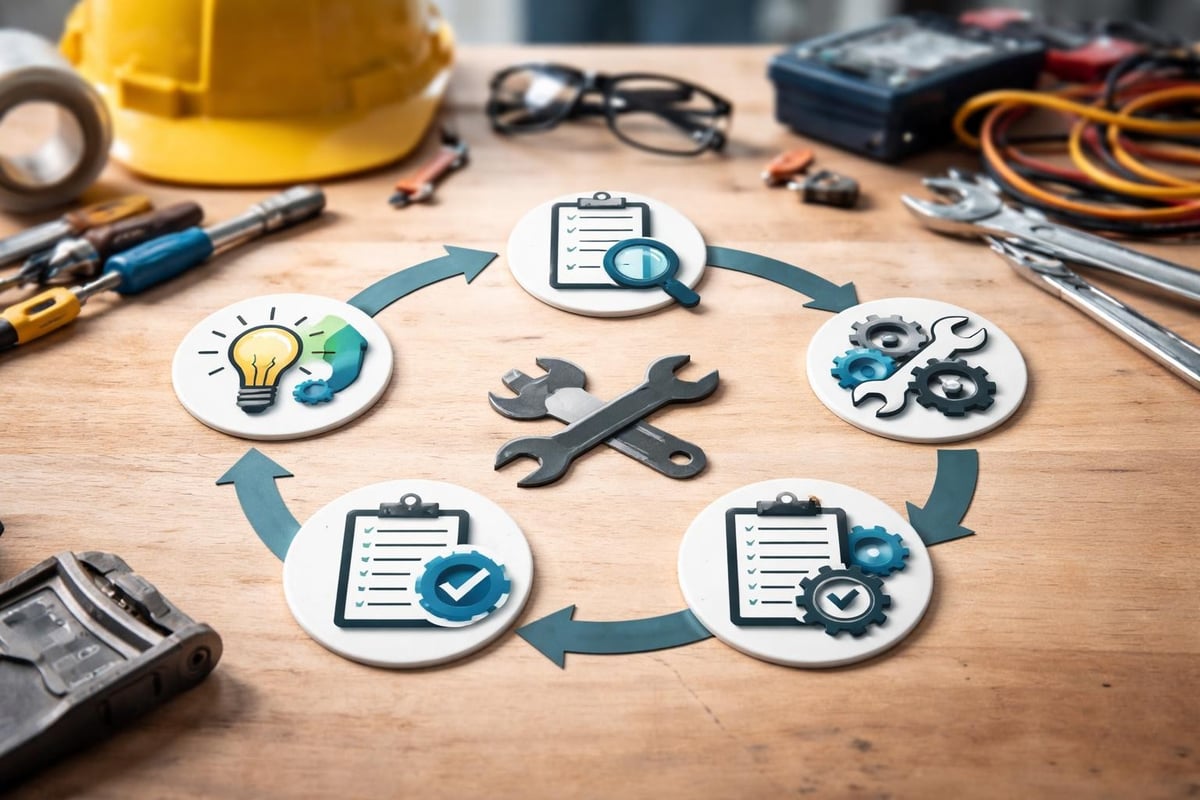
Effective industrial equipment maintenance requires a systematic approach that combines scheduled preventive work with responsive corrective maintenance. Organisations should establish clear procedures for reporting defects, taking equipment out of service when unsafe, and authorising repairs before returning equipment to operational use.
Risk Assessment and Safe Usage Protocols
Before any work equipment enters service, thorough risk assessment must identify potential hazards and establish appropriate control measures. This process examines how equipment might cause harm through mechanical dangers, electrical hazards, noise, vibration, or exposure to hazardous substances.
Risk assessments should consider the complete equipment lifecycle - from installation through operation to eventual decommissioning. They must account for normal operation, foreseeable misuse, maintenance activities, and emergency situations. The findings inform decisions about guarding requirements, safety interlocks, warning systems, and user training needs.
Implementing Control Measures
The hierarchy of control provides a systematic framework for managing work equipment risks:
Elimination: Remove the hazard entirely through design or process changes
Substitution: Replace with less hazardous equipment or methods
Engineering controls: Install guards, barriers, or safety devices
Administrative controls: Implement safe working procedures and permit systems
Personal protective equipment: Provide appropriate PPE as a last line of defence
Guards and protective devices must be robust, properly maintained, and regularly inspected. Interlocks that prevent equipment operation when guards are open should be tested during inspections to verify correct function. Organisations should never bypass or disable safety features, even temporarily, without formal risk assessment and appropriate compensating controls.
Training and Competence Requirements
Competent operation of work equipment demands adequate training, instruction, and supervision. The level of training required varies with equipment complexity and associated risks. Someone operating a pedestrian-controlled pallet truck needs different training compared to someone using a tower crane or operating a CNC milling machine.
Training programmes should address both theoretical knowledge and practical skills. Operators need to understand the equipment's capabilities and limitations, recognise potential hazards, implement safe working procedures, perform basic pre-use checks, and know when to report defects or seek assistance.
Operator Authorisation Systems
Many organisations implement formal authorisation systems for higher-risk equipment:
Initial assessment of theoretical knowledge
Supervised practical training and evaluation
Periodic refresher training to maintain competence
Reauthorisation following incidents or extended absence
Records demonstrating current authorisation status
Competence extends beyond operators to maintenance personnel, inspectors, and supervisors. Machine safety in the workplace requires everyone interacting with equipment to understand their responsibilities and the hazards they may encounter.
Role | Key Competence Areas | Typical Training Duration |
|---|---|---|
Equipment operator | Safe operation, pre-use checks, hazard recognition | 1-5 days |
Maintenance technician | Safe isolation, repair procedures, testing protocols | Weeks to months |
Appointed person (lifting) | Load assessment, lift planning, supervision | 3-5 days |
Competent inspector | Regulations, inspection techniques, report writing | Extended qualification |

Inspection Regimes and Record Keeping
Statutory inspections form a critical component of work equipment management. These thorough examinations, conducted by competent persons, verify that equipment remains safe for continued use and identify any deterioration requiring attention. Different equipment categories require different inspection approaches and frequencies.
For lifting equipment, LOLER inspections must occur at intervals determined by the scheme of examination, typically not exceeding 12 months for most equipment and six months for lifting accessories. Pressure systems require examination according to written schemes that specify intervals based on equipment type and operating conditions.
Inspection Report Management
Inspection reports must be retained and remain accessible throughout the equipment's operational life. These documents provide evidence of compliance and help organisations track equipment condition over time. Key elements include:
Unique equipment identification and location
Date of examination and competent person details
Defects identified, categorised by severity
Repair requirements and timescales
Date by which next examination is due
Organisations should establish systems that alert them to upcoming inspection due dates, preventing inadvertent operation of equipment beyond its examination interval. When inspectors identify defects requiring immediate attention, equipment must be removed from service until repairs are completed and verified.
Managing Equipment Throughout Its Lifecycle
Effective work equipment management begins before equipment arrives on site and continues until final disposal. Each lifecycle stage presents specific responsibilities and considerations that influence safety and compliance.
During procurement, organisations should verify that equipment meets relevant standards, arrives with necessary documentation including operating manuals and maintenance schedules, and suits the intended application and operating environment. The guidelines on tool and machine safety emphasise selecting equipment with appropriate guarding and safety features from the outset.
Installation and Commissioning
Proper installation ensures equipment operates as designed and maintains built-in safety features. This phase should include:
Verification of foundation or mounting adequacy
Correct connection of utilities (power, compressed air, cooling)
Installation and adjustment of guards and safety devices
Initial testing and calibration
Operator training before handover
Documentation created during commissioning, including test results and as-installed drawings, forms part of the equipment's permanent record. This information proves invaluable for future maintenance, modifications, and inspections.
Addressing Common Equipment Hazards
Work equipment presents numerous potential hazards that require specific control measures. Mechanical hazards include entanglement in rotating parts, crushing between moving and fixed components, shearing actions, and impact from moving equipment or ejected materials. General safety guidelines emphasise the importance of understanding these hazards before operating any equipment.
Electrical hazards from work equipment cause serious injuries and fatalities annually. Control measures include regular inspection of cables and connections, use of appropriate voltage levels (reduced voltage in hazardous environments), residual current devices, and safe isolation procedures before maintenance work.
Noise and Vibration Management
Many types of work equipment generate significant noise or vibration exposure:
Noise hazards: Prolonged exposure causing hearing damage
Hand-arm vibration: From power tools causing circulatory and nerve damage
Whole-body vibration: From mobile equipment affecting the spine
Control strategies include selecting quieter equipment, implementing engineering controls such as sound enclosures, reducing exposure duration through job rotation, and providing hearing protection where noise cannot be sufficiently reduced. Understanding workplace health and safety compliance requirements helps organisations address these secondary hazards effectively.
Modification and Adaptation Considerations
Organisations sometimes modify work equipment to improve productivity, accommodate changed processes, or address operational challenges. However, modifications can compromise safety features or introduce new hazards. Any proposed changes require careful evaluation through formal management of change procedures.
Before modifying equipment, organisations must assess whether changes affect:
Existing risk assessments and safe working procedures
Structural integrity or load-bearing capacity
Safety devices, guards, or interlocks
Statutory inspection requirements or frequencies
Manufacturer certifications or warranties
Significant modifications may require re-certification, updated inspection schemes, or notification to regulatory authorities. Documentation should capture the rationale for changes, engineering calculations supporting modifications, and updated operating procedures reflecting the altered configuration.
Equipment Retirement and Disposal
Work equipment eventually reaches the end of its serviceable life through obsolescence, excessive wear, or economic factors. Retirement decisions should consider ongoing maintenance costs, availability of spare parts, comparison with modern safety standards, and the equipment's accident and near-miss history.
Safe disposal requires several steps to protect people and the environment:
Formal removal from service with clear marking or physical isolation
Draining or purging of residual materials (fuels, oils, refrigerants)
Disconnection from utilities following safe isolation procedures
Disposal of hazardous components through licensed waste carriers
Record retention documenting retirement and disposal
Best practices for construction equipment emphasise that even during decommissioning, proper procedures remain essential to prevent injuries and environmental harm.
Creating a Culture of Equipment Safety
Beyond regulatory compliance, successful organisations develop safety cultures where everyone understands their role in equipment safety. This requires visible leadership commitment, open communication about hazards and near-misses, and systems that encourage reporting without blame.
Regular safety communications keep work equipment safety prominent in employees' minds. Toolbox talks, safety bulletins, and incident learning reviews maintain awareness of specific hazards and reinforce safe practices. Organisations should celebrate positive behaviours such as equipment operators reporting defects promptly or maintenance teams identifying innovative safety improvements.
Engaging employees in equipment safety decisions increases buy-in and often generates valuable insights. Those using equipment daily frequently identify practical improvements that managers might overlook. Establishing forums for safety discussions and acting on employee suggestions demonstrates that safety concerns receive serious attention.
Managing work equipment safely requires commitment to regulatory compliance, systematic maintenance, thorough inspection, and continuous improvement. By implementing robust procedures across the equipment lifecycle, organisations protect their workforce whilst maintaining operational efficiency. Workplace Inspection Services Ltd supports businesses throughout the UK with expert statutory inspections under LOLER, PUWER, PSSR, and COSHH/LEV regulations, helping organisations maintain compliance, reduce risk, and ensure safe working environments.