Safety on Work: Essential Practices for UK Workplaces
Safety on Work: Essential Practices for UK Workplaces
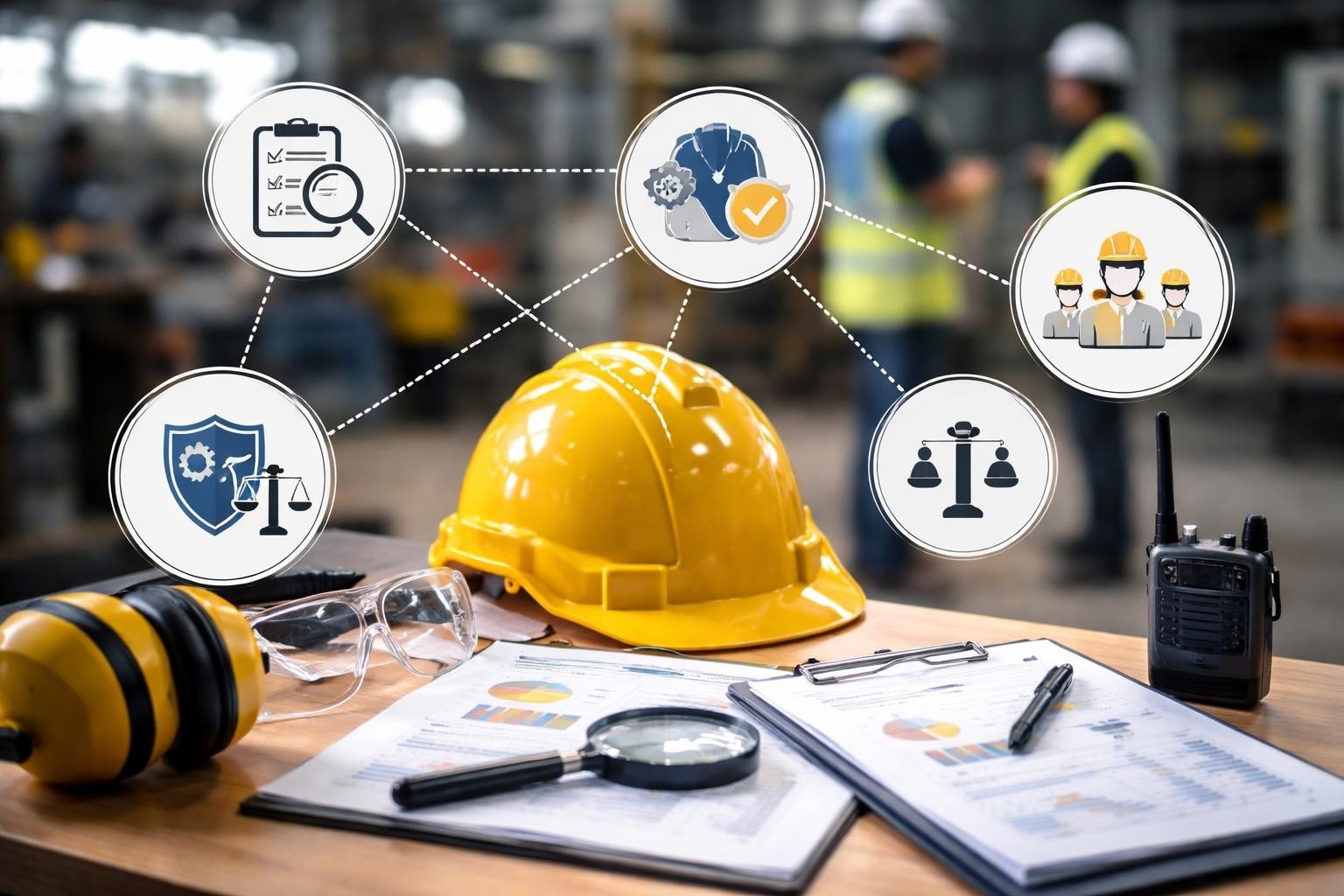
Safety on work remains the cornerstone of responsible business operations across the United Kingdom. Every organisation, regardless of size or sector, bears the fundamental responsibility of protecting employees from harm whilst maintaining productive operations. The engineering and industrial sectors face particularly complex safety challenges due to the nature of machinery, equipment, and processes involved. Understanding how to build and maintain a robust safety culture requires knowledge of regulations, commitment to systematic risk management, and ongoing vigilance through regular inspections and training programmes.
The Foundation of Workplace Safety Culture
Creating a genuine safety culture extends far beyond simply displaying warning signs or conducting annual training sessions. It requires embedding safety considerations into every business decision, operational procedure, and daily interaction.
Leadership Commitment and Visibility
Senior management must demonstrate authentic commitment to safety on work through actions rather than words alone. This means allocating appropriate budgets for safety equipment, dedicating time to safety committee meetings, and visibly participating in safety walkabouts. When employees observe directors and managers prioritising safety discussions and investigations, they understand that the organisation values their wellbeing genuinely.
Key leadership behaviours that strengthen safety culture include:
Conducting regular site visits focused specifically on safety observations
Responding promptly to safety concerns raised by employees
Celebrating safety achievements alongside production milestones
Investing in modern safety equipment without hesitation
Holding managers accountable for safety performance metrics
The most effective safety leaders recognise that production targets and safety objectives are not competing priorities. Instead, they understand that sustainable productivity emerges only from workplaces where employees feel genuinely protected from harm.

Employee Engagement and Communication
Safety on work improves dramatically when organisations create channels for frontline employees to contribute observations, suggestions, and concerns. Workers operating equipment daily often identify hazards before managers or safety officers notice them. According to OSHA's safety and health program guidelines, effective worker participation is a core element of any successful workplace safety programme.
Establishing regular safety briefings, suggestion schemes, and near-miss reporting systems encourages this valuable input. However, organisations must respond meaningfully to employee feedback. When workers report concerns that subsequently disappear into administrative processes without acknowledgement or action, engagement collapses rapidly.
Risk Assessment and Hazard Identification
Systematic risk assessment forms the technical backbone of effective safety on work management. This process involves identifying potential hazards, evaluating the likelihood and severity of harm, and implementing appropriate control measures.
The Hierarchy of Controls
When addressing identified risks, safety professionals apply a structured approach known as the hierarchy of controls. This framework prioritises the most effective risk reduction methods whilst acknowledging that multiple layers often provide the best protection.
Control Level | Effectiveness | Examples | Limitations |
|---|---|---|---|
Elimination | Highest | Removing hazardous processes entirely | Not always feasible |
Substitution | High | Replacing dangerous substances with safer alternatives | May affect product quality |
Engineering Controls | Medium-High | Machine guarding, ventilation systems, safety interlocks | Requires capital investment |
Administrative Controls | Medium | Training, procedures, permit systems | Relies on human compliance |
PPE | Lowest | Safety glasses, gloves, hearing protection | Protects only the wearer |
Understanding workplace health and safety compliance requirements helps organisations apply these controls systematically rather than relying solely on personal protective equipment, which represents the least reliable protection layer.
Dynamic Risk Assessment
Whilst formal risk assessments provide essential baseline protection, employees also need skills to assess changing conditions throughout their working day. Construction sites, manufacturing environments, and engineering workshops present constantly evolving hazard profiles as work progresses, weather changes, or equipment conditions deteriorate.
Training employees to perform quick mental risk assessments before starting tasks enables them to spot emerging dangers. This skill proves particularly valuable when workers encounter unexpected situations not covered by standard procedures or when multiple activities create new hazard combinations.
Regulatory Compliance and Statutory Inspections
The United Kingdom maintains comprehensive workplace safety legislation designed to prevent injuries, illnesses, and fatalities. Organisations must understand their obligations under various regulations and ensure ongoing compliance through systematic inspection regimes.
Key Regulatory Frameworks
Several statutory instruments govern safety on work across UK industries:
Health and Safety at Work etc. Act 1974 - The foundational legislation establishing employer duties
Management of Health and Safety at Work Regulations 1999 - Requiring risk assessments and safety management systems
Provision and Use of Work Equipment Regulations 1998 (PUWER) - Governing machinery and equipment safety
Lifting Operations and Lifting Equipment Regulations 1998 (LOLER) - Covering cranes, hoists, and lifting accessories
Pressure Systems Safety Regulations 2000 (PSSR) - Addressing pressure vessels and associated systems
Control of Substances Hazardous to Health Regulations 2002 (COSHH) - Managing chemical and biological hazards
Understanding inspection regulations helps organisations develop compliant schedules that maintain equipment safety whilst avoiding operational disruptions.
The Role of Independent Inspections
Statutory regulations often require competent persons to examine workplace equipment at specified intervals. LOLER inspections, for example, ensure lifting equipment remains safe through thorough examinations identifying wear, damage, or safety risks before they cause accidents.
Independent engineering inspection companies provide several advantages over in-house inspection programmes:
Objective assessments free from production pressures
Specialist expertise across multiple equipment types
Up-to-date knowledge of regulatory changes and best practices
Comprehensive documentation supporting compliance demonstrations
Fresh perspectives that may identify overlooked hazards
Regular statutory inspections form a critical component of proactive safety on work management, catching deteriorating conditions before equipment failures occur.
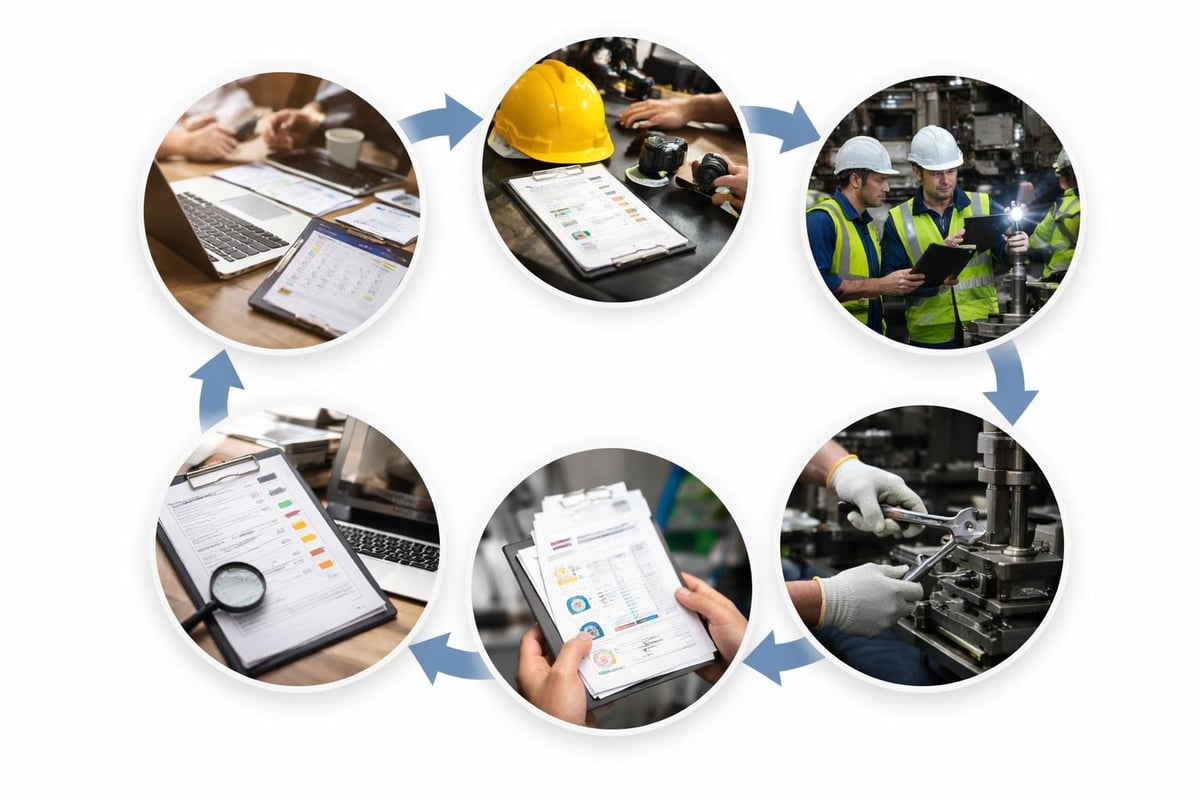
Common Workplace Hazards and Prevention Strategies
Different industries face unique safety challenges, yet certain hazards appear consistently across various workplace settings. Recognising these common risks and implementing proven prevention strategies significantly reduces incident rates.
Slips, Trips, and Falls
Despite seeming mundane, slips, trips, and falls account for a substantial proportion of workplace injuries. The CDC's fall prevention resources highlight how these incidents cause serious injuries and lost productivity across industries.
Prevention measures include:
Maintaining clean, dry walking surfaces throughout facilities
Installing adequate lighting in all work areas and corridors
Marking elevation changes clearly with high-visibility tape
Implementing immediate spill response procedures
Requiring appropriate footwear with slip-resistant soles
Keeping walkways clear of cables, materials, and equipment
Regular housekeeping inspections ensure these basic controls remain effective. Organisations often discover that minor maintenance issues-a burned-out light bulb, a damaged floor tile, or a leaking pipe-contributed to preventable injuries.
Machinery and Equipment Hazards
Engineering environments present particular risks from moving machinery, rotating equipment, and power tools. Effective safety on work practices for machinery involve multiple protective layers working together.
Guards and safety devices prevent contact with dangerous machine parts. However, physical guarding only works when maintained properly and not removed or bypassed by operators seeking faster production. Equally important are lockout/tagout procedures ensuring machines cannot start unexpectedly during maintenance, and proper training ensuring operators understand both normal operation and emergency stops.
Manufacturing and fabrication facilities should reference industry-specific guidance when developing machinery safety protocols tailored to their particular equipment types and processes.
Hazardous Substances and Environmental Exposures
Many workplaces use or generate substances that pose health risks through inhalation, skin contact, or ingestion. Chemical solvents, welding fumes, wood dust, and metal particles all require careful management to prevent both acute injuries and long-term occupational diseases.
Understanding the hierarchy of controls proves particularly valuable with substance hazards. Eliminating the hazardous substance entirely or substituting safer alternatives provides far better protection than relying on respirators. When elimination proves impossible, engineering controls such as local exhaust ventilation systems capture contaminants at source before they spread throughout the workspace.
organisations should also consider environmental factors including excessive heat, which OSHA identifies as a serious workplace hazard particularly during summer months in poorly ventilated facilities. Heat stress prevention requires environmental controls, work-rest schedules, hydration programmes, and training to recognise symptoms.
Training and Competency Development
Even the most sophisticated safety systems fail without properly trained personnel who understand both what to do and why it matters. Effective training programmes develop genuine competency rather than simply achieving tick-box compliance.
Initial Induction and Role-Specific Training
New employees require comprehensive safety induction covering site-specific hazards, emergency procedures, and reporting systems before commencing work. However, generic inductions prove insufficient for employees working with specialised equipment or in high-risk areas.
Role-specific training should address:
Particular hazards associated with the job function
Operation of specific machinery or equipment
Personal protective equipment requirements and limitations
Standard operating procedures for routine tasks
Abnormal conditions and emergency response actions
Competency assessment following training ensures employees genuinely understand the material rather than passively attending sessions. Practical demonstrations, written tests, and supervised work periods all contribute to verification.
Ongoing Refresher Training and Skills Maintenance
Safety on work knowledge degrades over time, particularly for procedures used infrequently. Annual refresher training maintains awareness and updates employees on procedural changes, new equipment, or lessons learned from incidents.
Training Type | Typical Frequency | Assessment Method | Documentation Required |
|---|---|---|---|
General safety induction | Upon hire | Written test | Certificate of completion |
Equipment operation | Before first use | Practical demonstration | Competency record |
Emergency procedures | Annual | Drill participation | Attendance record |
Hazardous substances | Annual or upon changes | Knowledge check | Training log |
First aid | Three-year certification | Formal qualification | Certificate renewal |
Beyond scheduled training, organisations should conduct toolbox talks addressing specific hazards, seasonal risks, or recent near-miss incidents. These brief focused sessions maintain safety awareness between formal training courses.
Incident Investigation and Continuous Improvement
No safety programme, however sophisticated, prevents every incident. When injuries, near-misses, or property damage occur, thorough investigation transforms these unfortunate events into learning opportunities that prevent recurrence.
Root Cause Analysis Techniques
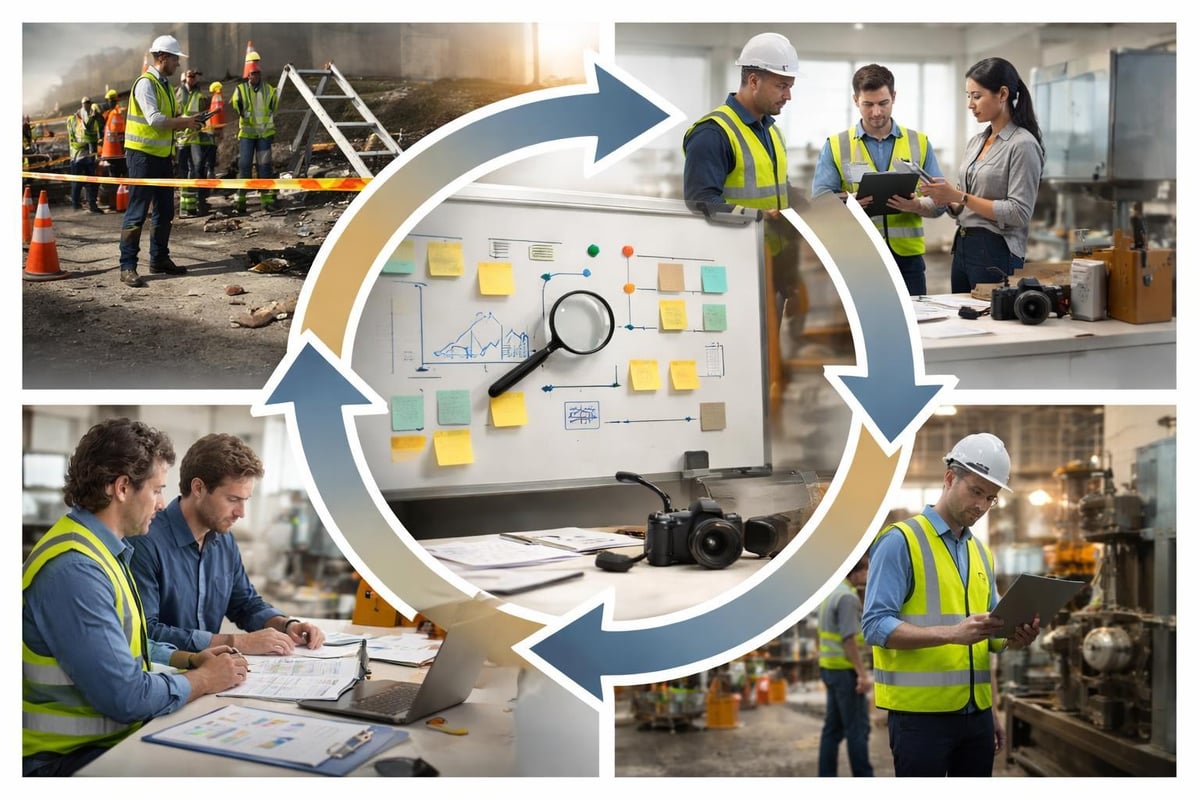
Effective incident investigation looks beyond immediate causes to identify underlying system failures. A maintenance worker injured by unexpected machine startup might prompt simplistic conclusions about personal carelessness. However, deeper investigation might reveal inadequate lockout procedures, missing safety devices, production pressure discouraging proper shutdown, or insufficient training-all systemic issues requiring organisational responses.
The "5 Whys" technique systematically explores incident causation by repeatedly asking why each condition existed. This method often reveals multiple contributing factors spanning technical, procedural, and cultural dimensions.
Learning from Near-Misses
Near-miss events-incidents that could have caused injury but didn't-provide invaluable safety intelligence. Organisations that encourage near-miss reporting and investigate them as thoroughly as actual injuries gain insights into hazards before anyone gets hurt.
However, near-miss reporting only flourishes in blame-free cultures where employees trust that honest reporting leads to problem-solving rather than punishment. Management responses to the first few reported near-misses establish whether employees will continue reporting or simply stay silent about close calls.
Measuring and Monitoring Safety Performance
What gets measured gets managed. Organisations serious about safety on work track multiple indicators providing insights into both outcomes and leading activities that prevent incidents.
Lagging Indicators: Learning from History
Traditional safety metrics measure negative outcomes after they occur:
Lost-time injury frequency rate (LTIFR)
Total recordable injury rate (TRIR)
Days away from work
Property damage incidents
Regulatory enforcement actions
Whilst these metrics indicate overall safety performance, they offer limited value for prevention since they only rise after someone gets hurt. International comparisons of occupational injury rates show significant variation between countries, suggesting substantial room for improvement in many jurisdictions.
Leading Indicators: Proactive Performance Monitoring
Forward-looking organisations increasingly emphasise leading indicators measuring safety activities before incidents occur:
Safety training hours completed
Hazard reports submitted by employees
Percentage of planned inspections completed on schedule
Corrective actions closed within target timeframes
Safety observation tours conducted by managers
Near-miss investigation completion rates
These metrics reveal whether safety systems function as designed and allow corrective action before lagging indicators deteriorate. A sudden drop in hazard reporting might indicate cultural problems or communication breakdowns requiring immediate attention.
Technology and Innovation in Workplace Safety
Modern technology offers unprecedented capabilities for enhancing safety on work through better hazard detection, improved communication, and data-driven decision-making.
Digital Inspection and Maintenance Systems
Traditional paper-based inspection records create administrative burdens and make trend analysis difficult. Digital inspection platforms enable inspectors to capture findings electronically, attach photographs, assign corrective actions, and track completion automatically.
These systems also facilitate scheduling based on inspection frequency requirements for different equipment types, ensuring nothing falls through administrative cracks. Automated reminders prompt timely inspections whilst dashboards provide management visibility into compliance status across multiple sites.
Wearable Technology and Real-Time Monitoring
Emerging wearable devices monitor environmental conditions and physiological responses, alerting workers to dangerous exposures before health effects occur. Heat stress monitors, gas detection badges, and noise dosimeters provide personalised protection by measuring individual exposure rather than relying on general area monitoring.
Similarly, proximity detection systems prevent collisions between mobile equipment and pedestrians by alerting operators when workers enter dangerous zones. These technologies add protective layers particularly valuable in complex environments where visual line-of-sight proves difficult.
Data Analytics and Predictive Safety
Large organisations with substantial incident histories can apply analytics to identify patterns invisible in individual events. Machine learning algorithms might recognise that certain work shift patterns, weather conditions, or production schedules correlate with elevated incident rates, enabling targeted preventive interventions.
Predictive maintenance using equipment sensor data prevents failures that could cause safety incidents. Vibration analysis, thermal imaging, and oil analysis detect deteriorating conditions before catastrophic breakdowns occur, protecting both employees and assets.
Building Safety into Procurement and Design
The most cost-effective safety interventions occur during equipment procurement and workplace design rather than attempting to retrofit protection onto existing installations.
Equipment Specification and Selection
Purchasing decisions should evaluate safety features alongside price and performance specifications. Modern machinery incorporates guards, interlocks, and emergency stops as standard features, yet cheaper alternatives may omit crucial protections.
Procurement specifications should require:
CE marking demonstrating conformity with applicable EU directives
Comprehensive operating and maintenance manuals
Guard designs preventing access during operation
Emergency stop devices within easy operator reach
Clear labelling of controls and hazard warnings
Provision for lockout/tagout during maintenance
Engaging safety professionals during equipment selection ensures specifications address actual workplace hazards rather than generic requirements.
Facility Layout and Workflow Design
Well-designed facilities separate pedestrians from vehicle traffic, provide adequate lighting throughout work areas, and position emergency equipment accessibly. Poor layouts force workers to improvise unsafe workarounds or expose them to unnecessary hazards.
When planning new facilities or modifying existing spaces, organisations should consult resources like industry-specific workplace guides that address sector-particular safety considerations including material flow, equipment placement, and emergency egress.
Contractor Management and Multi-Employer Workplaces
Many organisations employ contractors alongside permanent employees, creating interface challenges where different safety systems meet. Construction sites particularly face complexity from multiple contractors working simultaneously in shared spaces.
Pre-Qualification and Selection
Robust contractor safety management begins before work commences. Pre-qualification processes should evaluate:
Safety performance history including LTIFR and insurance experience modifications
Written safety programmes and procedures relevant to the scope of work
Training records demonstrating contractor employee competency
Equipment inspection and maintenance documentation
Insurance coverage limits appropriate to the risk profile
Selecting contractors based solely on lowest price often leads to safety compromises as contractors cut corners to remain profitable on thin margins.
Coordination and Communication
Principal contractors or facility owners bear responsibility for coordinating safety activities when multiple employers share a workspace. This includes conducting joint safety meetings, establishing common emergency procedures, and ensuring contractors understand site-specific hazards beyond their immediate work areas.
Clear demarcation of responsibility prevents dangerous gaps where each party assumes the other manages particular hazards. Written agreements should specify which party provides certain safety equipment, conducts inspections, or manages particular risks.
Developing Emergency Preparedness
Despite best prevention efforts, emergencies occasionally occur. Effective emergency response capabilities minimise harm when prevention fails.
Emergency Planning and Drills
Every workplace should maintain emergency action plans addressing reasonably foreseeable scenarios including fires, chemical releases, severe weather, and medical emergencies. Plans must extend beyond simply documenting procedures to ensuring employees understand their roles through regular drills.
Effective emergency drills test the plan rather than merely going through motions. Adding realistic complications-such as designating certain exits blocked or key personnel unavailable-reveals plan weaknesses requiring correction. Post-drill debriefs capture lessons learned and drive continuous improvement.
First Aid and Medical Response
Appropriate first aid capabilities depend on workplace hazards, employee numbers, and proximity to professional medical services. Remote sites or those with severe hazard potential require more extensive capabilities than offices near hospitals.
Beyond maintaining adequate first aid supplies and trained personnel, organisations should establish protocols for emergency medical transportation and communication with emergency services. Pre-planning these details prevents dangerous delays during actual emergencies when stress impairs decision-making.
Effective safety on work emerges from systematic attention to culture, compliance, training, and continuous improvement rather than isolated initiatives or reactive responses to incidents. Organisations that embed safety into their operational DNA protect employees whilst simultaneously improving productivity, quality, and reputation. Workplace Inspection Services Ltd supports UK businesses in maintaining statutory compliance through expert independent inspections under LOLER, PUWER, PSSR, and COSHH/LEV regulations, helping organisations reduce risk and ensure genuinely safe working environments nationwide.