Safety in the Work: Essential Guide for UK Businesses
Safety in the Work: Essential Guide for UK Businesses

Workplace safety remains one of the most critical responsibilities for organisations across the United Kingdom. Every year, thousands of employees experience injuries, illnesses or near-misses that could have been prevented through proper safety protocols and systematic inspections. Safety in the work isn't merely about compliance with regulations-it represents a fundamental commitment to protecting human life, maintaining operational efficiency and building a sustainable business foundation. As industrial processes become increasingly complex and regulatory frameworks continue to evolve, businesses must adopt comprehensive approaches to managing workplace hazards and ensuring every team member returns home safely at the end of each shift.
Understanding the Legal Framework for Workplace Safety
The United Kingdom maintains robust legislation designed to protect workers across all industries. The Health and Safety at Work Act 1974 establishes the foundation for workplace safety, placing clear duties on employers to ensure, as far as reasonably practicable, the health, safety and welfare of their employees.
Beyond this cornerstone legislation, specific regulations govern particular aspects of safety in the work environment. The Management of Health and Safety at Work Regulations 1999 require employers to conduct thorough risk assessments and implement appropriate control measures. These assessments must identify hazards, evaluate risks and establish hierarchies of control to minimise danger.
Sector-Specific Regulatory Requirements
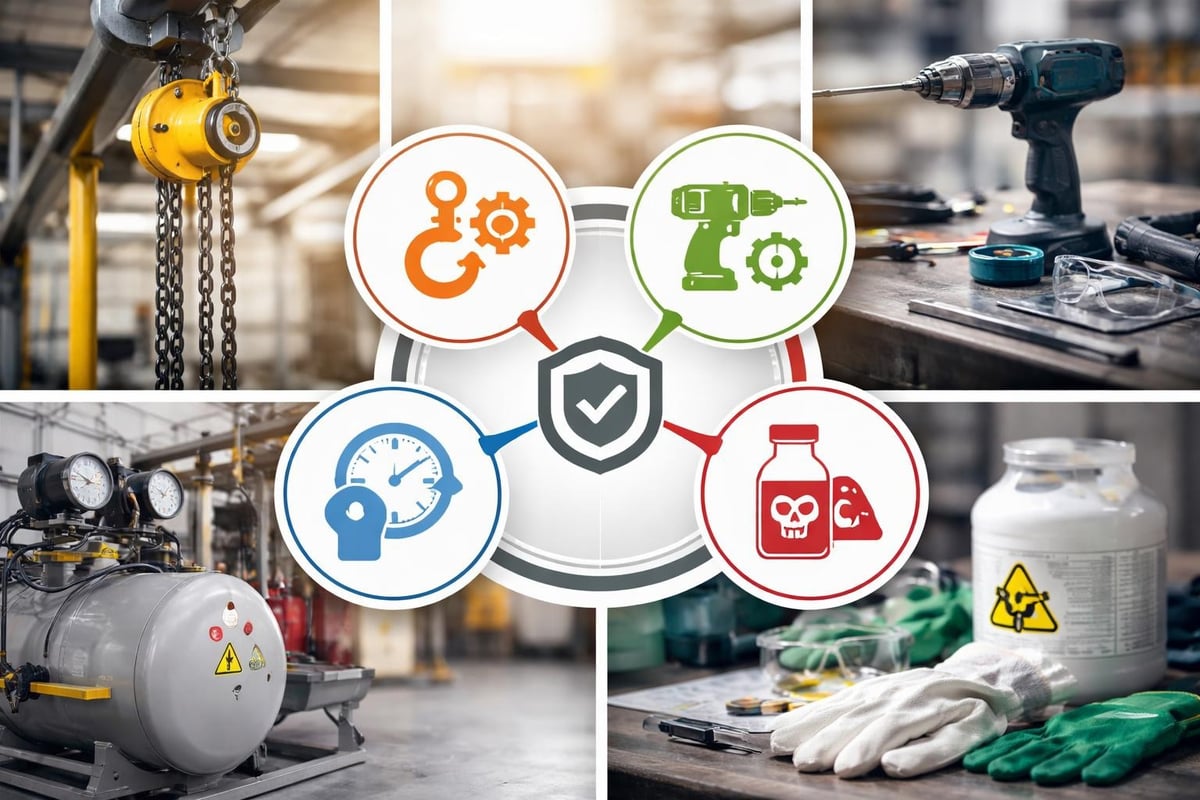
Different regulations apply depending on the equipment, substances and processes your organisation uses:
LOLER 1998 governs lifting operations and equipment, requiring thorough examinations at specified intervals
PUWER 1998 ensures work equipment is suitable, maintained and inspected appropriately
PSSR 2000 regulates pressure systems including air receivers and steam boilers
COSHH 2002 controls exposure to hazardous substances through proper ventilation and protection
Understanding which regulations apply to your specific operations is essential. Workplace Inspection Services Ltd helps organisations navigate these complex requirements through expert statutory inspections tailored to each sector's unique needs.
The Health and Safety Executive enforces these regulations through inspections and can issue improvement notices, prohibition notices or prosecute serious breaches. Penalties for non-compliance have increased substantially in recent years, with unlimited fines for serious offences and potential imprisonment for directors in cases of gross negligence.
Developing Effective Risk Assessment Procedures
Risk assessment forms the bedrock of any successful safety programme. Without properly identifying and evaluating hazards, organisations cannot implement appropriate controls or protect their workforce effectively.
The five-step approach recommended by the HSE provides a systematic methodology:
Identify the hazards present in your workplace
Determine who might be harmed and how
Evaluate the risks and decide on appropriate precautions
Record your significant findings and implement them
Review your assessment and update if necessary
Safety in the work requires dynamic risk assessment that adapts to changing conditions. New equipment, altered processes, different materials or modified working arrangements all necessitate reassessment. Many organisations make the mistake of treating risk assessment as a one-off exercise rather than an ongoing commitment.
Prioritising Risks Through Effective Evaluation
Not all risks carry equal weight. Effective prioritisation ensures resources focus on the most significant hazards first.
Risk Level | Likelihood × Severity | Action Required | Timeframe |
|---|---|---|---|
High | Frequent or catastrophic | Immediate action, consider stopping work | Within 24 hours |
Medium | Occasional with serious harm | Action plan with timeline | Within 1-4 weeks |
Low | Unlikely with minor harm | Monitor and review | Next scheduled review |
This matrix helps decision-makers allocate resources appropriately and communicate priorities throughout the organisation. Documentation should be accessible, understandable and regularly reviewed to ensure it reflects current workplace conditions.
For organisations operating manufacturing facilities or fabrication workshops, the complexity of machinery and processes demands particularly thorough risk assessment procedures.
Equipment Inspection and Maintenance Strategies
Machinery and equipment failures represent significant sources of workplace incidents. Systematic inspection and maintenance programmes prevent catastrophic failures and ensure safety in the work environment remains consistently high.
Statutory inspections form the minimum baseline for compliance. For lifting equipment, LOLER inspections provide thorough examinations of cranes, hoists, lifts and lifting accessories, identifying wear, damage or safety risks before they lead to incidents. These examinations must occur at intervals specified by regulations or more frequently if conditions dictate.
Beyond statutory requirements, proactive maintenance delivers substantial benefits:
Reduced downtime through early identification of potential failures
Extended equipment lifespan via proper care and timely interventions
Lower repair costs by addressing minor issues before major breakdowns
Enhanced safety culture demonstrating visible commitment to protection
Organisations should develop maintenance schedules that integrate statutory inspections with manufacturer recommendations and operational experience. Equipment operating in harsh environments or intensive duty cycles requires more frequent attention than lightly-used machinery in controlled conditions.
Creating Comprehensive Inspection Records
Documentation proves compliance and provides invaluable data for trend analysis. Effective record-keeping systems should capture:
Inspection dates and findings
Maintenance actions completed
Parts replaced or repaired
Recommendations for future attention
Responsible personnel and signatures
Digital systems increasingly replace paper-based records, offering searchable databases, automated reminders and trend analysis capabilities. Whatever system you choose, ensure records remain accessible for the required retention period-typically several years depending on the specific regulation.
Understanding inspection frequency requirements helps organisations plan resources and budget appropriately whilst maintaining continuous compliance.
Training and Competency Development
Equipment and procedures alone cannot guarantee safety in the work environment. Human factors play critical roles in most workplace incidents, making comprehensive training programmes essential.
Effective training extends beyond initial induction. Ongoing development ensures competency remains current as processes evolve, new hazards emerge and regulations change. The HSE's guidance emphasises that training should be:

Suitable and sufficient for the specific roles and hazards encountered
Repeated periodically to reinforce learning and update knowledge
Adapted when responsibilities change or new risks arise
Provided in a way that employees can understand and retain
Different roles require different competency levels. Machine operators need detailed understanding of their specific equipment, emergency procedures and routine safety checks. Supervisors require broader knowledge of risk assessment, accident investigation and safety leadership. Senior managers must understand their legal duties and strategic safety management.
Measuring Training Effectiveness
Investment in training only delivers value when it changes behaviour and reduces incidents. Measuring effectiveness helps optimise programmes and demonstrate return on investment.
Consider these assessment methods:
Knowledge tests immediately following training
Practical demonstrations of skills and procedures
Observation of workplace behaviour over time
Incident rate analysis comparing trained versus untrained periods
Employee feedback on training quality and relevance
According to OSHA's recommended practices for safety and health programs, organisations with comprehensive training see measurably lower incident rates than those with minimal or inconsistent programmes.
Regular refresher training maintains competency and reinforces the importance of safety in the work culture. Many organisations schedule annual refreshers for critical safety topics whilst providing more frequent updates for high-risk activities.
Managing Hazardous Substances and Environmental Controls
Many workplaces contain substances that pose health risks through inhalation, skin contact or ingestion. Dusts, fumes, vapours, mists and biological agents require careful control to protect employee wellbeing.
The Control of Substances Hazardous to Health Regulations establish a hierarchy of control measures. Elimination represents the ideal solution-removing hazardous substances entirely from processes. When elimination isn't feasible, substitution with less dangerous alternatives reduces risk substantially.
Where hazardous substances remain necessary, engineering controls provide the next level of protection. Local exhaust ventilation systems capture contaminants at source, preventing exposure. These systems require regular testing and examination to ensure continued effectiveness, with many organisations arranging COSHH/LEV inspections to verify performance and maintain compliance.
Implementing Effective Ventilation Systems
Properly designed and maintained ventilation protects health whilst supporting operational efficiency.
System Type | Application | Key Benefits | Maintenance Frequency |
|---|---|---|---|
Local Exhaust | Welding, grinding, spray painting | Captures at source | Every 14 months minimum |
General Ventilation | Warehouses, large workshops | Dilutes contaminants | Quarterly checks |
Dilution Ventilation | Offices, light industrial | Air quality maintenance | Annual service |
Fume Extraction | Laboratory, chemical handling | Prevents toxic exposure | Every 14 months minimum |
Health surveillance programmes complement engineering controls, monitoring workers for early signs of exposure-related conditions. Where risks cannot be eliminated through other means, personal protective equipment provides the final defence layer-though it represents the least effective control measure and should never be the primary solution.
Understanding the specific hazards present in your industry helps tailor control measures appropriately. Dry cleaners face different challenges than breweries, requiring sector-specific approaches to managing chemical exposures.
Addressing Psychological Health and Workplace Stress
Safety in the work encompasses more than physical hazards. Psychological health and stress management have gained increasing recognition as critical components of comprehensive workplace safety programmes.
Work-related stress affects millions of UK employees, contributing to absenteeism, reduced productivity and long-term health conditions. OSHA's overview on workplace stress highlights that excessive stress impacts both individual wellbeing and organisational performance substantially.
Common workplace stressors include:
Excessive workload and unrealistic deadlines
Lack of control over work methods or pace
Unclear role definitions and responsibilities
Poor workplace relationships and support
Organisational change and job insecurity
Employers have legal duties under the Management of Health and Safety at Work Regulations to assess and control stress risks just as they would physical hazards. The HSE's Management Standards provide a framework for identifying stress risk factors and implementing controls.
Building Supportive Work Environments
Creating psychologically healthy workplaces requires systematic approaches spanning multiple organisational levels.
Leadership commitment sets the tone. When senior managers visibly prioritise mental health, demonstrate vulnerability and support affected employees, it creates permission for others to seek help without stigma. Training programmes should equip managers to recognise stress signs and respond supportively.
Workload management prevents excessive pressure accumulating. Regular reviews of capacity versus demand, coupled with flexibility to adjust priorities, help maintain sustainable performance levels. Encouraging regular breaks and discouraging excessive overtime reinforces healthy boundaries.
Communication channels that enable employees to raise concerns safely contribute significantly to psychological safety. Regular one-to-one meetings, anonymous feedback mechanisms and accessible support services ensure problems receive attention before escalating.
Preventing Violence and Aggression
Workplace violence represents a growing concern across numerous sectors. The National Institute for Occupational Safety and Health provides comprehensive guidance on preventing violence in various work settings.
Violence encompasses physical attacks, threatening behaviour and verbal abuse. Healthcare, education, retail and social services face particularly elevated risks, though no sector remains entirely immune.
Effective prevention strategies combine multiple elements:
Environmental design that minimises isolated areas and provides escape routes
Staffing levels adequate for managing challenging situations
Communication training in de-escalation techniques
Clear policies defining unacceptable behaviour and response procedures
Reporting systems that encourage incident documentation
Many organisations implement lone worker protection systems for employees working in isolation or visiting external sites. These systems enable rapid response when incidents occur whilst providing reassurance that enhances confidence and reduces stress.
OSHA's publications on workplace violence offer sector-specific guidance for industries facing elevated risks, including late-night retail and healthcare settings.

Emergency Preparedness and Business Continuity
No matter how comprehensive your prevention measures, emergencies can still occur. Effective emergency preparedness ensures safety in the work environment extends to crisis situations.
Fire represents the most common workplace emergency. The Regulatory Reform (Fire Safety) Order 2005 requires responsible persons to conduct fire risk assessments, implement preventive measures and establish emergency procedures. Regular fire drills test evacuation procedures whilst familiarising employees with escape routes and assembly points.
Beyond fire, organisations should prepare for emergencies relevant to their specific operations:
Chemical spills in facilities handling hazardous substances
Equipment failures creating immediate danger
Medical emergencies from sudden illness or injury
Security incidents including bomb threats or intruders
Natural disasters such as flooding or severe weather
Emergency plans should be documented, communicated and practiced regularly. Designating trained first aiders, fire marshals and emergency coordinators ensures someone takes charge during crises. Equipment including first aid supplies, spill kits and emergency shut-off systems must be maintained in accessible locations.
Testing and Refining Emergency Procedures
Documented plans provide limited value without practical testing. Regular drills identify weaknesses and build confidence in procedures.
Effective emergency drills should:
Vary scenarios to test different response procedures
Occur unannounced occasionally to assess realistic reactions
Include evaluation and debriefing sessions
Generate improvement actions addressing identified gaps
Involve all shifts and employee groups
Recording drill performance over time reveals trends and demonstrates continuous improvement. Organisations serious about emergency preparedness schedule drills at least annually for major scenarios, with more frequent testing for high-risk operations.
Business continuity planning extends emergency preparedness beyond immediate safety to operational resilience. How quickly can your organisation resume critical functions following an incident? Identifying essential processes, alternative operating locations and key supplier dependencies helps minimise disruption and protect both employees and commercial viability.
The compliance hub provides valuable resources for organisations developing comprehensive emergency preparedness programmes aligned with regulatory requirements.
Creating Positive Safety Cultures
Technical controls, inspections and procedures form essential foundations, but sustainable safety in the work environment ultimately depends on culture. Culture describes the shared attitudes, beliefs and behaviours regarding safety that permeate an organisation.
Positive safety cultures share common characteristics:
Leadership commitment demonstrated through visible actions, not just words
Employee engagement with workers actively involved in safety decisions
Just culture that learns from errors without blame
Continuous improvement through data analysis and systematic refinement
Open communication where concerns receive respectful attention
Measuring culture proves challenging but remains essential. Safety climate surveys assess employee perceptions about management commitment, communication effectiveness and blame orientation. Incident reporting rates indicate whether employees feel comfortable raising concerns. Leading indicators such as near-miss reports and safety observation submissions reveal proactive engagement levels.
Engaging the Workforce in Safety Improvements
Frontline employees possess invaluable knowledge about workplace hazards and practical solutions. Engagement mechanisms that harness this expertise deliver superior outcomes to top-down mandates.
Safety committees bring together representatives from different departments and levels to discuss hazards, review incidents and recommend improvements. For maximum effectiveness, these committees need genuine authority to implement changes and adequate resources to pursue recommendations.
Suggestion schemes encourage individual contributions, particularly from employees who might feel uncomfortable speaking in group settings. Recognising and implementing good suggestions reinforces participation whilst demonstrating that management values worker input.
Behavioral observation programmes train employees to observe colleagues and provide feedback on safe and unsafe practices. When implemented with proper training and supportive intent, these programmes build mutual accountability and normalise safety conversations.
According to OSHA's workplace safety data, organisations with mature safety cultures demonstrate substantially lower incident rates and severity levels compared to those where safety receives minimal cultural emphasis.
Leveraging Technology for Enhanced Safety
Digital transformation offers unprecedented opportunities to strengthen safety in the work environment. Technology enables real-time monitoring, predictive analytics and automated interventions that complement traditional approaches.
Wearable devices track worker locations, detect falls and monitor environmental conditions. When sensors identify dangerous situations-such as toxic gas accumulation or unauthorised entry to restricted areas-they trigger immediate alerts enabling rapid response.
Digital inspection platforms replace paper-based systems with mobile applications that guide inspectors through comprehensive checklists, capture photographic evidence and automatically generate reports. Cloud-based storage ensures records remain accessible for compliance purposes whilst analytics identify recurring issues requiring systemic attention.
Predictive Maintenance and IoT Applications
Internet of Things sensors continuously monitor equipment condition, identifying deterioration before failures occur. Vibration analysis detects bearing wear in rotating machinery. Temperature sensors identify overheating electrical components. Pressure monitors track system performance in compressed air networks.
This continuous data stream enables predictive maintenance that schedules interventions based on actual condition rather than arbitrary time intervals. Equipment operates more reliably, unexpected failures decrease and maintenance resources focus on genuine needs rather than precautionary actions.
Virtual reality training platforms create immersive learning experiences without exposing trainees to actual hazards. New employees can practice emergency responses, equipment operation and hazard recognition in realistic scenarios before entering production environments. Performance metrics identify individuals requiring additional support whilst demonstrating competency objectively.
Understanding inspection regulations helps organisations determine where technology can enhance compliance whilst improving efficiency and effectiveness.
Contractor Management and Multi-Employer Worksites
Many organisations employ contractors for specialist tasks, maintenance activities or project work. Safety in the work environment becomes more complex when multiple employers share spaces and coordinate activities.
The CDM Regulations 2015 establish clear duties for managing construction work, whilst general health and safety law governs other contractor relationships. Principal contractors must ensure adequate cooperation, coordination and communication between all parties.
Effective contractor management begins before work commences:
Pre-qualification verifying safety competence and track record
Induction covering site-specific hazards and procedures
Permit systems authorising and controlling hazardous activities
Coordination meetings ensuring awareness of concurrent activities
Monitoring to verify compliance with agreed safety measures
Interface risks where contractors work near host employees or other contractors require particular attention. Activities such as hot work, confined space entry or work at height demand rigorous permit-to-work systems that verify precautions and authorise commencement.
Maintaining Oversight Without Micromanagement
Principal contractors retain ultimate accountability for site safety whilst respecting contractors' expertise and autonomy. This balance requires clear expectations, systematic verification and appropriate intervention when standards slip.
Key performance indicators help monitor contractor safety performance objectively. Leading indicators including toolbox talk attendance, permit compliance and near-miss reporting complement lagging measures such as incident rates. Regular performance reviews address concerns constructively whilst recognising excellence.
Organisations operating warehouses or care homes frequently engage contractors for maintenance, requiring robust management systems to protect both employees and service users.
Maintaining safety in the work environment demands ongoing commitment, systematic approaches and continuous improvement across all organisational levels. From regulatory compliance and equipment inspections to training programmes and cultural development, each element contributes to protecting your most valuable asset-your people. Workplace Inspection Services Ltd supports UK organisations nationwide through expert statutory inspections under LOLER, PUWER, PSSR and COSHH/LEV regulations, helping you maintain compliance, reduce risk and ensure consistently safe working conditions across your operations.