Safety for Engineers: A Comprehensive Guide for 2026
Safety for Engineers: A Comprehensive Guide for 2026
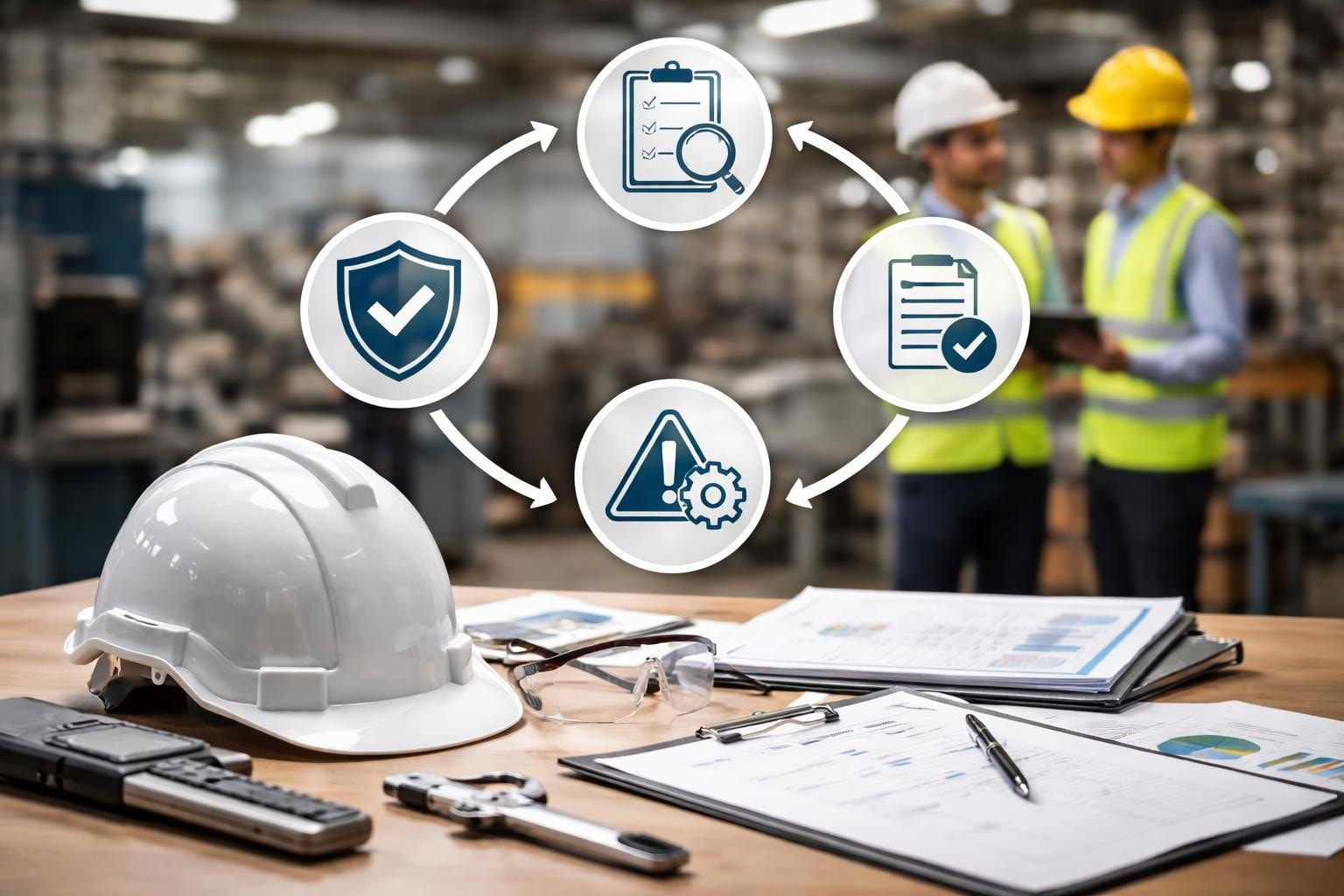
Engineering safety extends far beyond basic compliance ticking boxes. It represents a fundamental commitment to protecting lives, preserving assets, and maintaining operational integrity across all engineering disciplines. For engineers working in manufacturing, construction, research laboratories, or any industrial setting, understanding and implementing comprehensive safety protocols remains paramount to professional practice and legal responsibility. In 2026, as engineering systems grow increasingly complex and interconnected, the emphasis on safety for engineers has never been more critical.
The Foundational Principles of Engineering Safety
Safety for engineers begins with understanding the hierarchy of controls, a systematic approach to hazard mitigation that prioritises elimination over administrative solutions. This framework guides decision-making throughout the design, implementation, and maintenance phases of engineering projects.
The hierarchy follows a clear priority sequence:
Elimination – removing the hazard entirely from the workplace
Substitution – replacing hazardous materials or processes with safer alternatives
Engineering controls – isolating people from hazards through physical barriers or ventilation
Administrative controls – changing work procedures and policies
Personal protective equipment – providing protective gear as a last line of defence
Research into safety engineering practices demonstrates that inherently safe design, combined with adequate safety reserves and fail-safe mechanisms, creates robust protection systems. Engineers must integrate these principles from the earliest conceptual stages rather than retrofitting safety measures after design completion.
Legal and Ethical Responsibilities
The professional duty to prioritise public health and safety is both a legal requirement and an ethical imperative. Engineers must adhere to applicable codes, standards, and guidelines to protect those affected by their work. In the UK, this responsibility manifests through various statutory regulations governing workplace equipment, lifting operations, pressure systems, and hazardous substances.
Understanding inspection regulations helps engineers maintain compliance whilst creating genuinely safer working environments. These regulations aren't merely bureaucratic obstacles but frameworks built upon decades of incident analysis and safety research.

Workplace Hazard Identification and Risk Assessment
Effective safety for engineers requires systematic hazard identification before incidents occur. Engineers must develop keen observational skills and analytical frameworks to recognise potential dangers across diverse operational contexts.
Common Engineering Hazards
Hazard Category | Examples | Primary Risk Factors |
|---|---|---|
Mechanical | Moving machinery, crushing points, ejected parts | Inadequate guarding, poor maintenance, operator error |
Electrical | Live conductors, arc flash, electrocution | Insufficient isolation, damaged equipment, wet conditions |
Chemical | Toxic substances, corrosive materials, flammable liquids | Inadequate ventilation, improper storage, spill risks |
Physical | Noise, vibration, radiation, extreme temperatures | Prolonged exposure, insufficient barriers, inadequate PPE |
Ergonomic | Repetitive strain, awkward postures, manual handling | Poor workstation design, inadequate training, time pressure |
Risk assessment transforms hazard identification into actionable safety improvements. Engineers should evaluate both the likelihood and severity of potential incidents, prioritising interventions where risks exceed acceptable thresholds. This process must be documented, reviewed regularly, and updated whenever working conditions change.
The compliance hub provides valuable resources for understanding how different regulations interact to create comprehensive workplace safety frameworks. Engineers benefit from accessing centralised information that clarifies their responsibilities across multiple statutory requirements.
Laboratory and Workshop Safety Protocols
Engineering laboratories and workshops present unique safety challenges requiring specialised protocols. Whether conducting materials testing, prototyping new designs, or performing routine maintenance, engineers must operate within structured safety frameworks.
Personal Safety Requirements
Every engineer working in practical environments should follow fundamental personal safety practices. Comprehensive lab safety guidelines emphasise the importance of appropriate attire, including closed-toe shoes, long trousers, and tied-back hair. Safety glasses, gloves, and laboratory coats provide essential protection against chemical splashes, flying debris, and thermal hazards.
Before commencing any practical work, engineers must:
Review relevant risk assessments and method statements
Inspect equipment for visible damage or defects
Verify emergency stop mechanisms function correctly
Confirm appropriate personal protective equipment is available
Ensure adequate ventilation for the planned activities
Identify emergency exits and safety equipment locations
Engineering laboratory safety guidelines from established institutions provide detailed checklists that help engineers establish robust safety cultures. These resources prove particularly valuable when establishing new facilities or updating existing protocols to reflect current best practices.
Chemical and Material Handling
Engineers regularly work with substances requiring careful handling and storage. Understanding material safety data sheets (MSDS), proper ventilation requirements, and spill response procedures protects both individuals and the wider environment.
Storage areas must be organised to prevent incompatible materials from contact, with appropriate containment measures for liquids and adequate separation for flammable substances. Regular inspections ensure containers remain properly labelled and sealed, whilst ventilation systems maintain air quality within acceptable limits.
Equipment Safety and Statutory Inspections
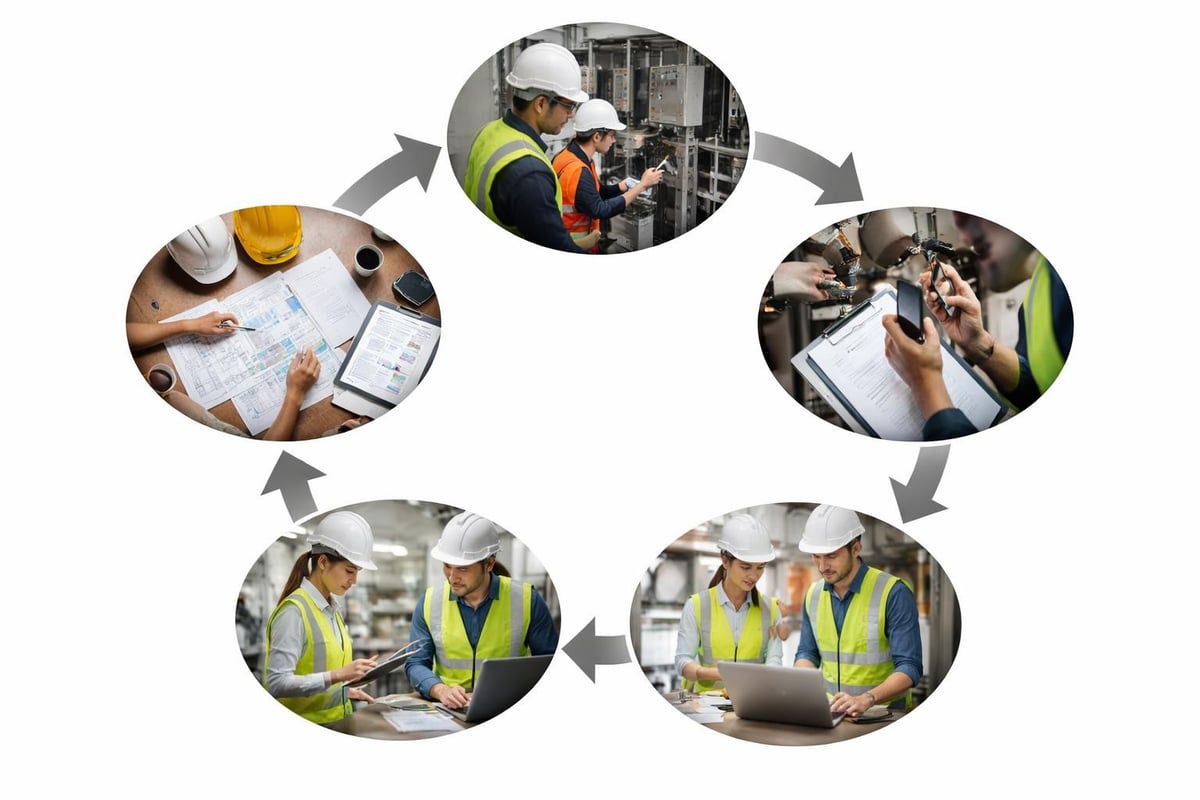
Workplace equipment represents a significant source of engineering hazards, from complex manufacturing machinery to seemingly simple lifting accessories. Safety for engineers encompasses not only safe operation but also ensuring equipment receives appropriate inspection and maintenance.
The Role of Statutory Inspections
UK legislation mandates regular inspections for various categories of workplace equipment. These examinations verify that equipment remains fit for purpose, properly maintained, and safe to operate. LOLER inspections ensure lifting equipment such as cranes, hoists, and lifting accessories undergo thorough examination by competent persons, identifying wear, damage, or safety risks before they cause incidents.
Engineers responsible for equipment procurement and maintenance must understand relevant statutory requirements. The table below outlines key inspection regimes:
Regulation | Equipment Covered | Typical Inspection Frequency |
|---|---|---|
LOLER 1998 | Lifting equipment, accessories, chains, slings | 6-12 months depending on use |
PUWER 1998 | Machinery, tools, work equipment | Risk-based, typically annual |
PSSR 2000 | Pressure vessels, steam systems, air receivers | Risk-based written scheme |
COSHH 2002 | LEV systems, fume extraction | 14 months for thorough examination |
Engineers should consult the inspection frequency guide to determine appropriate examination intervals for specific equipment types. Frequency depends on factors including usage intensity, operating environment, equipment complexity, and regulatory requirements.
Pre-Use Checks and Operator Training
Statutory inspections form only part of comprehensive equipment safety. Daily pre-use checks by operators detect developing faults before they escalate into serious defects. Engineers should develop clear inspection protocols that operators can complete quickly whilst maintaining thoroughness.
Effective training programmes ensure operators understand both how to perform their tasks safely and why specific precautions matter. This understanding promotes genuine engagement with safety procedures rather than rote compliance.
Fire Safety Engineering
Fire represents one of the most devastating hazards in engineering environments. Combining fuel sources, ignition risks, and sometimes oxygen-enriched atmospheres, workshops and industrial facilities require careful fire safety management.
Prevention and Protection Strategies
Prevention measures focus on eliminating ignition sources and controlling combustible materials:
Regular removal of combustible waste and debris
Proper storage of flammable liquids in approved containers
Control of hot work activities through permit systems
Maintenance of electrical equipment to prevent arcing
Adequate housekeeping to prevent dust accumulation
Protection systems provide crucial safeguards when prevention measures fail. The Society of Fire Protection Engineers offers comprehensive guidance on designing and implementing fire safety systems tailored to specific engineering applications.
Engineers must ensure adequate fire detection, alarm systems, and suppression equipment appropriate to the hazards present. Sprinkler systems, foam suppression, and gas-based systems each suit different scenarios. Regular testing and maintenance keep these systems ready for emergency activation.
Emergency Response Planning
Every engineering facility requires clear emergency procedures that all personnel understand and can execute under stress. Evacuation routes must remain unobstructed, with adequate signage visible even in smoke-filled conditions. Assembly points should be positioned safely away from buildings whilst allowing rapid headcounts.
Regular fire drills test both procedures and personnel readiness. Engineers should participate in post-drill reviews, identifying improvement opportunities and updating procedures accordingly. Documentation of these exercises demonstrates due diligence whilst providing valuable learning resources.
Human Factors and Safety Culture
Technical controls alone cannot guarantee safety for engineers. Human factors-how people interact with systems, make decisions under pressure, and respond to unexpected situations-profoundly influence safety outcomes.
Understanding Human Error
Engineers must design systems acknowledging that humans make mistakes. Fatigue, distraction, inadequate training, and time pressure all increase error probability. Rather than simply blaming individuals when incidents occur, effective safety management examines systemic factors that contributed to the error.
Strategies to minimise human error include:
Designing clear, intuitive interfaces that prevent incorrect operation
Implementing verification steps for critical operations
Providing adequate staffing to prevent fatigue-related mistakes
Ensuring comprehensive training covering both normal and emergency situations
Creating open reporting cultures where near-misses are shared without blame
Safety culture reflects the collective attitudes, beliefs, and practices regarding safety within an organisation. Engineers play crucial roles in shaping this culture through their daily actions, decision-making, and willingness to challenge unsafe practices regardless of hierarchy.

Reporting and Learning Systems
Effective incident reporting systems capture not only accidents but also near-misses and hazardous conditions. This information feeds continuous improvement processes, allowing organisations to prevent similar occurrences. Engineers should feel empowered to report concerns without fear of reprisal.
Investigations following incidents should focus on identifying root causes rather than assigning blame. Tools such as fault tree analysis, fishbone diagrams, and timeline reconstruction help uncover the complex chain of events leading to accidents. Sharing lessons learned across teams and industries prevents others from repeating mistakes.
Emerging Technologies and Safety Challenges
As engineering evolves, new technologies introduce both opportunities and challenges for safety management. Engineers must stay informed about emerging risks whilst leveraging technological advances to enhance safety.
Artificial Intelligence and Safety Systems
Recent research explores how AI might support safety-critical engineering. Studies examining construction safety applications analyse the accuracy and reliability of large language models in supporting safety practices. Whilst promising, these technologies require careful validation before deployment in situations where failures could cause harm.
The SAFER framework represents innovative approaches to generating and analysing safety requirements for complex systems. Engineers working with safety-critical applications must understand how to specify, verify, and validate AI-enhanced systems to prevent introducing new failure modes.
Robotics and Automation Safety
Industrial robots and automated systems present specific safety challenges. These machines operate with considerable force and often limited awareness of human presence. Safety standards require proper guarding, emergency stops, and sometimes collaborative robot technologies designed for safe human interaction.
Engineers designing automated systems must consider foreseeable misuse, maintenance requirements, and degraded mode operation. Lockout/tagout procedures prevent unexpected equipment activation during maintenance, whilst comprehensive training ensures personnel understand robot behaviour patterns.
Professional Development and Competence
Maintaining competence in safety for engineers requires ongoing professional development. Regulations, best practices, and technological capabilities evolve continuously, demanding that engineers update their knowledge throughout their careers.
Training and Certification
Various professional bodies offer safety-specific training and certification programmes. These credentials demonstrate competence to employers, clients, and regulatory authorities. Beyond formal qualifications, engineers should pursue continuous learning through conferences, technical publications, and peer networking.
Specialist areas such as fire protection engineering, pressure systems safety, and hazardous area classification each have dedicated training pathways. Engineers should identify which specialisations align with their work and pursue appropriate professional development.
Understanding occupational health and safety engineering standards provides engineers with frameworks for evaluating workplace conditions against recognised benchmarks. These standards evolve based on research and incident analysis, making regular review essential.
Staying Current with Regulations
Regulatory requirements change periodically, introducing new obligations or updating existing standards. Engineers must monitor relevant legislation affecting their industry sector and equipment types. Professional memberships often include regulatory updates and guidance on implementation.
Resources such as industry-specific guides help engineers understand how general regulations apply within their particular sector. Manufacturing facilities, warehouses, and fabrication workshops each face distinct safety challenges requiring tailored approaches.
Documentation and Record Keeping
Comprehensive documentation demonstrates compliance whilst providing valuable information for incident investigation and continuous improvement. Safety for engineers includes maintaining accurate records of inspections, training, risk assessments, and corrective actions.
Essential Safety Documentation
Document Type | Purpose | Retention Period |
|---|---|---|
Risk assessments | Identify hazards and control measures | Review annually, retain indefinitely |
Method statements | Define safe working procedures | Duration of activity plus 3 years |
Inspection reports | Record equipment condition and defects | Minimum 2 years, often longer for critical equipment |
Training records | Demonstrate operator competence | Duration of employment plus 6 years |
Incident reports | Document accidents and near-misses | Minimum 3 years, serious incidents indefinitely |
Electronic document management systems help organisations maintain searchable archives whilst ensuring appropriate personnel can access current versions. Version control prevents outdated procedures from causing confusion, whilst audit trails demonstrate when documents were reviewed and approved.
Engineers involved in supplementary testing services should understand what documentation accompanies different inspection types. Reports must clearly communicate findings, identify defects, and recommend appropriate corrective actions within defined timeframes.
Safety-Critical Code Development
For engineers developing software that controls safety-critical systems, coding standards become essential safety tools. The Power of 10 rules provide guidelines emphasising simplicity, verifiability, and predictability in safety-critical applications.
Key principles include:
Restricting language features to verifiable subsets
Limiting function complexity and length
Using fixed upper bounds for loops
Avoiding dynamic memory allocation
Enabling maximum compiler warning levels
These constraints may seem restrictive compared to general software development, but they significantly improve code reliability and testability. Safety for engineers writing embedded systems or control software demands rigorous approaches that prioritise predictable behaviour over programming convenience.
Code reviews, static analysis tools, and comprehensive testing regimes complement coding standards. Engineers should document design decisions, particularly those affecting safety, providing future maintainers with context for understanding the implementation.
Contractor and Visitor Management
Many engineering incidents involve contractors or visitors unfamiliar with site-specific hazards. Effective management systems ensure these individuals receive appropriate inductions, supervision, and protective equipment.
Induction Programmes
Site inductions should cover emergency procedures, specific hazards present, restricted areas, and permit-to-work requirements. Rather than generic presentations, effective inductions address actual site conditions and recent incident trends. Interactive elements and competence checks ensure information retention.
Engineers supervising contractor work must verify that contractors possess appropriate qualifications, insurance, and equipment. Method statements and risk assessments should be reviewed before work commences, with interfaces between contractor and site operations clearly defined.
Visitors to engineering facilities require appropriate supervision proportional to the hazards they might encounter. Designated safe routes, visible PPE, and clear briefings on emergency procedures provide basic protection whilst minimising disruption to operations.
Safety for engineers represents a comprehensive discipline encompassing technical knowledge, regulatory compliance, human factors understanding, and continuous professional development. By prioritising systematic hazard identification, implementing robust control measures, and fostering positive safety cultures, engineers protect lives whilst enhancing operational reliability. Workplace Inspection Services Ltd supports organisations across the UK in maintaining the highest safety standards through expert statutory inspections under LOLER, PUWER, PSSR, and COSHH/LEV regulations, helping businesses reduce risk and ensure compliance throughout their engineering operations.