Safety Compliance: Essential Guide for UK Businesses
Safety Compliance: Essential Guide for UK Businesses

Safety compliance represents the foundation of responsible business operations across the United Kingdom, particularly within engineering and industrial sectors where hazards are inherent to daily activities. Organisations that prioritise safety compliance not only protect their workforce from injury and illness but also shield themselves from substantial legal penalties, operational disruptions and reputational damage. Understanding the comprehensive nature of safety compliance and implementing robust systems ensures businesses meet their statutory obligations whilst creating environments where employees can perform their roles with confidence and security.
Understanding the Fundamentals of Safety Compliance
Safety compliance encompasses the policies, procedures and practices organisations implement to meet legal requirements and industry standards designed to protect workers. This framework extends beyond simply ticking boxes on inspection forms. It requires a genuine commitment to identifying hazards, assessing risks and implementing controls that prevent harm.
The regulatory landscape in the United Kingdom is built upon several foundational pieces of legislation that govern workplace safety. The Health and Safety at Work etc. Act 1974 establishes the general duties employers owe to employees and the public, whilst more specific regulations address particular hazards and equipment types. Businesses operating machinery, lifting equipment or pressure systems must navigate regulations such as LOLER, PUWER and PSSR, each carrying specific requirements for examination, maintenance and documentation.

Achieving meaningful safety compliance requires organisations to adopt a proactive rather than reactive approach. Rather than waiting for accidents to occur or enforcement notices to arrive, forward-thinking businesses embed safety into their operational DNA. This means conducting regular risk assessments, maintaining equipment according to manufacturer specifications and fostering a culture where workers feel empowered to report hazards without fear of reprisal.
The Business Case for Prioritising Safety Compliance
Investing in safety compliance delivers tangible returns that extend far beyond avoiding prosecution. Workplace accidents cost UK businesses billions annually through lost productivity, compensation claims, increased insurance premiums and damage to brand reputation. A single serious incident can devastate a small or medium-sized enterprise financially whilst simultaneously destroying years of trust built with clients and employees.
Key benefits of robust safety compliance include:
Reduction in workplace injuries and associated absence
Lower insurance premiums and reduced claims costs
Enhanced productivity through improved employee morale
Competitive advantage when tendering for contracts
Protection against prosecution and enforcement action
Improved operational efficiency through better-maintained equipment
Studies consistently demonstrate that organisations with strong safety cultures outperform their competitors across multiple metrics. Employees working in environments where their wellbeing is genuinely valued tend to be more engaged, productive and loyal to their employers. Clients increasingly scrutinise the safety records of potential suppliers, making compliance a prerequisite for securing major contracts rather than merely a legal obligation.
Regulatory Requirements Across Different Industries
Different industrial sectors face unique safety compliance challenges based on the nature of their operations and the equipment they utilise. Manufacturing facilities must contend with machinery guarding, noise exposure and potentially hazardous substances, whilst construction sites face risks associated with working at height, temporary structures and vehicle movements. Understanding the specific requirements applicable to your sector is essential for developing an effective compliance strategy.
For engineering inspection companies, the challenge lies in maintaining expertise across multiple regulatory frameworks simultaneously. Inspectors must remain current with legislative updates, technical standards and best practice guidance whilst delivering thorough examinations that genuinely identify defects and risks. The regulations governing workplace inspections establish minimum frequencies and competency requirements for those conducting statutory examinations.
Regulation | Primary Focus | Typical Industries | Inspection Frequency |
|---|---|---|---|
LOLER | Lifting equipment safety | Manufacturing, construction, warehousing | 6-12 months |
PUWER | Work equipment provision and use | All sectors using machinery | Risk-based |
PSSR | Pressure systems safety | Food processing, manufacturing, laboratories | 12-26 months |
COSHH | Hazardous substances control | Chemical processing, healthcare, printing | Risk-based |
Federal safety standards in the United States, such as OSHA's comprehensive regulations, provide useful comparative context for understanding how different jurisdictions approach workplace safety, though UK businesses must naturally focus on domestic requirements. Similarly, offshore safety regulations demonstrate how high-risk environments demand enhanced compliance measures.
Developing Effective Safety Management Systems
A robust safety management system provides the structure through which organisations deliver safety compliance consistently and effectively. Rather than relying on individual knowledge or ad-hoc arrangements, documented systems ensure critical tasks are completed regardless of personnel changes or operational pressures.
The foundation of any safety management system begins with a comprehensive policy statement demonstrating senior management commitment to health and safety. This policy should be communicated throughout the organisation and reviewed regularly to ensure it remains relevant as business activities evolve. From this policy flows the organisational structure, responsibilities and arrangements for implementing safety measures.
Essential components of a comprehensive safety management system:
Clear allocation of safety responsibilities throughout the organisational hierarchy
Systematic identification and assessment of workplace hazards
Implementation of appropriate control measures based on risk hierarchy
Regular monitoring and inspection programmes to verify controls remain effective
Incident investigation procedures to identify root causes and prevent recurrence
Training programmes ensuring competency for all safety-critical roles
Documentation systems providing evidence of compliance activities
Practical implementation requires translating these principles into specific actions tailored to your operational context. A warehouse operation will develop different procedures compared to a chemical processing plant, yet both must address the fundamental requirements of identifying hazards, controlling risks and demonstrating compliance. The safety and regulation resources available to businesses can provide valuable guidance on developing sector-appropriate systems.

Statutory Inspection Requirements and Competent Persons
Certain categories of equipment and systems require periodic statutory examinations conducted by competent persons to verify their continued safe operation. These examinations go beyond routine maintenance checks, providing independent assurance that equipment complies with relevant safety standards and remains fit for purpose. The frequency of these examinations is typically prescribed by regulation, though risk assessment may justify more frequent intervals in demanding operational environments.
The concept of the "competent person" is central to safety compliance yet often misunderstood. Competence encompasses both theoretical knowledge and practical experience relevant to the specific equipment or system being examined. A person competent to inspect one type of lifting equipment may lack the necessary expertise for examining pressure systems, highlighting the importance of engaging appropriately qualified inspectors.
For organisations operating lifting equipment subject to LOLER requirements, thorough examinations must be conducted at intervals not exceeding twelve months, or six months for equipment used to lift persons. These examinations identify deterioration, damage or defects that could result in dangerous situations, providing employers with clear evidence of compliance alongside recommendations for remedial action where necessary.
The documentation resulting from statutory examinations serves multiple purposes. Beyond demonstrating compliance to enforcement authorities, examination reports provide valuable operational intelligence about equipment condition, maintenance effectiveness and potential future issues. Progressive organisations analyse examination findings to identify trends, optimise maintenance strategies and make informed decisions about equipment replacement or refurbishment.
Creating a Culture of Continuous Improvement
Safety compliance should never be viewed as a static achievement but rather an ongoing journey of continuous improvement. Organisations that excel in safety consistently look for opportunities to enhance their performance, learning from incidents, near misses and the experiences of others. This mindset transforms safety compliance from a burdensome obligation into a source of competitive advantage.
Engaging workers in safety improvement initiatives yields powerful results. Frontline employees possess intimate knowledge of operational realities and often identify practical solutions that might elude managers working at a distance from the work face. Establishing mechanisms for workers to contribute safety suggestions, report hazards and participate in risk assessments creates ownership whilst tapping into valuable expertise.
Case studies demonstrate the value of learning from real-world experiences. OSHA's safety management case studies showcase organisations that have transformed their safety performance through systematic approaches, whilst ergonomics case studies illustrate how addressing human factors reduces injury rates and improves productivity simultaneously.
Benchmarking against industry standards and competitors provides valuable perspective on safety performance. Organisations can compare incident rates, inspection findings and compliance audit results against sector averages to identify areas requiring enhanced focus. This data-driven approach to safety compliance enables more effective resource allocation and demonstrates the business value of safety investments to stakeholders.
Technology and Digital Solutions for Safety Compliance
Modern technology offers powerful tools for enhancing safety compliance efficiency and effectiveness. Digital inspection platforms enable inspectors to capture findings on tablets or smartphones, automatically generating reports and tracking remedial actions through to completion. These systems eliminate paperwork delays, reduce transcription errors and provide instant visibility of equipment status across multiple sites.
Cloud-based compliance management systems centralise safety documentation, making certificates, risk assessments and training records instantly accessible to authorised personnel. This accessibility proves invaluable during enforcement visits, client audits or incident investigations when evidence of compliance must be produced rapidly. Automated reminders ensure critical tasks such as statutory inspections or competency refresher training are never overlooked.
Benefits of digital safety compliance solutions:
Real-time visibility of equipment examination status
Automated scheduling preventing overdue inspections
Centralised documentation accessible from any location
Trend analysis identifying recurring issues or problem equipment
Integration with maintenance systems for seamless workflow
Audit trails demonstrating compliance diligence
Sensor technology and Internet of Things devices enable continuous monitoring of critical parameters such as pressure, temperature or vibration. When integrated with compliance management systems, these sensors can trigger automatic alerts when readings exceed safe limits, enabling preventive intervention before equipment failure occurs. This predictive approach to safety compliance represents a significant evolution from traditional time-based inspection regimes.
Comprehensive guidance on Environmental, Health and Safety compliance demonstrates how integrated approaches deliver superior outcomes compared to siloed safety initiatives. Organisations that align safety compliance with environmental protection and quality management create synergies that enhance performance across all three domains whilst reducing administrative overhead.
Risk Assessment as the Foundation of Compliance
Effective risk assessment represents the cornerstone upon which all safety compliance activities are built. Without understanding the hazards present in the workplace and the risks they pose to workers, organisations cannot implement appropriate controls or demonstrate compliance with their general duties under health and safety law. The risk assessment process must be systematic, thorough and documented to withstand scrutiny.
The five-step approach to risk assessment provides a practical framework applicable across all industries and hazard types. This methodology begins with identifying hazards through workplace inspections, reviewing incident records and consulting workers who understand operational realities. The second step evaluates who might be harmed and how, considering both routine operations and foreseeable abnormal situations.
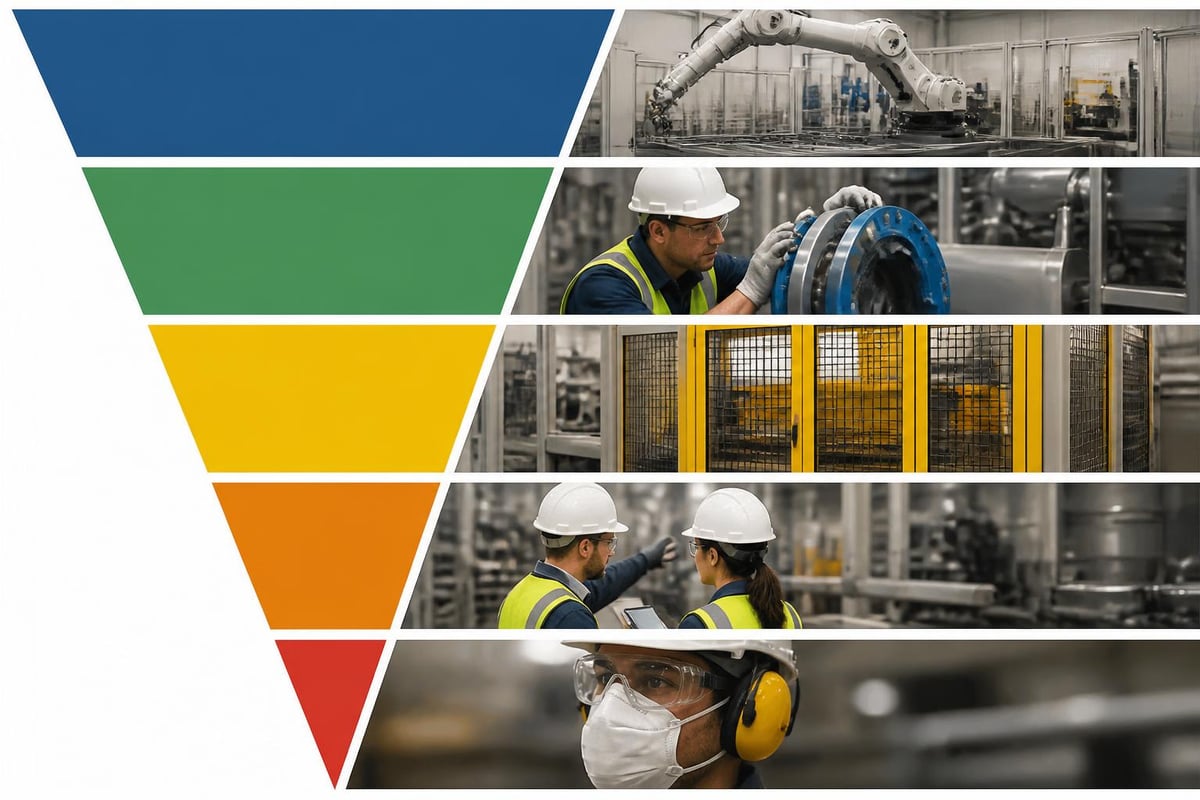
Evaluating risks and deciding on precautions requires judgement based on the likelihood and potential severity of harm. The hierarchy of control principle guides this evaluation, prioritising elimination of hazards where possible, followed by substitution with less hazardous alternatives, engineering controls, administrative controls and finally personal protective equipment as a last resort. Guidelines for hazard assessment provide structured approaches to this evaluation process.
Risk Level | Likelihood × Severity | Action Required | Timescale |
|---|---|---|---|
Very High | Almost certain to cause serious harm | Stop activity immediately | Immediate |
High | Likely to cause significant injury | Urgent action required | Within 24 hours |
Medium | Could cause injury | Action needed | Within 1 week |
Low | Minor injury possible | Monitor and review | Routine |
Recording findings and implementing controls transforms risk assessment from an academic exercise into practical safety improvements. Documentation should clearly identify hazards, existing controls, residual risk levels and any additional measures required. This record serves as the action plan for safety compliance whilst providing evidence that the employer has fulfilled their duty to assess risks.
Training and Competency Requirements
Ensuring workers possess the necessary knowledge and skills to perform their roles safely represents a fundamental element of safety compliance. Training requirements vary based on job roles, hazards encountered and equipment operated, but all organisations must provide adequate instruction, information and supervision to enable safe working. Generic induction training must be supplemented with role-specific training addressing particular risks and control measures.
Competency extends beyond formal qualifications to encompass practical experience and demonstrated ability to perform tasks safely. For safety-critical roles such as crane operators, authorised persons or those conducting statutory inspections, competency requirements are often prescribed by regulation or industry standards. Employers must verify competency through appropriate combinations of training, assessment and supervised practice.
Maintaining competency requires ongoing refresher training to reinforce key messages, update workers on procedural changes and address complacency that may develop over time. Records of all training provided should be maintained, including dates, content covered and any assessments completed. These records demonstrate compliance whilst enabling identification of individuals whose training may be approaching expiry.
The inspection frequency guide helps organisations understand statutory examination intervals, though internal competency assessments for those operating or maintaining equipment should occur more frequently based on operational demands and individual performance.
Managing Hazardous Substances and Local Exhaust Ventilation
Workplaces across numerous sectors involve exposure to substances hazardous to health, from welding fumes in fabrication shops to flour dust in bakeries. The Control of Substances Hazardous to Health Regulations require employers to prevent or adequately control exposure through a systematic approach to substance management. This begins with identifying all hazardous substances present, obtaining safety data sheets and assessing the risks associated with their use.
Where exposure cannot be prevented through elimination or substitution, engineering controls such as local exhaust ventilation systems provide effective protection. These systems capture contaminants at source before they enter the breathing zone, protecting workers from respiratory disease and other health effects. However, LEV systems only remain effective when properly designed, installed and maintained, making regular examination essential.
COSHH and LEV inspections verify that ventilation systems continue to perform as intended, measuring airflow, checking ductwork integrity and ensuring hoods are correctly positioned. Thorough examinations must be conducted at least every fourteen months, with records maintained demonstrating ongoing compliance. Between statutory examinations, routine checks by competent persons ensure systems remain operational and identify defects requiring attention.
State-specific requirements, such as California's Injury and Illness Prevention Program, demonstrate how different jurisdictions approach systematic safety management, though UK businesses must focus on domestic legislation whilst learning from international best practice.
Enforcement, Penalties and Prosecution
The Health and Safety Executive and local authorities enforce safety compliance through a range of interventions from advice and guidance through to prosecution and imprisonment in the most serious cases. Inspectors possess extensive powers to enter premises, examine equipment, take samples and interview workers. Organisations found to be in material breach of safety legislation may receive improvement notices requiring specific actions within defined timescales or prohibition notices immediately halting dangerous activities.
Prosecution for safety offences can result in unlimited fines, with the sentencing guidelines considering factors such as the seriousness of harm risked, the degree of culpability and the organisation's financial circumstances. Corporate manslaughter charges may be brought where gross breaches of duty result in fatalities, carrying significant reputational damage alongside financial penalties. Directors and senior managers can face personal liability including disqualification where their neglect contributed to offences.
Beyond formal enforcement action, poor safety compliance impacts insurance premiums, client relationships and employee recruitment. Major clients increasingly require evidence of safety competence before awarding contracts, whilst workers naturally gravitate towards employers who demonstrate genuine commitment to their wellbeing. The Department of Energy's worker safety enforcement illustrates how high-consequence industries approach compliance verification.
Consequences of safety compliance failures:
Unlimited financial penalties following prosecution
Prohibition of dangerous activities pending remediation
Personal liability for directors and managers
Increased insurance premiums and excess levels
Loss of clients due to poor safety performance
Difficulty recruiting and retaining skilled workers
Criminal records affecting future business opportunities
Compensation claims from injured workers
Maintaining comprehensive records of safety compliance activities provides crucial protection during enforcement investigations. Documentation demonstrating systematic approaches to risk assessment, training provision, equipment maintenance and incident investigation evidences the employer's commitment to fulfilling their duties. Organisations that can produce clear evidence of proactive compliance typically receive more favourable treatment than those unable to demonstrate systematic safety management.
Building Sustainable Safety Compliance Programmes
Long-term safety compliance success requires embedding safety into everyday business operations rather than treating it as an additional burden imposed upon productive work. This integration begins with visible leadership commitment, with senior managers actively participating in safety activities, resourcing compliance initiatives adequately and holding individuals accountable for safety performance.
Establishing clear safety objectives aligned with broader business goals enables measurement of progress and demonstrates the value safety compliance delivers. These objectives might include reducing lost-time injury frequency rates, achieving specified percentages of safety observations completed or eliminating high-risk scenarios entirely. Regular reporting on these metrics to senior leadership ensures safety receives equivalent attention to financial performance and operational efficiency.
Consultation and engagement with workers creates buy-in whilst accessing valuable frontline knowledge about operational realities. Safety committees, toolbox talks and suggestion schemes provide structured opportunities for worker participation, ensuring those most affected by safety measures contribute to their development. This inclusive approach generates practical solutions whilst fostering the sense of shared ownership essential for sustainable compliance.
The comprehensive services offered by specialist providers support organisations in meeting their statutory obligations whilst enabling internal resources to focus on operational activities. Engaging independent inspection companies provides access to specialist expertise across multiple regulatory frameworks whilst delivering the impartiality enforcement authorities expect from statutory examinations.
Continuous monitoring and review ensure safety compliance programmes remain effective as circumstances change. Periodic audits assess whether documented procedures are followed in practice, identify gaps in compliance and highlight opportunities for improvement. Learning from incidents, near misses and industry developments enables refinement of safety measures before deficiencies result in harm or enforcement action.
Safety compliance represents both a legal obligation and a moral imperative for organisations operating across engineering and industrial sectors, protecting workers whilst safeguarding business continuity and reputation. By implementing systematic approaches to hazard management, maintaining equipment through statutory inspections and fostering cultures of continuous improvement, businesses create environments where employees thrive whilst regulatory requirements are consistently satisfied. Workplace Inspection Services Ltd supports organisations throughout the UK in achieving robust safety compliance through independent statutory inspections under LOLER, PUWER, PSSR and COSHH regulations, combining technical expertise with practical understanding of operational challenges to deliver examinations that genuinely enhance workplace safety.