Pressure Vessel Inspection: Complete UK Compliance Guide
Pressure Vessel Inspection: Complete UK Compliance Guide
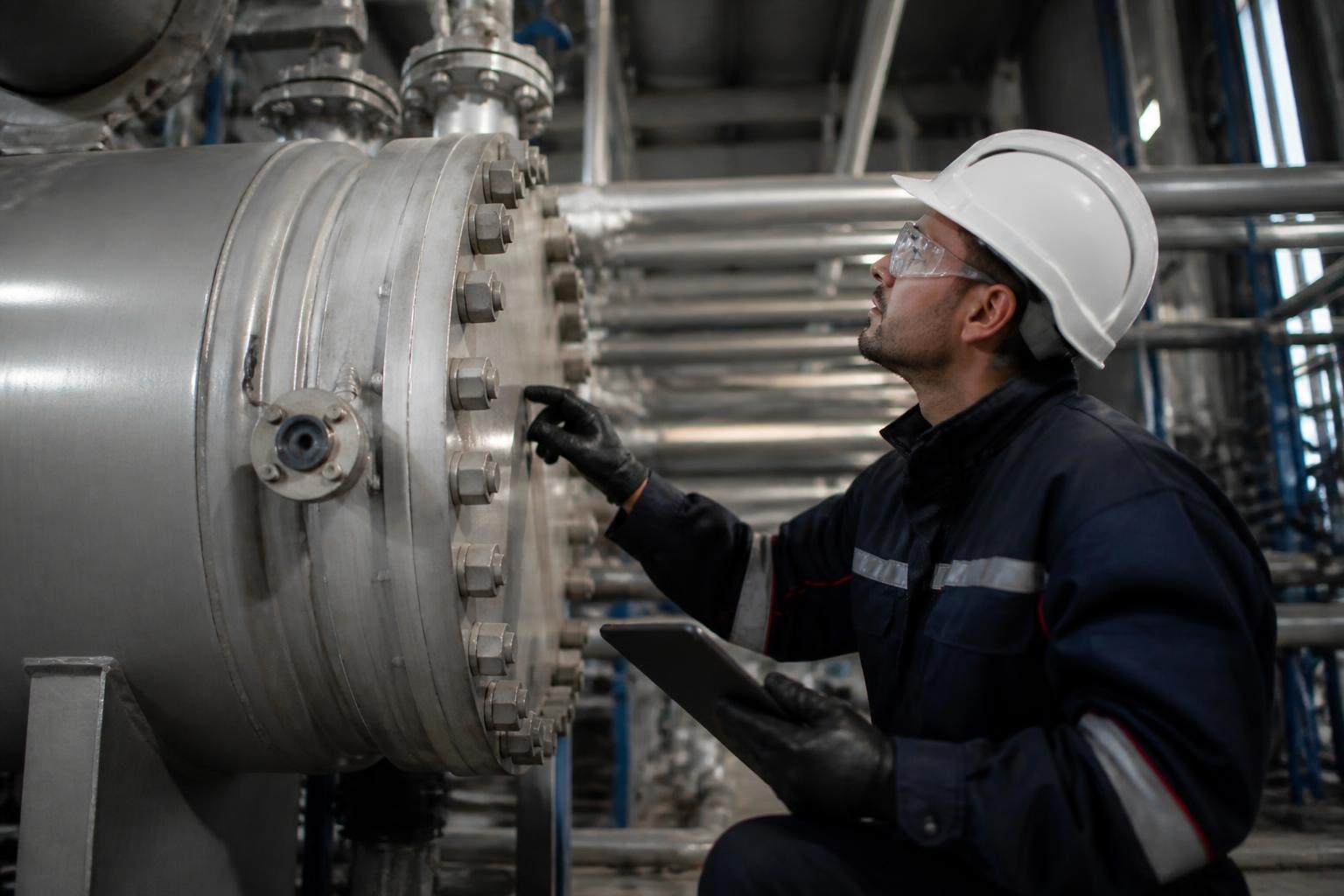
Pressure systems remain amongst the most critical and potentially dangerous pieces of equipment in industrial environments. From manufacturing plants to chemical facilities, these vessels operate under extreme conditions that demand rigorous oversight and consistent monitoring. The consequences of pressure vessel failure can be catastrophic, resulting in serious injury, fatalities, environmental damage, and significant financial loss. Understanding the legal requirements, inspection methodologies, and best practices for maintaining these systems is essential for any organisation that operates pressure equipment in the UK.
Understanding Pressure Vessel Inspection Requirements
Pressure vessel inspection forms a cornerstone of workplace safety legislation in the United Kingdom. Under the Pressure Systems Safety Regulations 2000 (PSSR), organisations must ensure that all pressure systems are properly examined by a competent person at defined intervals.
The regulations apply to a broad range of equipment, including steam boilers, air receivers, autoclaves, heat exchangers, and associated pipework. These systems must undergo thorough examination to identify defects, deterioration, or potential failure points before they develop into serious safety hazards.
Legal Framework and Statutory Obligations
PSSR inspections ensure businesses meet their legal duties whilst protecting employees and the public from pressure-related incidents. The regulations require employers to maintain a written scheme of examination, prepared by a competent person, which specifies the nature and frequency of examinations.
Key statutory requirements include:
Appointing a competent person to carry out thorough examinations
Establishing maximum safe operating limits for all pressure systems
Implementing a written scheme of examination specific to each system
Maintaining comprehensive records of all inspections and repairs
Taking immediate action when defects are identified
The Health and Safety Executive (HSE) enforces these regulations and has the authority to issue improvement notices, prohibition notices, or prosecute organisations that fail to comply. Recognising pressure vessel hazards is fundamental to developing appropriate control measures and inspection protocols.
Types of Pressure Vessel Inspections
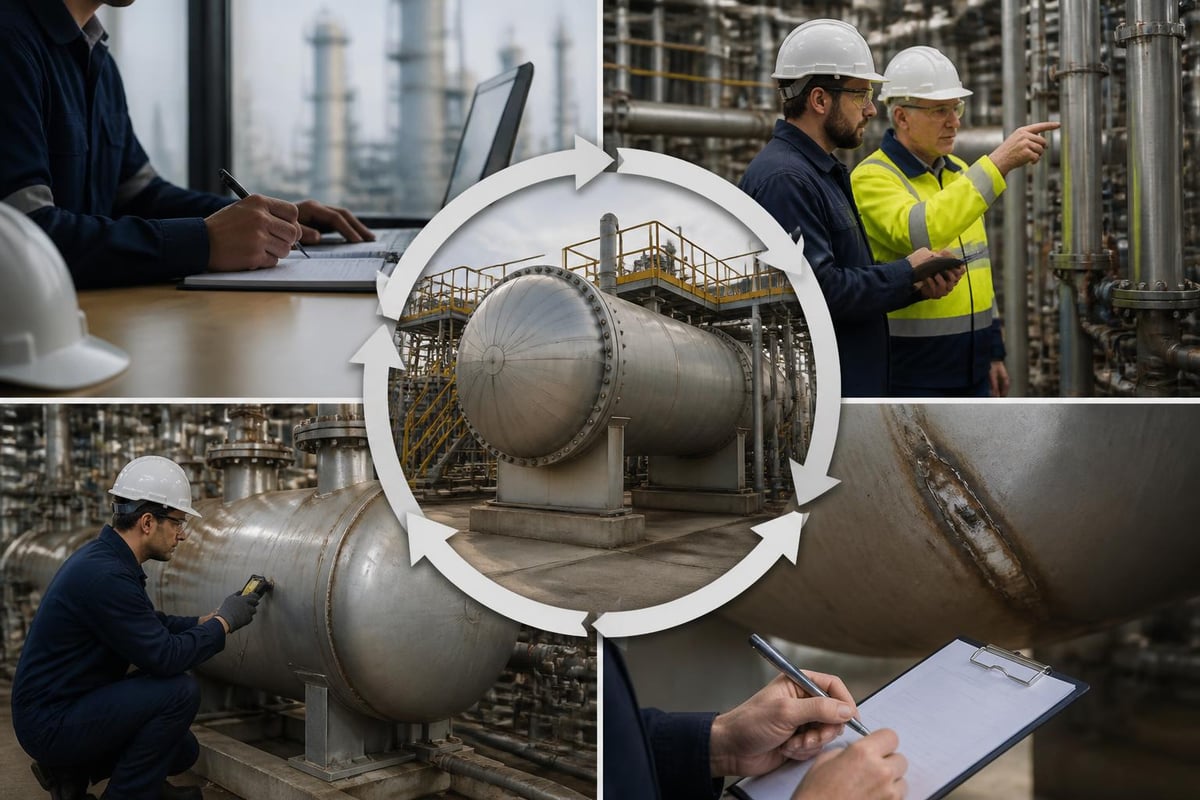
Different inspection methodologies serve distinct purposes throughout a pressure vessel's operational lifecycle. Understanding when and how to apply each technique ensures comprehensive safety coverage whilst optimising resource allocation.
External Visual Examinations
External inspections represent the most frequent form of pressure vessel examination. These assessments focus on identifying visible signs of deterioration, corrosion, leakage, or damage without requiring system shutdown or internal access.
Inspectors examine external surfaces for:
Corrosion, particularly at support points and beneath insulation
Cracks, bulging, or deformation of vessel walls
Leakage at welds, flanges, or connection points
Condition of safety devices, valves, and instrumentation
Proper labelling and identification markings
External examinations typically occur annually, though the exact frequency depends on the vessel's operating conditions, contents, and risk assessment findings detailed in the written scheme of examination.
Internal Thorough Examinations
Internal inspections provide the most comprehensive assessment of a pressure vessel's condition. These examinations require the system to be taken out of service, depressurised, cleaned, and opened for direct internal access.
Inspection Aspect | What's Assessed | Common Findings |
|---|---|---|
Internal Surfaces | Corrosion, erosion, pitting | Metal loss, scale build-up |
Welds and Joints | Cracks, separation, quality | Fatigue cracks, incomplete fusion |
Supporting Structure | Brackets, saddles, legs | Corrosion at contact points |
Internal Fittings | Baffles, tubes, internals | Mechanical damage, detachment |
The thorough examination process follows established procedures to ensure consistency and completeness. Internal examinations typically occur at intervals ranging from 14 months to several years, depending on risk factors and the competent person's recommendations.
Non-Destructive Testing Methods
Non-destructive testing (NDT) techniques allow inspectors to assess vessel integrity without causing damage to the equipment. These advanced methods detect subsurface flaws, measure wall thickness, and identify material defects invisible to visual inspection alone.
Common NDT techniques include:
Ultrasonic Testing (UT) - measures wall thickness and detects internal flaws using high-frequency sound waves
Radiographic Testing (RT) - reveals internal defects through X-ray or gamma-ray imaging
Magnetic Particle Inspection (MPI) - identifies surface and near-surface cracks in ferromagnetic materials
Dye Penetrant Testing (PT) - detects surface-breaking defects through liquid penetrant application
Eddy Current Testing (ECT) - assesses surface and near-surface flaws using electromagnetic induction
Various inspection and testing methods provide complementary information about vessel condition. Combining multiple techniques offers the most comprehensive assessment of structural integrity and remaining service life.
Risk-Based Inspection Approaches
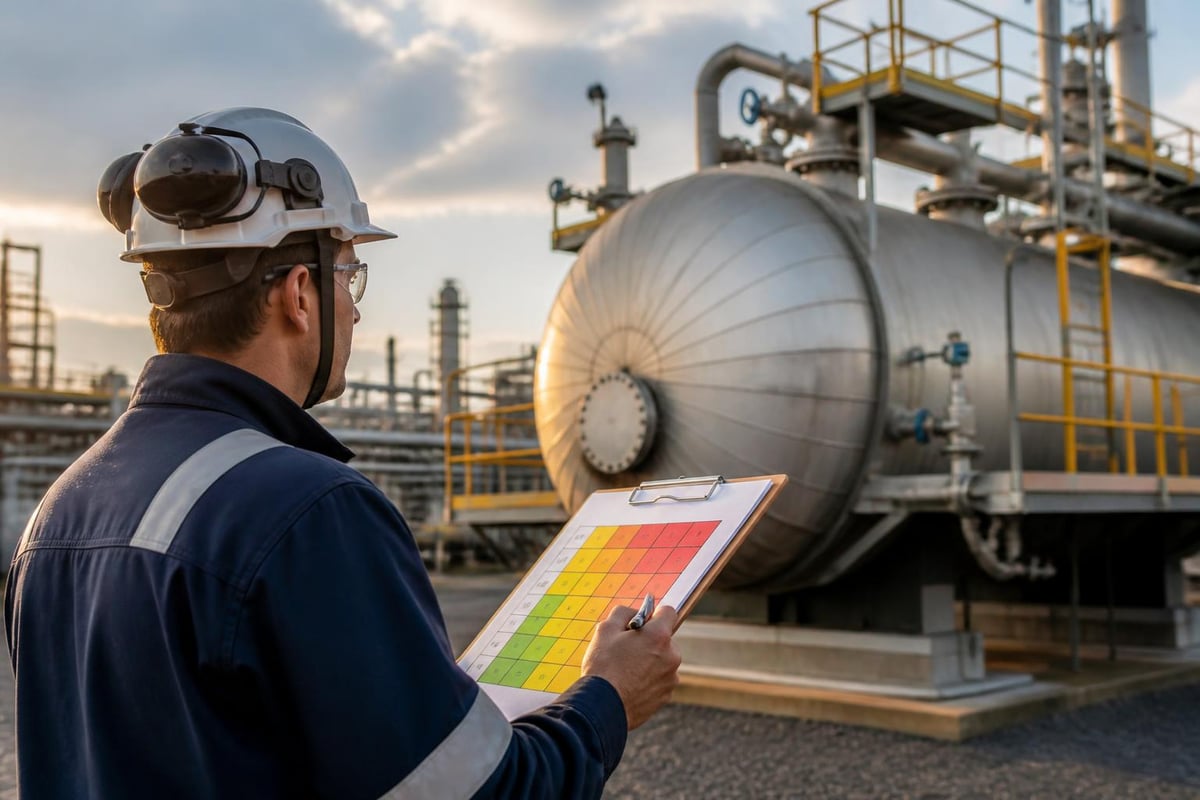
Modern inspection strategies increasingly adopt risk-based methodologies that prioritise resources towards the highest-risk equipment. This approach recognises that not all pressure vessels pose equal danger and that inspection frequency should reflect actual risk levels.
Risk-based inspection (RBI) evaluates both the probability of failure and the potential consequences. Factors considered include operating pressure and temperature, vessel age, process fluid corrosivity, previous inspection findings, and the vessel's location relative to personnel or critical infrastructure.
Implementing RBI Programmes
Organisations implementing RBI methodologies develop systematic frameworks for assessing and ranking equipment. This process involves:
Categorising vessels by risk level (high, medium, low)
Adjusting inspection frequency based on risk classification
Applying more rigorous inspection techniques to high-risk vessels
Monitoring performance indicators to validate risk assessments
Reviewing and updating classifications as conditions change
Inspection requirements and procedures must balance regulatory compliance with practical risk management. Whilst RBI allows flexibility in scheduling, it never eliminates the need for regular statutory examinations.
Emerging Inspection Technologies
Technological advancement continues to reshape how organisations approach pressure vessel inspection. Modern techniques enhance safety, reduce downtime, and improve the quality of information available to decision-makers.
Non-Intrusive Inspection Methods
Non-intrusive inspection (NII) techniques examine pressure vessels without requiring internal access or extended shutdown periods. Case studies demonstrate how NII reduces costs whilst maintaining safety standards.
Advanced ultrasonic testing systems can now map entire vessel walls from the exterior, identifying thinning, laminations, or other defects without depressurisation. Acoustic emission monitoring detects active crack growth during operation, providing early warning of developing problems.
Drone and Robotic Inspection
Remotely operated inspection tools increasingly supplement or replace manual examinations in hazardous or difficult-to-access locations. Drone technology for non-entry inspections allows thorough assessment of large vessels without confined space entry.
Robotic crawlers equipped with cameras and NDT sensors navigate vessel interiors, capturing high-resolution imagery and measurement data whilst keeping personnel safely outside. These technologies prove particularly valuable for large storage tanks, reactors, and other vessels where traditional inspection presents significant logistical challenges.
Common Defects and Failure Mechanisms
Understanding typical pressure vessel degradation patterns helps inspectors recognise warning signs and predict potential failure modes. Different operating conditions produce characteristic defect types that require specific monitoring approaches.
Corrosion and Material Loss
Corrosion represents the most common cause of pressure vessel deterioration. Several corrosion mechanisms affect pressure equipment:
General corrosion produces uniform thinning across large surface areas, gradually reducing wall thickness until the vessel can no longer safely contain design pressure. Regular thickness monitoring tracks corrosion rates and predicts remaining service life.
Localised corrosion concentrates in specific areas, creating pits, crevices, or under-deposit attack. These defects are particularly dangerous because significant metal loss may occur in small areas that escape visual detection.
Stress corrosion cracking develops when tensile stress combines with a corrosive environment, producing cracks that propagate through vessel walls. This mechanism affects stainless steel, carbon steel, and various alloys under specific conditions.
The EPA highlights rupture hazards associated with internal wall thinning, emphasising the importance of monitoring corrosion progression through regular inspection programmes.
Mechanical Damage and Fatigue
Pressure vessels experience cyclic loading from temperature changes, pressure fluctuations, and mechanical vibration. Repeated stress cycles gradually initiate and propagate fatigue cracks, typically at stress concentration points such as nozzles, welds, or geometric discontinuities.
Mechanical damage from external impact, improper handling during maintenance, or operational upset conditions can create dents, gouges, or deformation that compromise structural integrity. These defects may not immediately cause failure but create stress concentrations that accelerate crack development.
Failure Mechanism | Primary Causes | Inspection Focus |
|---|---|---|
Corrosion | Chemical exposure, moisture | Wall thickness, surface condition |
Fatigue Cracking | Cyclic loading, vibration | Welds, nozzles, attachments |
Creep | High temperature operation | Deformation, microstructure changes |
Brittle Fracture | Low temperature, material flaws | Material toughness, crack detection |
Documentation and Record Keeping
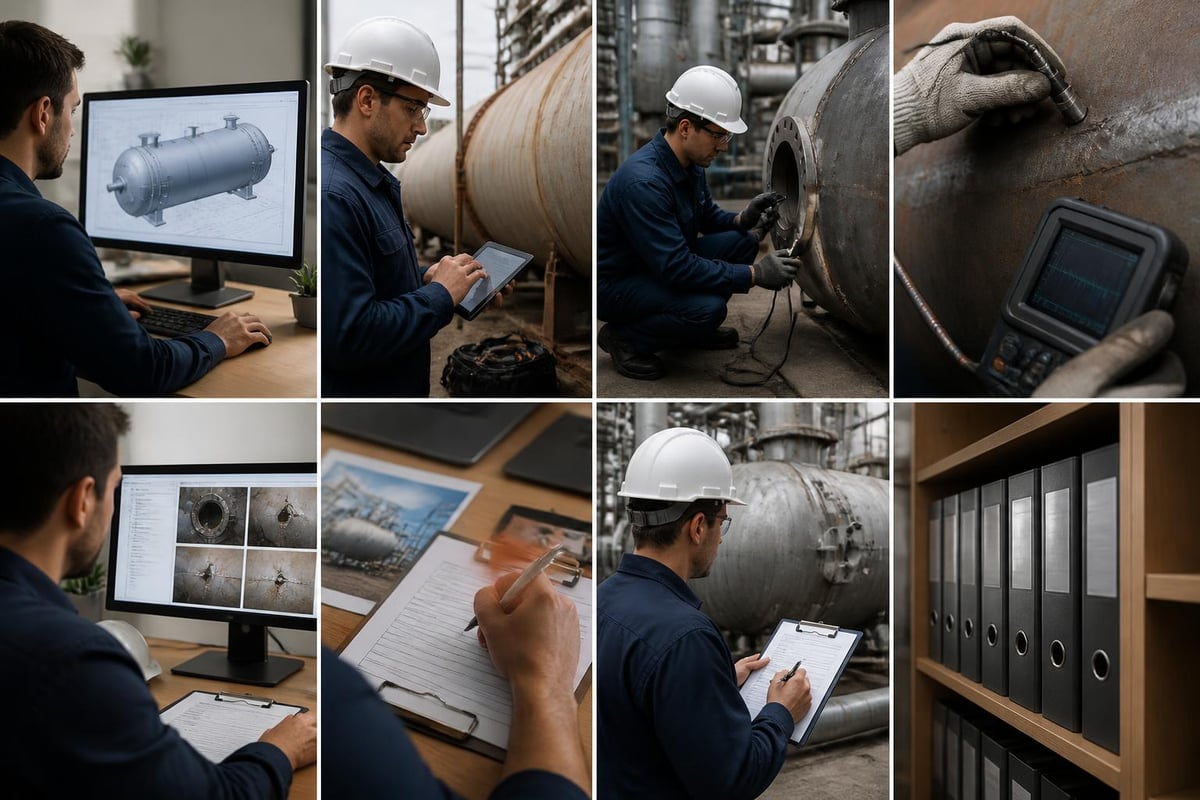
Comprehensive documentation underpins effective pressure vessel inspection programmes. Proper records demonstrate regulatory compliance, track equipment condition over time, and support informed maintenance decisions.
Written Scheme of Examination
Every pressure system requires a written scheme prepared by a competent person. This document specifies which parts of the system require examination, the nature of examinations needed, and maximum intervals between inspections.
The scheme must address:
System identification and description
Safe operating limits for pressure and temperature
Examination frequency for each component
Specific examination methods and requirements
Competent person qualifications
Understanding inspection regulations helps organisations develop compliant written schemes appropriate to their equipment and operations.
Inspection Reports and Certificates
Following each examination, the competent person must provide a written report detailing findings, any defects discovered, and recommendations for corrective action. These reports form a critical history of equipment condition and maintenance interventions.
Essential report elements include:
Date and type of examination performed
Equipment identification and location details
Condition findings for all examined components
Measurements, test results, and supporting data
Defects requiring immediate or future attention
Next examination due date
Competent person's signature and credentials
Organisations must retain inspection records throughout the equipment's service life and for at least two years following decommissioning. Using comprehensive checklists ensures systematic documentation and prevents oversights during examinations.
Competent Person Requirements
The concept of the "competent person" forms the foundation of effective pressure vessel inspection. PSSR regulations require examinations to be conducted by individuals possessing the necessary knowledge, experience, and training to properly assess equipment safety.
Qualifications and Experience
Competent persons typically hold relevant engineering qualifications and demonstrate substantial practical experience with pressure systems. Many possess certifications from recognised professional bodies or have completed specialist training programmes in pressure vessel examination.
Experience requirements vary based on equipment complexity and operating conditions. Simple air receivers may be examined by individuals with basic pressure system knowledge, whilst complex chemical process vessels demand extensive expertise in materials science, failure analysis, and specialised inspection techniques.
Independence and Objectivity
Regulatory guidance emphasises the importance of independence in pressure vessel examination. Whilst in-house personnel can serve as competent persons, organisations must ensure examiners possess sufficient authority and independence to make impartial safety decisions without commercial or operational pressure.
Many businesses engage independent inspection providers to ensure objectivity and access to broader expertise. Working with specialists provides assurance that examinations meet regulatory standards and industry best practices.
Industry-Specific Considerations
Different industrial sectors face unique challenges in pressure vessel inspection. Operating conditions, process fluids, and regulatory environments shape inspection requirements and methodologies.
Manufacturing and Process Industries
Manufacturing facilities often operate multiple pressure systems supporting production processes. These environments demand efficient inspection scheduling that minimises production disruption whilst maintaining safety standards.
Coordination between inspection activities and planned maintenance shutdowns optimises resource utilisation. Manufacturing sector guidance addresses common equipment types and inspection priorities specific to these operations.
Chemical and Petrochemical Facilities
Chemical processing operations present particularly demanding inspection challenges. Aggressive process chemicals, high temperatures, and toxic materials require specialised assessment approaches and stringent safety protocols.
Enhanced inspection programmes in these environments may include corrosion monitoring systems, materials testing, and fitness-for-service assessments that evaluate whether degraded vessels can continue operating safely until the next planned shutdown.
Maintenance and Repair Considerations
Inspection findings directly inform maintenance planning and equipment lifecycle management. Understanding how to respond to defects ensures timely intervention without unnecessary equipment retirement.
Defect Assessment and Remediation
Not every defect requires immediate vessel removal from service. Competent persons apply engineering judgment to evaluate whether identified flaws compromise safe operation within established limits.
Minor corrosion, small dents, or superficial cracks may be monitored through increased inspection frequency rather than immediate repair. This approach maintains operational continuity whilst ensuring safety margins remain adequate.
When repairs become necessary, work must comply with relevant codes and standards. Welding on pressure vessels requires qualified welders, approved procedures, and post-repair inspection to verify work quality. Significant repairs may necessitate re-rating the vessel or updating the written scheme of examination.
Remaining Life Assessment
Advanced analytical techniques help predict how long degraded vessels can continue operating safely. Ultrasonic testing determines remaining vessel life by measuring current wall thickness and calculating future corrosion progression.
These assessments consider:
Current condition and defect characteristics
Historical deterioration rates
Future operating conditions and duty cycles
Required safety margins and design standards
Economic factors and replacement planning
Inspection Frequency and Scheduling
Determining appropriate examination intervals balances regulatory requirements, risk factors, and operational considerations. Whilst PSSR provides general guidance, specific frequencies must reflect individual equipment characteristics and operating environments.
Factors Influencing Frequency
Multiple variables affect how often pressure vessels require examination. High-risk factors that may shorten intervals include:
Corrosive process fluids or operating environments
High operating pressures or temperatures
Previous inspection findings indicating active deterioration
Age and operational history of the equipment
Consequences of potential failure
Conversely, well-maintained vessels operating under benign conditions with good inspection history may qualify for extended intervals within regulatory maximums.
Coordinating Multi-Equipment Programmes
Organisations operating numerous pressure vessels benefit from strategic inspection scheduling. Inspection frequency guides help plan examinations efficiently across equipment populations.
Grouping examinations by location, system, or shutdown window optimises inspector utilisation and minimises operational disruption. Digital management systems track due dates, schedule examinations, and alert responsible personnel when inspections approach.
Integration with Broader Safety Programmes
Pressure vessel inspection rarely exists in isolation. Effective safety management integrates pressure system oversight with broader equipment examination and workplace safety initiatives.
Multi-Regulation Compliance
Many facilities must comply with multiple statutory inspection regimes. Pressure vessels may also fall under PUWER requirements if they incorporate machinery elements, or connect to lifting equipment subject to LOLER examination.
Coordinating inspections across these regulatory frameworks prevents duplication, reduces costs, and ensures comprehensive equipment oversight. Understanding how different regulations interact helps organisations develop efficient compliance strategies.
Safety Culture and Continuous Improvement
Inspection programmes succeed when embedded within a broader safety culture that values equipment integrity and proactive maintenance. Organisations should encourage personnel to report potential pressure system problems between formal examinations.
Near-miss reporting, operator observations, and process data trending can identify developing issues before they become serious defects. This information supplements formal inspections and enhances overall system reliability.
International Standards and Best Practices
Whilst UK legislation establishes minimum requirements, international standards and industry best practices offer additional guidance for pressure vessel inspection programmes.
Codes and Standards
Various technical standards inform pressure vessel design, fabrication, and examination. The British Standards Institution, American Society of Mechanical Engineers, and other standards bodies publish detailed specifications for different vessel types and applications.
Key standards address:
Design calculations and material selection
Fabrication methods and quality requirements
Inspection and testing procedures
Repair and alteration protocols
Fitness-for-service assessment methodologies
Organisations may reference these standards within their written schemes of examination to specify detailed technical requirements beyond basic regulatory compliance.
International Regulatory Approaches
Different jurisdictions take varying approaches to pressure vessel regulation. U.S. federal regulations specify distinct requirements compared to UK PSSR, though fundamental safety principles remain consistent across regulatory frameworks.
Understanding international approaches benefits organisations operating across multiple countries or importing equipment from overseas suppliers. Harmonising inspection practices where possible simplifies management whilst respecting local legal requirements.
Effective pressure vessel inspection protects personnel, preserves equipment investments, and ensures regulatory compliance across industrial operations. By implementing robust examination programmes, leveraging appropriate technologies, and maintaining comprehensive documentation, organisations create safer workplaces whilst optimising operational efficiency. Workplace Inspection Services Ltd delivers expert, independent pressure vessel examinations throughout the UK, supporting businesses in meeting their PSSR obligations whilst maintaining the highest safety standards. Contact our team today to discuss how we can support your pressure system compliance requirements.