LOLER PUWER Regulations: Compliance Guide 2026
LOLER PUWER Regulations: Compliance Guide 2026

Understanding the complexities of workplace safety legislation is essential for businesses operating in the UK. Among the most important statutory frameworks are the loler puwer regulations, which together form a comprehensive system for ensuring equipment safety across diverse industries. These regulations exist not as isolated requirements but as complementary frameworks that address overlapping yet distinct aspects of workplace equipment management. For duty holders responsible for compliance, grasping how these regulations interact and where their requirements differ is fundamental to maintaining both legal compliance and a safe working environment.
Understanding the Legal Framework of LOLER PUWER Regulations
The Lifting Operations and Lifting Equipment Regulations 1998 (LOLER) and the Provision and Use of Work Equipment Regulations 1998 (PUWER) came into force simultaneously but serve different purposes within the broader health and safety landscape. LOLER specifically addresses lifting equipment and lifting operations, whilst PUWER covers virtually all work equipment used in the workplace.
Both regulations stem from European directives and are enforced by the Health and Safety Executive (HSE) in the United Kingdom. The relationship between these frameworks is hierarchical in nature: PUWER establishes general requirements for all work equipment, whilst LOLER provides additional, specific requirements for lifting equipment and accessories.
The Scope of PUWER
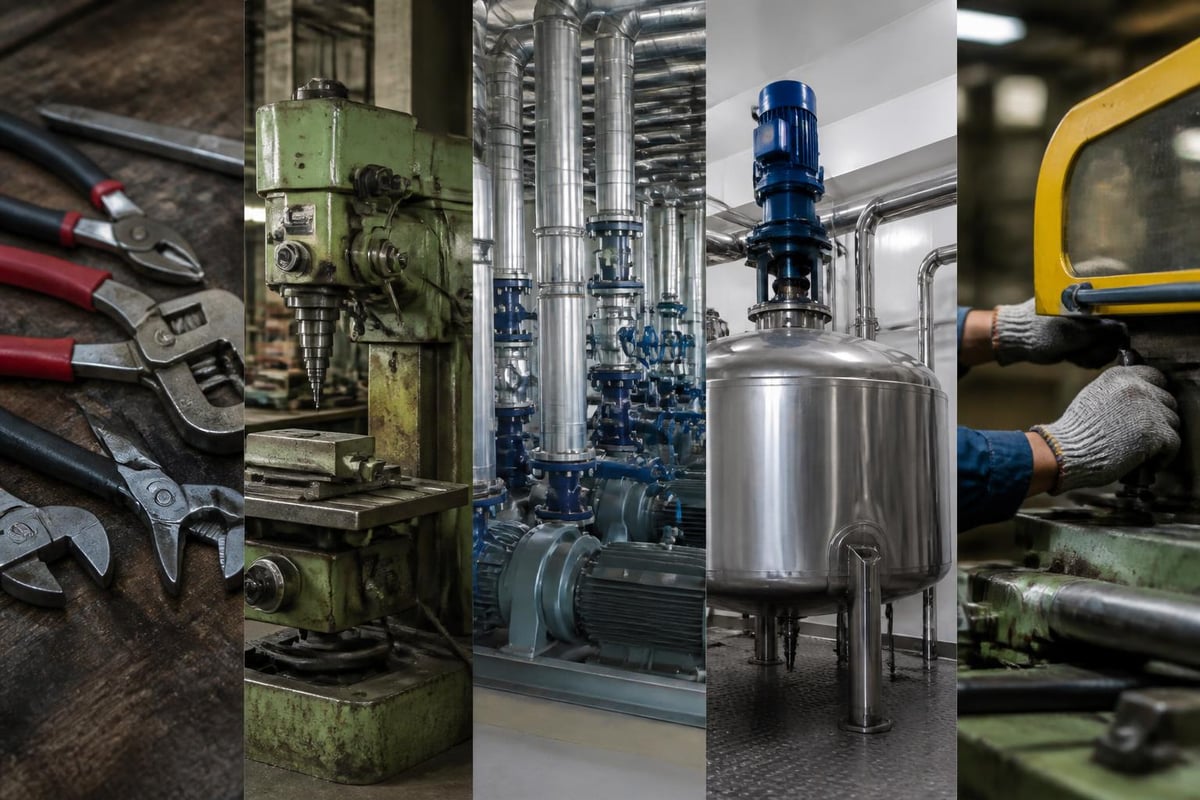
PUWER applies to work equipment provided for use at work, which includes any machinery, appliance, apparatus, tool or installation for use at work. This extraordinarily broad definition encompasses everything from hand tools and office equipment to complex manufacturing machinery and processing systems.
The regulations require that equipment is:
Suitable for its intended use
Maintained in a safe condition
Inspected to ensure it remains safe
Used only by people who have received adequate information, instruction and training
Businesses must also ensure that equipment conforms to relevant standards and is appropriately selected for the work environment. The British Safety Council provides detailed guidance on interpreting these requirements across different workplace settings.
The Scope of LOLER
LOLER focuses specifically on lifting equipment and lifting operations. The regulations apply to equipment used at work for lifting or lowering loads, including people. This includes cranes, hoists, lift trucks, elevating work platforms, vehicle inspection platform hoists, lifting accessories (such as chains, slings, and shackles), and passenger or goods lifts.
What distinguishes LOLER from PUWER is the emphasis on thorough examination by competent persons at specified intervals. This requirement recognises the particular risks associated with lifting operations, where equipment failure can result in catastrophic consequences including serious injury or death.
Key Requirements Under LOLER PUWER Regulations
Whilst the loler puwer regulations share common objectives around equipment safety, their specific requirements differ substantially. Understanding these distinctions prevents compliance gaps and ensures comprehensive safety management.
Thorough Examination Requirements
LOLER mandates thorough examinations conducted by competent persons at intervals specified by the regulations or a written scheme of examination. For most lifting equipment, this means examinations at least every twelve months, though some equipment types require six-monthly examinations, and accessories used for lifting people require six-monthly checks.
Equipment Type | LOLER Examination Frequency | PUWER Inspection Requirement |
|---|---|---|
Overhead crane | 6 or 12 months | Regular inspection as needed |
Forklift truck | 6 or 12 months | Regular inspection as needed |
Lifting chains/slings | 6 or 12 months | Regular inspection as needed |
Workshop press | Not applicable | Regular inspection as needed |
Lathe | Not applicable | Regular inspection as needed |
Hand tools | Not applicable | Regular inspection as needed |
PUWER requires inspections to ensure equipment remains safe, but these are generally less prescriptive regarding frequency and competence requirements. The specific interval depends on the risk profile of the equipment and operating conditions.
Documentation and Record-Keeping
Both sets of regulations require meticulous record-keeping, though the nature of documentation differs. LOLER requires formal reports of thorough examination, which must be retained and made available for inspection. These reports must include specific details about the equipment, examination findings, defects identified, and any testing performed.
PUWER requires maintenance logs and inspection records but doesn't mandate the same formal reporting structure. However, comprehensive equipment management records remain essential for demonstrating compliance and tracking equipment history.
Compliance Obligations for Duty Holders
The loler puwer regulations impose duties on various parties within an organisation, including employers, self-employed persons, and those who have control over work equipment or lifting equipment. Understanding who bears responsibility for specific compliance elements is crucial for effective safety management.
Equipment Selection and Suitability
Under PUWER, equipment must be suitable for the intended use and appropriate for the conditions in which it will be used. This means considering factors such as:
The nature of the work being performed
Environmental conditions (indoor/outdoor, temperature, moisture)
Frequency and duration of use
Training and competence of operators
LOLER adds further requirements for lifting equipment, specifying that equipment must be of adequate strength and stability for each load, marked with safe working loads, and positioned or installed to minimise risks from the load falling or striking people.
Training and Competence
Both regulations require that only trained and competent persons use, supervise or manage work equipment. For PUWER, this means providing adequate information, instruction and training to all users. Organisations must establish competency frameworks that address equipment-specific hazards and operational requirements.

LOLER extends this by requiring that lifting operations are properly planned by competent persons, appropriately supervised, and carried out in a safe manner. This three-fold requirement of planning, supervision and safe execution applies to every lifting operation and represents a higher standard than general PUWER requirements.
The Intersection of LOLER and PUWER
Equipment that falls under LOLER must also comply with PUWER, creating an overlap where both sets of regulations apply simultaneously. Understanding the differences between LOLER and PUWER helps organisations develop integrated compliance strategies rather than treating them as separate obligations.
For example, a forklift truck used for lifting operations must comply with PUWER's general requirements for work equipment maintenance and safe use, whilst also meeting LOLER's specific requirements for thorough examination and load marking. This dual compliance framework ensures comprehensive safety coverage without creating contradictory requirements.
Common Compliance Challenges
Businesses frequently encounter specific challenges when implementing loler puwer regulations:
Equipment classification confusion: Determining whether equipment constitutes lifting equipment under LOLER or general work equipment under PUWER only. For instance, excavators present particular classification questions depending on how they're used and what attachments are fitted.
Competent person availability: Finding appropriately qualified individuals to conduct thorough examinations under LOLER whilst also ensuring adequate inspection regimes for PUWER equipment.
Documentation management: Maintaining separate but coordinated record systems for LOLER examinations and PUWER inspections across diverse equipment portfolios.
Frequency determination: Establishing appropriate inspection intervals for PUWER equipment in the absence of specific regulatory guidance, particularly for equipment in demanding environments.
Industry-Specific Applications
The application of loler puwer regulations varies significantly across different sectors, with particular considerations emerging in specific industries.
Manufacturing and Fabrication
Manufacturing facilities typically operate extensive equipment portfolios spanning both regulations. Manufacturing environments commonly feature overhead cranes, jib cranes, lifting beams and accessories (LOLER), alongside machine tools, presses, guillotines and conveyors (PUWER).
Integration between the regulatory frameworks becomes especially important where equipment serves dual purposes. A gantry system might function as both a lifting device and a processing platform, requiring comprehensive compliance across both LOLER and PUWER.
Warehousing and Logistics
Warehouse operations rely heavily on materials handling equipment, making LOLER compliance particularly critical. Forklift trucks, pallet stackers, order pickers and dock levellers all require thorough examination under LOLER, whilst conveyor systems, packaging machinery and dock equipment fall primarily under PUWER.
The fast-paced nature of logistics operations necessitates careful planning to accommodate statutory examinations without disrupting operational continuity. Many organisations adopt proactive maintenance strategies that integrate LOLER examinations with routine servicing schedules.
Construction and Contracting
Construction sites present unique challenges for loler puwer regulations due to transient equipment populations and changing site conditions. Mobile cranes, tower cranes, hoists and lifting accessories move between sites regularly, requiring robust systems to track examination status and ensure compliance transfers with equipment.
PUWER inspections become particularly important for construction equipment exposed to harsh conditions, where accelerated deterioration demands more frequent assessment than might be necessary in controlled environments.
Enforcement and Penalties
The Health and Safety Executive enforces both LOLER and PUWER through workplace inspections, investigations following incidents, and targeted intervention programmes. Enforcement action ranges from improvement and prohibition notices through to prosecution in serious cases.
Inspection Priorities
HSE inspectors assess compliance across several dimensions:
System adequacy: Whether organisations have established appropriate examination and inspection regimes
Competence verification: Confirming that examinations are conducted by genuinely competent persons
Record integrity: Checking that documentation accurately reflects equipment status and examination findings
Action on defects: Verifying that identified defects receive appropriate remedial action within specified timeframes
Operational compliance: Ensuring lifting operations are planned, supervised and executed safely
Failure to comply with the loler puwer regulations can result in unlimited fines and, in cases involving fatalities or serious injuries, imprisonment for responsible individuals.

Recent Case Studies
Recent prosecutions illustrate the serious consequences of non-compliance. In 2025, a manufacturing company received a £380,000 fine following an incident where inadequately maintained lifting equipment failed, resulting in serious injuries. The investigation revealed systematic failures in LOLER compliance, including overdue examinations and unaddressed defect reports.
Another case involved PUWER breaches where inadequately guarded machinery caused severe injuries. The company had failed to conduct risk assessments or implement appropriate safeguarding, resulting in a £250,000 fine and a suspended prison sentence for the responsible director.
Implementing Effective Compliance Systems
Successful management of loler puwer regulations requires systematic approaches that integrate both frameworks within overall safety management systems.
Asset Register Development
A comprehensive asset register forms the foundation of effective compliance. This register should capture:
Unique equipment identifiers
Classification (LOLER, PUWER, or both)
Location and responsible person
Examination/inspection requirements and frequencies
Examination/inspection history
Current status and any restrictions on use
Modern digital systems enable automated scheduling, instant access to examination reports, and real-time compliance dashboards. These technologies significantly reduce administrative burden whilst improving compliance assurance.
Competent Person Arrangements
Organisations face a fundamental choice regarding competent person provision: in-house capability or external specialist support. This decision depends on equipment portfolio size, technical complexity, and available internal expertise.
Approach | Advantages | Disadvantages |
|---|---|---|
In-house competent person | Immediate availability, equipment familiarity, cost-effective for large portfolios | Training investment, maintaining competence, potential bias |
External inspection provider | Independent assessment, broad expertise, no training overhead | Scheduling complexity, higher per-inspection cost, less equipment familiarity |
Hybrid model | Flexibility, coverage continuity, cost optimisation | Coordination requirements, potential gaps |
Many organisations adopt hybrid models, maintaining in-house capability for routine examinations whilst engaging specialists for complex equipment or independent verification. LOLER inspections provided by independent specialists offer assurance of objective, expert assessment.
Defect Management Protocols
Both LOLER and PUWER require appropriate action when defects are identified. Effective defect management systems categorise findings by severity and establish clear escalation and remediation pathways.
Immediate hazards require equipment withdrawal from service until remediation is complete. Defects requiring attention within specific timeframes need tracking systems to ensure timely resolution. Advisory observations that don't immediately compromise safety should nonetheless be addressed to prevent deterioration.
Integration with Broader Safety Management
The loler puwer regulations don't exist in isolation but form part of comprehensive workplace safety frameworks. Integration with related regulations and management systems enhances overall effectiveness whilst reducing duplication.
Relationship with Other Regulations
Several other regulatory frameworks intersect with LOLER and PUWER:
Pressure Systems Safety Regulations 2000 (PSSR): Applies to pressure equipment, requiring similar thorough examination regimes. Organisations with both lifting and pressure equipment benefit from coordinated compliance approaches that align inspection scheduling across multiple regulatory frameworks.
Health and Safety at Work Act 1974: Provides the overarching duty of care within which LOLER and PUWER operate, requiring systematic risk management.
Management of Health and Safety at Work Regulations 1999: Mandates risk assessments that inform equipment selection, maintenance requirements, and operational controls under both LOLER and PUWER.
Risk Assessment Integration
Risk assessments conducted under the Management Regulations should inform LOLER and PUWER compliance strategies. Equipment-specific risk assessments help determine appropriate inspection frequencies, identify critical examination points, and establish operational controls.
For PUWER equipment without prescribed examination intervals, risk assessment becomes the primary tool for establishing appropriate inspection regimes. Factors including equipment age, operating intensity, environmental exposure, and consequence of failure inform frequency decisions.
Future Developments in Equipment Safety Regulation
The regulatory landscape continues to evolve in response to technological advancement, incident learning, and changing work patterns. Understanding emerging trends helps organisations future-proof their compliance strategies.
Digital Technologies
Emerging technologies are transforming how organisations manage loler puwer regulations compliance. Internet of Things (IoT) sensors provide continuous condition monitoring, potentially enabling predictive maintenance that identifies developing defects before they compromise safety. Digital twins allow virtual equipment assessment and scenario testing.
Blockchain technology offers potential for immutable examination records, whilst artificial intelligence could assist competent persons in defect identification and risk assessment. However, these technologies supplement rather than replace the fundamental requirement for competent person examination under current regulations.
Post-Brexit Regulatory Environment
Following the UK's departure from the European Union, regulations and standards continue to evolve within a distinctly British framework. Whilst LOLER and PUWER remain substantially unchanged, ongoing regulatory review could result in adjustments reflecting UK-specific priorities and experiences.
Businesses should monitor HSE guidance updates and engage with consultation processes to stay ahead of regulatory developments and contribute practical perspectives from operational experience.
Navigating the loler puwer regulations requires systematic approaches that integrate both frameworks within comprehensive safety management systems, supported by competent assessment and rigorous record-keeping. For businesses seeking expert support with statutory compliance across lifting equipment, work equipment, pressure systems and ventilation, Workplace Inspection Services Ltd offers nationwide independent engineering inspections that help organisations maintain legal compliance, reduce operational risk and protect their most valuable asset: their people.