LOLER Lift Inspections: Essential Guide for 2026
LOLER Lift Inspections: Essential Guide for 2026
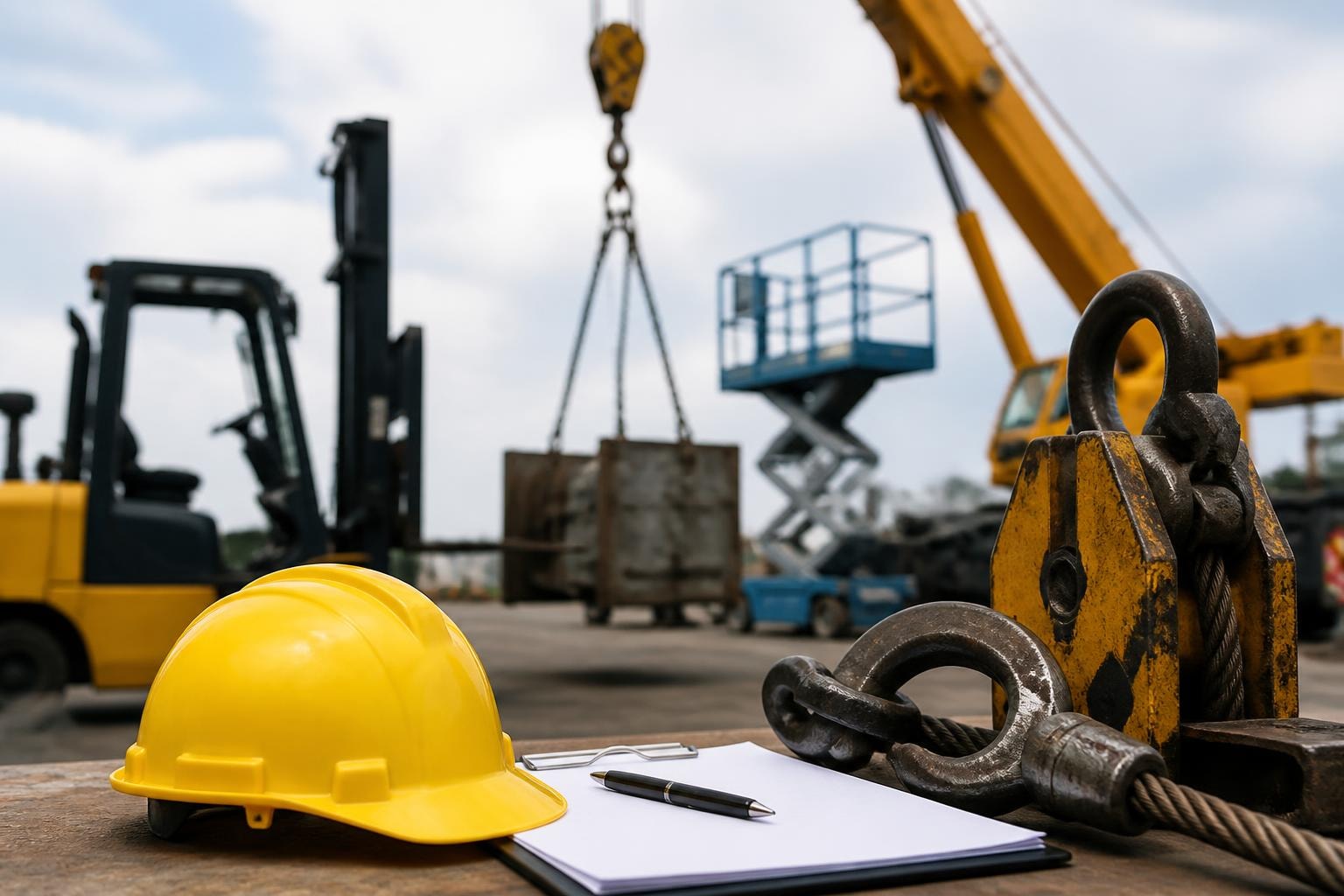
Lifting equipment plays a critical role in countless workplaces across the United Kingdom, from construction sites and warehouses to manufacturing facilities and healthcare settings. The safe operation of lifts, hoists, cranes and other lifting apparatus depends not only on proper use but also on systematic examination and maintenance. Understanding the requirements for loler lift inspections ensures businesses meet their legal obligations whilst protecting employees, contractors and visitors from potentially life-threatening incidents. This comprehensive guide explores the regulatory framework, practical requirements and best practices that define effective inspection programmes in 2026.
Understanding LOLER and Its Application to Lifting Equipment
The Lifting Operations and Lifting Equipment Regulations 1998 (LOLER) establish the legal framework governing the safe use of lifting equipment in British workplaces. These regulations apply to an extensive range of apparatus, from passenger lifts and goods hoists to mobile elevating work platforms and scissor lifts. The LOLER regulations overview clarifies that any equipment used for lifting or lowering loads, including people, falls within scope.
LOLER places specific duties on employers, equipment owners and those with control over lifting operations. The regulations complement the Provision and Use of Work Equipment Regulations 1998 (PUWER), creating a comprehensive safety framework. Whilst PUWER addresses general equipment safety, LOLER focuses specifically on the unique risks associated with lifting activities.
Key Equipment Categories Requiring Inspection
Different categories of lifting equipment each present distinct risks and operational characteristics:
Passenger and goods lifts in commercial and residential buildings
Platform hoists used in construction and maintenance
Mobile elevating work platforms (MEWPs) for access at height
Scissor lifts in warehouses and retail environments
Vehicle lifts in garages and service centres
Patient hoists in healthcare facilities
Dock levellers and tail lifts on commercial vehicles
The diversity of equipment types means inspection approaches must be tailored to specific operational contexts and risk profiles. Each category operates under different conditions, experiences varying wear patterns and presents unique failure modes that competent inspectors must understand thoroughly.
Legal Requirements for Thorough Examinations
LOLER mandates thorough examinations of lifting equipment at specified intervals, distinct from routine maintenance or operational checks. These examinations must be conducted by a competent person who possesses appropriate knowledge, experience and training to identify defects and assess whether equipment remains safe for continued use.
The regulations require thorough examinations in several circumstances:
Before first use when equipment is new to the organisation
After installation at any location where installation work has occurred
At specified intervals determined by equipment type and usage
Following exceptional circumstances such as damage, modification or extended periods out of use
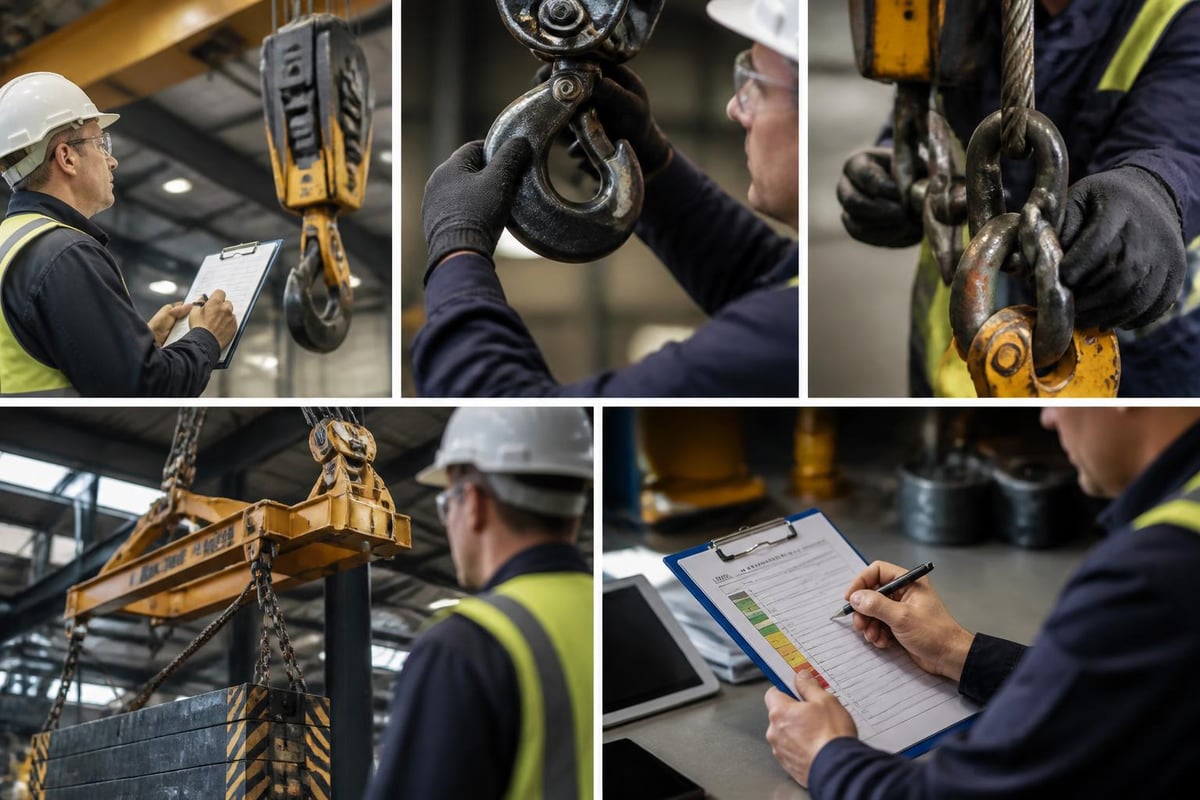
Employers must ensure examinations occur within the prescribed timeframes and that detailed reports are produced and retained. The thorough examinations requirements specify that reports must be submitted to the relevant enforcing authority when equipment is used to lift people and defects present an imminent danger.
Examination Frequencies and Intervals
Determining appropriate examination intervals represents a critical compliance decision. LOLER specifies maximum intervals but permits more frequent examinations where risk assessment indicates this necessity.
Equipment Type | Standard Maximum Interval | Typical Risk Factors |
|---|---|---|
Equipment lifting people | 6 months | High consequence of failure, intensive use |
Accessory equipment (slings, chains, hooks) | 6 months | Wear from repeated loading, exposure to elements |
Other lifting equipment | 12 months | Lower risk profile, less intensive use patterns |
Equipment with written scheme | As specified in scheme | Custom intervals based on specific risk assessment |
Understanding these intervals helps organisations develop comprehensive inspection schedules that maintain continuous compliance. Many businesses benefit from professional guidance when establishing these programmes, particularly where multiple equipment types operate across different sites.
The Role of Competent Persons in LOLER Inspections
Competence stands at the heart of effective loler lift inspections. LOLER requires examinations to be conducted by persons possessing sufficient training, experience, knowledge and other qualities to enable appropriate judgements about equipment safety. This competence requirement extends beyond simple technical knowledge to encompass understanding of failure modes, deterioration patterns and operational contexts.
A competent person must demonstrate:
Technical knowledge of equipment design, construction and operating principles
Practical experience examining similar equipment types
Understanding of regulations and relevant standards
Ability to identify defects and assess their safety implications
Knowledge of remedial measures appropriate to identified defects
The Health and Safety Executive emphasises that competence develops through a combination of formal training, practical experience and continuing professional development. Organisations must ensure appointed persons maintain current knowledge as equipment technology evolves and regulatory guidance develops.
Internal Versus Independent Inspection Services
Businesses face an important decision regarding whether to develop internal inspection capability or engage independent specialists. Each approach offers distinct advantages depending on organisational circumstances, equipment complexity and resource availability.
Internal inspectors may offer:
Immediate availability and familiarity with specific equipment
Integrated knowledge of operational contexts and usage patterns
Potential cost advantages for large equipment portfolios
Independent inspection services provide:
Objective assessment without organisational pressures
Specialist expertise across diverse equipment types
Professional indemnity protection and regulatory credibility
Access to advanced testing equipment and methodologies
Professional services such as LOLER inspections delivered by independent engineering companies combine technical expertise with impartial assessment, helping organisations maintain robust compliance programmes whilst managing resource constraints.
Planning and Organising Safe Lifting Operations
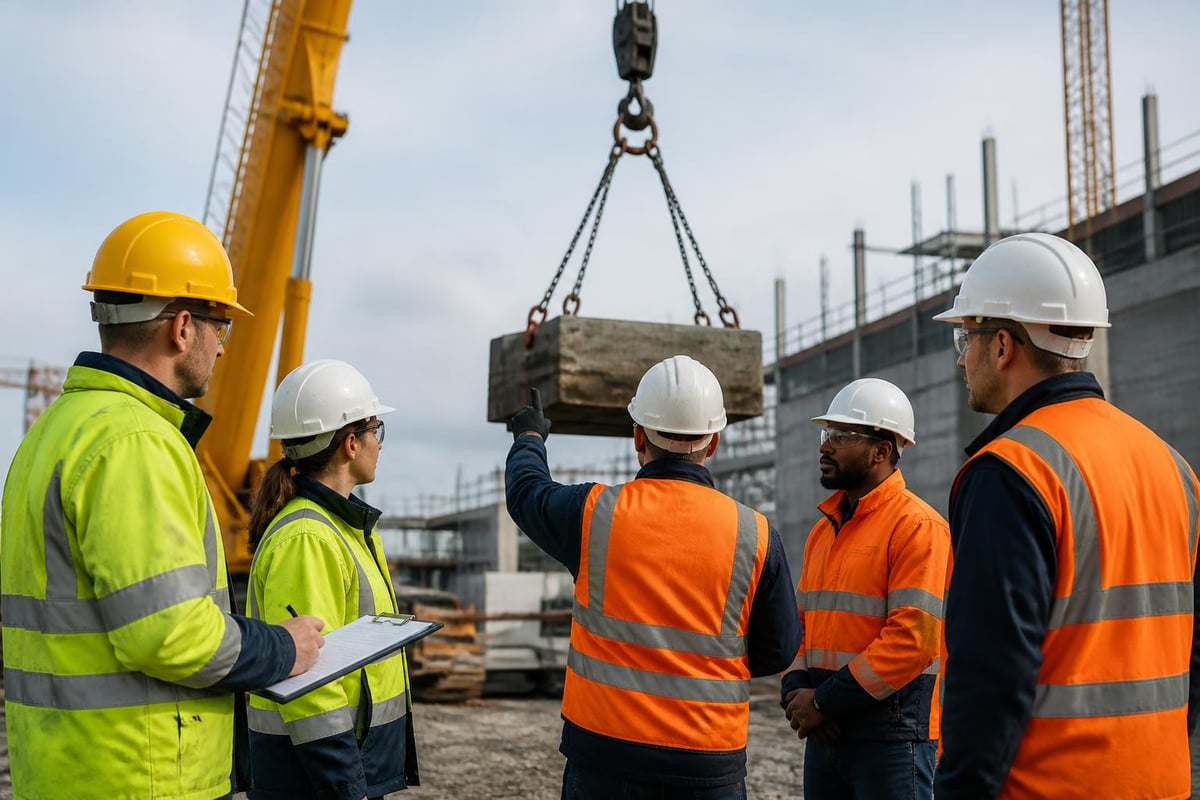
LOLER extends beyond equipment examination to encompass the planning and execution of lifting operations. Regulation 8 requires that all lifting operations involving lifting equipment are properly planned by a competent person, appropriately supervised and carried out in a safe manner. This planning requirement applies regardless of whether the operation is routine or exceptional.
Effective planning considers multiple factors:
Load characteristics including weight, dimensions and centre of gravity
Environmental conditions affecting stability and visibility
Proximity to structures, overhead lines or other hazards
Equipment capacity and configuration appropriate to the task
Competence of operators and supervisory personnel
Emergency procedures for equipment failure or incident
The planning and organizing lifting operations guidance emphasises that planning must be proportionate to risk. Simple, routine operations may require only basic planning, whilst complex or high-risk activities demand detailed written plans and method statements.
Specific Considerations for Equipment Lifting People
Equipment used to lift people presents the highest risk profile under LOLER, reflecting the potentially catastrophic consequences of failure. The regulations impose additional requirements for such equipment, including more frequent examinations and enhanced design standards.
Key requirements include:
Fail-safe mechanisms preventing free-fall in the event of primary system failure
Adequate strength with appropriate safety factors
Suitable devices to prevent persons falling from the carrier
Emergency evacuation procedures for equipment failure scenarios
Restricted access limiting use to authorised, trained personnel
The lifting people requirements establish that equipment must be specifically designed for carrying persons, except where work platform attachments meet strict criteria. This prohibition prevents improvised solutions that compromise safety.
Documentation and Record-Keeping Requirements
Comprehensive documentation forms an essential component of LOLER compliance, providing evidence of systematic examination programmes and enabling defect tracking over time. The regulations specify detailed requirements for examination reports and their retention.
Mandatory Report Contents
Thorough examination reports must contain specific information:
Required Element | Purpose | Retention Period |
|---|---|---|
Equipment identification | Unique reference to specific item | Until next examination |
Examination date and location | Establishes compliance with intervals | Until next examination |
Defects identified | Documents safety concerns | Until defects remedied |
Competent person details | Confirms examiner qualifications | Until next examination |
Immediate/imminent danger declaration | Triggers regulatory notification | Permanent retention |
Electronic record systems offer advantages over paper-based approaches, enabling systematic tracking of examination due dates, defect remediation and compliance status across multiple sites. However, systems must ensure information remains accessible and protected against loss.
Businesses must retain reports until the next thorough examination or for two years, whichever is longer. Where defects present imminent danger to persons, additional notification requirements apply, with copies submitted to the relevant enforcing authority within 28 days.
Common Defects and Deterioration Patterns
Understanding typical defect patterns enables both inspectors and equipment operators to recognise developing problems before they compromise safety. Loler lift inspections systematically assess equipment for evidence of wear, damage, deterioration and modification.
Frequent defect categories include:
Structural degradation from corrosion, cracking or deformation
Mechanical wear in bearings, gears, chains and wire ropes
Hydraulic system deterioration including leaks, seal failure and contamination
Electrical faults affecting controls, interlocks and safety circuits
Safety device malfunction of overload protection, limit switches and emergency stops
Environmental conditions significantly influence deterioration rates. Equipment operating in corrosive atmospheres, extreme temperatures or high-contamination environments requires enhanced examination scrutiny and potentially modified inspection intervals. The inspection frequency considerations help organisations determine appropriate schedules based on operational context.
Defect Categorisation and Response
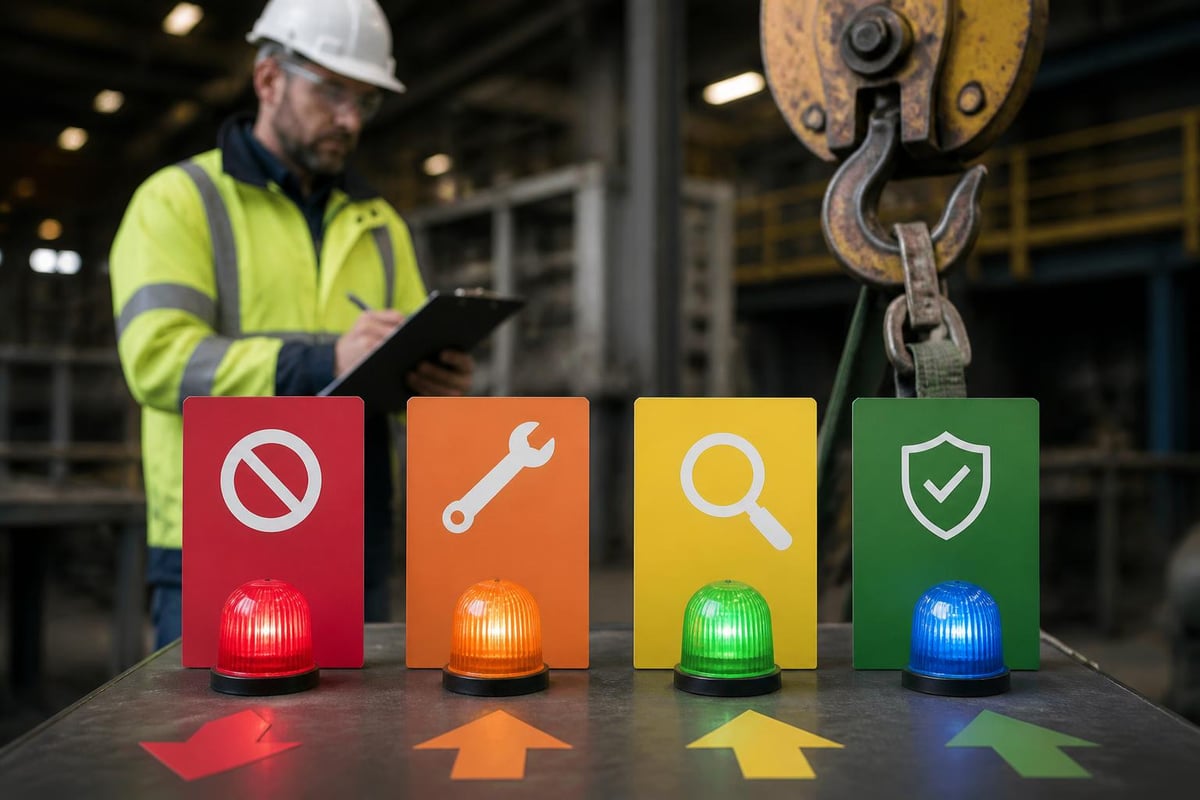
Professional inspection protocols categorise defects according to their safety implications, enabling prioritised remediation:
Imminent danger defects require immediate withdrawal from service and regulatory notification. These include structural failures, safety system bypasses or conditions presenting immediate risk to persons.
Major defects require remediation before next scheduled use but may permit continued operation under restricted conditions. Examples include excessive wear approaching replacement criteria or minor safety system degradation.
Minor defects require attention within specified timeframes but do not immediately compromise safe operation. These might include cosmetic damage, minor leaks or early-stage deterioration requiring monitoring.
Integration with Broader Workplace Safety Programmes
Effective loler lift inspections function as part of comprehensive workplace safety management rather than isolated compliance exercises. Integration with other statutory inspection programmes, maintenance systems and risk management processes maximises safety outcomes whilst optimising resource utilisation.
Organisations managing diverse equipment portfolios benefit from coordinated approaches that align inspection schedules, share competent person resources and integrate documentation systems. For example, businesses operating both lifting equipment and pressure systems can coordinate their safety and regulation compliance activities for operational efficiency.
Links to Risk Assessment and Safe Systems of Work
LOLER examination findings inform broader risk assessments and shape safe systems of work. Identified defect patterns may indicate inadequate maintenance programmes, operator training gaps or environmental factors requiring control measures. This feedback loop enables continuous improvement of safety management systems.
Risk assessments should consider:
Equipment selection appropriate to tasks and environments
Operator competence and training requirements
Maintenance programme adequacy and resourcing
Environmental controls protecting against accelerated deterioration
Supervision arrangements ensuring safe working practices
The integration of statutory inspection findings with dynamic risk assessment processes creates robust safety cultures where compliance supports rather than merely documents safety performance.
Enforcement, Penalties and Liability Implications
LOLER represents criminal law, with non-compliance carrying significant penalties including unlimited fines and potential imprisonment for serious breaches. The Health and Safety Executive and local authorities enforce these regulations through inspection programmes, incident investigation and prosecution where appropriate.
Recent enforcement trends demonstrate regulatory focus on:
Systematic examination failures where businesses lack robust inspection programmes
Competent person inadequacies involving unqualified or inexperienced inspectors
Defect remediation delays particularly for imminent danger conditions
Documentation deficiencies preventing verification of compliance
Lifting operation planning failures contributing to incidents
Beyond regulatory penalties, LOLER non-compliance creates significant civil liability exposure. Equipment failures resulting in injuries or fatalities frequently generate negligence claims, with inadequate inspection programmes undermining employer defences. Insurance coverage may be compromised where systematic non-compliance is demonstrated.
Corporate Manslaughter Considerations
The Corporate Manslaughter and Corporate Homicide Act 2007 creates liability where management failures cause death. LOLER non-compliance featuring in fatal incident investigations may support corporate manslaughter charges, particularly where systemic failures indicate gross negligence in safety management.
Organisations demonstrate due diligence through:
Documented inspection programmes with appropriate frequencies
Competent person appointments with verified qualifications
Systematic defect remediation tracking and verification
Management oversight of compliance status
Regular audit and review of safety management systems
Managing Multi-Site Inspection Programmes
Organisations operating across multiple locations face particular challenges coordinating loler lift inspections to maintain consistent compliance standards. Effective multi-site programmes require systematic approaches to scheduling, competent person allocation, standardised documentation and centralised oversight.
Key success factors include:
Centralised inspection scheduling ensures no equipment exceeds examination intervals despite operational complexity. Digital systems tracking individual equipment records, due dates and inspection history prevent compliance gaps across distributed portfolios.
Standardised inspection protocols deliver consistent assessment quality regardless of inspector or location. Detailed checklists, defect categorisation criteria and reporting templates ensure uniformity whilst accommodating equipment-specific considerations.
Regional competent person networks balance specialist expertise with geographic coverage. Organisations may employ roving inspectors covering multiple sites or establish partnerships with independent inspection providers offering nationwide service.
Management information systems aggregate compliance data, enabling oversight of portfolio-wide performance. Dashboard reporting highlights overdue examinations, outstanding defects and emerging deterioration trends requiring strategic attention.
The nationwide coverage offered by specialist inspection companies addresses these multi-site challenges, combining technical expertise with logistical capability to support geographically distributed operations.
Emerging Technologies and Future Developments
The lifting equipment sector continues evolving with technological advances influencing both equipment design and inspection methodologies. Understanding these developments helps organisations anticipate future compliance requirements and optimise safety performance.
Digital Inspection Tools and Reporting
Electronic inspection systems increasingly replace paper-based approaches, offering advantages including:
Real-time data capture eliminating transcription errors
Photographic evidence integrated with defect descriptions
Automated scheduling and reminder systems
Cloud-based accessibility enabling multi-site coordination
Advanced analytics identifying defect patterns and trends
These systems enhance inspection quality whilst improving efficiency, though organisations must ensure electronic records meet regulatory retention requirements and remain accessible throughout specified periods.
Predictive Maintenance and Condition Monitoring
Advanced condition monitoring technologies enable predictive maintenance approaches that anticipate failures before they compromise safety. Techniques including vibration analysis, thermography and ultrasonic testing supplement traditional thorough examinations by detecting developing problems at early stages.
While these technologies enhance safety management, they complement rather than replace statutory loler lift inspections. LOLER thorough examinations remain mandatory regardless of additional monitoring systems, though condition monitoring data may inform examination scope and frequency decisions within written schemes.
The integration of Internet of Things sensors, real-time monitoring and artificial intelligence promises further advances in equipment safety management. However, the fundamental requirement for competent person assessment of equipment fitness for purpose persists as technology evolves.
Written Schemes of Examination
LOLER permits alternative examination intervals where equipment operates under a written scheme prepared by a competent person. These schemes enable risk-based approaches to inspection frequency, potentially extending or shortening intervals based on equipment-specific considerations including design, usage intensity, environment and deterioration experience.
Written schemes must specify:
Equipment covered by the scheme with unique identification
Examination intervals justified by risk assessment
Specific examination scope and methodologies
Competent person qualification requirements
Review and revision triggers
Schemes offer flexibility for organisations with specialised equipment or unusual operational contexts where standard intervals may prove inappropriate. However, developing robust written schemes requires substantial technical expertise and thorough risk assessment, making them suitable primarily for larger organisations with sophisticated safety management systems.
Professional engineering companies provide written scheme development services combining regulatory knowledge with equipment-specific expertise, ensuring schemes satisfy LOLER requirements whilst optimising inspection frequencies.
Effective loler lift inspections protect both people and organisations through systematic examination programmes that identify defects before they compromise safety. Meeting these regulatory obligations requires competent inspectors, appropriate examination frequencies, robust documentation and integration with broader safety management systems. Workplace Inspection Services Ltd supports businesses across the United Kingdom with expert LOLER inspection services, combining technical expertise with nationwide coverage to help organisations maintain compliance, reduce risk and ensure safe working environments.