LOLER Inspection Frequency: Complete UK Guide 2026
LOLER Inspection Frequency: Complete UK Guide 2026
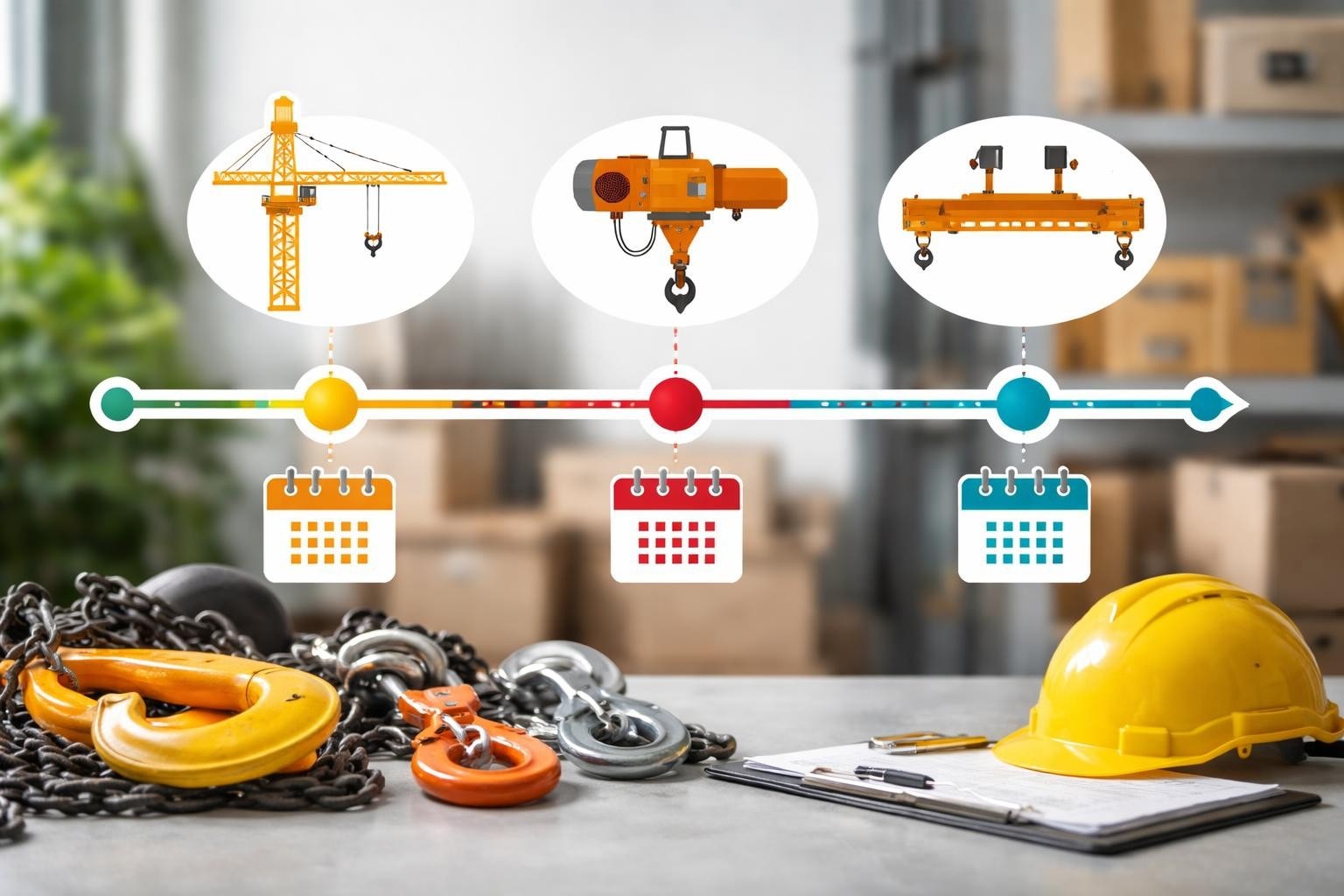
Understanding the correct loler inspection frequency is essential for businesses operating lifting equipment across the United Kingdom. The Lifting Operations and Lifting Equipment Regulations 1998 impose legal obligations on employers and equipment owners to ensure thorough examinations occur at specified intervals. Getting these intervals wrong can result in enforcement action, workplace accidents and significant operational disruption. This comprehensive guide examines the statutory requirements, explains how different equipment types require different examination schedules, and provides practical advice for maintaining compliance throughout 2026 and beyond.
The Legal Framework Governing LOLER Inspection Frequency
The Lifting Operations and Lifting Equipment Regulations 1998 establish the foundation for all lifting equipment inspections in UK workplaces. The legislation places a duty on those who own, operate or have control over lifting equipment to ensure it undergoes thorough examination by a competent person at appropriate intervals.
Regulation 9 specifically addresses examination requirements and sets out three distinct scenarios that determine loler inspection frequency. Understanding which scenario applies to your equipment is the first step towards establishing a compliant inspection regime.
Determining Your Inspection Interval
The appropriate loler inspection frequency depends primarily on the type of equipment and its operational context. Equipment used for lifting persons must undergo more frequent examination than equipment used solely for lifting goods, reflecting the higher risk associated with personnel-carrying operations.
Key frequency categories include:
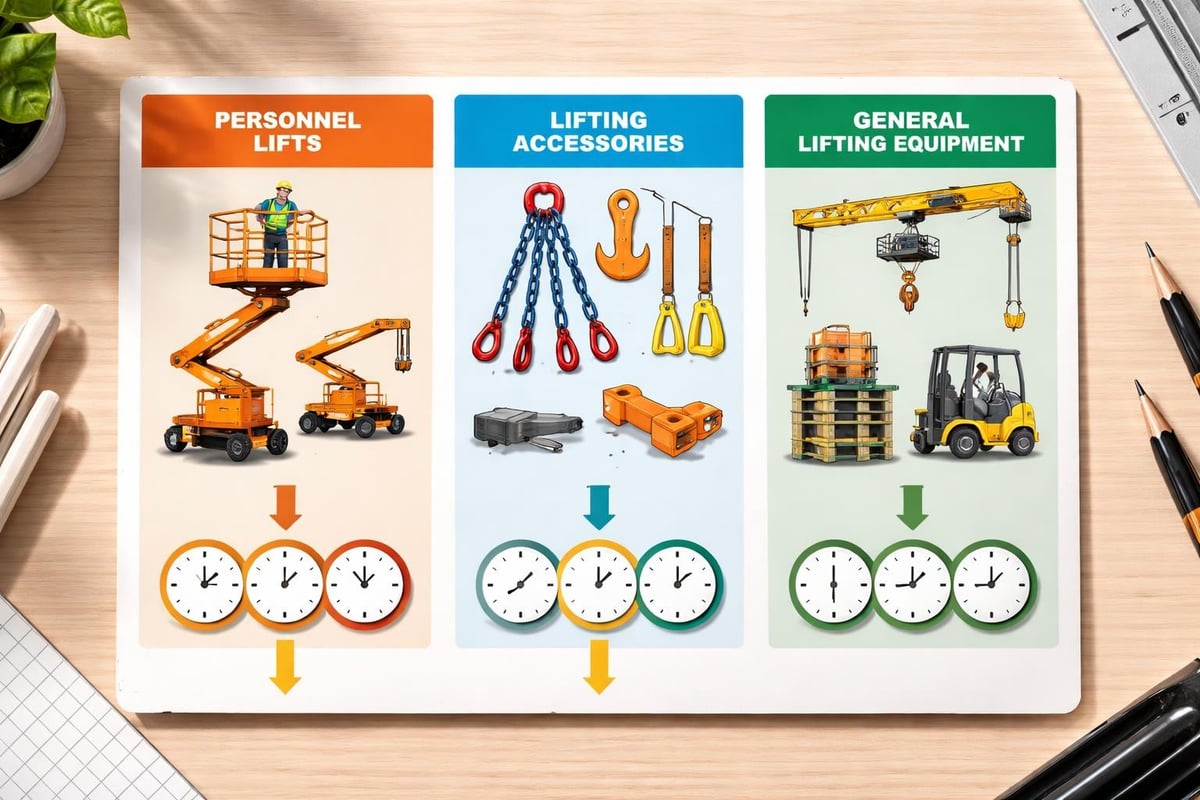
Equipment for lifting persons: thorough examination every six months
Lifting accessories (slings, shackles, chains): thorough examination every six months
Other lifting equipment (cranes, hoists): thorough examination every twelve months
First examination: before first use after installation or assembly at a new site
The regulations also permit an alternative approach through a written scheme of examination, which can specify different intervals based on risk assessment and operational conditions. This flexibility allows organisations to tailor their inspection programmes to specific operational circumstances whilst maintaining safety standards.
Equipment Used for Lifting Persons
Any lifting equipment designed or used for lifting people requires examination at six-month intervals. This category encompasses passenger lifts, goods lifts where persons may enter the cage, mobile elevating work platforms (MEWPs), platform hoists and personnel carriers attached to excavators or telescopic handlers.
The enhanced loler inspection frequency for person-carrying equipment reflects the catastrophic consequences that equipment failure could have. The Health and Safety Executive provides detailed guidance emphasising that even infrequent use does not reduce the six-month requirement.
Identifying Person-Carrying Equipment
Some equipment presents classification challenges. A goods lift not intended for persons but occasionally entered for maintenance may still require six-month examinations if people could be at risk. The determining factor is whether the design or operational use involves lifting persons, regardless of manufacturer intention.
Similarly, work platforms attached to forklift trucks, though not purpose-designed for lifting persons, fall under the six-month requirement when used to elevate workers. Organisations must carefully assess their equipment inventory to ensure correct categorisation and appropriate loler inspection frequency.
Equipment Type | Typical Use | Inspection Frequency | Regulatory Basis |
|---|---|---|---|
Passenger lifts | Vertical personnel transport | 6 months | LOLER 9(3)(a) |
MEWPs | Elevated work access | 6 months | LOLER 9(3)(a) |
Platform hoists | Construction personnel lifting | 6 months | LOLER 9(3)(a) |
Goods lifts (with access) | Material transport, occasional entry | 6 months | LOLER 9(3)(a) |
Lifting Accessories and Their Examination Requirements
Lifting accessories constitute any equipment used to attach loads to lifting machinery or to form part of the load itself. This broad category includes wire rope slings, chain slings, synthetic webbing slings, shackles, eyebolts, lifting beams, spreader bars and hooks.
The loler inspection frequency for all lifting accessories is six months, reflecting the harsh operational conditions these items endure and the direct load path they form between lifting machinery and suspended loads. Failure of a lifting accessory typically results in immediate load release with potentially severe consequences.
Managing Large Accessory Inventories
Organisations with extensive lifting accessory inventories face practical challenges in maintaining compliant examination schedules. Effective management requires robust tracking systems that record each item's unique identification, last examination date and next due date.
Practical management strategies include:
Implementing colour-coding systems that change annually to provide visual confirmation of examination status
Centralising accessory storage to prevent unauthorised use of out-of-date equipment
Maintaining duplicate certificates in both physical and digital formats
Scheduling examinations in batches to optimise inspector attendance
Quarantining equipment approaching examination due dates
Many businesses find that professional LOLER inspections help streamline the management of complex accessory inventories through comprehensive tracking and certification systems that integrate with existing maintenance management platforms.
Cranes, Hoists and Other Lifting Equipment
Lifting equipment not used for lifting persons and not classified as lifting accessories typically requires thorough examination every twelve months. This category includes overhead cranes, mobile cranes, gantry cranes, jib cranes, chain hoists, wire rope hoists, winches and vehicle-mounted cranes.
The annual loler inspection frequency provides a baseline for equipment operating under normal conditions. However, organisations must consider whether more frequent examinations are necessary based on operational intensity, environmental conditions or observed deterioration patterns.
Factors Affecting Inspection Intervals
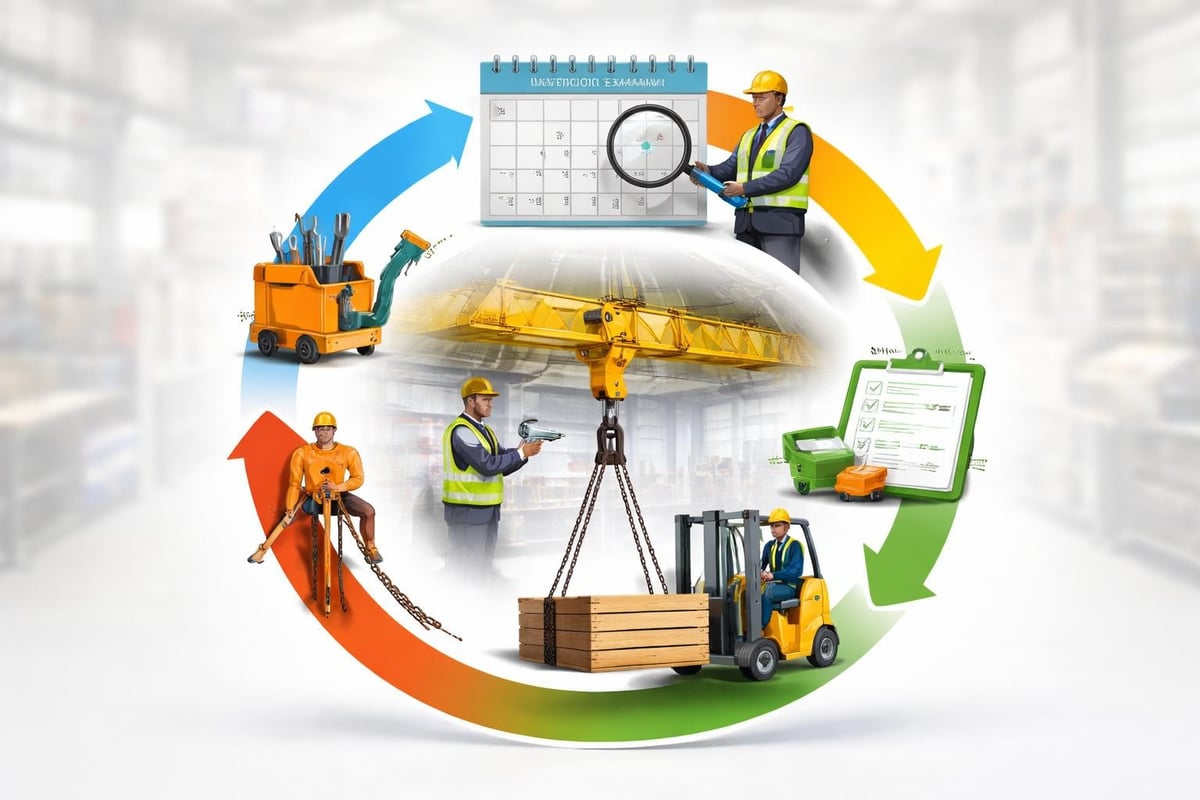
While twelve months represents the maximum interval, several factors may necessitate more frequent examinations. Equipment operating in corrosive environments, subjected to exceptionally high duty cycles or showing signs of accelerated wear requires enhanced scrutiny.
The competent person conducting thorough examinations should recommend revised loler inspection frequency when operational evidence suggests standard intervals are insufficient. These recommendations must be documented and implemented to maintain compliance and safety.
Written Schemes of Examination
Regulation 9(2) permits an alternative to the standard frequency intervals through implementation of a written scheme of examination. This document, prepared by a competent person, specifies what equipment requires examination, the nature of examination required and the interval between examinations.
Written schemes offer valuable flexibility for complex operations or unusual equipment configurations. They enable risk-based approaches that may specify more frequent examinations for critical equipment whilst potentially extending intervals for low-risk items operating in benign conditions.
Developing an Effective Written Scheme
A comprehensive written scheme must identify all lifting equipment within scope, specify the nature and extent of examination required for each item, and establish examination intervals based on systematic risk assessment. The scheme should reference equipment-specific factors including operational intensity, environmental exposure and maintenance history.
Essential written scheme components:
Complete equipment inventory with unique identifiers
Risk assessment methodology and results
Specified examination intervals for each equipment category
Requirements for examination after exceptional circumstances
Review and revision procedures
Competent person approval and signature
The loler inspection frequency established within a written scheme must never exceed statutory maximum intervals (six months for person-lifting equipment, twelve months for other equipment) without robust justification and documented risk assessment. Understanding inspection regulations helps organisations develop schemes that balance operational efficiency with safety compliance.
First Examinations and Installation Requirements
Before lifting equipment enters service for the first time after installation or assembly at a new location, it must undergo thorough examination. This requirement applies regardless of how recently the equipment received examination at its previous location or during manufacturing.
The first examination loler inspection frequency requirement ensures equipment has been correctly installed, assembled and commissioned before entering operational service. This examination verifies that installation has not compromised safety-critical components and that all safety devices function correctly.
Relocation and Re-installation
Equipment relocated between sites requires thorough examination at the new location before resuming service. This applies even when the equipment was examined immediately before dismantling. The examination confirms that transportation, dismantling and re-assembly processes have not introduced defects or compromised structural integrity.
For equipment regularly relocated (such as mobile cranes moving between construction sites), the definition of "installation" requires careful interpretation. Generally, movement on public highways or positioning at a new work location constitutes installation requiring examination, whilst movement around a single site does not.
Scenario | Examination Required | Timing | Notes |
|---|---|---|---|
New equipment delivered | Yes | Before first use | Applies even with manufacturer certificate |
Equipment relocated to new site | Yes | Before use at new location | Regardless of recent examination |
Mobile crane moving between sites | Yes | At each new site | Industry practice varies; seek competent advice |
Equipment moved within single site | No | N/A | Continue normal periodic frequency |
Examination After Exceptional Circumstances
Beyond scheduled periodic examinations, loler inspection frequency requirements include immediate examination following exceptional circumstances that may have affected equipment integrity. These circumstances include equipment involvement in accidents, significant modifications or repairs, extended periods of disuse, or exposure to conditions exceeding design parameters.
The competent person must determine whether circumstances warrant thorough examination outside the normal schedule. Factors informing this decision include the nature of the event, visible damage, equipment age and operational history.
Recognising Exceptional Circumstances
Common scenarios triggering unscheduled examination:
Overloading events (intentional or accidental)
Structural damage from impact or collision
Exposure to extreme weather (storms, flooding, extreme temperatures)
Modifications affecting load paths or structural integrity
Extended storage or disuse (typically exceeding six months)
Fire or exposure to hazardous substances
Organisations must establish clear reporting procedures ensuring operational staff understand their responsibility to report exceptional circumstances. Delayed examination following such events increases risk and may invalidate insurance coverage.
The Role of Competent Persons
LOLER requires thorough examinations to be conducted by competent persons possessing appropriate theoretical knowledge, practical experience and relevant qualifications. The competent person's role extends beyond simple inspection to include assessment of whether equipment remains safe for continued service and recommendation of any remedial action or revised loler inspection frequency.
Competence encompasses understanding of relevant engineering principles, knowledge of equipment-specific failure modes, awareness of regulatory requirements and ability to identify defects that may not be immediately apparent. The HSE provides guidance on competence requirements emphasising that competence must be demonstrable and relevant to specific equipment types.
In-House Versus External Competent Persons
Organisations face a strategic choice between developing in-house competence or engaging external inspection services. In-house competent persons offer operational familiarity and immediate availability but require ongoing training, professional development and quality assurance systems to maintain competence.
External providers bring independent perspective, broad experience across multiple industries and established quality management systems. They offer particular value for organisations with limited equipment inventories or specialised equipment requiring niche expertise. Many businesses adopt hybrid approaches, maintaining in-house capability for routine equipment whilst engaging specialists for complex or critical systems.
Documentation and Record Keeping Requirements
Every thorough examination must be documented in a formal report submitted to the employer within 28 days of examination. These reports constitute legal documents that enforcement authorities may inspect during workplace visits. The loler inspection frequency for individual equipment items can be verified only through comprehensive record systems.
Reports must identify examined equipment, state examination date, detail examination findings, declare whether equipment is safe for continued service, specify any remedial action required and recommend timing for next examination. When defects present imminent danger, the competent person must provide immediate notification rather than waiting for formal report submission.
Maintaining Compliant Records
Employers must retain thorough examination reports for specified periods: equipment still in service requires retention of the last two reports, whilst equipment no longer in service requires retention for two years after disposal. These requirements establish an auditable history demonstrating compliance with loler inspection frequency obligations.
Effective record management practices include:
Centralised storage systems accessible to operational managers and safety personnel
Digital backup systems protecting against physical document loss
Calendar integration providing automated alerts for upcoming examination due dates
Equipment tagging systems displaying examination status at point of use
Regular audits verifying record completeness and accuracy
Modern businesses increasingly adopt digital management platforms that integrate thorough examination records with broader maintenance management systems. These platforms facilitate compliance by automating loler inspection frequency tracking and generating management reports highlighting overdue examinations or emerging defect trends.
Industry-Specific Considerations
Different industrial sectors face distinct challenges in implementing appropriate loler inspection frequency regimes. Manufacturing facilities with extensive overhead crane systems require coordination to avoid production disruption whilst maintaining examination schedules. Warehouses and distribution centres must manage large forklift truck attachment inventories including fork extensions, drum handlers and hook attachments.
Construction sites present particular complexity due to transient equipment populations, frequent relocations triggering first-examination requirements, and harsh operating environments accelerating deterioration. These factors often necessitate more frequent examinations than statutory minimums.
Tailoring Frequency to Operational Context
Understanding how loler inspection frequency interacts with operational intensity enables risk-based decision making. Equipment operating multiple shifts daily experiences greater wear than identical equipment used occasionally. Similarly, equipment operating outdoors in marine environments faces accelerated corrosion compared to equipment in controlled indoor environments.
The written scheme of examination provides the mechanism for adjusting frequencies to reflect these operational realities. However, any deviation from standard intervals requires documented justification based on systematic risk assessment and competent person approval.
Common Compliance Failures and Prevention
Enforcement data reveals recurring patterns in loler inspection frequency non-compliance. The most common failure involves exceeding maximum examination intervals through inadequate tracking systems or poor operational communication. Equipment relocated between sites frequently enters service without required first examinations, particularly in sectors with mobile operations.
Another prevalent issue involves inadequate competent person engagement. Organisations sometimes rely on maintenance personnel lacking demonstrable competence to conduct thorough examinations, or fail to act upon examination findings requiring immediate attention.
Building Robust Compliance Systems
Preventing these failures requires systematic approaches combining clear policy, operational procedures, training and verification. Senior management must demonstrate commitment through resource allocation and accountability measures that emphasise compliance as a core operational requirement.
Critical compliance system elements:
Designated responsibility for LOLER compliance at management level
Documented procedures covering equipment acquisition, installation, operation and disposal
Training programmes ensuring operational staff understand examination requirements
Pre-use check systems identifying equipment approaching examination due dates
Formal review processes evaluating compliance system effectiveness
Organisations benefit from periodic compliance audits conducted by independent specialists who can identify system weaknesses before enforcement intervention. These audits should evaluate not just examination currency but also the broader compliance framework ensuring sustainable adherence to loler inspection frequency requirements.
Integration with Other Regulatory Regimes
LOLER operates alongside other workplace safety regulations creating overlapping compliance obligations. PUWER requirements address general machinery safety including lifting equipment, whilst sector-specific guidance provides additional context for particular industries or equipment types.
Effective compliance strategies recognise these intersections and develop integrated approaches rather than treating each regulation independently. Thorough examination programmes can incorporate PUWER inspection requirements, creating unified inspection schedules that optimise resource utilisation whilst ensuring comprehensive coverage.
Coordinating Multiple Inspection Requirements
For complex facilities with diverse equipment populations subject to various regulatory regimes, coordination becomes essential to avoid examination duplication or gaps. A lifting mechanism forming part of a pressure system may require examination under both LOLER and PSSR frameworks, necessitating coordination to ensure both requirements receive appropriate attention.
Understanding compliance across multiple regulations enables organisations to develop efficient inspection programmes that satisfy all applicable requirements without unnecessary redundancy. This integrated approach often reveals opportunities for efficiency whilst strengthening overall safety management systems.
Future Trends and Emerging Technologies
The lifting equipment sector continues evolving with technological advances influencing both equipment capabilities and examination methodologies. Remote monitoring systems now provide continuous operational data that competent persons can analyse to inform loler inspection frequency decisions. Predictive maintenance algorithms identify emerging defects before they compromise safety, potentially enabling more targeted examination strategies.
However, technology serves to supplement rather than replace statutory thorough examination requirements. Regardless of monitoring sophistication, equipment must still undergo physical examination by competent persons at intervals not exceeding regulatory maximums. The value of technological advances lies in enabling more informed decisions about examination timing within these constraints.
Adapting to Regulatory Evolution
While LOLER's fundamental requirements remain stable since 1998 implementation, enforcement emphasis and guidance interpretation evolve responding to accident investigations and emerging industry practices. Organisations maintaining currency with HSE publications and industry guidance position themselves to adapt examination programmes as expectations develop.
Professional engagement with inspection specialists and industry bodies provides valuable insight into emerging best practices and regulatory interpretations affecting loler inspection frequency implementation. This proactive approach enables organisations to anticipate rather than react to compliance expectations.
Establishing and maintaining appropriate loler inspection frequency is fundamental to workplace safety and legal compliance across UK industries. Understanding statutory requirements, recognising equipment-specific considerations and implementing robust management systems ensures lifting operations remain safe whilst avoiding enforcement action. Whether managing a single crane or a complex multi-site operation, professional support from specialists provides confidence that examination programmes meet both legal obligations and operational needs. Workplace Inspection Services Ltd offers nationwide expertise in statutory lifting equipment examinations, helping organisations across all sectors maintain compliant, risk-based inspection programmes tailored to their specific operational requirements.