LOLER Equipment: A Complete Guide for UK Businesses
LOLER Equipment: A Complete Guide for UK Businesses
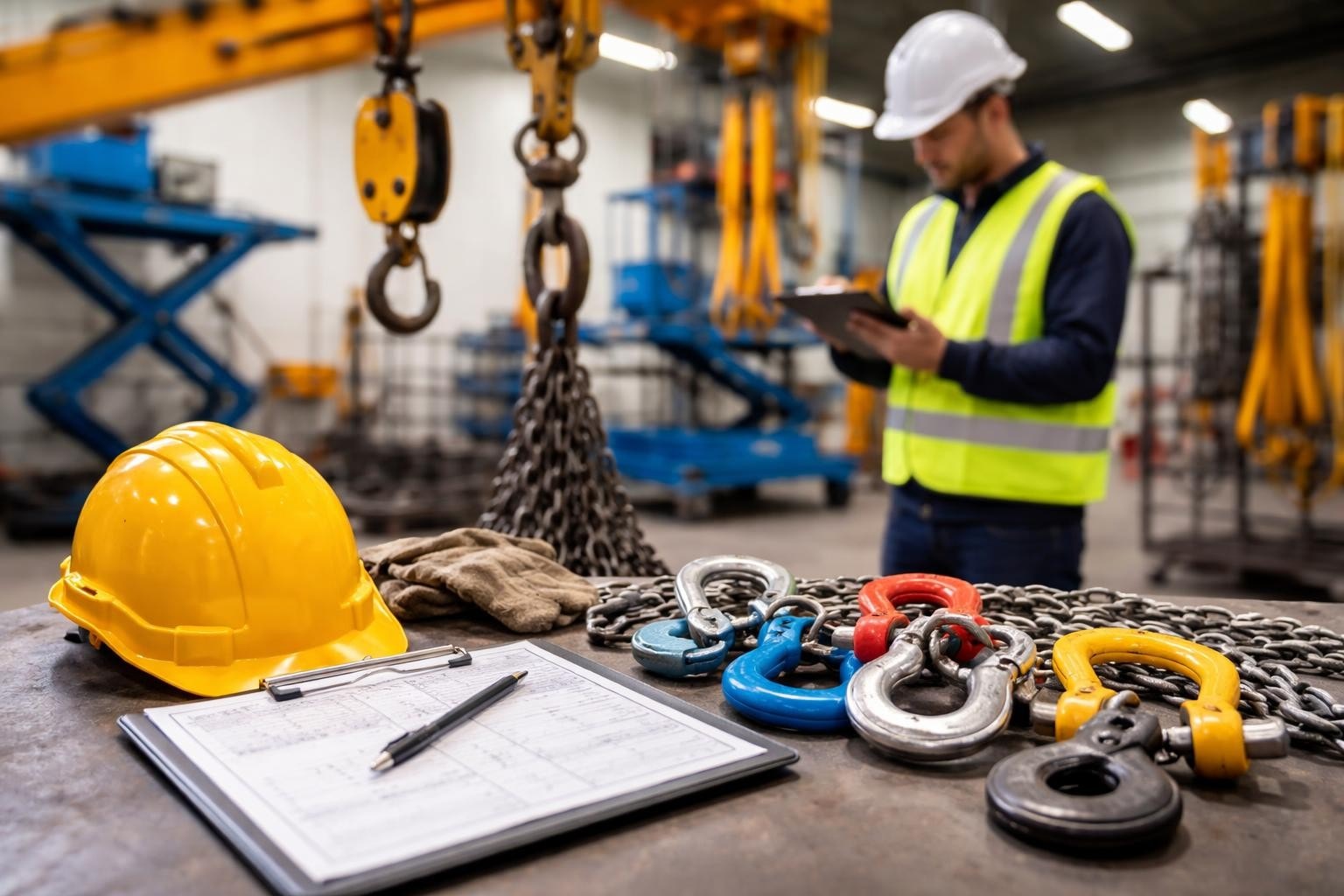
Understanding which equipment falls under the Lifting Operations and Lifting Equipment Regulations 1998 is essential for maintaining workplace safety and legal compliance across UK businesses. LOLER equipment encompasses a broad spectrum of machinery and accessories used to lift and lower loads, from overhead cranes in manufacturing facilities to passenger lifts in commercial buildings. The regulations apply to any equipment used at work for lifting or lowering people or goods, making them relevant to virtually every industry sector. Employers must ensure this equipment undergoes regular thorough examinations by competent persons, with inspection intervals determined by the type of equipment and its operational context.
What Qualifies as LOLER Equipment
LOLER equipment includes any machinery, accessory or attachment designed specifically for lifting operations. This definition extends far beyond traditional industrial cranes and encompasses a diverse range of workplace equipment that many businesses may not immediately recognise as falling under these regulations.
Core Categories of Lifting Equipment
The Lifting Operations and Lifting Equipment Regulations apply to several distinct categories of equipment, each presenting unique safety considerations and examination requirements.
Lifting Machinery:
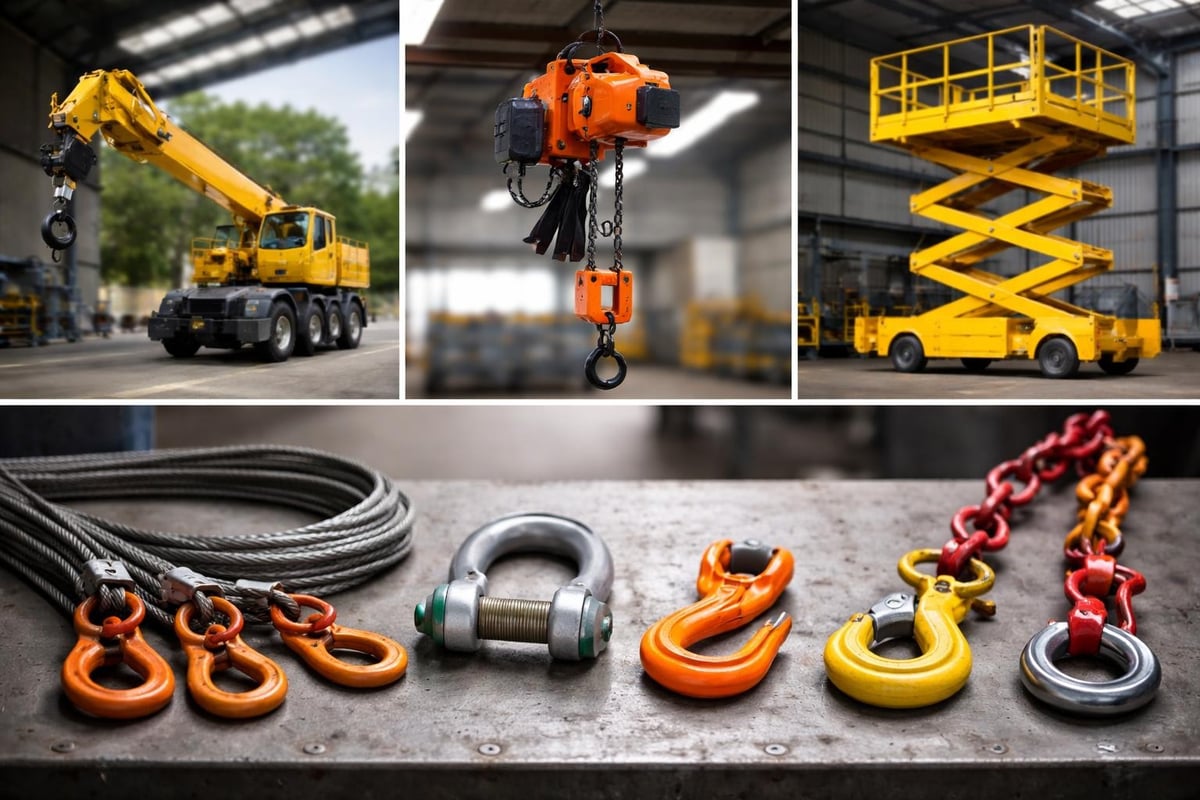
Overhead travelling cranes and gantry cranes
Mobile cranes and tower cranes
Goods and passenger lifts
Hoists, including chain blocks and electric hoists
Lift trucks and forklift attachments designed for lifting
Vehicle inspection platform lifts
Scissor lifts and mobile elevating work platforms
Lifting Accessories:
Wire rope slings and chain slings
Textile and webbing slings
Shackles, hooks and eyebolts
Spreader beams and lifting frames
Clamps and grabs
Magnets used for lifting operations
Equipment designed solely for restraining loads during transport, such as ratchet straps used to secure cargo on vehicles, generally falls outside LOLER's scope unless specifically used in lifting operations.
Equipment for Lifting People
Loler equipment used for lifting people attracts more stringent requirements than equipment used solely for goods. This reflects the higher risk associated with personnel lifting operations and includes passenger lifts, mobile elevating work platforms (MEWPs), cradles, and work cages suspended from cranes or excavators.
Any equipment that could be used to lift people, even if not its primary purpose, may require examination at six-monthly intervals. This creates important considerations for businesses using equipment such as forklift man-cages or suspended access equipment.
Equipment Type | Primary Use | Typical Examination Interval |
|---|---|---|
Passenger lift | People transport | 6 months |
Goods lift | Materials only | 12 months |
Mobile crane with man-cage | People access | 6 months |
Mobile crane (goods only) | Materials lifting | 12 months |
Legal Requirements Under LOLER
The regulations establish clear duties for employers and those controlling lifting equipment, regardless of whether they own or lease the equipment. Understanding these obligations helps businesses maintain compliance whilst ensuring safe working conditions.
Planning and Supervision Obligations
Every lifting operation must be properly planned by a competent person, appropriately supervised, and carried out safely. This requirement applies to routine daily lifts as well as complex, one-off operations. Planning considerations include assessing load weights, determining suitable equipment capacity, identifying potential hazards, and establishing safe working methods.
Adequate supervision ensures lifting operations follow the established plan and that personnel remain competent to perform their roles. The level of supervision required varies according to operation complexity, personnel experience, and the working environment.
Equipment Suitability and Strength
Loler equipment must possess adequate strength and stability for its intended use, with appropriate safety factors built into design and construction. Equipment positioning requires particular attention, especially when supporting structures or ground conditions may affect stability.
Businesses must ensure equipment remains suitable throughout its working life by:
Conducting risk assessments before introducing new equipment
Maintaining equipment according to manufacturer specifications
Removing damaged or deteriorated equipment from service
Verifying load capacities match operational requirements
Installing appropriate safety devices and controls
Understanding statutory workplace inspections across different regulatory frameworks helps businesses develop comprehensive compliance strategies.
Thorough Examination Requirements
Thorough examination forms the cornerstone of LOLER compliance, providing systematic verification that loler equipment remains safe for continued operation. These examinations differ fundamentally from routine maintenance or operator checks, requiring detailed assessment by qualified engineers.
Competent Person Criteria
The regulations require thorough examinations to be conducted by a "competent person" possessing sufficient practical and theoretical knowledge alongside actual experience of the equipment type being examined. Competence encompasses understanding mechanical and structural principles, recognising deterioration and damage, and knowing how defects affect safety.
Most organisations engage independent engineering inspection companies to provide competent persons, ensuring objectivity and specialist expertise. Internal staff may qualify as competent persons where they possess appropriate qualifications, training and experience, though this approach requires careful consideration of potential conflicts of interest.
Workplace Inspection Services Ltd carries out thorough examinations of equipment such as cranes, hoists, lifts, lifting accessories and other lifting systems, helping businesses meet their legal obligations whilst maintaining safe working environments.
Examination Intervals and Frequency
Thorough examination frequency depends primarily on whether equipment lifts people or solely handles goods. The standard intervals established under LOLER provide minimum requirements, though more frequent examinations may be necessary based on operating conditions, usage intensity, or manufacturer recommendations.
Standard examination intervals:
Equipment used for lifting people: every 6 months
Equipment used solely for goods: every 12 months
Accessories for lifting: every 6 months (or according to examination scheme)
First examination: before first use or after installation
Businesses may develop examination schemes that specify different intervals based on risk assessment, provided these schemes receive approval from a competent person. Such schemes consider factors including operating environment, duty cycles, load characteristics, and historical defect patterns.
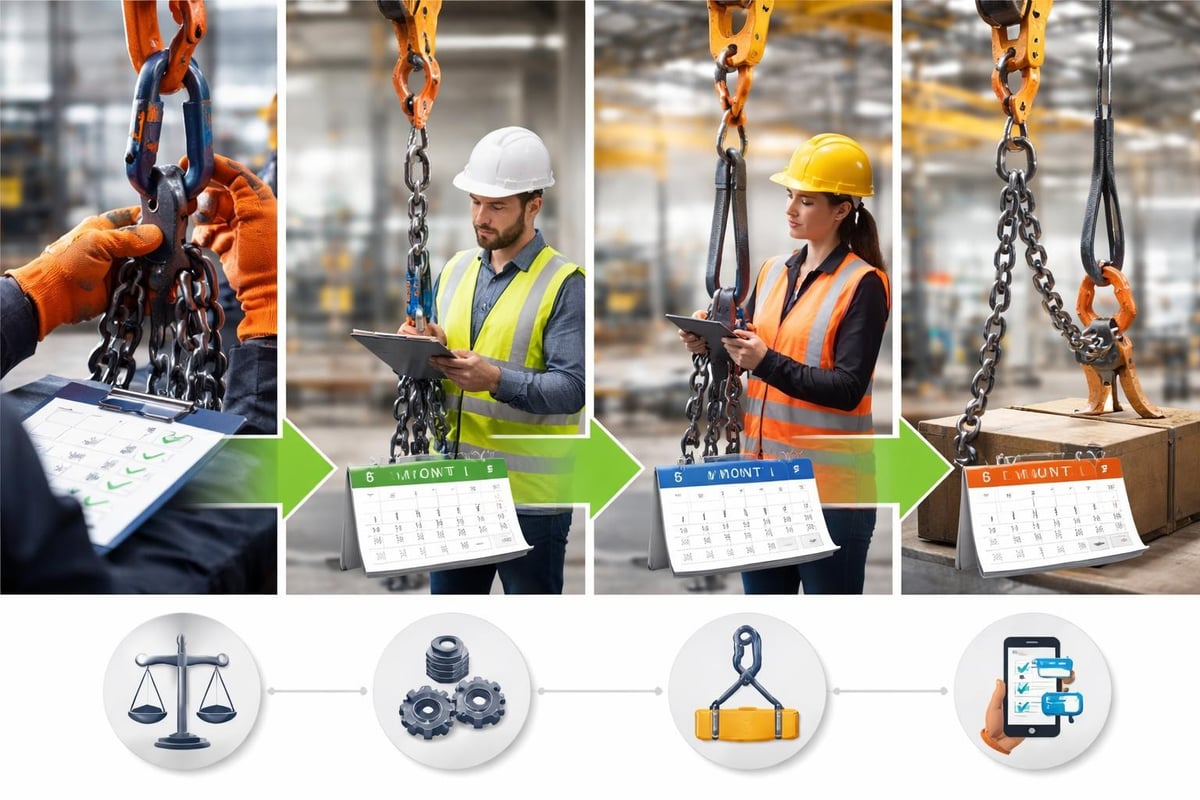
Detailed guidance on LOLER inspection frequency helps businesses establish appropriate examination schedules for different equipment types.
Common LOLER Equipment in Different Industries
The application of LOLER regulations varies significantly across industry sectors, with each facing unique equipment portfolios and operational challenges. Understanding sector-specific requirements helps businesses identify all equipment requiring thorough examination.
Manufacturing and Fabrication
Manufacturing facilities typically operate extensive lifting equipment inventories, including overhead cranes spanning production bays, jib cranes servicing individual workstations, and numerous lifting accessories. Fabrication workshops frequently employ multiple chain blocks, beam clamps, and magnetic lifters alongside traditional slings and shackles.
The high-intensity usage common in manufacturing environments accelerates wear, potentially necessitating examination schemes with intervals shorter than statutory minimums. Environmental factors such as heat, chemical exposure, or abrasive materials further influence examination frequency.
Warehousing and Logistics
Warehouse operations depend heavily on forklift trucks equipped with various lifting attachments, dock levellers, and goods lifts. Whilst standard forklift forks typically fall under PUWER rather than LOLER, specialised attachments including drum handlers, bale clamps, and fork extensions constitute loler equipment requiring thorough examination.
Loading bay equipment such as dock levellers and scissor lifts plays crucial roles in material handling operations. These items require careful assessment to determine appropriate examination intervals based on usage patterns and load characteristics.
Construction and Building Maintenance
Construction sites utilise diverse lifting equipment ranging from mobile cranes and telehandlers to suspended access cradles and MEWPs. The transient nature of construction work creates challenges for maintaining examination records and ensuring equipment receives timely inspections when moving between sites.
Building maintenance operations frequently employ loler equipment for personnel access, including abseil equipment, bosun's chairs, and building maintenance units (BMUs) mounted on structures. These personnel-lifting applications demand six-monthly examinations alongside rigorous operational planning.
Healthcare and Care Settings
Healthcare facilities and care homes operate patient hoists and transfer equipment falling squarely within LOLER's scope. These devices, essential for safe patient handling, require meticulous examination given their critical role in protecting vulnerable individuals.
Goods hoists serving kitchens, laundries, or storage areas in multi-storey healthcare buildings also require thorough examination, as do passenger lifts and platform lifts installed for accessibility purposes.
Record Keeping and Documentation
Maintaining comprehensive records of thorough examinations satisfies legal obligations whilst providing valuable equipment history supporting maintenance decisions and replacement planning. The quality and accessibility of documentation directly impacts compliance demonstrations during enforcement visits.
Examination Report Contents
Thorough examination reports must contain specific information prescribed by regulation, ensuring consistency and clarity across different competent persons and inspection providers. Each report should identify the equipment examined, record the examination date, and state the next examination due date.
Essential report elements include:
Equipment identification (description, location, unique reference)
Date of thorough examination
Name and address of employer or equipment user
Identification of any defects affecting continued safe operation
Defect categorisation (immediate prohibition or scheduled repair)
Name and professional qualifications of examiner
Next examination due date
Reports highlighting defects that could cause danger must reach the equipment user within 28 days, whilst defects representing imminent danger require immediate notification, effectively prohibiting equipment use until rectification.
Documentation Retention Periods
Businesses must retain the last thorough examination report for equipment still in service, alongside the previous two reports. This requirement ensures adequate historical data remains available for trend analysis and defect pattern identification.
When equipment leaves service, disposal, or transfers to another business, retaining examination records for a reasonable period supports liability management and provides continuity of safety information.
Record Type | Minimum Retention | Recommended Retention |
|---|---|---|
Current examination report | Until superseded | Until equipment disposal |
Previous examination report | Until superseded | Until equipment disposal |
Two reports prior | Until superseded | Until equipment disposal |
Equipment removed from service | Not specified | 2 years minimum |
Responding to Examination Findings
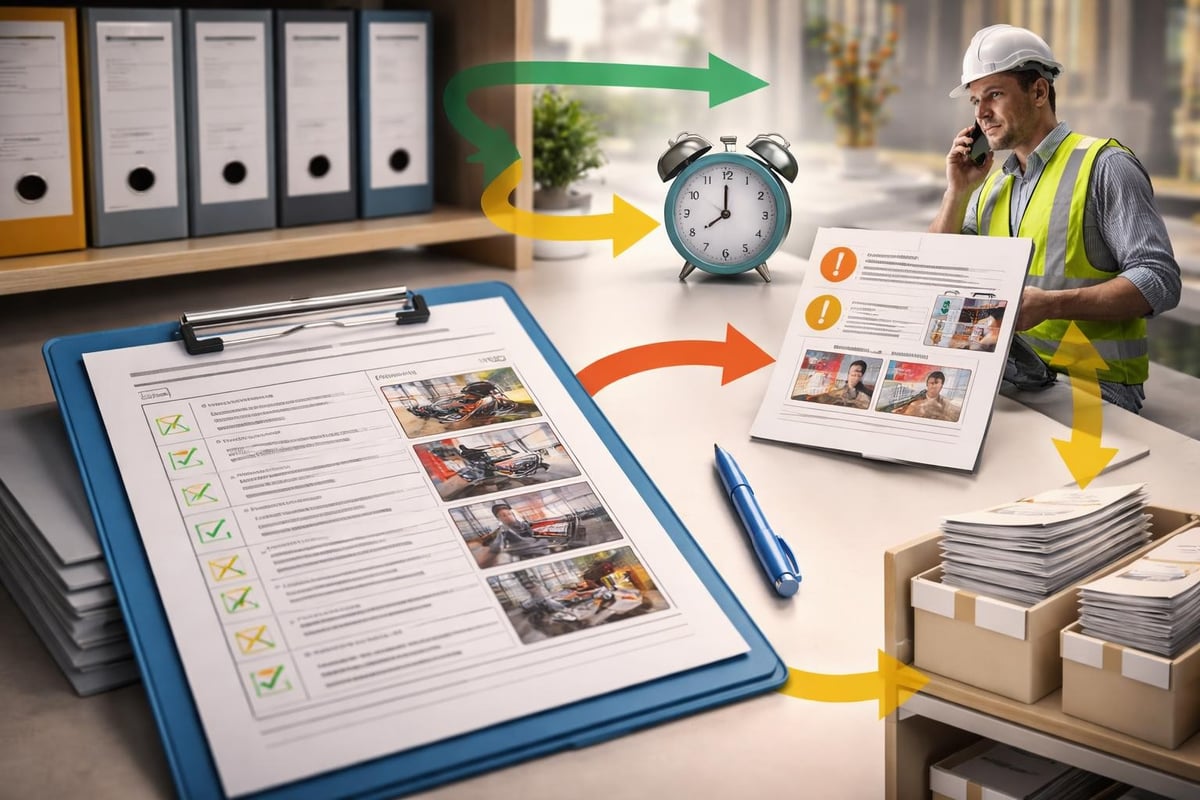
Thorough examinations regularly identify defects requiring attention, from minor wear requiring monitoring to serious deterioration demanding immediate action. Effective defect management processes ensure appropriate responses whilst maintaining operational continuity where possible.
Defect Classification Systems
Competent persons typically categorise defects according to their severity and urgency, though LOLER itself distinguishes primarily between defects requiring immediate action and those permitting scheduled repair.
Immediate action defects render equipment dangerous for continued use and effectively prohibit operation until rectification. Examples include severely worn load-bearing components, damaged safety devices, or structural defects compromising equipment integrity.
Scheduled repair defects allow continued operation whilst requiring attention within specified timeframes. These typically involve wear approaching limits, minor damage not immediately affecting safety, or deterioration requiring monitoring.
Some inspection providers employ graduated classification systems with multiple categories providing nuanced assessment of defect severity and repair urgency. These systems support prioritised maintenance planning whilst ensuring critical issues receive immediate attention.
Rectification and Re-examination
Following defect rectification, equipment may require re-examination before returning to service, particularly where repairs affect load-bearing components or safety-critical systems. The competent person who identified defects should specify whether re-examination is necessary.
Businesses must maintain records demonstrating defect rectification, including repair descriptions, replacement component specifications, and confirmation that work was completed by qualified personnel. This documentation supports equipment safety cases and provides evidence of diligent maintenance practices.
Understanding the broader context of inspection regulations helps businesses develop integrated approaches to statutory compliance across multiple regulatory frameworks.
Integration with Other Safety Regulations
LOLER equipment frequently falls under multiple regulatory frameworks, creating overlapping requirements that businesses must navigate effectively. Understanding these interactions prevents duplication whilst ensuring comprehensive safety management.
LOLER and PUWER Relationships
The Provision and Use of Work Equipment Regulations 1998 (PUWER) applies to all work equipment, including loler equipment. Whilst LOLER addresses specific lifting operation risks through thorough examination requirements, PUWER inspections cover broader equipment safety aspects including guarding, controls, and general maintenance.
This relationship means lifting equipment typically requires both LOLER thorough examinations and PUWER inspections, though these may be conducted simultaneously by competent persons qualified in both regulatory areas. Businesses should ensure their inspection programmes address both sets of requirements without unnecessary duplication.
Pressure Systems Considerations
Some loler equipment incorporates pressure systems, such as hydraulic lifts or pneumatically-operated hoists, potentially bringing PSSR (Pressure Systems Safety Regulations) requirements into play. Equipment containing pressure systems above prescribed thresholds requires examination under both LOLER and PSSR, with inspections coordinated to maximise efficiency.
The interaction between these regulations highlights the value of engaging inspection providers with broad competence across multiple statutory frameworks, enabling consolidated examination schedules and integrated reporting.
Insurance and Compliance
Many insurance policies require evidence of current statutory inspections as conditions of coverage for lifting equipment. Regular thorough examinations therefore serve dual purposes: satisfying legal obligations and maintaining insurance validity. Businesses should verify their insurance requirements align with statutory examination frequencies, noting that some policies may demand more frequent inspections than regulatory minimums.
Examination records provide crucial evidence during insurance claims involving lifting equipment incidents, supporting investigations and liability determinations. Comprehensive documentation demonstrating diligent compliance significantly strengthens positions in such circumstances.
Developing Effective Management Systems
Systematic approaches to managing loler equipment throughout its lifecycle ensure consistent compliance whilst supporting operational efficiency and safety culture development. Effective systems integrate equipment registers, examination scheduling, defect management, and continuous improvement processes.
Equipment Registers and Identification
Comprehensive equipment registers form the foundation of LOLER compliance programmes, documenting all equipment requiring thorough examination alongside relevant operational parameters and examination histories. Each equipment item should receive unique identification enabling tracking throughout its service life.
Register information should include:
Equipment description and type
Manufacturer and model details
Serial number and unique site reference
Location and responsible department
Examination interval and next due date
Safe working load and operational limits
Acquisition date and expected service life
Modern digital systems enable automated examination scheduling, overdue equipment flagging, and trend analysis across equipment populations. Such systems significantly reduce administrative burden whilst improving compliance consistency.
Scheduling and Planning
Proactive examination scheduling prevents equipment reaching end-of-certificate dates whilst minimising operational disruption. Businesses operating multiple sites or extensive equipment inventories benefit from forward planning that groups examinations geographically or by equipment type, optimising inspector utilisation and reducing costs.
Seasonal considerations may influence examination timing, with some businesses scheduling inspections during quieter operational periods or planned shutdowns. However, statutory intervals must not be exceeded regardless of operational convenience.
Training and Competence
Whilst thorough examinations require competent persons, equipment operators and supervisors need appropriate training to support safe lifting operations. Training programmes should address pre-use checks, load assessment, rigging techniques, and defect recognition, empowering personnel to identify concerns warranting specialist examination.
Supervisory staff benefit from understanding LOLER requirements sufficiently to ensure compliance with planning and supervision obligations. This knowledge enables effective operational decision-making regarding equipment selection, lift planning, and competent person engagement.
Resources available through compliance hub materials support ongoing training and competence development across regulatory areas.
Cost Considerations and Budget Planning
Managing loler equipment compliance involves direct costs for thorough examinations alongside indirect expenses for defect rectification, equipment downtime, and administrative processes. Understanding these cost drivers supports effective budget planning and value optimisation.
Examination Service Pricing
Thorough examination costs vary according to equipment type, complexity, accessibility, and geographical location. Straightforward equipment such as chain blocks or simple slings typically incurs lower fees than complex installations like overhead cranes or passenger lifts requiring extensive testing and documentation.
Engaging inspection providers for multiple equipment items or sites often enables preferential pricing through economies of scale. Annual service agreements covering all statutory inspections across business locations provide cost certainty whilst ensuring consistent compliance management.
Lifecycle Cost Management
Proactive maintenance informed by thorough examination findings extends equipment service life, reducing long-term replacement costs. Regular inspections identify wear patterns enabling predictive maintenance scheduling, preventing catastrophic failures and associated business interruption expenses.
Equipment nearing end of economic life based on examination trend analysis supports informed replacement decisions, balancing repair costs against new equipment investment. This lifecycle approach optimises capital deployment whilst maintaining safety standards.
Compliance Cost-Benefit Analysis
Non-compliance penalties dwarf inspection costs, with enforcement actions potentially resulting in substantial fines, prosecution, and reputational damage. Beyond regulatory consequences, equipment failures resulting from inadequate examination cause workplace injuries, production losses, and insurance complications.
Comprehensive thorough examination programmes therefore represent cost-effective risk management investments, protecting businesses from financial, legal, and ethical consequences of lifting equipment failures. The relatively modest costs of professional inspections deliver significant value through risk reduction and compliance assurance.
Managing loler equipment compliance requires systematic approaches encompassing equipment identification, regular thorough examinations, effective defect management, and comprehensive record keeping. These obligations apply across all UK businesses operating lifting equipment, regardless of sector or organisation size. Workplace Inspection Services Ltd provides nationwide statutory inspection services covering LOLER alongside PUWER, PSSR and COSHH/LEV regulations, supporting businesses in maintaining compliance, reducing operational risks, and ensuring safe working environments throughout their operations.