Health and Safety Work Environment: A Complete Guide
Health and Safety Work Environment: A Complete Guide

Creating a robust health and safety work environment has become a cornerstone of successful business operations in 2026. Organisations across engineering, manufacturing and industrial sectors recognise that protecting employees from workplace hazards isn't simply a legal requirement-it's a fundamental business imperative that affects productivity, staff retention and operational resilience. The complexity of modern workplaces, with their diverse equipment, processes and regulatory frameworks, demands a comprehensive approach to safety management that evolves with emerging risks and regulatory updates.
Understanding the Foundation of Workplace Safety
A health and safety work environment extends far beyond visible protective equipment and warning signs. It encompasses the entire ecosystem of policies, procedures, cultural attitudes and physical safeguards that work together to minimise risk. According to the U.S. Department of Energy's safety culture principles, organisations must foster an environment where safety considerations are embedded into every decision-making process.
Core Elements of Safety Management
The architecture of an effective safety programme relies on several interdependent components:
Risk assessment and hazard identification across all operational areas
Regulatory compliance with statutory requirements including LOLER, PUWER and PSSR
Employee training programmes that address both general safety and role-specific hazards
Maintenance protocols ensuring equipment remains safe and fit for purpose
Incident reporting systems that capture near-misses and actual events
Continuous improvement mechanisms that learn from experience

The Business Case for Safety Investment
Investment in a comprehensive health and safety work environment delivers measurable returns. Reduced accident rates translate directly into lower insurance premiums, decreased absenteeism and minimised production disruptions. The NIOSH Authoritative Recommendations Program provides evidence-based guidelines demonstrating how preventative measures consistently outperform reactive approaches in both safety outcomes and financial terms.
Beyond immediate cost savings, organisations with strong safety records find recruitment easier, staff turnover lower and employee morale higher. When workers feel protected and valued, their engagement with quality standards and operational excellence increases correspondingly.
Regulatory Frameworks Governing Workplace Safety
The United Kingdom maintains comprehensive legislation governing workplace health and safety, with regulations tailored to specific hazards and equipment types. Understanding these frameworks is essential for creating compliant operations that protect both workers and businesses from legal and financial consequences.
Key Statutory Requirements
Regulation | Primary Focus | Key Obligations |
|---|---|---|
LOLER 1998 | Lifting equipment | Thorough examinations, competent persons, defect reporting |
PUWER 1998 | Work equipment | Suitable equipment, maintenance, information and training |
PSSR 2000 | Pressure systems | Written schemes, periodic examinations, safe operating limits |
COSHH 2002 | Hazardous substances | Exposure assessment, control measures, health surveillance |
These regulations form the backbone of workplace safety compliance. The statutory inspection regulations established by these frameworks require periodic professional examinations by competent persons who can identify deterioration before it leads to failure.
Competent Person Requirements
Legislation consistently requires businesses to engage competent persons for safety-critical assessments. This competence extends beyond basic qualifications to encompass practical experience, knowledge of specific equipment types and understanding of the operational context in which equipment functions.
Organisations must demonstrate that appointed persons possess appropriate training, experience and knowledge. This requirement protects businesses from liability whilst ensuring inspections genuinely identify risks rather than simply completing paperwork.
Engineering Controls and Equipment Safety
Within industrial environments, engineering controls represent the most reliable tier of protection within the hierarchy of risk control measures. These physical modifications and safety features eliminate or reduce hazards at source rather than relying on human behaviour or administrative controls.
Implementing Effective Engineering Controls
Properly designed engineering controls integrate seamlessly into production processes whilst maintaining protective functions:
Machine guarding that prevents access to dangerous moving parts
Isolation systems enabling safe maintenance without residual energy risks
Ventilation systems extracting harmful dusts, fumes and vapours at source
Emergency stops positioned for rapid activation during abnormal conditions
Interlocking mechanisms preventing operation when guards are removed
The Occupational Safety and Health Administration reference materials provide detailed technical guidance on implementing these controls across various industrial applications.
Statutory Equipment Inspections
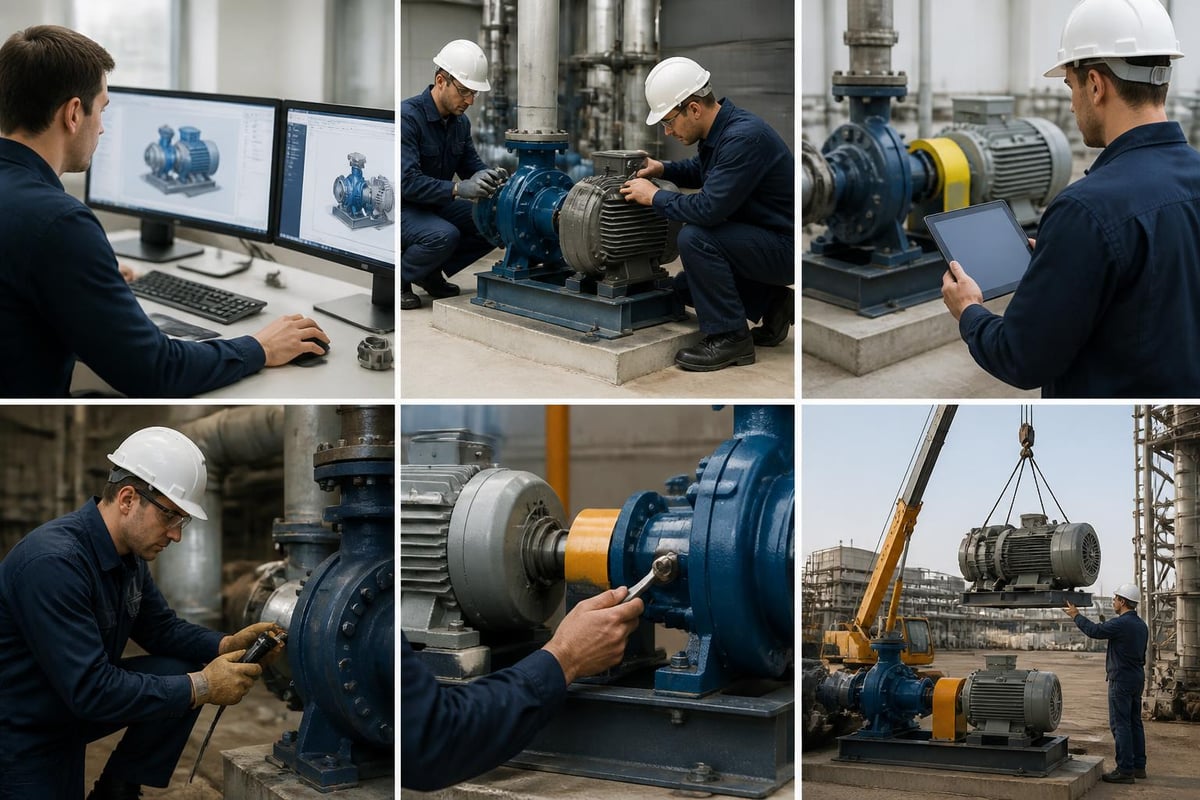
Regular inspections form a critical component of maintaining a safe health and safety work environment. For lifting equipment, LOLER inspections ensure that cranes, hoists, lifting accessories and other equipment remain safe to use and compliant with the Lifting Operations and Lifting Equipment Regulations 1998, identifying wear, damage or safety risks before they escalate into failures.
Understanding inspection frequency requirements helps organisations plan maintenance budgets and minimise operational disruptions. Different equipment types and operating conditions demand varying examination intervals, from three-monthly checks on certain lifting accessories to annual examinations for many pressure vessels.
Building a Proactive Safety Culture
Technical controls and regulatory compliance provide essential foundations, but creating an exemplary health and safety work environment requires cultivating attitudes and behaviours that prioritise safety throughout the organisation. Culture emerges from leadership commitment, communication effectiveness and the systems supporting employee engagement with safety processes.
Leadership's Role in Safety Culture
Senior management establishes the tone for workplace safety through visible commitment and resource allocation. When leaders actively participate in safety initiatives, attend incident investigations and recognise safety achievements, they signal its genuine importance beyond mere compliance.
Effective safety leadership includes:
Regular safety walkthroughs with frontline workers
Prompt response to reported hazards
Transparent communication about incidents and preventative actions
Integration of safety performance into business metrics
Investment in training, equipment and protective systems
Employee Engagement and Participation
Workers closest to operational hazards often possess the most valuable insights into practical risks and effective control measures. Mechanisms for capturing this knowledge-safety committees, suggestion schemes, pre-task planning sessions-transform employees from passive compliance subjects into active safety partners.
The health and safety practices in demanding work environments demonstrate how organisations across sectors benefit from structured employee participation in identifying and controlling workplace risks.
Risk Assessment and Hazard Management
Systematic risk assessment underpins every aspect of workplace safety management. This structured approach identifies potential hazards, evaluates their significance and implements proportionate control measures before incidents occur. Regular review ensures risk assessments remain current as processes, equipment or personnel change.
The Risk Assessment Process
Stage | Activities | Outputs |
|---|---|---|
Hazard identification | Workplace inspections, task analysis, incident review | Comprehensive hazard register |
Risk evaluation | Likelihood assessment, severity rating, exposure calculation | Risk priority matrix |
Control selection | Hierarchy of controls application, feasibility analysis | Control measure specification |
Implementation | Training delivery, engineering modifications, procedure updates | Operational controls |
Review | Effectiveness monitoring, incident analysis, regulatory updates | Revised assessments |
Effective risk assessment considers both routine operations and non-standard activities such as maintenance, cleaning or emergency response. The NIOSH workplace hazard protection guidance emphasises the importance of addressing foreseeable scenarios beyond normal production activities.
Dynamic Risk Management
Static risk assessments prepared annually cannot capture the evolving nature of workplace hazards. Dynamic risk management empowers employees to assess changing conditions in real-time and adjust working methods accordingly. This approach proves particularly valuable in maintenance operations, where equipment condition, environmental factors and task complexity vary significantly between interventions.
Training and Competency Development
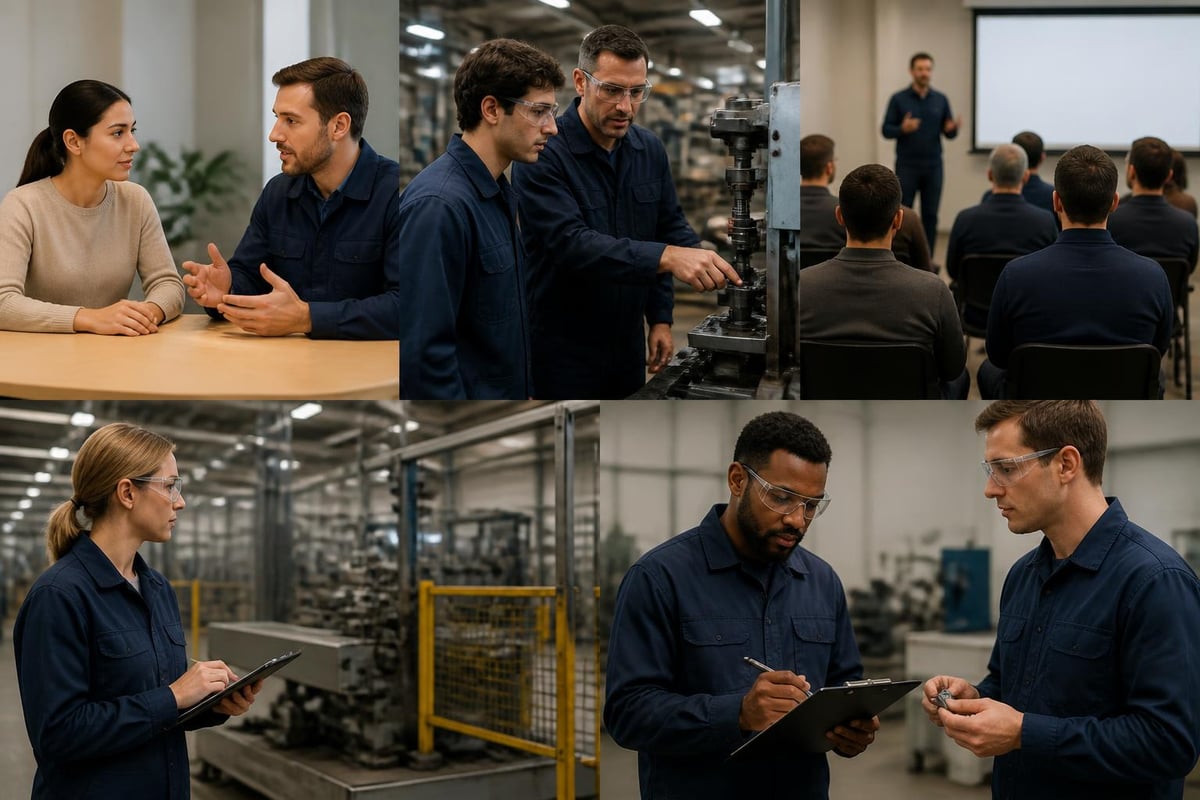
No health and safety work environment can function effectively without properly trained personnel who understand both general safety principles and role-specific hazards. Training programmes must address initial competency development, periodic refresher sessions and updates following incidents or procedural changes.
Structuring Effective Training Programmes
Comprehensive training encompasses multiple delivery methods and assessment approaches:
Induction programmes covering site-specific hazards and emergency procedures
Role-specific training addressing equipment operation, maintenance protocols and control measures
Supervisory development building capability to manage safety performance
Refresher sessions maintaining awareness and updating knowledge
Competency assessments verifying understanding and practical application
Training effectiveness depends on active learning rather than passive information transfer. Practical demonstrations, scenario-based exercises and hands-on practice produce better retention and behaviour change than lecture-based approaches alone.
Maintaining Training Records
Documented training records provide essential evidence of compliance and competency. These records should capture training content, attendance, assessment results and validity periods. When incidents occur or regulatory inspections take place, comprehensive training documentation demonstrates organisational diligence and individual capability.
Emergency Preparedness and Response
Despite preventative measures, emergency situations occasionally arise in industrial environments. A robust health and safety work environment includes comprehensive emergency plans, trained response teams and regular drills that test organisational readiness. Preparation determines whether incidents remain minor disruptions or escalate into catastrophic events.
Essential Emergency Planning Elements
Emergency plans should address foreseeable scenarios specific to site operations, including fires, chemical releases, equipment failures and medical emergencies. Plans must identify:
Detection and alarm systems ensuring rapid awareness of incidents
Evacuation procedures tailored to different emergency types
Assembly points positioned safely away from potential hazard zones
Communication protocols for internal coordination and external emergency services
Equipment and resources required for effective response
Post-incident procedures including investigation and business continuity
Regular drills test plan effectiveness whilst building employee familiarity with emergency procedures. Drills should include realistic scenarios, communication challenges and post-exercise reviews identifying improvement opportunities.
First Aid and Medical Response
Adequate first aid provision forms a legal requirement and practical necessity. The number of first aiders, equipment specification and facility requirements depend on employee numbers, shift patterns and specific workplace hazards. Additional considerations apply for sites handling hazardous substances or operating in remote locations where emergency service response times increase.
Monitoring, Measurement and Continuous Improvement
Maintaining an effective health and safety work environment requires ongoing monitoring of performance indicators, incident trends and control measure effectiveness. Data-driven approaches identify emerging risks before they manifest as injuries whilst highlighting successful interventions worthy of wider application.
Key Performance Indicators
Indicator Type | Examples | Purpose |
|---|---|---|
Lagging indicators | Lost time injuries, incident rates, enforcement notices | Measure actual harm |
Leading indicators | Near-miss reports, audit scores, training completion | Predict future performance |
Activity metrics | Inspection completion, hazard corrections, safety observations | Track preventative effort |
Compliance measures | Regulatory examination currency, documentation completeness | Verify legal adherence |
Balanced scorecards incorporating multiple indicator types provide richer insight than single metrics alone. Organisations should establish realistic targets reflecting their current position whilst driving continuous improvement.
Learning from Incidents and Near-Misses
Incidents represent learning opportunities that illuminate control weaknesses and guide improvement efforts. Thorough investigation identifies root causes rather than superficial factors, enabling interventions that prevent recurrence. The Environment, Health and Safety field emphasises systematic investigation methodologies that look beyond individual errors to organisational and systemic contributors.
Near-miss reporting programmes capture valuable data about hazards that could produce harm under slightly different circumstances. Encouraging reporting without blame creates intelligence streams identifying risks requiring attention before injuries occur.
Technology and Innovation in Workplace Safety
Technological advancement continues transforming how organisations manage workplace safety. Digital inspection systems, wearable safety devices, environmental monitoring sensors and data analytics platforms enhance both preventative capabilities and incident response effectiveness. Organisations that embrace these innovations gain competitive advantages through improved safety outcomes and operational efficiency.
Digital Transformation Benefits
Modern safety management systems consolidate multiple functions within integrated platforms:
Inspection scheduling and tracking ensuring statutory examinations occur timely
Asset registers maintaining complete equipment inventories and examination histories
Documentation management providing instant access to certificates, reports and procedures
Mobile inspection tools enabling field data capture and immediate defect reporting
Analytics dashboards visualising trends and highlighting areas requiring attention
The compliance hub resources demonstrate how organisations can leverage digital tools to streamline regulatory compliance whilst improving safety outcomes.
Emerging Safety Technologies
Innovation continues introducing new capabilities for hazard control and monitoring. Wearable devices detect fatigue, environmental exposures and proximity to moving equipment. Augmented reality systems guide maintenance procedures whilst highlighting hazards. Predictive analytics identify equipment failures before occurrence, enabling proactive intervention.
Organisations implementing new technologies should ensure they complement rather than replace fundamental safety management principles. Technology enhances human capability but cannot substitute for competent personnel, effective procedures and genuine safety commitment.
Specialist Considerations for Engineering Environments
Engineering workplaces present unique safety challenges combining heavy equipment, complex processes, hazardous materials and diverse tasks. These environments require specialised approaches addressing sector-specific risks whilst maintaining alignment with general safety management principles.
Managing Multiple Hazard Types
Engineering facilities typically contain numerous hazard categories requiring coordinated control:
Mechanical hazards from moving machinery, rotating parts and stored energy
Electrical risks including shock, arc flash and fire initiation
Pressure system dangers from stored energy release and system failure
Chemical exposures through inhalation, skin contact or ingestion
Physical stressors including noise, vibration, heat and manual handling
The NIOSH electrical safety resources provide detailed guidance on controlling one of engineering's most prevalent hazard categories. Comprehensive programmes address all risk types through layered defences rather than isolated interventions.
Contractor and Visitor Management
Engineering sites frequently host contractors performing maintenance, installation or specialist services. These temporary workers require site-specific safety induction, hazard awareness and coordination with permanent staff. Permit-to-work systems ensure hazardous tasks receive appropriate authorisation, risk assessment and control measure implementation before commencement.
Visitor safety demands similar attention despite typically shorter site duration and restricted access. Clear procedures for sign-in, escort requirements, protective equipment provision and emergency awareness protect guests whilst minimising operational disruption.
Workplace Health Beyond Injury Prevention
A comprehensive health and safety work environment addresses long-term health impacts alongside immediate injury risks. Chronic exposures to noise, vibration, hazardous substances or ergonomic stressors may produce debilitating conditions emerging years after exposure begins. Proactive health management identifies and controls these less obvious hazards before damage accumulates.
Occupational Health Programmes
Structured health surveillance monitors employees for early signs of work-related health deterioration. Programme scope depends on specific workplace exposures:
Respiratory monitoring for workers exposed to dusts, fumes or respiratory sensitisers
Hearing assessments in high-noise environments
Vibration health surveillance for users of vibrating tools and equipment
Skin monitoring where dermal exposures occur
Biological monitoring measuring actual substance uptake rather than environmental levels
Health surveillance generates data enabling exposure control evaluation whilst identifying individual health issues requiring intervention. Results should trigger reviews of control measures rather than simply medical treatment for affected individuals.
Ergonomics and Musculoskeletal Health
Poorly designed workstations, repetitive tasks and manual handling create musculoskeletal disorders affecting productivity and worker wellbeing. Ergonomic assessments evaluate task demands against human capabilities, identifying modifications reducing physical stress. Solutions range from equipment redesign and task rotation to mechanical handling aids and workstation adjustments.
The NYSUT workplace health and safety resources cover ergonomic considerations alongside other health topics affecting long-term worker wellbeing. Investment in ergonomic improvements typically produces rapid returns through reduced absenteeism and enhanced productivity.
Creating and maintaining an exemplary health and safety work environment requires sustained commitment, systematic approaches and expert support. The frameworks, technologies and practices outlined above enable organisations to protect their workforce whilst achieving regulatory compliance and operational excellence. Workplace Inspection Services Ltd provides the specialist engineering inspection expertise organisations need to maintain safe operations, offering comprehensive statutory examinations under LOLER, PUWER, PSSR and COSHH/LEV regulations that keep businesses compliant and employees protected across the United Kingdom.