Ensure the Safety of Workplace Equipment in 2026
Ensure the Safety of Workplace Equipment in 2026

Creating a safe working environment requires more than good intentions. Organisations across the United Kingdom must actively ensure the safety of employees through systematic inspections, regulatory compliance, and proactive risk management. The engineering inspection landscape has evolved significantly, with statutory requirements now forming the backbone of workplace safety programmes. Whether operating in manufacturing, construction, or service industries, businesses must implement robust frameworks that protect workers whilst maintaining operational efficiency and legal compliance.
The Foundation of Workplace Safety Through Engineering Inspections
Engineering inspections serve as the cornerstone of any effective safety programme. These systematic evaluations identify potential hazards before they escalate into incidents, ensuring equipment operates within safe parameters. The process extends beyond simple visual checks, incorporating detailed examinations of mechanical integrity, structural soundness, and operational performance.
Why Regular Inspections Are Non-Negotiable
Workplace equipment degrades over time through normal wear, environmental exposure, and operational stress. Without regular assessment, minor defects develop into critical failures. Statutory inspections mandated under UK regulations exist precisely because historical incidents demonstrated the catastrophic consequences of neglected equipment maintenance.
The benefits of consistent inspection programmes include:
Early detection of wear patterns and component fatigue
Prevention of catastrophic equipment failures
Reduction in unplanned downtime and associated costs
Enhanced employee confidence in workplace safety
Demonstration of legal compliance and due diligence
Lower insurance premiums through proven risk mitigation
Organisations that ensure the safety of their operations through regular inspections report fewer accidents, improved productivity, and stronger regulatory relationships. The safety inspection process requires structured planning, competent personnel, and comprehensive documentation to deliver measurable results.
Regulatory Frameworks That Ensure the Safety of UK Workplaces
Multiple regulations govern workplace equipment safety in Britain, each addressing specific equipment types and hazard profiles. Understanding these frameworks enables organisations to build comprehensive compliance strategies that ensure the safety of personnel whilst meeting legal obligations.
Key Statutory Requirements
Regulation | Equipment Covered | Primary Focus | Inspection Frequency |
|---|---|---|---|
LOLER 1998 | Lifting equipment, accessories, hoists | Safe lifting operations | 6-12 months typically |
PUWER 1998 | Work equipment, machinery, tools | Suitable and maintained equipment | Risk-based intervals |
PSSR 2000 | Pressure vessels, steam systems | Pressure system integrity | 12-26 months typically |
COSHH 2002 | Ventilation systems, extraction units | Hazardous substance control | 14 months maximum |
Each regulation imposes specific duties on employers to ensure the safety of equipment through competent examination. The Lifting Operations and Lifting Equipment Regulations require thorough examinations by competent persons at intervals specified in the equipment's written scheme of examination.
PUWER places broader responsibilities on employers to ensure work equipment remains safe throughout its working life. This includes initial verification, regular maintenance, and periodic inspections appropriate to the equipment's risk profile and operating environment.
Understanding Competent Person Requirements
Regulations consistently reference the need for "competent persons" to conduct examinations. This isn't merely about qualifications. Competence combines theoretical knowledge, practical experience, and awareness of potential defects specific to equipment types. Professional engineering inspectors develop this competence through years of exposure to diverse equipment in varying operational contexts, enabling them to ensure the safety of complex systems through informed assessment.
Building an Inspection Programme That Works
Effective inspection programmes require more than scheduling periodic visits. They demand integrated planning that aligns with operational realities, regulatory requirements, and organisational risk appetite. Businesses must ensure the safety of their workforce through systematic approaches that embed inspection activities into normal operations.
Programme Design Principles
Successful programmes share common characteristics:
Comprehensive equipment inventories documenting all items requiring statutory examination
Written schemes of examination defining inspection scope, methods, and frequencies
Competent inspector selection ensuring examiners possess relevant expertise
Clear accountability structures assigning ownership for inspection coordination
Documented procedures standardising inspection processes across sites
Effective defect management ensuring timely remediation of identified issues
The inspection regulations framework provides detailed guidance on establishing compliant programmes across different equipment types and industrial sectors.
Risk-Based Inspection Scheduling
Whilst regulations specify maximum intervals between examinations, prudent organisations ensure the safety of high-risk equipment through more frequent inspections. Factors influencing inspection frequency include:
Equipment age and condition
Operating environment severity
Utilisation intensity and duty cycles
Consequence of failure scenarios
Historical defect patterns
Manufacturer recommendations
Risk assessment forms the foundation of intelligent scheduling. Equipment operating in harsh environments or critical applications warrants closer scrutiny than items used occasionally in controlled conditions. This targeted approach optimises resource allocation whilst maintaining safety standards.

Common Equipment Categories Requiring Statutory Inspection
Different equipment types present unique hazards requiring specialised inspection approaches. Understanding these categories helps organisations ensure the safety of diverse workplace environments through appropriately tailored examination programmes.
Lifting Equipment and Accessories
Lifting operations involve inherent risks due to gravity, dynamic loads, and potential falling object hazards. LOLER specifically addresses these risks by requiring thorough examination of cranes, hoists, lifting slings, shackles, and similar equipment. Inspectors assess structural integrity, mechanical components, safety devices, and load-bearing elements to ensure the safety of lifting operations.
Common defects discovered during lifting equipment examinations include:
Wire rope degradation and broken strand patterns
Chain elongation and link deformation
Hook throat opening and latch dysfunction
Hydraulic system leaks and cylinder wear
Structural crack development in beams and supports
Control system malfunction and safety device failure
Pressure Systems and Vessels
Pressure systems pose explosion and release hazards if integrity fails. The Pressure Systems Safety Regulations mandate examinations of air receivers, steam boilers, autoclaves, and associated pipework. These inspections ensure the safety of operations involving stored energy through careful assessment of corrosion, mechanical damage, and design limitations.
The EPA's guidance on pressure vessel rupture hazards highlights the catastrophic potential of compromised pressure equipment, reinforcing the critical importance of regular professional examination.
Work Equipment and Machinery
PUWER covers an extraordinarily broad equipment range, from simple hand tools to complex manufacturing systems. Inspections ensure the safety of machinery through verification of guarding adequacy, control reliability, emergency stop functionality, and general mechanical condition. Safety inspection best practices emphasise systematic approaches that identify both obvious hazards and subtle degradation patterns.
The Inspection Process: From Planning to Remediation
Professional inspections follow structured methodologies that ensure the safety of equipment through comprehensive, repeatable examinations. Understanding this process helps organisations prepare effectively and maximise inspection value.
Pre-Inspection Preparation
Effective inspections begin before the examiner arrives. Organisations should:
Compile equipment documentation including specifications and maintenance records
Prepare access arrangements for thorough physical examination
Schedule inspections to minimise operational disruption
Brief operators on inspection requirements and timing
Gather previous inspection reports for trend analysis
This preparation ensures the safety of the inspection process itself whilst enabling examiners to work efficiently and thoroughly.
On-Site Examination Activities
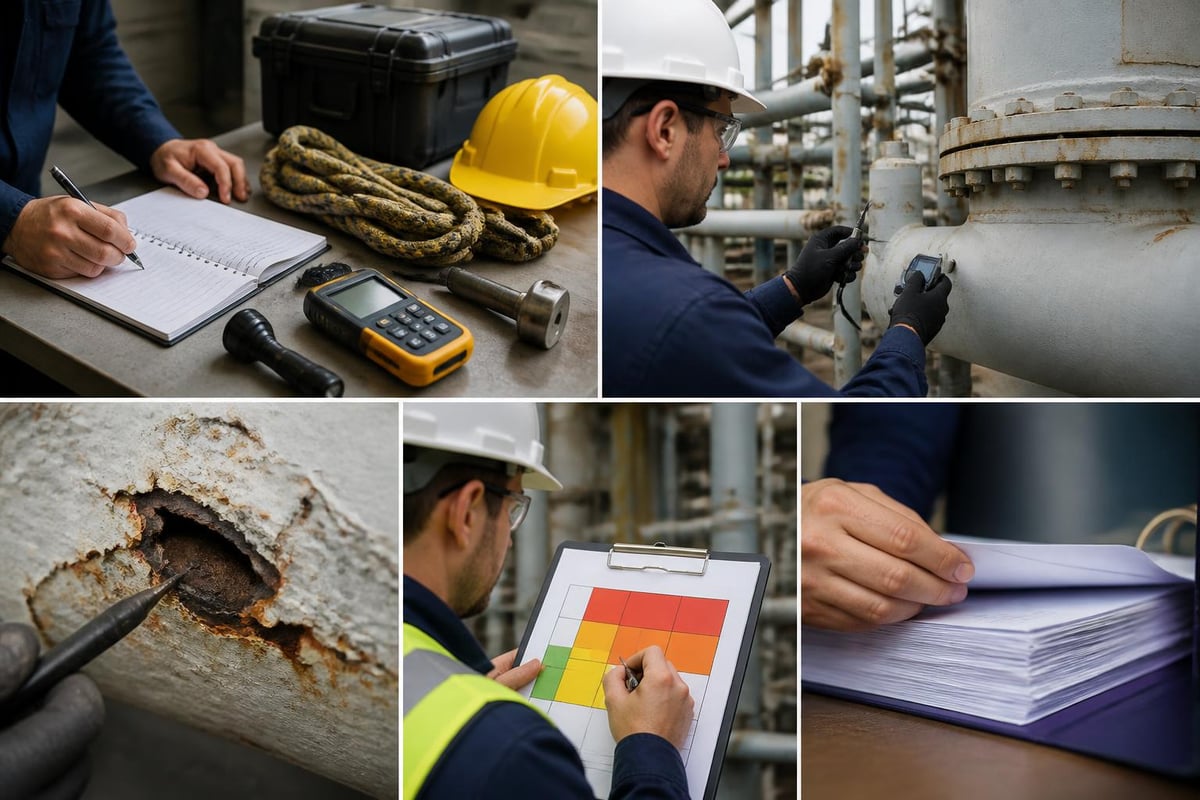
Competent inspectors employ multiple examination techniques tailored to equipment types. Visual inspection identifies obvious damage, corrosion, and wear. Dimensional measurements detect component elongation or deformation. Non-destructive testing reveals internal defects invisible to the eye. Functional testing confirms safety systems operate correctly under load.
Inspection Method | Applications | Defect Types Detected |
|---|---|---|
Visual examination | All equipment | Cracks, corrosion, wear, damage |
Ultrasonic testing | Pressure vessels, structural welds | Internal defects, wall thickness |
Magnetic particle inspection | Ferrous components | Surface and near-surface cracks |
Load testing | Lifting equipment | Structural adequacy, deflection |
Functional testing | Safety systems, controls | Operational performance |
Professional inspectors ensure the safety of examinations through appropriate personal protective equipment, isolation procedures, and hazard awareness. Electrical equipment safety inspectors follow similar systematic approaches when evaluating powered systems.
Reporting and Recommendations
Following examination, inspectors produce detailed reports documenting findings, identified defects, and recommendations. These reports ensure the safety of equipment through clear communication of risks and required actions. Effective reporting includes:
Equipment identification and examination scope
Defect descriptions with severity classifications
Photographic evidence of significant findings
Specific remedial action recommendations
Timeframes for defect rectification
Next examination due dates
The mechanical integrity field guide to inspection recommendations provides valuable insights into formulating actionable, prioritised recommendations that drive safety improvements.

Implementing Effective Defect Management Systems
Identifying defects delivers limited value unless organisations ensure the safety of operations through prompt, appropriate remediation. Defect management systems bridge the gap between inspection findings and corrective action, maintaining equipment integrity throughout its lifecycle.
Prioritisation Frameworks
Not all defects warrant identical urgency. Effective systems categorise findings based on risk severity:
Immediate prohibition: Equipment must cease operation until rectified
Urgent repair: Significant risk requiring remediation within days
Planned maintenance: Moderate concerns addressed during scheduled maintenance
Monitor: Minor observations tracked for deterioration trends
Advisory: Improvement opportunities without immediate safety implications
This tiered approach ensures the safety of limited resources whilst addressing critical risks promptly. Businesses operating across multiple sectors benefit from consistent prioritisation criteria applied across diverse equipment portfolios.
Tracking and Documentation
Comprehensive record-keeping demonstrates regulatory compliance and supports continuous improvement. Effective systems track:
Inspection histories and defect trends
Remedial work completed and verification
Equipment modifications and upgrades
Compliance status against regulatory requirements
Maintenance expenditure and patterns
Digital platforms increasingly replace paper-based systems, enabling real-time status visibility and automated compliance alerts. These tools ensure the safety of operations through proactive management rather than reactive crisis response.
Sector-Specific Safety Considerations
Different industries face unique equipment safety challenges requiring tailored approaches. Organisations must ensure the safety of sector-specific operations through appropriately focused inspection programmes that address characteristic hazards.
Manufacturing and Fabrication Environments
Manufacturing facilities typically operate diverse machinery portfolios under intensive utilisation. Fabrication workshops employ cutting equipment, presses, welding systems, and material handling devices, each presenting distinct hazards. High-duty cycles accelerate wear, demanding vigilant monitoring to ensure the safety of continuous operations.
Warehousing and Distribution Operations
Warehouse environments concentrate lifting equipment risks through forklifts, pallet trucks, dock levellers, and goods lifts. The combination of mobile equipment, pedestrian activity, and varied loads creates complex safety scenarios. Regular inspections ensure the safety of these dynamic environments through verification of structural adequacy, control reliability, and operator protection systems.
Healthcare and Care Facilities
Healthcare settings including hospitals and care homes operate patient hoists, therapeutic equipment, and building services in environments where equipment failure directly impacts vulnerable individuals. Inspection programmes must ensure the safety of residents through meticulous examination of equipment critical to patient care and mobility assistance.
The Business Case for Proactive Safety Management
Beyond regulatory compliance, proactive inspection programmes deliver tangible business benefits. Organisations that ensure the safety of operations through systematic equipment management experience measurable returns on investment.
Financial Benefits
Direct cost savings emerge from:
Reduced accident-related expenses including compensation, legal costs, and investigation time
Lower insurance premiums reflecting demonstrated risk management
Decreased emergency repair costs through planned maintenance
Minimised production losses from unexpected equipment failures
Extended equipment lifespan through early intervention
Indirect benefits include improved employee morale, enhanced corporate reputation, and competitive advantages in sectors where safety performance influences contract awards. Workplace safety practices increasingly feature in procurement decisions as organisations seek partners demonstrating genuine safety commitment.
Operational Advantages
Systematic inspection programmes generate operational insights beyond simple pass-fail determinations. Trend analysis reveals patterns predicting future failures, enabling proactive replacement before breakdowns occur. Performance data informs equipment procurement decisions, directing investment toward reliable, maintainable systems that ensure the safety of operations throughout extended lifecycles.
Integration with overall maintenance strategies creates synergies reducing total cost of ownership. Coordinating statutory inspections with planned maintenance activities minimises disruption whilst ensuring the safety of comprehensive equipment care. This holistic approach optimises resource deployment across preventive, predictive, and corrective maintenance activities.
Selecting Competent Inspection Providers
Outsourcing inspections to professional providers offers advantages in expertise, independence, and resource flexibility. However, organisations must ensure the safety of their selection process through careful provider evaluation.
Essential Provider Characteristics
Quality inspection providers demonstrate:
Relevant technical qualifications in engineering disciplines appropriate to equipment types
Professional certifications from recognised bodies validating competence
Comprehensive insurance covering professional indemnity and public liability
Established quality systems ensuring consistent, auditable inspection processes
Industry experience spanning equipment types and operational environments
Independence from equipment suppliers and maintenance contractors
Organisations should request references, review sample reports, and verify inspector credentials before engaging providers. The compliance hub resources offer guidance on evaluating inspection service providers across statutory examination requirements.
Service Scope and Support
Beyond basic inspection delivery, leading providers offer value-added services that ensure the safety of operations through comprehensive support:
Written scheme development and review
Equipment register compilation and maintenance
Defect management and remediation tracking
Regulatory update notifications and guidance
Training and competency development for in-house personnel
Emergency inspection availability for incident response
This extended support transforms inspection relationships from transactional service delivery into strategic safety partnerships.
Emerging Technologies Enhancing Inspection Effectiveness
Technological advancement continually improves inspection capabilities, enabling more thorough examinations whilst reducing costs and disruption. Forward-thinking organisations ensure the safety of operations through adoption of proven innovations that enhance traditional inspection methodologies.
Digital Documentation and Reporting
Cloud-based platforms replace paper reports with instant digital delivery, photographic evidence integration, and historical data access. Real-time reporting enables immediate defect response rather than delayed reaction to posted documents. Digital systems facilitate compliance demonstration through readily accessible audit trails spanning equipment lifecycles.
Advanced Non-Destructive Testing
Portable ultrasonic devices, thermal imaging cameras, and vibration analysis equipment extend inspector capabilities beyond visual observation. These technologies reveal internal conditions, thermal patterns indicating component stress, and dynamic behaviours suggesting impending failure. Organisations ensure the safety of critical equipment through targeted deployment of advanced testing where visual inspection proves insufficient.
Predictive Analytics and Condition Monitoring
Permanent sensor installations enable continuous equipment monitoring, detecting abnormal patterns warranting investigation between scheduled inspections. Machine learning algorithms identify subtle trend deviations predicting failures weeks or months ahead. This predictive capability ensures the safety of operations through intervention before defects reach critical severity, complementing rather than replacing periodic statutory examinations.
Building a Safety Culture Around Equipment Inspections
Technical compliance delivers limited value without supportive organisational culture. Businesses must ensure the safety of workplaces through cultural development that values inspection activities, respects findings, and prioritises remediation. Leadership commitment, employee engagement, and continuous improvement mindsets combine to create environments where equipment safety becomes embedded in daily operations.
Leadership Responsibilities
Senior management sets the tone through visible safety commitment. Allocating adequate resources, responding promptly to inspection findings, and recognising safety achievements demonstrate genuine prioritisation beyond policy statements. Leaders who personally participate in inspection activities and remediation reviews signal organisational values that ensure the safety of personnel remains paramount regardless of operational pressures.
Employee Engagement and Training
Frontline personnel interact daily with equipment, positioning them to identify emerging issues between formal inspections. Training operators to recognise defect warning signs, report concerns without fear of reprisal, and understand regulatory requirements creates multiple safety layers. Organisations that ensure the safety of operations through employee empowerment benefit from thousands of additional observation hours supplementing professional inspections.
Effective training programmes cover:
Regulatory requirements and organisational obligations
Equipment-specific hazards and control measures
Pre-use inspection requirements and procedures
Defect reporting processes and expectations
Individual responsibilities within the safety management system
Regular refresher training maintains awareness whilst incorporating lessons from incidents and near-misses into evolving safety knowledge.
Continuous Improvement Through Inspection Learning
Each inspection generates data valuable beyond immediate compliance verification. Organisations that ensure the safety of operations through systematic learning extract maximum value from inspection investments, driving continuous improvement across equipment management practices.
Trend Analysis and Pattern Recognition
Aggregating inspection findings across equipment populations reveals patterns invisible in individual reports. Recurring defects suggest systematic issues in maintenance practices, operating procedures, or equipment selection. Geographic or operational variations highlight environmental factors requiring mitigation. Statistical analysis identifies equipment types warranting additional scrutiny or accelerated replacement.
Incident Investigation Integration
When incidents occur despite inspection programmes, thorough investigation determines whether inspection processes failed or whether incidents stemmed from factors outside inspection scope. This analysis ensures the safety of future operations through process refinement addressing identified gaps. Integration with broader safety management systems creates feedback loops driving systematic improvement.
Benchmarking and External Comparison
Comparing defect rates, inspection costs, and equipment performance against industry benchmarks provides context for internal performance assessment. Regulatory guidance and industry publications offer comparative data enabling organisations to ensure the safety of operations meets or exceeds sector norms. Participation in industry forums facilitates knowledge exchange and best practice adoption.
Systematic equipment inspection programmes form the foundation of workplace safety, combining regulatory compliance with operational excellence. Organisations that implement comprehensive examination schedules, respond promptly to findings, and foster safety-focused cultures protect employees whilst enhancing business performance. Workplace Inspection Services Ltd supports businesses across the United Kingdom through expert statutory inspections covering LOLER, PUWER, PSSR, and COSHH/LEV requirements, helping organisations maintain compliance, reduce risk, and ensure safe working environments nationwide.